Bulgarian Yogurt vs. Greek Yogurt: The Ultimate Comparison Guide
Bulgarian yogurt — kiselo mlyako in Bulgarian — is one of the oldest and most studied fermented foods on the planet. It is also one of the most misunderstood. Walk into a Bulgarian home at any hour and you will find a clay pot of it in the refrigerator. The bacteria that make it, Lactobacillus bulgaricus, exist nowhere else in quite the same form. This guide explains what Bulgarian yogurt actually is, how it compares to Greek yogurt, why the science behind it won a Nobel Prize, and how to make it at home or find it when you travel to Bulgaria.
This video walks through what Bulgarian yogurt is and how to make it at home from scratch:
What Is Bulgarian Yogurt?
Bulgarian yogurt is a fermented milk product made with exactly two bacterial cultures: Lactobacillus delbrueckii subsp. bulgaricus and Streptococcus thermophilus. These two strains work in symbiosis — the streptococci lower the pH quickly, then the lactobacilli take over and produce the lactic acid that gives kiselo mlyako its sharp, clean tartness. The yogurt is not strained. It sets in the container, pourable and thinner than Greek yogurt, with a texture that runs from just-set to lightly creamy depending on fat content and fermentation time.
The name of the bacterium tells you everything: Lactobacillus bulgaricus is indigenous to Bulgaria. In 1905, a 27-year-old Bulgarian medical student named Stamen Grigorov isolated the organism for the first time while studying at the University of Geneva. A few years later, Nobel Prize-winning immunologist Élie Metchnikoff read Grigorov's work and proposed that the longevity of Bulgarian peasants — who reportedly had unusually high numbers of centenarians for the era — was directly linked to their daily consumption of fermented milk containing these cultures. Metchnikoff's 1908 Nobel Prize in Physiology or Medicine did not cite yogurt specifically, but his subsequent book "The Prolongation of Life" made Bulgarian yogurt famous across Europe and the United States.
Today authentic Bulgarian yogurt carries protected status under European Union law. The EU's Protected Designation of Origin (PDO) framework means that only yogurt produced in Bulgaria using Lactobacillus bulgaricus strains native to Bulgarian flora can legally be called "Bulgarian yogurt" in EU markets. This legal distinction matters: it confirms that the bacteria found in Bulgarian yogurt are geographically specific, shaped by the local mountain climate and wild flora over millennia.
Bulgarian Yogurt vs. Greek Yogurt: A Direct Comparison
The most obvious difference is texture. Bulgarian yogurt ferments but is never strained. Greek yogurt is strained through cloth or a centrifuge to remove most of the whey, which concentrates protein and fat and creates the characteristic thick, spoonable mass. Bulgarian yogurt is noticeably thinner and more acidic. Greek yogurt is milder and denser, closer in texture to a soft cream cheese than to a drinkable ferment.
Nutritionally, the straining process that defines Greek yogurt significantly changes the numbers. A 200g serving of whole-milk Greek yogurt typically contains 17–20g of protein and around 200mg of calcium. The same weight of whole-milk Bulgarian yogurt contains roughly 10–12g of protein but retains more of its original calcium — straining flushes calcium out with the whey. Bulgarian yogurt also carries a broader live-culture count per gram in most studies, because the bacteria are not diluted by concentration the way they are during straining.
| Feature | Bulgarian Yogurt (Kiselo Mlyako) | Greek Yogurt (Strained) |
|---|---|---|
| Texture | Thin to lightly creamy, pourable | Very thick, spoonable |
| Taste | Sharply tart, clean, tangy | Milder, less acidic |
| Protein per 200g | ~10–12g | ~17–20g [source] |
| Calcium | Higher (whey not removed) | Lower (lost during straining) |
| Key cultures | L. bulgaricus + S. thermophilus (traditional Bulgarian strains) | S. thermophilus + L. bulgaricus (may include other strains) |
| Production method | Fermented in container, not strained | Fermented then strained to remove whey |
| Typical uses | the cold tarator soup, dressings, dips, drinking plain | Smoothies, tzatziki, baking, high-protein snacks |
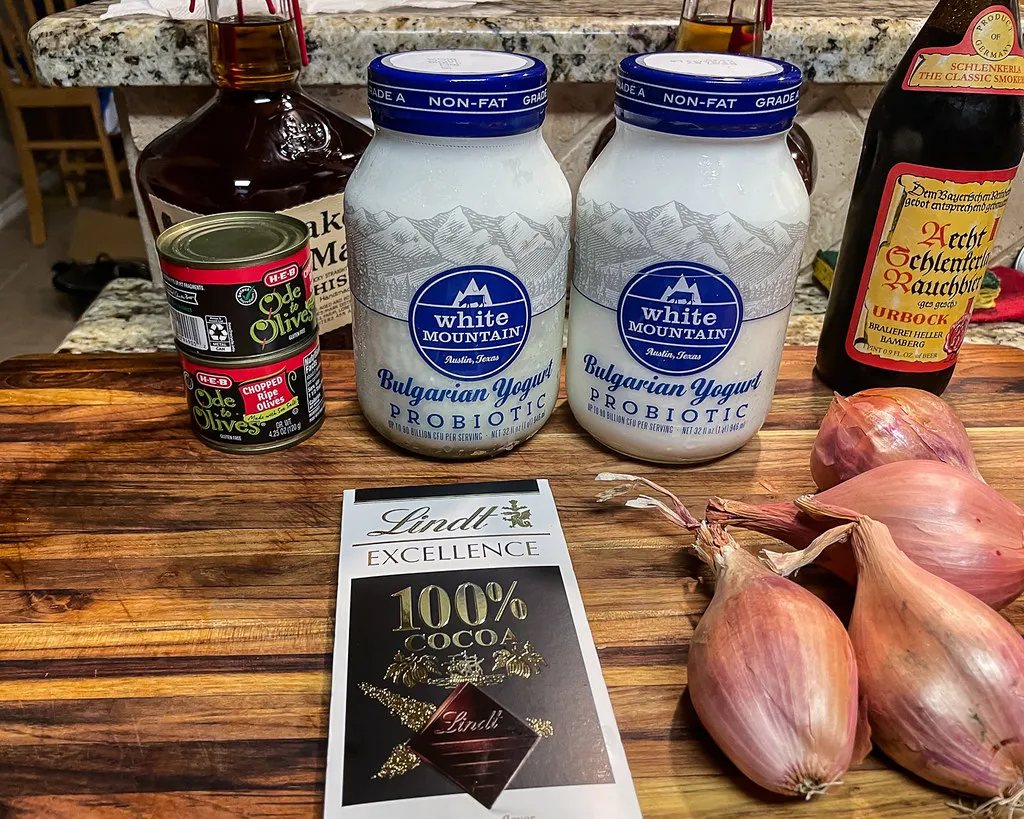
| Price (32 oz, US) | ~$5–8 | ~$4–7 |
Choose Bulgarian yogurt if you want more calcium, a genuine probiotic culture count, and a tart flavor that works in cold soups and savory sauces. Choose Greek yogurt if you prioritize high protein density and a thick texture for cooking, baking, or eating as a standalone meal. There is no objectively superior option — the right choice depends on what you are eating it with.
The Health Benefits of Bulgarian Yogurt
Lactobacillus bulgaricus is not just a fermentation agent — it is one of the most studied probiotic organisms in dairy science. Research confirms that L. bulgaricus strains can inhibit the growth of pathogenic bacteria in the gut, reduce intestinal permeability, and support the immune response by stimulating the production of cytokines. Streptococcus thermophilus, the companion culture, produces lactase as a byproduct of fermentation, which is one reason many people with mild lactose intolerance tolerate Bulgarian yogurt better than unfermented milk.
Élie Metchnikoff's original theory — that intestinal auto-intoxication from harmful gut bacteria accelerates aging — has been partially validated by modern microbiome research. Studies published since 2010 consistently show associations between high levels of Lactobacillus species in the gut and reduced markers of systemic inflammation. The oldest verified supercentenarian in modern recorded history, Maria Branyas Morera, who died in 2024 at age 117, reportedly consumed Bulgarian-style yogurt made with L. bulgaricus and S. thermophilus daily. Researchers who analyzed her microbiome found exceptionally high Bifidobacteria levels. No one claims yogurt alone explains extreme longevity, but the data keeps pointing in the same direction.
Beyond probiotics, Bulgarian yogurt provides calcium (roughly 300mg per 200g serving), phosphorus, B12, and riboflavin — figures you can cross-check against the USDA FoodData Central food composition database. Whole-milk versions contain conjugated linoleic acid (CLA), a fatty acid with some evidence of anti-inflammatory effects. The fat content does not make Bulgarian yogurt calorie-dense by modern standards — a 200g serving of full-fat kiselo mlyako runs about 130–150 kcal, comparable to a medium apple with almond butter.
The Legend, the Nobel Prize, and Why Bulgaria's Bacteria Are Protected by Law
The oldest story attached to Bulgarian yogurt places it in the court of King Francis I of France in the 16th century. The king was reportedly suffering from debilitating digestive illness, beyond what his court physicians could treat. According to the legend, a Bulgarian doctor was summoned from the Ottoman-controlled Balkans and prescribed daily consumption of traditional Bulgarian fermented milk. The king recovered. The story almost certainly contains mythologized elements, but it circulated widely in Europe for centuries and helped cement the cultural association between Bulgarian yogurt and gut-healing properties long before Grigorov's microscope confirmed the science.
Grigorov's 1905 identification of L. bulgaricus, followed by Metchnikoff's popular writing, turned Bulgarian yogurt into an international curiosity in the early 20th century. The bacterium was formally renamed Lactobacillus delbrueckii subsp. bulgaricus in subsequent taxonomy revisions, but the common name — and the Bulgarian identity of the organism — has never been in dispute. The name is legally encoded: Bulgaria successfully argued before the EU that the specific wild strains of L. bulgaricus that occur naturally in Bulgarian pastures, soil, and air are unique to that geography. Yogurt made elsewhere with commercial L. bulgaricus starters contains organisms that are descendants of Bulgarian strains, but they have been maintained in laboratory conditions for generations. They are not the same as what grows naturally in the Rhodope or Balkan mountain regions.
This is the detail that all the competitor articles miss. When you buy a "Bulgarian yogurt starter culture" from a US online retailer, you are getting a viable and beneficial product — but it is not legally Bulgarian yogurt. The authentic product exists in its fullest form only in Bulgaria, made with local milk, in the traditional clay pot or glass jar, from cultures maintained in an unbroken line.
Bulgarian Yogurt Starters: What to Buy and What to Look For
Bulgarian yogurt starter cultures sold outside Bulgaria are freeze-dried or fresh blends of L. bulgaricus and S. thermophilus derived from Bulgarian strains, propagated in laboratory conditions. They produce excellent yogurt — considerably better than most commercial varieties — but they are not PDO-protected. When shopping for a starter, check the label for both organisms by name. A product that lists only "active yogurt cultures" without specifying the strains is likely a generic blend that may include Lactobacillus acidophilus or Bifidobacterium, which produce a different flavor and probiotic profile.
Reputable suppliers include Cultures for Health and Bacillus Bulgaricus, which both sell heirloom-style starters that can be re-cultured indefinitely. Heirloom starters cost more upfront — typically $12–20 for a small packet — but a single batch yields a tablespoon of live yogurt that can seed the next batch, making the per-batch cost negligible after the first two or three ferments. Direct-set starters (single-use sachets) cost $6–12 and are more consistent but cannot be propagated.
Insulated packaging matters more than most buyers realize. Live bacterial cultures in starter packets are damaged by temperature swings during shipping. If a starter arrives without cold packs or an insulated mailer in summer, the cell counts may already be reduced. Reputable sellers use insulated mailers with gel packs. If yours arrives warm and the first batch fails to set within 10–12 hours, the starter is probably compromised — contact the supplier for a replacement rather than troubleshooting your technique. Store active starters in the refrigerator and freeze long-term backups immediately.
Making Bulgarian Yogurt at Home
The process is straightforward. Heat one litre of whole milk to 82°C (180°F) and hold it there for 10–15 minutes — this denatures the whey proteins and gives the finished yogurt a smoother set. Let the milk cool to 40–44°C (105–112°F). Stir in roughly 1 teaspoon of powdered starter or 2 tablespoons of live yogurt from a previous batch. Pour into a clean glass jar or clay pot, cover loosely, and maintain 40–44°C for 6–12 hours.
Keeping the temperature steady is the main variable. A yogurt maker is the easiest solution. Alternatives that work: a standard oven set to its lowest setting with the door slightly ajar, a covered pot wrapped in towels placed in a switched-off oven, or a wide-mouth thermos flask preheated with hot water. The yogurt is ready when it sets and smells clean and sour. Refrigerate for at least 4–6 hours before eating — it firms and the flavor mellows slightly as it chills.
If the yogurt is too thin after 12 hours, the starter culture was weak or the milk cooled below the fermentation window. If it separates into curds and watery whey, the temperature was too high — above 46°C the bacteria die and coagulation becomes uneven. Save a few tablespoons from each successful batch to start the next one. A healthy heirloom culture can be maintained this way for years. After 5–6 re-cultures the flavor often deepens noticeably compared to the first batch.
How Bulgarians Actually Eat It — and Recipes to Try
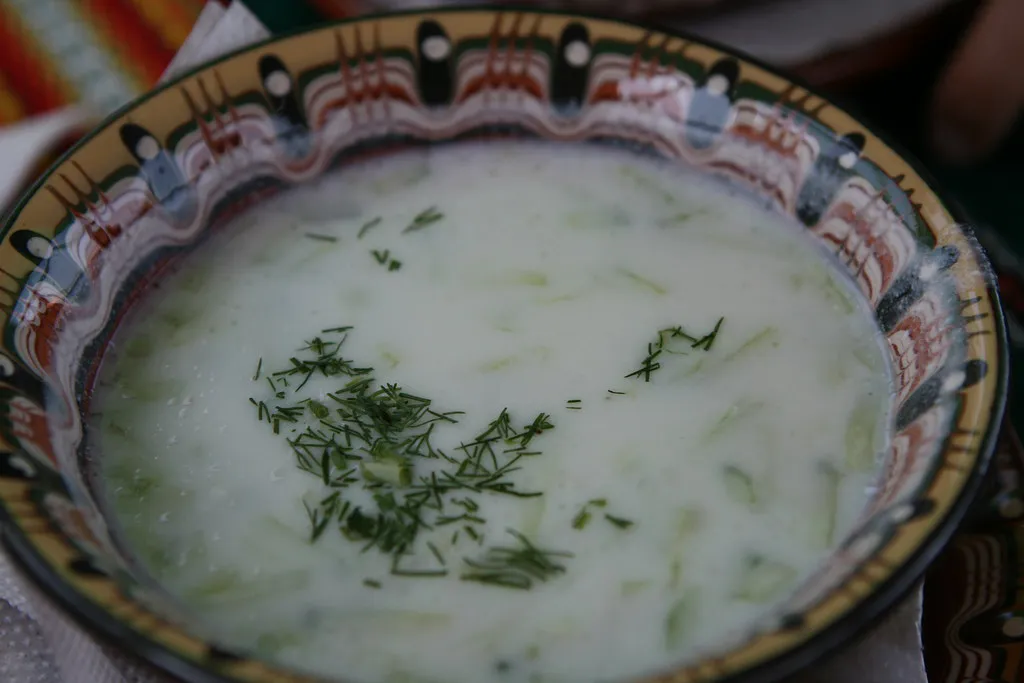
In Bulgaria, kiselo mlyako appears at every meal and between meals. Breakfast is often a bowl of yogurt with honey and walnuts, or poured over a slice of banitsa. Lunch and dinner frequently involve it as a side — a small bowl to cool the heat of roasted peppers or to accompany grilled meat. The most famous cold-weather use is as the base of the chilled cucumber soup, tarator, made from yogurt, grated cucumber, garlic, dill, walnuts, and water. Tarator is the single most practical recipe to understand if you want to use Bulgarian yogurt the way Bulgarians use it.
Beyond tarator, yogurt features in snezhanka — a thicker dip made with strained yogurt, cucumber, garlic, and olive oil, similar to Greek tzatziki but tangier and more garlicky. It also appears in lyutenitsa-based dishes as a cooling counterpoint to the roasted pepper heat, and is beaten into egg-and-flour batters for savory pancakes called mekitsi. For breakfast, mix it with crushed walnuts, a drizzle of Bulgarian forest honey, and a pinch of cinnamon — this combination is ubiquitous in village guesthouses across the Rhodope mountains.
As a marinade, Bulgarian yogurt's lactic acid tenderizes chicken or lamb beautifully. Coat the meat in a mixture of 200ml yogurt, 3 minced garlic cloves, smoked paprika, cumin, and salt. Marinate for 4–8 hours, then grill or roast. The yogurt chars slightly on the outside and keeps the interior moist. This technique is common at Bulgarian mehanas (traditional taverns) and produces results that are noticeably different from oil-based marinades.
Where to Try Bulgarian Yogurt When You Visit
The best Bulgarian yogurt is not in supermarkets. Village-made kiselo mlyako, produced from raw or lightly pasteurized milk with cultures maintained over decades, has a depth of flavor that no commercial version matches. The Rhodope mountain villages — particularly around Smolyan and Shiroka Laka — have a strong tradition of homemade yogurt. Local guesthouses will often serve it at breakfast from their own production. Ask for "domashno kiselo mlyako" (домашно кисело мляко — homemade yogurt).
In Sofia, the Zhenski Pazar market (Women's Market) near the city center has vendors selling locally made dairy including yogurt in season. The organic market at the NDK (National Palace of Culture) on Saturdays carries small-batch yogurt from certified farms. For a restaurant context, any traditional mehana will serve yogurt as a side dish or base for tarator — look for traditional Bulgarian cuisine restaurants that write their menus in Bulgarian as well as English, which usually signals a less tourist-adapted kitchen.
Commercial brands worth trying if you can't find village yogurt: Rodopi, Danon Bulgaria (different formulation from Western Danone), and Kamchia all use Bulgarian-origin cultures and produce a product significantly more tart than anything branded "Bulgarian yogurt" in North American supermarkets. A 400g tub in a Bulgarian supermarket (Lidl, Kaufland, or Fantastico) costs around 1.20–2.00 BGN (0.60–1.00 EUR) — notably cheaper and more authentic than imported alternatives.
Continue planning: Use 15 Must-Try Bulgarian Foods: A Culinary Travel Guide and The Best Banitsa Recipe: Authentic Bulgarian Cheese Pie Guide to connect this guide with the rest of your Bulgaria itinerary.
Frequently Asked Questions
What is Bulgarian Yogurt?
Bulgarian yogurt is a traditional fermented milk product. It uses specific starter cultures, Lactobacillus bulgaricus and Streptococcus thermophilus. It is known for its distinctive tangy taste and thinner consistency.
What are the health benefits of Bulgarian Yogurt?
It offers unique probiotic benefits, particularly from Lactobacillus bulgaricus. These help support gut health, boost immunity, and improve digestion. It also provides essential nutrients like calcium and B vitamins.
How does Bulgarian Yogurt differ from Greek Yogurt?
Bulgarian yogurt is tangier and thinner, while Greek yogurt is thicker and creamier due to straining. Greek yogurt generally has higher protein. Bulgarian yogurt features unique bacterial strains.
Can you make Bulgarian Yogurt at home?
Yes, you can easily make Bulgarian yogurt at home. You need milk and a Bulgarian yogurt starter culture. The process involves heating milk, cooling it, adding the starter, and fermenting at a controlled temperature.
What is Bulgarian Yogurt starter culture?
It is a specific blend of live bacteria, primarily Lactobacillus bulgaricus and Streptococcus thermophilus. These cultures initiate the fermentation process. They transform milk into traditional Bulgarian yogurt.
Is Bulgarian Yogurt good for gut health?
Yes, Bulgarian yogurt is excellent for gut health. Its unique probiotic strains help balance the gut microbiome. This supports better digestion and overall digestive well-being.
What does Bulgarian Yogurt taste like?
Bulgarian yogurt has a distinctly tart and tangy flavor. It is often described as refreshing and clean. The taste is more pronounced than many commercial yogurts.
Bulgarian yogurt is one of those foods where the science, the history, and the daily lived reality all converge. The bacteria are real and geographically specific. The health research is among the oldest in fermented food science. The taste is genuinely different from any commercial alternative. If you travel to Bulgaria, seek out homemade kiselo mlyako in a mountain village — it will recalibrate what you thought yogurt could be.
For connected planning, compare practical Bulgaria travel guide with Bulgaria seasonal planning guide before finalizing your route.