Kebapche and Kyufte: Bulgaria's Essential Grilled Meats
Walk past any mehana or street grill in Bulgaria and you will smell them before you see them — the earthy, cumin-scented smoke of kebapche and kyufte hitting hot charcoal. These two grilled minced-meat dishes are the backbone of Bulgarian skara (grill) culture, eaten at roadside stands, birthday parties, and Sunday family lunches with equal enthusiasm.
Together they represent something deeper than lunch. Kebapche and kyufte are the everyday expression of Bulgarian food identity, the dishes Bulgarians grow up eating and the first things they miss when living abroad. Understanding both — what sets them apart, what spices define them, and where to eat the best versions in Bulgaria — gives you a real foothold in the country's culinary culture in 2026.
For a visual introduction to authentic kebapche and kyufte on the grill, watch how these are prepared:
What Are Kebapche and Kyufte?
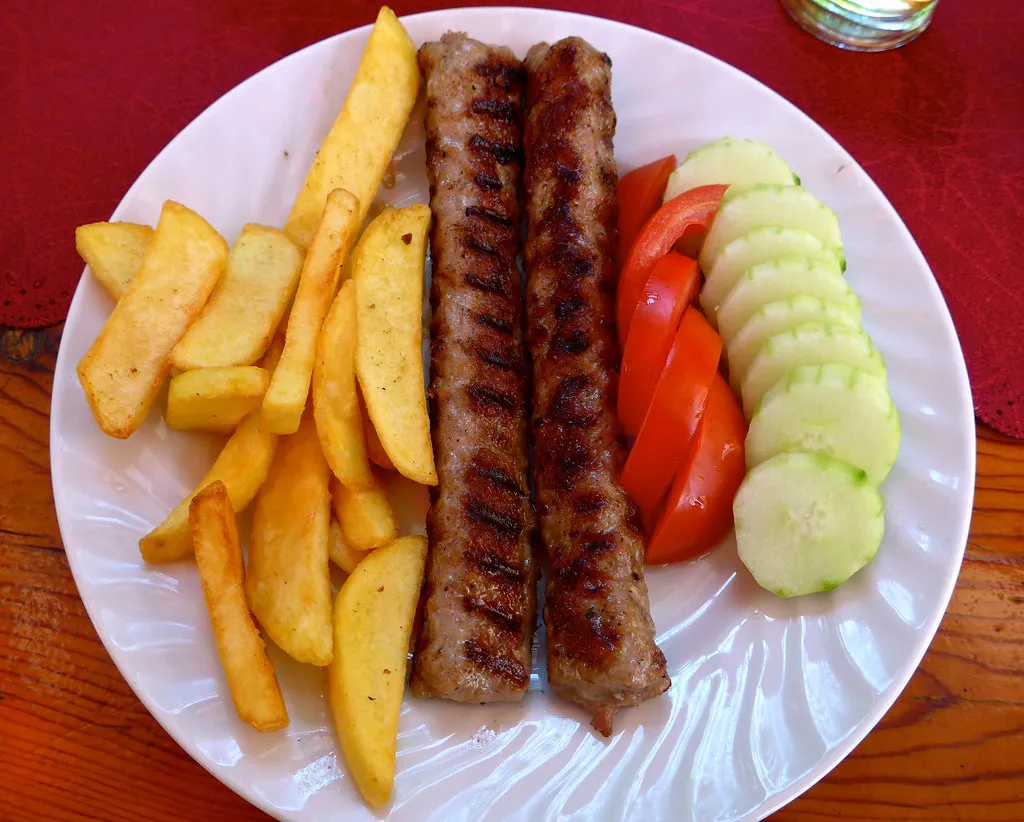
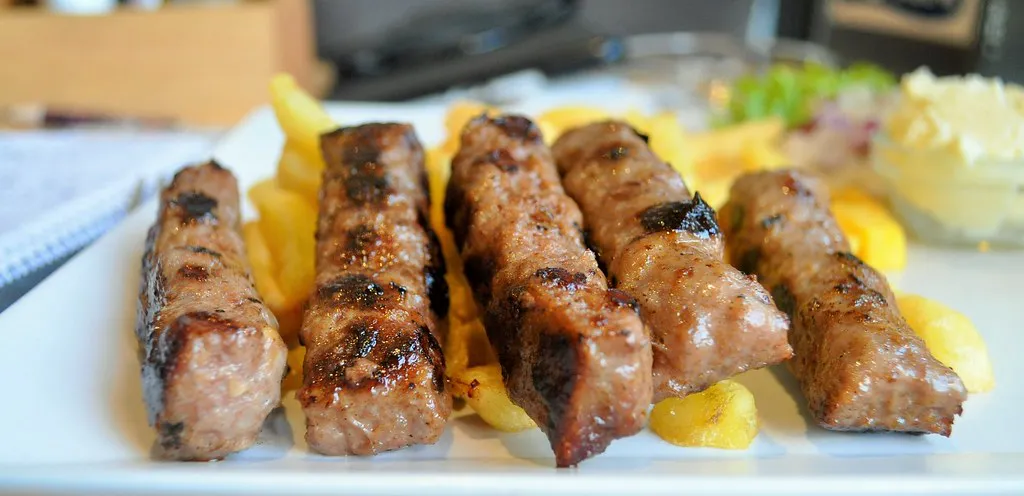
Kebapche is a skinless grilled sausage made from seasoned minced meat, formed into a cylinder roughly 10–12 cm long and about 2.5 cm wide. It has an elongated shape similar to a kofta or Turkish köfte but with a distinctly Bulgarian spice profile. The outside chars and firms up on the grill while the inside stays juicy and dense.
Kyufte is the round counterpart — a flat, palm-sized minced-meat patty grilled to a similar char. Think of it as the burger cousin in the same family. The meat mixture is almost identical to kebapche: minced pork and beef, salt, black pepper, and cumin. The main difference is purely shape, which changes the texture ratio of crust to interior and how it holds sauces at the table.
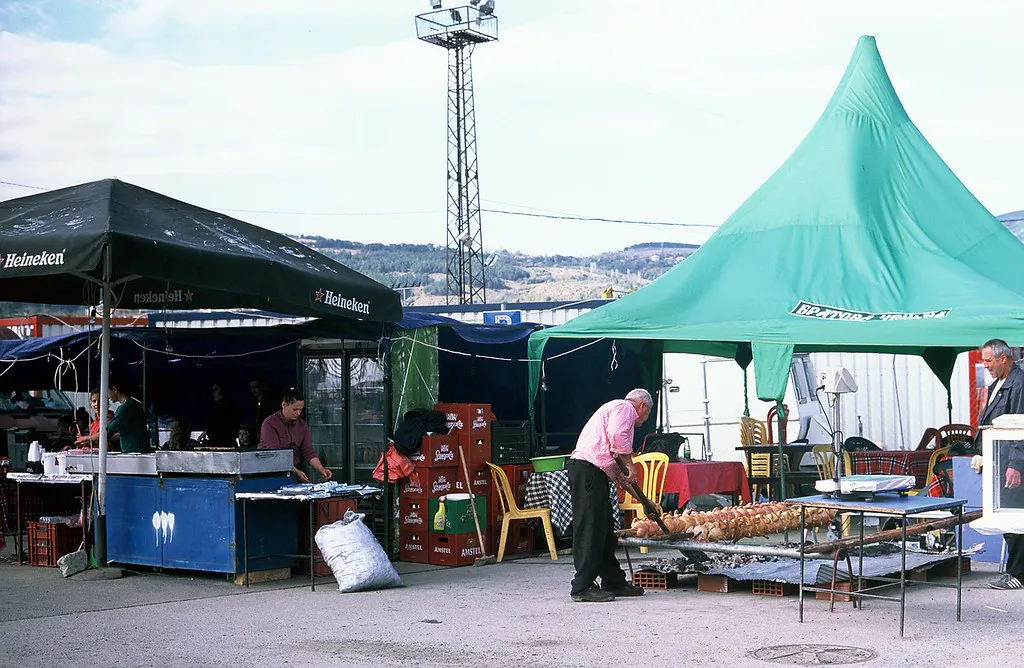
Both belong to the broader category of skara — Bulgarian grilled food — alongside pork chops (пържола), marinated chicken, and stuffed peppers. But kebapche and kyufte are the anchors. At a traditional mehana, if you order skara, these two will almost always arrive on the plate. They are also the most common items at Bulgarian street-food stalls and outdoor festivals throughout the country.
The Spices That Define Bulgarian Skara
The flavour signature of both kebapche and kyufte comes from two spices: cumin (kim) and chubritsa. Cumin provides the warm, slightly bitter earthiness that makes Bulgarian grilled meat immediately recognisable — it is present in almost every authentic recipe and should be freshly ground for maximum impact. Without it, the dish tastes generic rather than Bulgarian.
Chubritsa (savory, Satureja hortensis) is less well known outside Bulgaria but equally important. It is a fragrant annual herb used across Bulgarian cooking — in cheese, bean dishes, and grilled meats alike. In kebapche and kyufte, chubritsa adds a peppery, thyme-adjacent note that lifts the fat in the meat. You can find dried chubritsa in Bulgarian grocery stores and online; dried thyme is a rough substitute if you cannot source it.
The other essentials are black pepper, salt, and a small amount of baking soda. The baking soda is a specifically Bulgarian technique — it slightly alkalises the meat mixture, which tenderises the proteins and keeps the interior moist under the direct heat of charcoal. Many recipes also add a splash of cold sparkling water during kneading, which improves cohesion and gives the mixture a lighter texture.
What you will not find in an authentic recipe: garlic, onion, paprika, or fresh herbs. These are common additions in other regional meatball traditions but Bulgarian kebapche and kyufte stay deliberately simple. The restraint is intentional and is what makes the cumin and chubritsa stand out cleanly.
Kebapche vs Kyufte: Key Differences
The short answer: shape and texture. Kebapche's cylindrical form means more surface area per gram of meat, so you get more charred crust per bite. Kyufte's disc shape means the interior stays slightly softer and the patty holds together more easily, making it easier to eat on bread as a quick street snack.
In practice, Bulgarians have mild regional and personal preferences. Some argue kyufte has a slightly higher pork ratio for a richer flavour; others insist the recipes are identical and the difference is purely aesthetic. What is consistent across the country is that kyufte is more likely to appear on a bread roll at a street stand, while kebapche tends to get plated at a sit-down mehana with sides.
Both are typically made from a mix of around 60–70% pork and 30–40% beef. Pure pork versions exist and are common in cheaper street-food contexts. Some home cooks add a small amount of lamb for a more complex, gamey note, but this is a minority variation. Fat content matters: a blend with roughly 20–25% fat stays juicy; leaner mixtures turn dry and dense on the grill.
Skara Culture: Grilling as a Way of Life
Skara in Bulgaria is not merely a cooking method — it is a social institution. Every town of any size has at least one skara restaurant where the grill runs from midday through late evening, and the smoke is visible from the street. These are not fancy establishments. Checked tablecloths, plastic bread baskets, a litre of beer on draught, and a plate of mixed skara arriving without ceremony — that is the authentic format.
Outdoor grilling culture intensifies in summer. Bulgarian families bring portable charcoal grills (mangal) to the beach, riverbanks, and mountain clearings. Kebapche and kyufte are the first thing onto the grill at these gatherings, shaped the night before and kept chilled until the coals are ready. The smell of cumin-spiced meat over charcoal is as strongly associated with Bulgarian summer as sunflowers or the Black Sea coast.
The charcoal grill (skara na vŭgleshtа) is considered the only legitimate cooking method for these dishes in a restaurant context. Gas grills exist and are used in higher-volume establishments, but any Bulgarian will tell you the difference is detectable — charcoal gives a smokiness that defines the dish. At home, a cast-iron grill pan or an oven broiler works as a substitute, but the authentic version requires live fire.
Making Kebapche and Kyufte: The Authentic Method
The core technique for both dishes is the same: mince, season, knead, rest, shape, and grill. The meat is minced through a medium plate — not fine, which turns it to paste, and not coarse, which makes it fall apart. A 50/50 or 60/40 pork-to-beef ratio is standard. Ask a butcher to grind fresh from pork shoulder and beef chuck for the best result.
Seasoning goes in at the start: salt, black pepper, cumin, chubritsa, and baking soda. Mix by hand for two to three minutes, then add cold sparkling water gradually while kneading vigorously. The mixture needs 10–15 minutes of firm kneading until it becomes tacky and holds together as a single mass. This step is non-negotiable — under-kneaded mixture falls apart on the grill. Cover tightly and refrigerate for at least four hours, ideally overnight, before shaping.
For kebapche, wet your hands lightly and roll portions of around 80–90 g into cylinders of roughly 10–12 cm. For kyufte, press similar portions into flat patties about 1.5 cm thick. Grill over medium-high charcoal, turning every two to three minutes for 10–14 minutes total. An internal temperature of 71°C (160°F) confirms they are done. Rest for two minutes off the heat before serving.
How Kebapche and Kyufte Are Served
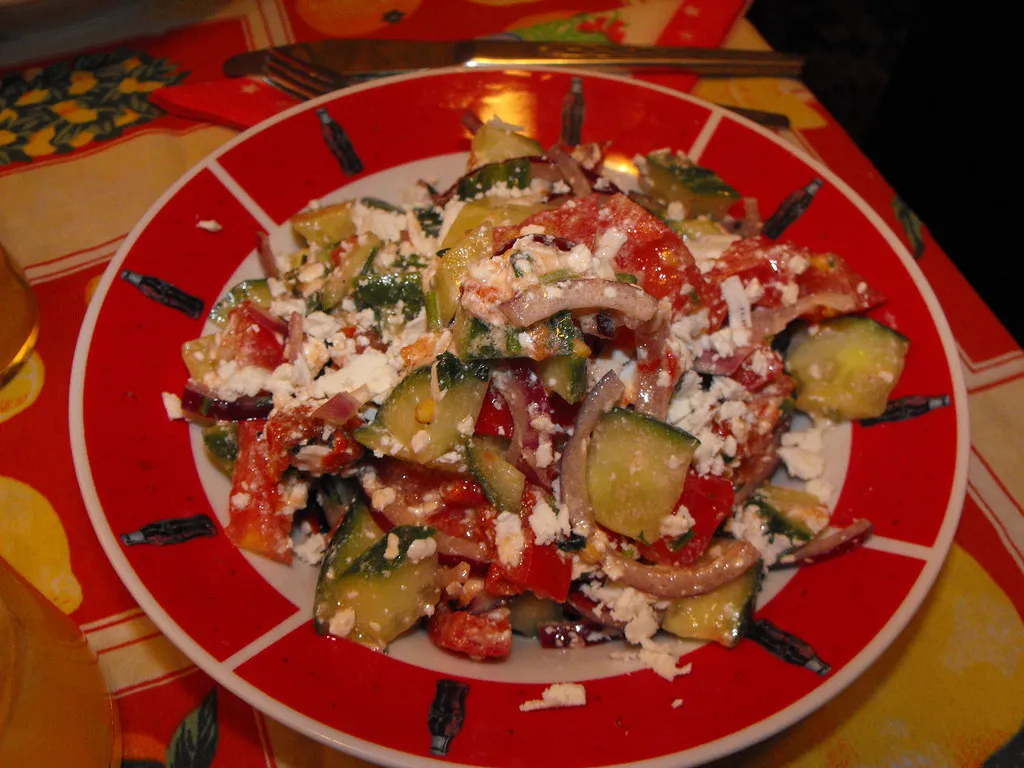
At a sit-down mehana, kebapche typically arrives on a wooden board or plate alongside lyutenitsa relish — the roasted-pepper-and-tomato relish that is effectively Bulgaria's national condiment — and a thick slice of white bread. A Shopska salad dish (tomato, cucumber, peppers, and white sirene cheese) is the standard first course that precedes the grill plate. These combinations are so ingrained they are almost automatic on any mehana menu.
At street-food stands, kyufte in a bread roll (kyufte v kiflа) is the quick-lunch format: the hot patty goes directly into a halved roll with a spoonful of lyutenitsa or a squeeze of mustard, sometimes with a few rings of raw onion. It costs between 2 and 4 BGN (roughly €1–2) at a typical stand in 2026 and is the Bulgarian equivalent of a hamburger for everyday eating.
Cold tarator soup — the cucumber and yogurt soup — is the classic warm-weather pairing because the cool acidity cuts through the fat in the grilled meat. For drinks, a cold beer (Zagorka or Kamenitza are the most common brands on draught at skara restaurants) or a shot of rakia before the meal are the traditional choices. The rakia-before-grilled-meat sequence is a cultural ritual as much as a flavour pairing.
Where to Eat Kebapche and Kyufte in Bulgaria
The best kebapche and kyufte in Bulgaria are rarely found in tourist-facing restaurants. Look for mehani (taverns) with a working charcoal grill visible through a window or at the entrance — if you can see and smell the coals, the food is authentic. Local skara restaurants in residential neighbourhoods, far from the main pedestrian streets, consistently outperform anything in central tourist zones on quality and price.
Sofia has a concentration of reliable skara restaurants in the Lozenets, Mladost, and Lyulin neighbourhoods. The Zhenski Pazar (women's market) area near the city centre has several old-school lunch spots where kebapche is grilled fresh from mid-morning. In Plovdiv, the area around the Kapana Creative District Visitor Guide has a number of mehani that retain traditional menus despite the neighbourhood's gentrification.
Outside the cities, roadside skara stands along national highways — particularly on routes through the Balkan mountain range and near the Valley of Roses — are worth stopping for. These are simple operations: a charcoal grill, a few plastic tables, and a short menu. The quality is often exceptional because the volume is high and the turnover keeps the meat fresh. Prices at roadside stands run 3–6 BGN per portion of kebapche or kyufte in 2026.
Any visitor following a Bulgarian cuisine itinerary should treat kebapche and kyufte as a baseline, not a highlight — these are the everyday dishes that anchor Bulgarian food culture. Explore them early in your trip so the more elaborate regional dishes make sense in context.
Regional Variations and the Lamb Question
One detail that most guides to Bulgarian grilled meat skip entirely: regional variation is real but subtle. Kebapche in the Rhodope mountain region sometimes includes a proportion of lamb mince, which adds a distinctly gamey, mineral note to the flavour. This is not standard across Bulgaria but is well established locally. If you are eating in Smolyan, Zlatograd, or Madan, you may notice the difference without being told.
In the Strandzha region near the Turkish border, the influence of Ottoman culinary tradition is still detectable — some local variations of kyufte are spiced with a small amount of allspice or dried sweet pepper alongside the standard cumin and chubritsa. These are small regional inflections, not a separate dish, but they matter to anyone eating their way seriously through Bulgarian cuisine rather than just checking it off a list.
The lamb question generates genuine debate among Bulgarians. Purists argue the traditional recipe is pork and beef only, with lamb being a Rhodopean minority usage that should not be generalised. Others see lamb as an equally valid historical strand. In 2026, restaurant menus across Bulgaria almost universally default to the pork-beef blend, so you are unlikely to encounter lamb kebapche unless you are in the specific mountain regions where it is traditional or you seek it out explicitly.
Continue planning: Use 15 Must-Try Bulgarian Foods: A Culinary Travel Guide and The Best Banitsa Recipe: Authentic Bulgarian Cheese Pie Guide to connect this guide with the rest of your Bulgaria itinerary.
Frequently Asked Questions
How do you make kebapche from scratch?
Making kebapche from scratch involves grinding a mix of pork and beef, seasoning it with cumin and black pepper, and kneading it thoroughly. Then, you form it into cylinders and grill until cooked through. Chilling the meat mixture overnight is highly recommended for best results.
What are the main ingredients in kebapche?
The main ingredients in kebapche are ground pork and beef, typically in equal parts or with more pork. Essential spices include ground cumin, black pepper, and salt. A small amount of baking soda and cold water are also crucial for texture and moisture.
What is the difference between kyufte and kebapche?
The primary difference between kyufte and kebapche lies in their shape. Kyufte are round, patty-like meatballs, while kebapche are elongated, cylindrical skinless sausages. Both share similar meat bases and seasonings but are distinct in presentation and grilling behavior.
How do you grill kebapche without drying it out?
To grill kebapche without drying it out, use a meat mixture with adequate fat content (around 20-25%). Grill over medium-high heat, turning frequently every 2-3 minutes. Cook until the internal temperature reaches 160°F (71°C), typically 10-15 minutes, and avoid overcooking.
What spices are used in authentic kebapche?
Authentic kebapche primarily uses ground cumin, black pepper, and salt for seasoning. Some recipes also include a touch of savory or paprika for added depth. The quality and freshness of these spices significantly impact the final flavor profile of the dish.
What do you serve with kebapche?
Kebapche is traditionally served with lyutenitsa relish (pepper and tomato relish), Shopska salad dish, or simple fried potatoes. Fresh bread and a cold beer are also common accompaniments. Tarator, a cold cucumber yogurt soup, also pairs well, especially in warm weather.
Kebapche and kyufte are not complicated dishes, but they are deeply cultural ones. The combination of cumin, chubritsa, and charcoal smoke defines a flavour that is immediately and specifically Bulgarian. Whether you encounter them at a Sofia mehana, a Rhodope roadside stand, or a Black Sea beach grill in 2026, you are eating something that has stayed essentially unchanged for generations — and that is the point.
For more on the broader food culture these dishes sit within, the Bulgarian cuisine guide covers everything from dairy traditions to regional specialities. And if you want to understand what to drink alongside your skara, the rakia article covers Bulgaria's most important spirit in detail.
For connected planning, compare practical Bulgaria travel guide with Bulgaria seasonal planning guide before finalizing your route.