Tarator: The Ultimate Guide to Bulgarian Cold Soup & Lebanese Tahini Sauce
Tarator is one of those words that means completely different things depending on where you are. In Bulgaria, it is a chilled yogurt-and-cucumber soup — the dish that appears on every restaurant menu the moment temperatures climb above 25°C. In Lebanon and across much of the Arab world, tarator is a creamy tahini sauce, tangy with lemon and sharp with raw garlic. Both versions take under 15 minutes to make, rely on just a handful of ingredients, and reward anyone willing to source quality components. This guide covers both recipes in full, along with variations, serving pairings, storage advice, and the cultural context that makes each version worth understanding on its own terms.
Here's a video guide to making authentic Bulgarian tarator, the classic cold cucumber soup:
What is Tarator? (Bulgarian Soup vs. Lebanese Sauce)
Tarator is a culinary term shared across the Balkans and the Middle East, but the dish it describes varies sharply by region. In Bulgaria, tarator is a cold soup: thin, tangy, and built on a base of plain yogurt diluted with cold water. In Lebanon and Syria it is a thick sauce or dip, made from tahini (ground sesame paste), lemon juice, and garlic, with no dairy involved at all. The two dishes share a name and a reputation for freshness, but their ingredients, textures, and uses are entirely distinct — the Balkan soup belongs to the same family as the wider yogurt-and-cucumber tradition of the region.
Bulgarian tarator sits closer to a drinkable salad than a conventional soup. Many Bulgarians prefer it served in a tall glass rather than a bowl — you drink it cold on a hot afternoon the way others reach for lemonade. Lebanese tarator, by contrast, is a condiment. It coats grilled meat, falafel, and roasted vegetables with a glossy, nutty, acidic layer that brightens otherwise heavy dishes. Understanding which version you want to make — or eat — is the first step toward a good result.
Why You'll Love Making Tarator
Both versions of tarator are among the fastest things you can prepare from scratch. Bulgarian tarator takes about 10 minutes of active work, plus 30 minutes in the refrigerator. The Lebanese sauce is ready in five minutes flat. Neither recipe requires cooking. There is no heat, no stove, no oven — just chopping, mixing, and tasting. That combination of speed and zero-effort cooking makes tarator the kind of dish you can add to almost any meal without disrupting your plans for the evening.
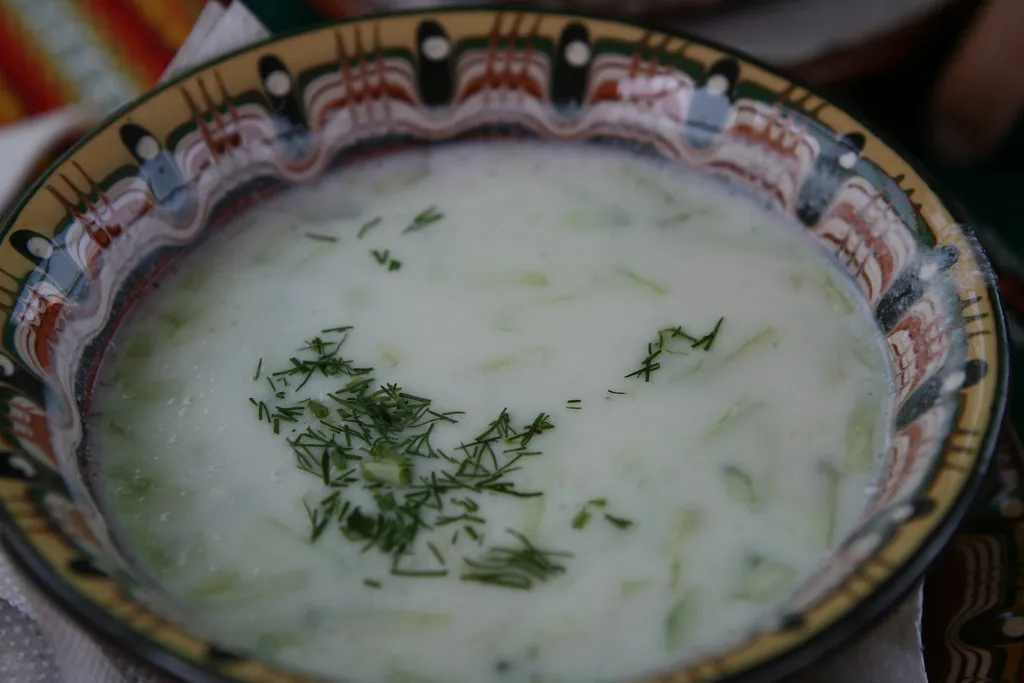
Tarator also pairs with an unusually wide range of foods. The Bulgarian soup works as a starter, a side dish alongside grilled meats, or a standalone light lunch. It fits naturally next to traditional Bulgarian dishes at the table. The Lebanese sauce does similar duty across Middle Eastern cooking — drizzled over falafel, spooned alongside grilled lamb, or thinned with water and used as a salad dressing. Both versions are naturally gluten-free, and the Lebanese sauce is fully vegan. The Bulgarian soup is vegan with one easy swap.
Essential Tarator Ingredients
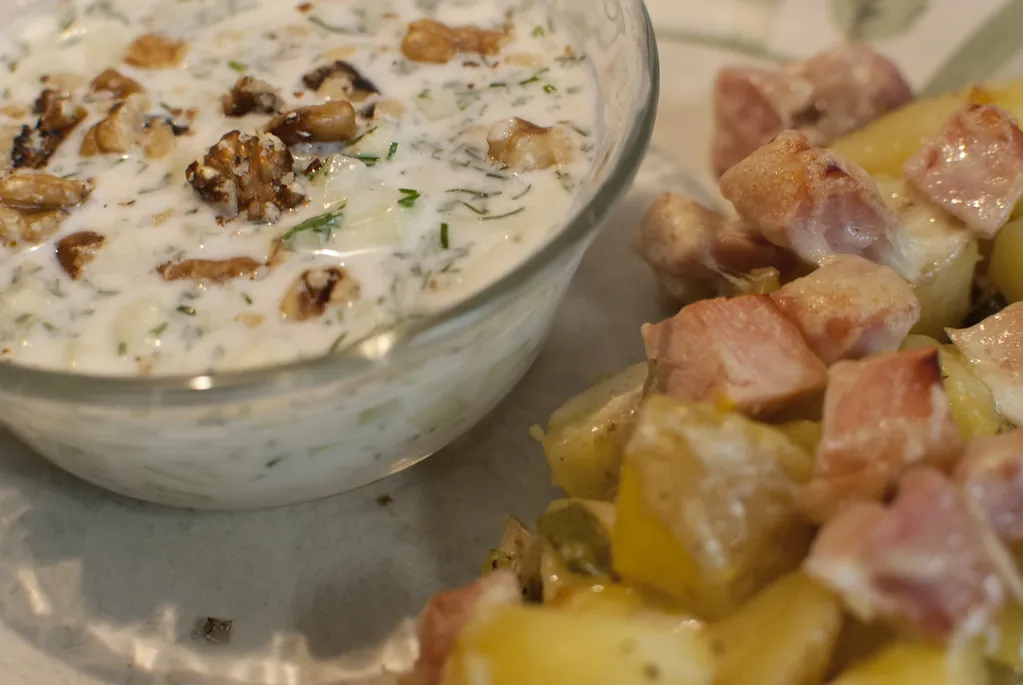
For Bulgarian tarator, four ingredients are non-negotiable: plain yogurt, cucumber, fresh dill, and salt. Full-fat yogurt gives the best texture — it blends smoothly with cold water without turning watery. Greek-style strained yogurt technically works but requires more water to reach a drinkable consistency, and its flavour is slightly sharper. Genuine Bulgarian-style yogurt, if you can find it, is the ideal choice: it has a milder tang and a looser set that mixes naturally. The cucumbers should be peeled and diced as finely as possible — small cubes give a better texture than grated cucumber, which turns the soup grainy. Fresh dill is essential; dried dill loses the grassy brightness that defines Bulgarian tarator. Garlic and walnuts are optional additions that appear in many households but not all.
For Lebanese tarator, the ingredient list is even shorter: good tahini, fresh lemon juice, a clove of garlic, and cold water. The quality of the tahini matters enormously here. Look for a brand whose only ingredient is sesame seeds, with a smooth, pourable consistency. Tahini made from over-roasted seeds tastes bitter and will fight against the lemon rather than complement it. Freshly squeezed lemon juice is essential — bottled juice lacks the brightness needed to balance tahini's richness. Raw garlic, mashed to a paste with a pinch of salt before combining with the other ingredients, distributes more evenly and avoids sharp raw chunks in the finished sauce.
How to Make Bulgarian Tarator Soup (Step-by-Step)
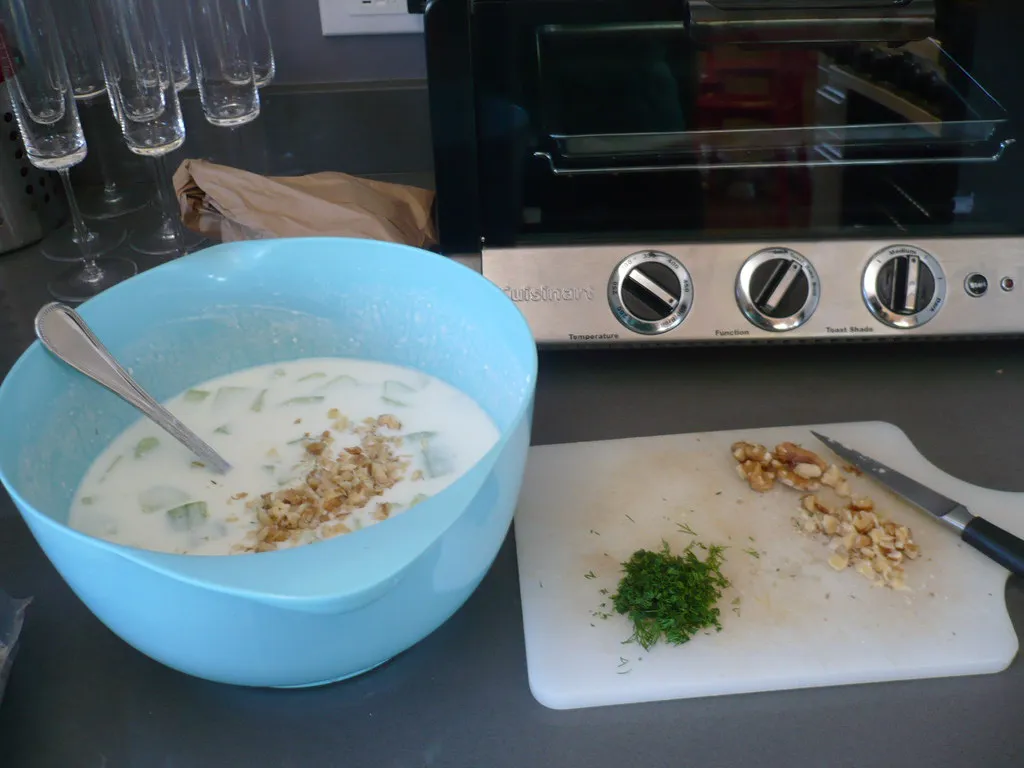
This recipe makes four generous servings and takes about 10 minutes of prep time. Peel two medium cucumbers and dice them as finely as you can manage — small cubes, roughly 5 mm, give the best texture. Mince one to two cloves of garlic. Chop a large handful of fresh dill, stems and all.
- Step 1: Prepare the Cucumbers
- Peel and dice two medium cucumbers into small, even pieces about 5 mm across.
- Skip the grater — grated cucumber releases too much water and turns the soup thin and slightly gritty.
- If your cucumbers have particularly large seeds, scoop them out first.
- Step 2: Mince Garlic and Chop Dill
- Mince one to two garlic cloves as finely as possible, or use a press.
- Chop a generous handful of fresh dill — roughly 30 g / 1 oz.
- Fresh dill is not negotiable; dried dill cannot replicate the herbaceous lift it provides.
- Step 3: Build the Yogurt Base
- In a large bowl or jug, whisk 500 ml / 2 cups of full-fat plain yogurt with 500 ml / 2 cups of very cold water.
- Add the water gradually, whisking as you go, to break up any yogurt lumps.
- Adjust the water to your preferred thickness — some people like it soup-thin, others prefer it closer to a thick smoothie.
- Step 4: Combine and Season
- Add the diced cucumber, minced garlic, chopped dill, and a generous pinch of salt to the yogurt base.
- Stir well and taste. Adjust salt, add more dill, or thin with a little more cold water.
- Optional: stir in 50–75 g / ½ cup of roughly chopped raw walnuts and a drizzle of sunflower or olive oil.
- Step 5: Chill and Serve
- Cover and refrigerate for at least 30 minutes before serving — one hour is better.
- Serve in bowls or tall glasses, with an extra sprig of dill and a few walnut pieces on top if you like.
- The soup should be very cold. If your refrigerator is not running cold enough, add a handful of ice cubes just before serving.
How to Make Lebanese Tahini Tarator Sauce (Step-by-Step)
This recipe makes roughly 300 ml / 1¼ cups of sauce and takes about five minutes. The technique of making a garlic paste first — rather than just mincing — is worth the extra ninety seconds. It eliminates harsh raw-garlic chunks and distributes the flavour evenly throughout the sauce.
- Step 1: Make the Garlic Paste
- Mince two cloves of garlic as finely as possible, then sprinkle with a pinch of salt.
- Use the flat side of a knife to scrape and press the garlic and salt together repeatedly for about 90 seconds, until it forms a smooth paste.
- This step eliminates sharp garlic pieces that would otherwise create uneven heat in the finished sauce.
- Step 2: Whisk Tahini and Lemon
- In a medium bowl, combine 125 ml / ½ cup of well-stirred tahini with the juice of one large lemon — about 60 ml / ¼ cup.
- Whisk together. The mixture will initially seize and thicken dramatically into a thick paste. This is normal.
- Add the garlic paste and a pinch of salt, then whisk again to combine.
- Step 3: Gradually Add Water
- Add cold water one tablespoon at a time, whisking thoroughly between each addition.
- After 60–120 ml / 4–8 tbsp of water, the sauce will loosen and become smooth and creamy.
- Stop when it reaches a consistency you can drizzle — think double cream rather than milk.
- Step 4: Adjust and Taste
- Taste and adjust: more lemon for brightness, more water for a thinner dressing, more salt to sharpen the flavour.
- Optional garnish: a drizzle of extra virgin olive oil and a small handful of chopped flat-leaf parsley.
- Serve immediately or refrigerate. The sauce will thicken as it chills — stir in a splash of water before using if needed.
Tarator Variations and Customizations
Bulgarian tarator varies considerably from household to household. The base of yogurt, cucumber, dill, and salt is constant, but nearly everything else is optional. Some families add raw walnuts for crunch and richness; others skip them entirely. A tablespoon of white wine vinegar or apple cider vinegar sharpens the tang beyond what yogurt alone provides. A drizzle of sunflower oil — the traditional choice in Bulgaria, rather than olive oil — adds body and a subtly nutty finish. Vegan versions substitute an unsweetened coconut yogurt or soy yogurt for the dairy base without significant loss of flavour, provided the plant yogurt is full-fat and not sweetened.
Lebanese tarator invites a different set of variations. The simplest addition is cumin — a pinch of ground cumin, ideally from freshly toasted seeds, adds an earthy layer that deepens the sauce and makes it feel more distinctly Middle Eastern. Fresh herbs can be blended in: flat-leaf parsley is traditional, while mint gives a cleaner, fresher result. For heat, stir in a small spoonful of harissa or a pinch of cayenne. Lime juice can replace lemon for a slightly sharper acid note. For a thicker dip, reduce the water. For a salad dressing, double it.
Tips for Making the Best Tarator
For Bulgarian tarator, the single most important factor is yogurt quality. Full-fat yogurt made with live bacterial cultures — particularly one fermented with Lactobacillus bulgaricus and Streptococcus thermophilus, the strains native to Bulgaria — produces a distinctly cleaner tang than generic supermarket yogurt. These two bacterial strains were first isolated from Bulgarian yogurt in the early 1900s and remain the biological marker of authentic Bulgarian-style fermentation, the same cultures used in the standard process for making yogurt. The difference is subtle but real: Bulgarian-style yogurt tastes less sharp and more rounded. Brands labelled "Balkan yogurt" or "Bulgarian yogurt" in Western supermarkets usually use these strains. If you can only find standard plain yogurt, use full-fat and avoid anything labelled "Greek" — it requires too much thinning and has a sharper, more acidic baseline flavour.
For Lebanese tarator, the two non-negotiable rules are: use fresh lemon juice, and add the water slowly. Bottled lemon juice is flat and slightly cooked-tasting; it fights against the tahini rather than lifting it. And when tahini seizes into a thick clump after the first addition of liquid, the only solution is patience — keep whisking and adding water one tablespoon at a time. It will eventually smooth out. If the finished sauce tastes bitter, the tahini brand is probably the problem, not the recipe. A high-quality tahini made from hulled, lightly roasted seeds will taste nutty and mild; an inferior one from over-roasted seeds will taste harsh and no amount of lemon will fix it.
- Troubleshooting Common Tarator Problems
- Bulgarian soup too thin: whisk in more yogurt or add a handful of extra finely diced cucumber.
- Bulgarian soup too thick: add cold water a tablespoon at a time and stir.
- Garlic overpowering the soup: stir in a little more yogurt and a squeeze of lemon to mellow it.
- Lebanese sauce seized into a thick paste: keep adding cold water one tablespoon at a time and whisk continuously until smooth.
- Lebanese sauce tastes bitter: the tahini quality is the issue — add more lemon juice as a temporary fix, or switch to a better brand next time.
- Lebanese sauce too thin: let it sit for 10 minutes; it thickens on its own as it rests.
Make-Ahead and Storage Tips
Bulgarian tarator is best made and eaten the same day, but you can prepare the components in advance without compromising quality. Dice the cucumbers and chop the dill up to 24 hours ahead and store them separately in the refrigerator. Keep the garlic separate too — raw garlic intensifies dramatically overnight and will overpower the soup if mixed in too early. When you are ready to serve, combine everything with the yogurt and water, season, and chill for 30 minutes. This approach means the soup comes together in under three minutes on the day.
If you do make the soup fully in advance, it keeps for two to three days in an airtight container in the refrigerator. Expect some separation — the cucumber releases water as it sits. Give it a vigorous stir before serving and taste for seasoning, since the garlic will have softened and the salt may need adjusting. Do not freeze Bulgarian tarator; the yogurt separates and the cucumber turns mushy.
Lebanese tarator stores considerably better. It keeps in the refrigerator for up to two weeks in a sealed jar. The sauce thickens as it chills, so stir in a splash of cold water and whisk briefly before using. Do not freeze it — tahini emulsions break on thawing and the texture becomes grainy and unpleasant. If you need a large batch for a gathering, scale the recipe up and blend everything in a standard blender for 60 seconds rather than whisking by hand.
Health Benefits of Tarator
Bulgarian tarator is built around yogurt, which means it delivers a meaningful dose of live probiotic cultures with every serving. Probiotics — the live bacteria found in fermented foods support gut microbiome health and aid digestion. The cucumbers contribute hydration, potassium, and vitamins C and K. Fresh dill adds antioxidants and has mild anti-inflammatory properties. Raw garlic contains allicin, a compound associated with immune support. Combined, the bowl amounts to a genuinely nutritious light meal — low in calories, hydrating, and rich in beneficial bacteria. It is no coincidence that tarator is the dish Bulgarians reach for instinctively when temperatures rise: it replaces fluids and electrolytes while tasting like something you actually want.
Lebanese tarator offers a different nutritional profile. Tahini is dense in calories but high in quality: it provides unsaturated fats, calcium, magnesium, iron, and a notable amount of plant-based protein. Sesame seeds are one of the richest non-dairy sources of calcium available. Lemon juice adds vitamin C and supports iron absorption from the tahini. The garlic, again, contributes its well-documented immune-supporting compounds. Both versions of tarator are naturally gluten-free. The Lebanese sauce is fully vegan; the Bulgarian soup becomes vegan with a plant-based yogurt swap. Neither version contains refined sugar or processed ingredients.
What to Serve with Tarator (Serving Ideas)
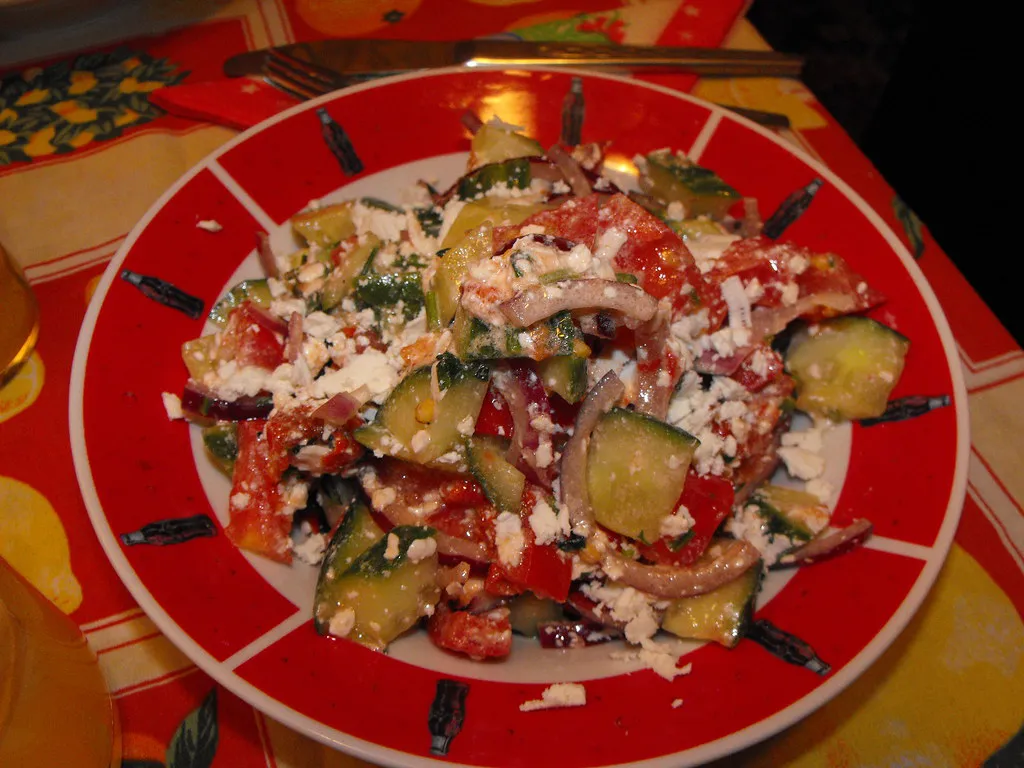
Bulgarian tarator works as a starter, a side dish, or a standalone light lunch on a hot day. It is a natural match for grilled meats — particularly the spiced grilled sausages and patties of the Bulgarian barbecue found on every summer grill menu. It also sits well alongside the bright summer salad of tomato, cucumber, and white cheese and the rich, flaky pastries of Bulgaria's beloved cheese pastry. The cooling properties of the soup make it a useful counterpoint to anything fatty or spicy. In Bulgaria, it is frequently served in a tall glass rather than a bowl — you drink it cold, the way you might reach for a glass of cold water. This is worth trying at home: the drinking format changes the experience entirely.
Lebanese tarator is one of the most versatile condiments in Middle Eastern cooking. It is the traditional sauce for shawarma, falafel, and fried fish. It coats grilled lamb and chicken. Thinned with additional water and a squeeze of extra lemon, it becomes a light salad dressing for grain bowls. Used thick, it serves as a dip for raw vegetables, warm pita, or roasted sweet potato. You can drizzle it over hummus as a garnish, or swirl it into a bowl of lentil soup. Keep a jar in the refrigerator for two weeks and you will find uses for it every day.
Frequently Asked Questions About Tarator
A few practical questions come up consistently when people first make tarator. The most common issue with the Bulgarian soup is consistency — too thin or too thick, which is easily corrected by adjusting the yogurt-to-water ratio. The most common issue with Lebanese tarator is the seizing of the tahini when first combined with lemon juice, which alarms first-time makers but resolves entirely with patient whisking and gradual water addition. Both dishes are forgiving once you understand how the base ingredient behaves.
On storage: Bulgarian tarator keeps two to three days refrigerated but is best fresh. Lebanese tarator is the opposite — it actually improves slightly after a day in the fridge as the garlic mellows and the flavours integrate. Both dishes are unsuitable for freezing. On the vegan question: Lebanese tarator is already fully vegan. Bulgarian tarator requires only a swap of dairy yogurt for unsweetened full-fat plant-based yogurt — coconut yogurt or a thick soy yogurt both work well.
The History and Cultural Significance of Tarator
The origins of Bulgarian tarator are tied to the Ottoman Empire, which ruled Bulgaria for nearly five centuries. Early records describe cold yogurt-based soups made with water and vinegar as a practical summer food across the empire's Balkan territories. As local dairy traditions evolved, yogurt replaced the vinegar base, and fresh cucumbers and dill became the standard flavouring. The dish became distinctly Bulgarian over generations — not merely because it appeared there, but because the yogurt culture used to make it is biologically associated with Bulgaria. The bacterial strains Lactobacillus delbrueckii subsp. bulgaricus and Streptococcus thermophilus, first identified scientifically in Bulgarian yogurt at the turn of the 20th century, are what give authentic Bulgarian yogurt its characteristic flavour. Tarator made with real Bulgarian-fermented yogurt has a different taste foundation than the same recipe made with generic supermarket yogurt — cleaner, slightly less sharp, and more rounded.
Lebanese tahini tarator has older roots still. Tahini has been used in Middle Eastern cooking for thousands of years, appearing in medieval Arabic culinary texts. The specific combination of tahini, lemon juice, and garlic into a sauce is documented across Lebanon, Syria, Jordan, and Palestine, each with slight regional differences. In Lebanon the sauce is thinner and more lemony; in Jordan it is often thicker and earthier with cumin. The name "tarator" likely entered Levantine Arabic from Ottoman Turkish, reflecting the centuries of culinary exchange across the region. Both versions of the dish carry that history in every bowl — simple preparations that survived and spread because they worked.
Continue planning: Use 15 Must-Try Bulgarian Foods: A Culinary Travel Guide and The Best Banitsa Recipe: Authentic Bulgarian Cheese Pie Guide to connect this guide with the rest of your Bulgaria itinerary.
Frequently Asked Questions
What is the difference between Bulgarian and Lebanese tarator?
Bulgarian tarator is a cold yogurt-cucumber soup, light and refreshing. Lebanese tarator is a creamy tahini-based sauce, typically served with savory dishes. They share a name but are distinct in ingredients and use.
How long does tarator last in the fridge?
Bulgarian tarator soup lasts for about 2-3 days in an airtight container. Lebanese tahini tarator sauce can last for up to 5-7 days when properly refrigerated. Always check for freshness before consuming.
Can you make tarator vegan?
Yes, Bulgarian tarator can be made vegan by substituting dairy yogurt with an unsweetened plant-based yogurt. Lebanese tahini tarator is naturally vegan, as all its ingredients are plant-derived. Both are delicious vegan options.
What are the main ingredients in tarator?
Bulgarian tarator's main ingredients are yogurt, cucumber, dill, garlic, and water. Lebanese tarator primarily uses tahini, lemon juice, garlic, and water. Both rely on fresh, simple components for their flavor.
Is tarator healthy?
Yes, both versions of tarator offer health benefits. Bulgarian tarator is probiotic-rich and hydrating. Lebanese tarator provides healthy fats and minerals from tahini. Both are generally low in calories and packed with fresh ingredients.
Tarator in its Bulgarian form is one of the most honest summer foods there is — a handful of fresh ingredients, a yogurt base, and twenty minutes between you and something genuinely refreshing. The Lebanese tahini version is one of the most versatile condiments you can keep in the refrigerator. Both reward quality ingredients and a little patience, and both are far simpler than they look on a restaurant menu. Try the Bulgarian soup first if summer has arrived; try the tahini sauce first if you have falafel or grilled meat waiting. Either way, you are unlikely to stop at one batch.
For connected planning, compare practical Bulgaria travel guide with Bulgaria seasonal planning guide before finalizing your route.