Plovdiv Food Tour: A Culinary Journey
A Plovdiv food tour does more than feed you well — it hands you a key to understanding Bulgaria through its kitchen. You taste dishes that have survived Ottoman rule, survived communism, and arrived at your table largely unchanged. The city's 8,000-year history layers itself into every bite: Roman, Byzantine, and Bulgarian Revival traditions all show up on the plate.
In 2026, Plovdiv's food scene has grown well beyond tourist-facing mehanas. Guided tours now run through the Thursday Market, into the Kapana creative quarter, and up into Old Town restaurants where the views compete with the food. This guide covers what to expect on a structured tour, which dishes you will actually taste, how the logistics work, and where to eat and drink on your own.
The First Bulgarian Culinary Tour in Plovdiv
The Food Walk is the original and best-known culinary tour in Plovdiv — the guides describe it as the first Bulgarian culinary tour run under the hills. It was started by two local guides, Danny and Ilia, who built it around the idea that food is the fastest way into a city's character. Tours run every Friday and Saturday, starting at 10:00 from the Unification Square monument. Groups are capped at 10 people to preserve the personal, community feel.
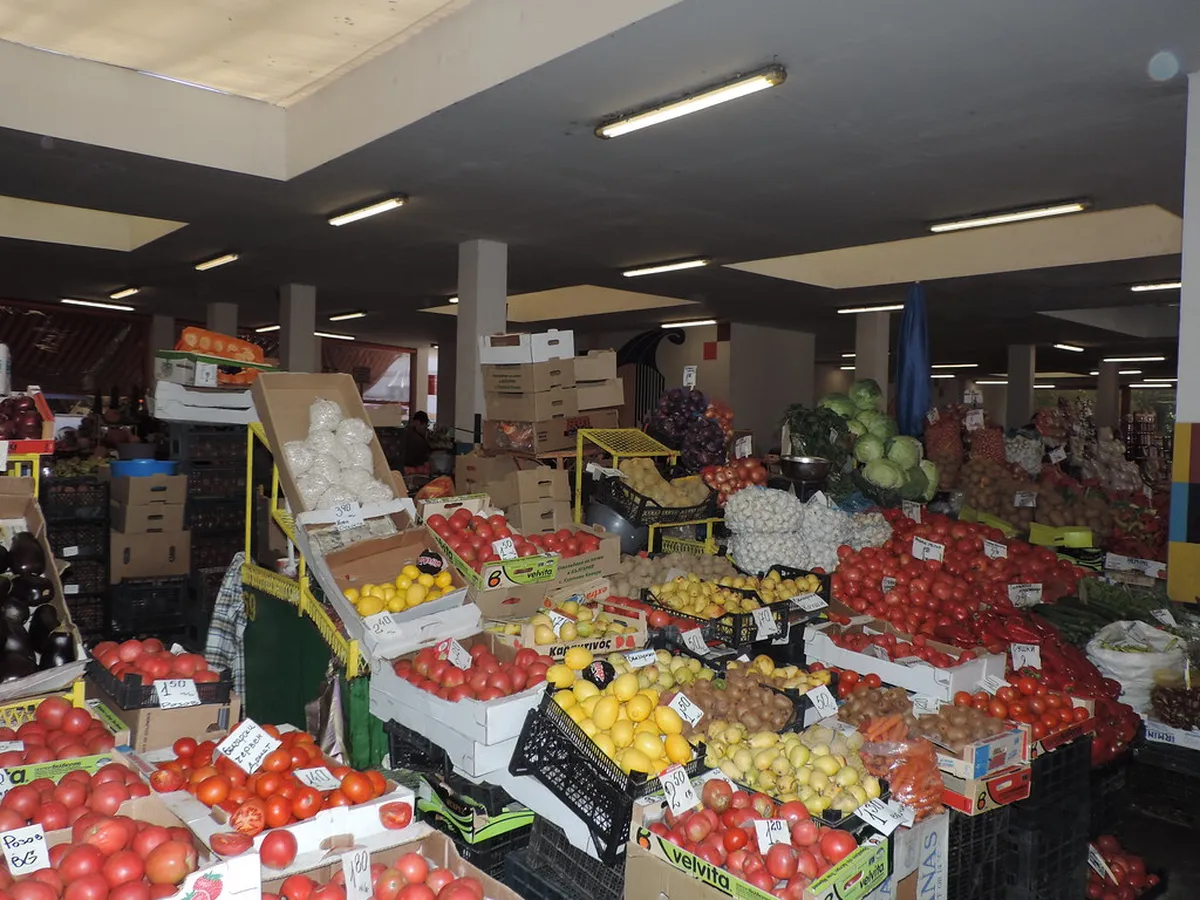
The walk covers roughly three hours at a relaxed pace. You begin at Thursday Market, the historic open-air market that has traded in this spot for centuries, where your guide runs a fun quiz while you learn the market's origins. From there the route moves through Old Plovdiv and Kapana, with multiple stops for tastings and cultural explanations along the way.
Private tours are available on other days and times by contacting the organizers in advance. If you have dietary restrictions — vegetarian, vegan, or food allergies — flag them when booking. The group-size limit means spots fill fast in summer; reserve at least a few days ahead. Cancellation is free up to 24 hours before the scheduled start.
A Bulgarian food and culture tour in Plovdiv of this format typically costs between BGN 50–80 per person, though prices vary by operator. The fee covers all tastings. You do not need to eat beforehand — portions are generous and the pace gives your appetite time to recover between stops.
For a sense of what these stops look and taste like in person, this walk-through of a Plovdiv food tour follows the route through the markets and tasting stops:
What You Taste on a Plovdiv Food Tour
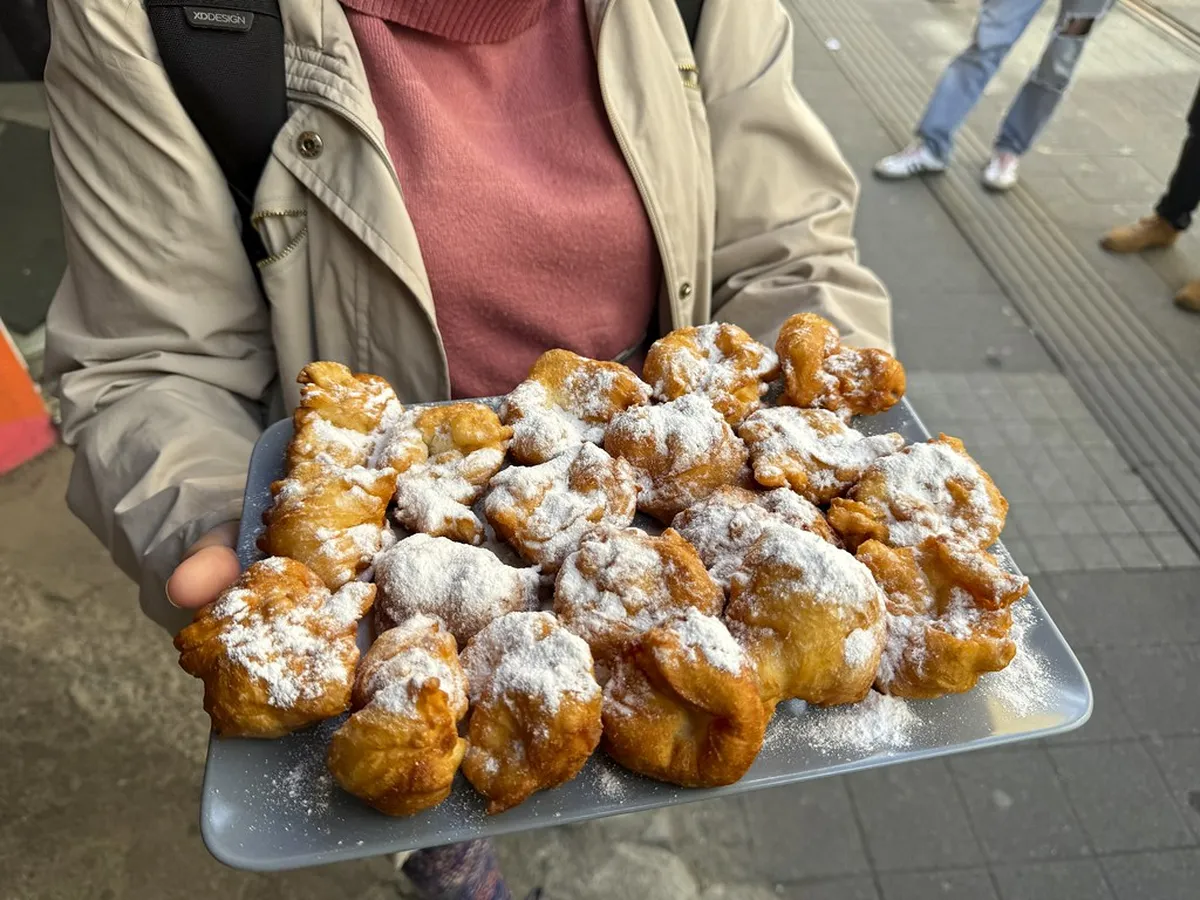
Most guided food walks in Plovdiv include 10–12 distinct tastings. The lineup changes slightly by season, but a core group of dishes appears on almost every tour. Banitsa — flaky pastry filled with white sirene cheese — is the Bulgarian national breakfast, and you will almost certainly eat one warm from a local bakery. Mekitsa, a soft fried dough dusted with powdered sugar or drizzled with honey, is its close companion and makes an excellent morning stop.
Traditional sausage (lukanka or sudzhuk, cured and air-dried), Bulgarian spreads like kyopolou (roasted aubergine and pepper), and fresh vegetables with white brined cheese appear as a midday tasting. Halva and oriental sweets complete the dessert arc. Tarator — cold yogurt and cucumber soup — shows up on summer tours as a palate cleanser.
One tasting that surprises most visitors is the honey stop at what the guides call "the most photogenic shop under the hills." You try multiple varietal honeys, learn about Bulgaria's beekeeping traditions, and pick up gifts. The other moment that stands out is the *hamkane* segment — an old Bulgarian folk custom where you bite into a hanging sweet without using your hands, connecting you to a village tradition that almost nobody outside Bulgaria has heard of.
The tour also includes aromatic Mursalski tea, sourced from the Rhodope Mountains and associated with the long lives of the mountain villagers who drink it daily. A coffee break in Old Plovdiv is built into the itinerary. Explore the full picture of Plovdiv food and drinks to plan your meals around the tour.
| Breakfast / morning | Banitsa (flaky pastry with white sirene cheese) and mekitsa (fried dough with sugar or honey) |
| Savoury midday | Cured sausage (lukanka or sudzhuk), kyopolou spread, fresh vegetables with white brined cheese |
| Summer palate cleanser | Tarator — cold yogurt and cucumber soup |
| Dessert | Halva and oriental sweets, plus the hanging-sweet hamkane custom |
| Drinks | Mursalski tea from the Rhodope Mountains and a coffee break in Old Plovdiv |
| Specialty stop | Varietal honey tasting at "the most photogenic shop under the hills" |
Kapana: The Creative Quarter You Eat and Drink Through
Kapana translates roughly as "trap" in Bulgarian — not because it is unsafe but because its tightly woven, angled streets make it feel like a maze you can not quite escape once you have settled in. During the communist era it was used as a car park. After Plovdiv was named European Capital of Culture in 2019, the neighbourhood was pedestrianized and rapidly became the liveliest part of the city.
By day, Kapana runs on coffee and lunch. By evening it shifts to wine bars, craft beer spots, and small restaurants where menus lean toward Bulgarian-Mediterranean crossovers rather than traditional mehana food. Most guided food tours pass through Kapana at least once. If you are self-guiding, the Kapana area is bounded by Knyaz Alexander Batenberg Street to the north and Rayko Daskalov to the east — you can walk its entire footprint in 20 minutes, though you will almost certainly stop several times.
The pedestrian zone also hosts a rotating schedule of street art markets and open-air events, especially on weekend afternoons in spring and summer. If your food tour ends in Kapana, plan an extra hour before dinner to browse. The galleries and the independent food stalls are part of the same ecosystem that makes the neighbourhood worth lingering in.
💡 Good to know: The Food Walk caps groups at 10 people and only runs Friday and Saturday at 10:00 from the Unification Square monument, so summer spots fill fast — reserve at least a few days ahead. Cancellation is free up to 24 hours before the start, and you can flag vegetarian, vegan, or allergy needs when booking.
Plovdiv is the Oldest Inhabited City in Europe
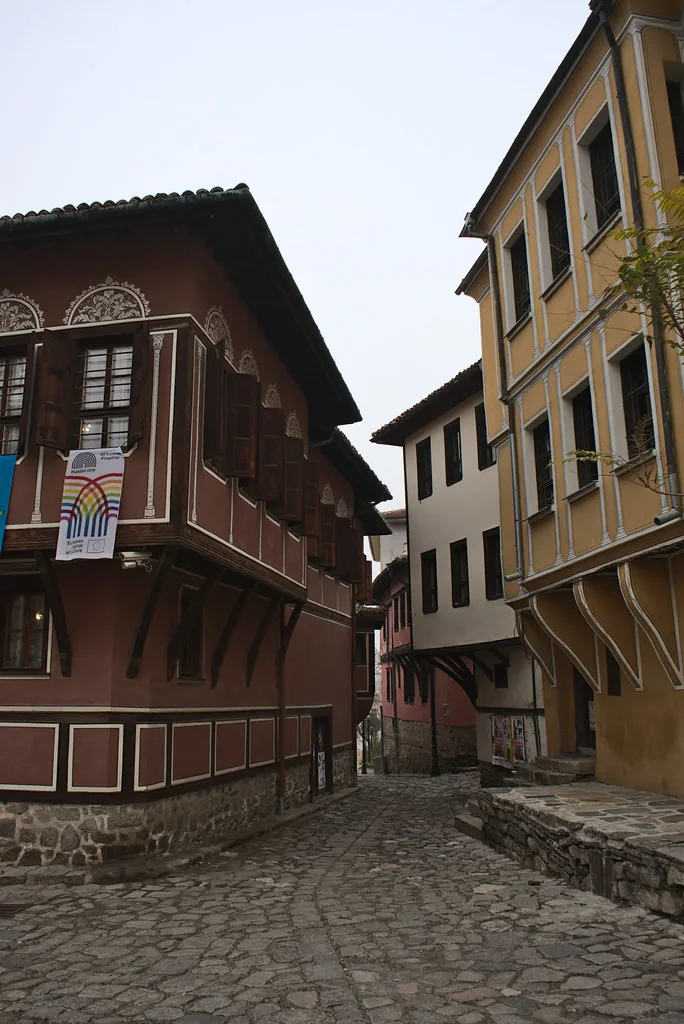
Plovdiv's history spans more than 8,000 years, making it the oldest continuously inhabited city in Europe and the sixth-oldest in the world. What makes this relevant to a food tour — and not just a history lecture — is that you can see the layering as you walk. The main pedestrian street has a Roman amphitheatre visible underground through glass panels. An Ottoman mosque stands at the entrance to the Kapana quarter. Bulgarian Revival-era wooden houses with their characteristic overhanging upper floors frame the Old Town lanes where you stop for coffee.
Plovdiv's food traditions carry this same layering. Bulgarian cheeses and yogurt culture predate the Ottoman period. Stuffed peppers, baklava, and strong black coffee entered the kitchen during 500 years of Ottoman rule. Post-liberation Bulgaria introduced grape-based spirits like rakia alongside its own distinctive cured meats. A food tour that connects those historical dots gives you a framework that makes every dish make sense.
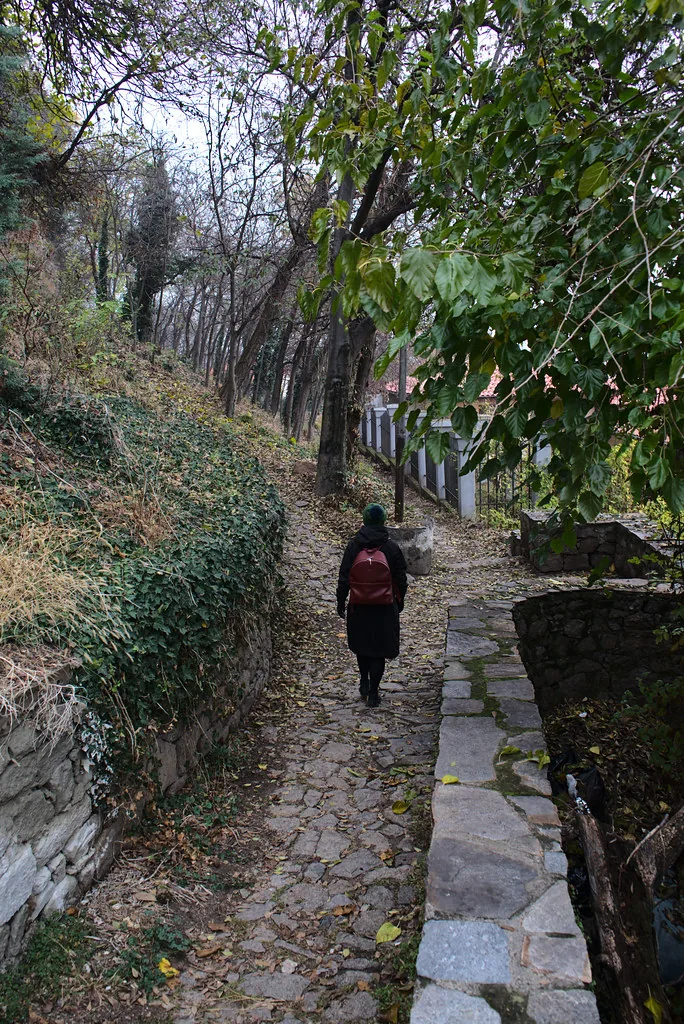
Understanding the city's age also explains why the Old Town has survived in such good condition. Much of it is protected as a UNESCO heritage zone. The cobblestone streets and timber-framed houses you walk through during a food tour are genuinely 200 years old, not a reconstruction. The cats are a bonus — Old Town is well known for its resident feline population, and you will encounter them at most outdoor seating spots.
Best Restaurants in Plovdiv
A food tour covers tastings, not a full sit-down meal. You will almost certainly want dinner on your own afterward. In Kapana, Pavaj offers a local Bulgarian menu at mid-range prices and fills up quickly on weekends — arrive before 19:00 or book ahead. Rahat Tepe, up in the Old Town, leans slightly more toward tourists but earns its reputation for panoramic views and straightforward Bulgarian cooking. Supa Bar on the main pedestrian strip runs outstanding soups at lunch — cheap, fast, and filling.
For something less traditional, Street Chefs Plovdiv is widely cited as the best burger in town and draws a young, local crowd. 15 Best Restaurants in Plovdiv covers these and more options if you want a full evening itinerary sorted before you arrive.
Best Bars and Coffee Shops in Plovdiv
Kapana is the natural base for drinks after a food tour. Local Beer Bar, Kotka i Mishka (Cat and Mouse Beer Bar), and Baba Yaga — run by a French owner and popular with international visitors — are the most recommended spots for craft beer and relaxed evening drinking. Bar Petnoto is a quieter wine bar for something slower. Satori Magic, in Old Town, doubles as a quirky cafe and bar with a distinctive atmosphere.
For coffee during the day, Dwell Coffee House is a family-run roastery with good single-origin espresso and a loyal local following. The Family Coffee Roasters is another well-regarded option. Kapana as a whole is dense with independent cafes, so you can browse and choose based on the vibe of the moment. Discover more at 12 Best Coffee Shops in Plovdiv 2026 for a full list of top picks.
One practical note: most bars in Plovdiv stay open until midnight or 01:00 on weekdays and later on weekends. The public bus network shuts down around 21:00, so if you are not within walking distance of your accommodation, budget for a taxi home. Taxis run on the meter and are reasonably priced; the app Taxi.Me works well for ordering one when you cannot flag one on the street.
How to Get Around Plovdiv
Plovdiv's city centre is genuinely walkable. You can cross from one side to the other in 15–20 minutes on foot, and almost everything relevant to a food tour — Old Town, Kapana, Thursday Market, Tsar Simeon Park — sits within a 10-minute walk of the main pedestrian street. Comfortable shoes matter more than any transport plan for the food walk itself; the cobblestone streets in Old Town are uneven.
If you are staying outside the centre, city buses cover most neighbourhoods and cost BGN 1 per ride. Do not buy from the driver — a ticket seller walks the bus after departure. Use Moovit rather than Google Maps for live schedules. Buses stop running around 21:00, after which taxis are the practical option. Flagging one on a main road like Tsar Boris III Obedinitel usually works; Taxi.Me is the app alternative.
Getting to Plovdiv from Sofia is straightforward. The train takes about 2.5 hours and costs around BGN 9; Bulgarian trains run on fixed pricing regardless of when you book. The bus via Busbud takes roughly 2 hours and is slightly cheaper. Plovdiv's own airport is small, with only 3–4 daily flights; a taxi from the airport to the centre runs about BGN 35, or you can take the shuttle bus for BGN 10 per person.
💡 Good to know: City buses cost BGN 1 per ride, but pay the ticket seller who walks the bus after departure — not the driver — and use Moovit rather than Google Maps for live schedules. Buses stop around 21:00, so for a late night in Kapana budget for a metered taxi; the Taxi.Me app is the reliable way to order one.
Where to Stay in Plovdiv
Staying close to Old Town is the practical choice if a food tour is a priority. You can walk to the tour meeting point at Unification Square in under 10 minutes, reach Kapana for dinner in 5, and explore the amphitheatre and hilltop viewpoints without needing transport at all. Hostel Old Plovdiv is well-placed in Old Town and comes with consistently strong reviews; it offers both dorms and private rooms and includes free homemade lemonade, which sounds minor but is genuinely a nice touch after a warm day walking the hills.
For a higher budget, boutique hotels in renovated Revival-era buildings in Old Town put you inside a UNESCO-protected neighbourhood. Hotel Gallery 37, a short walk from the amphitheatre, is one of the better-known options in that bracket. Even if you stay slightly outside the centre, no accommodation in Plovdiv proper puts you more than a 15-minute bus ride from the food tour starting point.
Self-Guided Food Walk vs Guided Tour
A guided food tour earns its price through context, not just calories. The stories behind hamkane, the history of Thursday Market, the difference between a village banitsa and a city-bakery banitsa — these are things you will not get from a restaurant menu. If you are in Plovdiv for two days or fewer, a guided tour is the fastest way to orient yourself around both the food and the city's layout.
Self-guided eating is better suited to visitors spending three or more days in the city who want to eat at their own pace and budget. The practical route: start the morning at a bakery in Kapana for banitsa and coffee, visit the Thursday Market (held every Thursday morning on Sahat Tepe hill) for seasonal produce and local interaction, eat lunch at a mehana in Old Town, and end the evening in Kapana with drinks. You cover most of the same ground as a guided tour but at your own speed and for significantly less money.
The main trade-off is depth. Plovdiv's culinary history is genuinely interesting — the guided format turns a walk into a lesson. For first-time visitors, the guided route almost always delivers more value for a half-day investment. For repeat visitors or independent travellers with time to research, the self-guided approach rewards patience.
Explore More Cities in Bulgaria
Plovdiv sits in central southern Bulgaria and connects naturally with several day trips and onward journeys. Asenovgrad, 20 minutes away by train for BGN 1.50, is a small town set against Asenovgrad Fort — a medieval fortress perched above a gorge. Admission is BGN 8 for adults; you can see most of the fort from outside for free if budget is tight. The Rhodope Mountains begin just south of here and are worth at least a day of exploration.
Sofia is the logical next stop: 2 hours by bus or 2.5 hours by train, and sharply different in character — larger, grittier, with a more diverse food scene and stronger nightlife. Veliko Tarnovo to the north makes an excellent companion to Plovdiv for anyone interested in Bulgarian medieval history. The Black Sea coast — Varna or Burgas — is a natural extension for summer travellers. Find more travel ideas on the Tours Bulgaria blog, and consider adding a 9 Best Plovdiv Wineries Day Trip Stops into the Thracian Valley as a half-day extension to your food itinerary.
Continue planning: Use Best Things to Do in Plovdiv to connect this guide with the rest of your Bulgaria itinerary.
Continue planning: Use Ancient Theatre Plovdiv 2026: Tickets, Events & History to connect this guide with the rest of your Bulgaria itinerary.
Frequently Asked Questions
Which Plovdiv food tour options fit first-time visitors?
First-time visitors should choose a comprehensive Plovdiv food tour that covers a range of traditional Bulgarian dishes. Look for tours that include stops at local markets and explain culinary history. These often provide a great introduction to the city's gastronomic scene. A walking tour combining food and cultural insights is ideal.
How much time should you plan for a Plovdiv food tour?
Most Plovdiv food tours last between three and four hours. This duration allows for multiple tasting stops and provides enough time for explanations from your guide. Plan for half a day to fully enjoy the experience without feeling rushed. It ensures a leisurely and immersive culinary journey.
What should travelers avoid when planning a Plovdiv food tour?
Travelers should avoid booking tours without checking reviews or cancellation policies. Do not overeat before your tour, as tastings can be substantial. Also, avoid tours that do not clearly list their inclusions. Always verify meeting points, such as near Plovdiv City Hall, and confirm dietary accommodations in advance.
Is a Plovdiv food tour worth including on a short itinerary?
Yes, a Plovdiv food tour is definitely worth including even on a short itinerary. It offers an efficient way to experience local culture and cuisine in a limited time. You get to sample many dishes and learn about the city's heritage quickly. It provides a memorable and flavorful highlight to any brief visit.
Which Must-See Plovdiv Attractions options fit first-time visitors?
First-time visitors to Plovdiv should prioritize the Ancient Roman Theatre and a stroll through the Old Town. These iconic sites offer a fantastic introduction to the city's history and charm. Also, consider climbing Nebet Tepe Visitor Guide for panoramic views. These attractions provide a well-rounded experience.
A Plovdiv food tour is one of the most efficient ways to understand Bulgaria from the ground up. You cover history, culture, and neighborhood geography in three hours, and you eat well doing it. Whether you book a guided walk or piece together your own route through Kapana and Old Town, the food is a genuine entry point into the city's character.
Plan around the Friday and Saturday Food Walk schedule if you want the guided format, book at least a few days ahead in summer, and leave the evening free for Kapana. Plovdiv rewards slow, unhurried exploration — and the food is a very good reason to slow down.