What Language Do They Speak in Bulgaria?
Planning a trip to Bulgaria involves understanding its rich culture and communication styles.
Many travelers wonder: what language do they speak in Bulgaria, and how will I get by day to day?
Bulgarian is the official language, written in the Cyrillic alphabet — a script that Bulgaria itself gave to the world.
This guide covers everything you need: the official language and its history, minority tongues, where English works and where it won't, essential survival phrases with phonetic spellings, and the one Cyrillic trick that makes navigating smaller towns far less daunting.
To help you get started with pronunciation, here are four essential Bulgarian words explained by a native speaker:
The Official Language: Bulgarian
Bulgarian is the official language of the Republic of Bulgaria and is spoken by roughly 77% of the population — around 5.4 million people inside the country, with another 2 million speakers in diaspora communities across Europe, North America, and Ukraine.
It belongs to the South Slavic branch of the Indo-European family, closely related to Macedonian and Serbian. Unlike other Slavic languages, Bulgarian has no noun cases — it dropped them during the medieval period — which actually makes its grammar somewhat easier for English speakers to approach compared to Russian or Polish.
The language has evolved through three distinct periods: Old Bulgarian (9th–11th century), Middle Bulgarian (12th–15th century), and Modern Bulgarian from the 16th century onward. The modern literary standard crystallised after Bulgaria gained independence from Ottoman rule in 1878, drawing on the northeastern dialect spoken around Tarnovo.
One feature worth knowing: Bulgarian uses a rare verb form called the "renarrative mood," which speakers use specifically when reporting something they did not witness personally. It is a grammatical signal that essentially means "apparently" or "so I've heard." You won't need to use it, but locals find it charming if you recognise it.
Bulgaria Invented the Cyrillic Alphabet
This is one of the most important cultural facts to know before you arrive. The Cyrillic script was created in the 9th century in the First Bulgarian Empire by Saints Cyril and Methodius, two brothers from Thessaloniki who were commissioned to create a writing system for the Slavic peoples. Bulgaria was the first Slavic nation to adopt it, and from Bulgaria it spread to Serbia, Russia, Ukraine, and beyond. Omniglot's Cyrillic guide provides detailed historical and linguistic context for this alphabet.
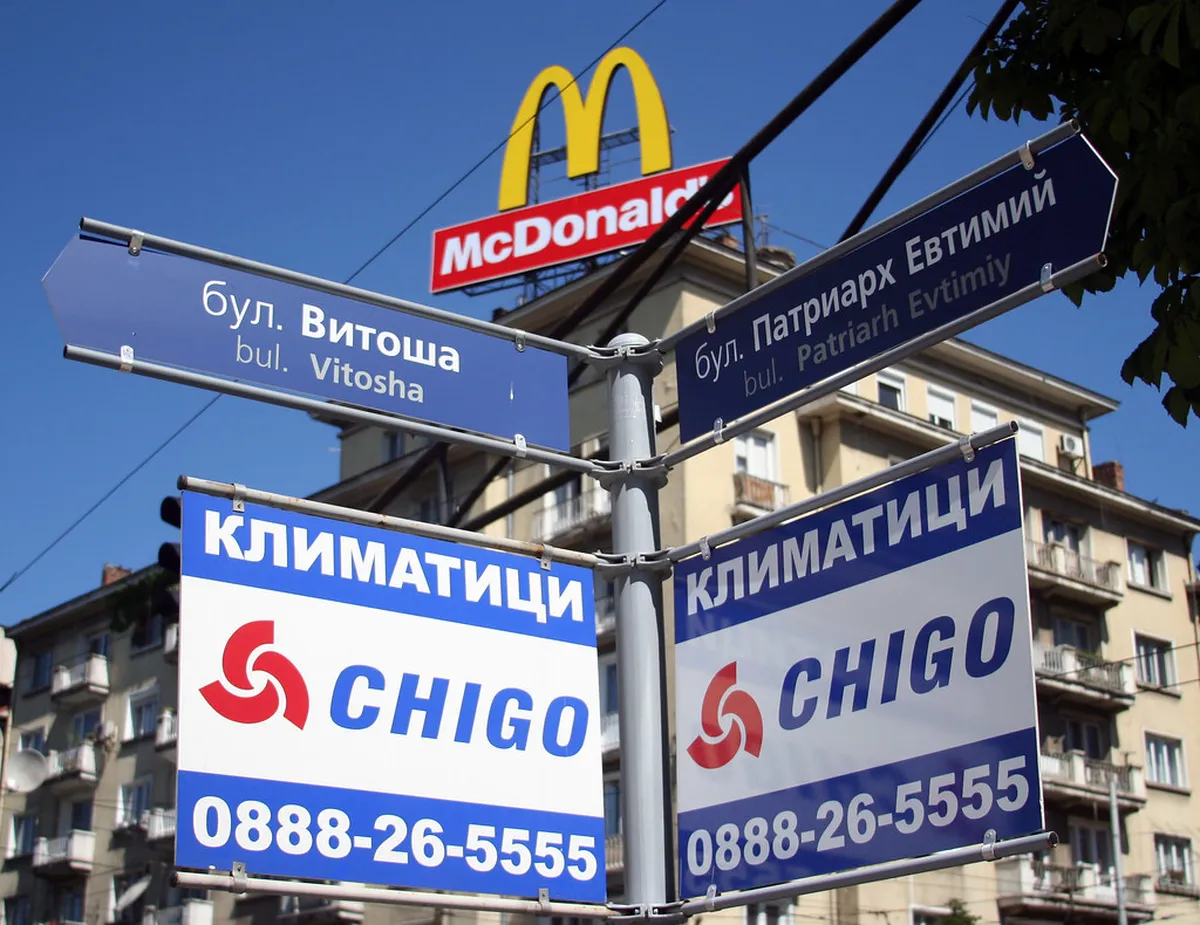
Today Bulgaria is the only European Union member state that uses Cyrillic as its official alphabet, and the script officially became the third alphabet of the EU when Bulgaria joined in 2007. Britannica's Cyrillic article covers the alphabet's history and modern usage across Slavic languages. Bulgarians take quiet pride in this fact — it is worth mentioning if you want to make a good impression with a local.
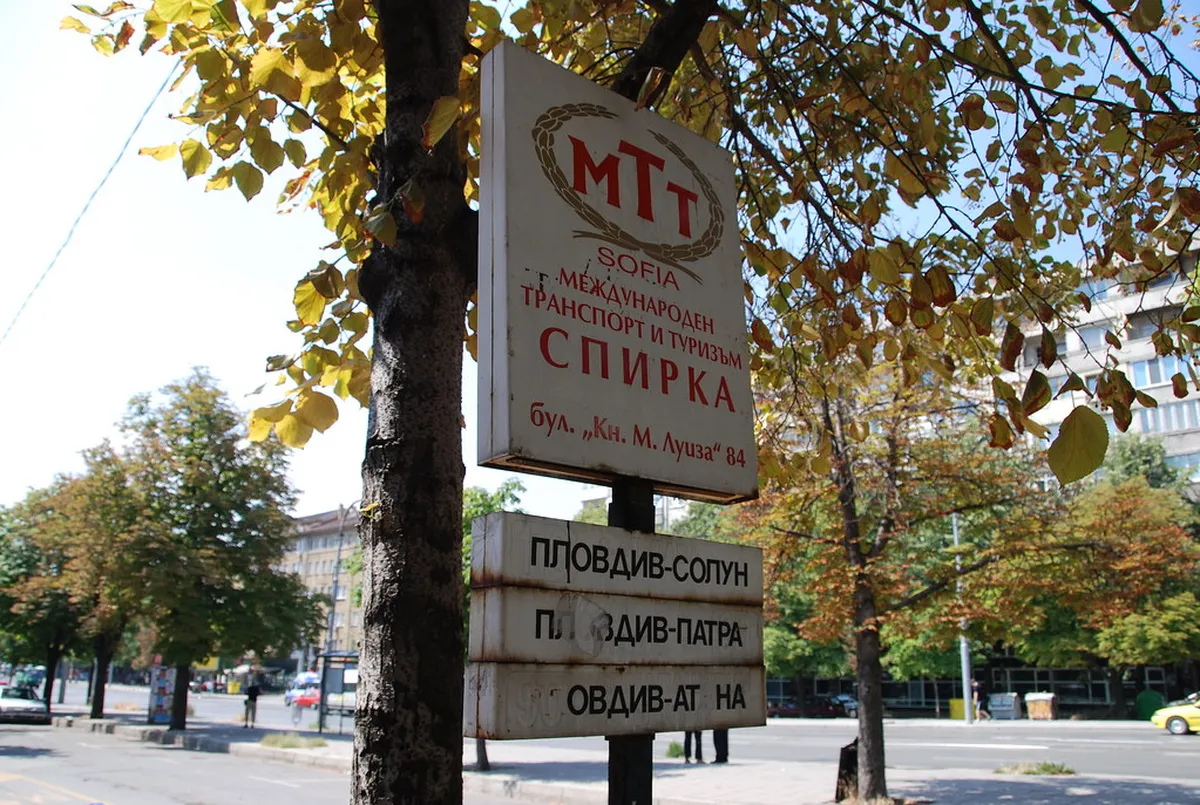
For travelers, Cyrillic is less daunting than it looks. Many letters are phonetically close to their Latin counterparts (А = A, Е = E, О = O, М = M, Т = T). Learning to recognise just six letters — А, Е, О, С, Т, Н — lets you sound out a surprising number of Bulgarian place names on street signs and bus stops. Sofia's metro stations and the main coastal resorts display both Cyrillic and Latin script, but smaller towns and rural bus stops often use Cyrillic only. Twenty minutes with a Cyrillic chart before your trip is twenty minutes very well spent.
Minority Languages in Bulgaria
Beyond Bulgarian, several minority languages are actively spoken across the country. Turkish is the most significant, used by approximately 9% of the population — around 845,000 people — concentrated in the Kardzhali Province in southern Bulgaria, along the Danube river belt, and in parts of eastern Bulgaria. This linguistic presence directly reflects the Ottoman Empire's four-century rule, which ended in 1878.
Romani is spoken by the Roma community and represents roughly 2% of the population. The Roma have maintained their language across generations despite significant social and economic pressures. Romani belongs to the Indo-Aryan branch of Indo-European languages, making it linguistically unrelated to Bulgarian — it has roots in northern India.
Macedonian is spoken by a smaller number of people in the southwestern Pirin region near the North Macedonia border. Whether Macedonian constitutes a distinct language or a dialect of Bulgarian remains a politically sensitive question in Bulgaria — it is wise to avoid raising this debate with locals. Other minority languages present in smaller numbers include Aromanian, Gagauz, and Armenian, each tied to specific historical migration patterns.
Foreign Languages Spoken in Bulgaria
Three foreign languages matter most for understanding Bulgaria's linguistic landscape: Russian, English, and German. They each tell a distinct story about the country's history.
Russian holds a special position because of shared Slavic heritage and the communist era (1944–1989), when Russian was compulsory in schools. Many Bulgarians over 50 speak Russian fluently or near-fluently. In some rural areas and among older residents, Russian is more useful than English. If you speak even basic Russian, it will open doors that English cannot.
German has gained ground through Bulgaria's close trade relationship with Germany and the large number of Bulgarians who live or work in German-speaking countries. It is the second most studied foreign language in Bulgarian universities after English, and you will encounter German speakers readily in the business and education sectors.
English is now the dominant foreign language among younger Bulgarians, driven by school curricula, streaming services, social media, and EU membership. Bulgaria's integration into the European Union has made English proficiency an economic necessity for the under-40 generation.
English Language Proficiency in Bulgaria
English proficiency in Bulgaria follows a clear geographic and demographic pattern. In Sofia, Plovdiv, Varna, and Burgas, and especially in the major coastal resorts — Sunny Beach, Golden Sands, Albena — you will find strong English coverage. Hotel staff, tour operators, and restaurant workers at tourist-facing businesses almost universally speak English. The same applies to major attractions and transport hubs.
Younger Bulgarians under 40 generally have functional to good English, learned in school from around age seven and reinforced by English-language internet content. Bulgarians who studied at university or have worked abroad often speak very good English.
The picture changes significantly once you leave the main corridors. In smaller towns, villages, and rural areas, English is uncommon among people over 50. This is where basic Bulgarian phrases and a translation app earn their keep. Google Translate's camera mode handles Cyrillic menus and signs reliably in 2026 — download the Bulgarian offline pack before you travel so it works without data.
For more practical travel preparation, see our guide on Bulgaria Travel Tips: Your Essential Guide to Planning a Trip covering transport, money, and safety basics.
English is widely spoken in Sofia, Plovdiv, Varna, and the major coastal resorts like Sunny Beach and Golden Sands. Hotel staff, tour operators, and restaurant workers at tourist-facing businesses almost universally speak English. Younger Bulgarians under 40 generally have functional to good English learned in school and reinforced by English-language internet content.
Regional Dialects and Variations
Bulgarian divides broadly into Eastern and Western dialect groups. Eastern dialects — spoken in regions around Varna, Burgas, and Veliko Tarnovo — are characterised by the pronunciation of the old Slavic vowel "yat" as "ya" in stressed position and "e" in unstressed position. Western dialects — found around Sofia, Plovdiv, and Kyustendil — preserve different consonant clusters and treat that same vowel differently.
In practice, these differences in pronunciation and a handful of vocabulary items are the main variation you will notice. Standard Bulgarian is taught in schools and used in all broadcast media, so every Bulgarian speaker understands it regardless of regional background. Travelers will not encounter comprehension problems due to dialects — the variation is roughly comparable to regional accents in English.
Language in Education in Bulgaria
Bulgarian is the language of instruction at every level of the state education system. Foreign language teaching starts in primary school, typically from Year 2 or 3 (age 7–8), with English as the standard first choice. By secondary school, most students study two foreign languages.
The curriculum also offers German, French, Russian, and Spanish. Some regions with significant Turkish-speaking populations provide supplementary instruction in Turkish. Higher education increasingly offers courses and entire programmes in English to attract international students from across the EU and beyond.
For foreigners who want to study Bulgarian, the Sofia University "St. Kliment Ohridski" runs summer intensive courses, and the Bulgarian Cultural Institute in London offers regular language classes. Several online platforms — including iTalki and Pimsleur — offer Bulgarian, though course depth is more limited than for major European languages.
Impact of Migration and Globalization on Bulgarian
Bulgaria has experienced significant emigration since the 1990s, with large diaspora communities established in Germany, Spain, the UK, the United States, and Canada. These returnees and remittance-senders bring back linguistic influences — English, German, and Spanish loanwords now surface regularly in everyday Bulgarian conversation, particularly in technology, fashion, and business vocabulary.
Expatriate communities have settled in Sofia and the Black Sea coast, contributing to the multilingual environment in those areas. English is effectively a lingua franca in Sofia's startup and tech districts. Meanwhile, Bulgarian diaspora communities abroad maintain cultural centres and Saturday language schools to preserve the language for second-generation children.
Language purists and the Bulgarian Academy of Sciences periodically push back against excessive foreign borrowing, but the practical reality is that Bulgarian is a living language adapting to 21st-century conditions, as it has always done.
Media, Entertainment, and Language Change
Most Bulgarian television and radio content is in Bulgarian. Foreign films and international TV series are subtitled rather than dubbed — a significant detail for language learners, since Bulgarians hear the original English, French, or Spanish audio while reading Bulgarian subtitles. This subtitling norm (shared with Scandinavia and the Netherlands) is widely credited with lifting English proficiency among younger generations faster than in countries that dub everything.
Online media and streaming services have accelerated English penetration further. YouTube, Netflix, and social media platforms are predominantly consumed in English by under-30 Bulgarians, even when Bulgarian content is available. This generational shift is visible in language: the Bulgarian spoken by people under 25 contains noticeably more English-derived slang and loanwords than older speech registers.
Essential Bulgarian Phrases for Travelers
Learning a handful of Bulgarian phrases will noticeably warm your interactions with locals, especially outside the main tourist areas. Pair them with our etiquette and tipping guide so the words land the way you intend. Pronunciation tip: stress in Bulgarian often falls on the last syllable of a word, and the letter "a" is always a pure "ah" sound — never the English "ay."
- Hello (informal): Zdravei (zdra-VEY)
- Hello (formal / to a group): Zdraveyte (zdra-VEY-teh)
- Good morning: Dobro utro (DOH-broh OO-troh)
- Good evening: Dobar vecher (DOH-bar VEH-cher)
- Goodbye: Dovijdane (doh-VIZH-da-neh)
- Please: Molya (MOH-lya)
- Thank you: Blagodarya (bla-go-da-RYA)
- Yes: Da (da)
- No: Ne (neh)
- Excuse me / Sorry: Izvinete (iz-vi-NEH-teh)
- Do you speak English?: Govorite li angliyski? (go-vo-RI-teh lee an-GLIY-ski)
- I don't understand: Ne razbiram (neh raz-BI-ram)
- Where is…?: Kade e…? (ka-DEH eh)
- How much does this cost?: Kolko struva? (KOL-koh STROO-va)
- The bill, please: Smetkata, molya (SMET-ka-ta, MOH-lya)
- Water: Voda (VOH-da)
- Delicious: Vkusno (VKOOS-noh)
- Help!: Pomosht! (POH-mosht)
One phrase worth memorising above all others is "Govorite li angliyski?" — even if the answer is no, asking it politely in Bulgarian signals respect and usually produces a warmer response than launching straight into English. At markets, restaurants, and transport counters off the main tourist trail, this single phrase changes the dynamic of the interaction.
| English | Bulgarian | Pronunciation |
|---|---|---|
| Hello | Zdraveyte | zdra-VEY-teh |
| Thank you | Blagodarya | bla-go-da-RYA |
| Yes | Da | da |
| No | Ne | neh |
| How much does this cost? | Kolko struva? | KOL-koh STROO-va |
| Where is…? | Kade e…? | ka-DEH eh |
| Help! | Pomosht! | POH-mosht |
| Please | Molya | MOH-lya |
Cultural Nuances of Bulgarian Communication
Beyond spoken words, understanding Bulgarian non-verbal communication is essential — and one detail trips up virtually every first-time visitor. In Bulgaria, a single nod of the head up and down means "no," while shaking the head side to side means "yes." This is the reverse of the convention in most Western countries. Bulgarians are aware that foreigners find this confusing, and in tourist areas many will consciously switch to the Western convention when speaking English — but not always. When in doubt, confirm verbally with "Da?" (yes?) or "Ne?" (no?).
Formality matters more in Bulgaria than in many Western cultures. Address adults you do not know well with the formal second-person plural "Vie" (Вие) rather than the informal "ti" (ти). Using someone's first name without invitation can come across as overly familiar. In shops and offices, a brief "Dobur den" (good day) when entering is standard and appreciated.
Direct eye contact during conversation is considered a sign of honesty and confidence — unlike in some East Asian cultures, avoiding eye contact in Bulgaria can read as shifty or disrespectful. Bulgarians tend toward directness in business conversations and may be blunter than Western Europeans, but this should not be mistaken for rudeness.
For a full breakdown of Bulgarian social customs and tipping conventions, see our dedicated guide on Bulgaria etiquette and customs.
A single nod of the head up and down means "no," while shaking the head side to side means "yes" — the reverse of Western convention. Confirm verbally with "Da?" (yes?) or "Ne?" (no?) when in doubt. Additionally, smaller towns and rural bus stops often display signs in Cyrillic only, so learning to recognise key Cyrillic letters before your trip is worthwhile.
Which Language Should You Learn for Traveling to Bulgaria?
For most English-speaking travelers on a standard tour of Sofia, Plovdiv, and the Black Sea coast, basic Bulgarian phrases plus Google Translate covers 95% of situations. English works reliably in hotels, restaurants, and tour services at the main destinations. The gap is rural travel, local markets — where a grasp of the lev and cash habits matters as much as vocabulary — and conversations with older residents — precisely where a phrasebook or offline translation app earns its place.
If you speak Russian, use it. Older Bulgarians respond very positively to Russian, and it is more widely understood among the over-50 generation than English. The languages share enough Slavic vocabulary that even halting Russian communicates goodwill.
If you are planning an extended stay, learning Bulgarian properly is worth the investment. It is not an easy language — the verb system is complex — but it opens up conversations, literature, and an entire dimension of Bulgarian culture that English simply cannot access. The Cyrillic alphabet, by contrast, can be learned to reading level in a weekend, and that alone dramatically reduces daily friction.
Continue planning: Use Bulgaria Travel Tips: Your Essential Guide to Planning a Trip and Backpacking Bulgaria: A Complete 2026 Budget Travel Guide to connect this guide with the rest of your Bulgaria itinerary.
Frequently Asked Questions
Is English widely spoken in Bulgaria?
English is increasingly spoken in Bulgaria, especially in major cities, popular tourist destinations, and among younger generations. However, proficiency may be limited in smaller towns and rural areas. It is always helpful to learn a few basic Bulgarian phrases to assist with communication.
What is the Cyrillic alphabet?
The Cyrillic alphabet is the writing system used for Bulgarian, Russian, Serbian, and several other Slavic languages. It was developed in the 9th century in the First Bulgarian Empire. It has distinct characters different from the Latin alphabet. Find more information on the languages of Bulgaria.
Are there many dialects in Bulgaria?
Yes, Bulgarian has several regional dialects, primarily divided into Eastern and Western Bulgarian groups. These dialects have minor differences in pronunciation, vocabulary, and grammar. However, standard Bulgarian is widely understood across the entire country, so travelers typically face no issues.
What are common phrases in Bulgarian for travelers?
Common phrases include 'Zdravei' (Hello), 'Blagodarya' (Thank you), 'Molya' (Please), 'Da' (Yes), and 'Ne' (No). Learning these basic expressions can greatly enhance your interactions. Locals appreciate any effort to speak their language, even if it's just a few words.
What are the main minority languages in Bulgaria?
The main minority languages spoken in Bulgaria include Turkish, Romani, Armenian, and Russian. These languages are used by various ethnic communities within the country. Their presence reflects Bulgaria's rich historical and cultural diversity.
Understanding what language they speak in Bulgaria enriches your travel experience.
Bulgarian is the official language, written in the Cyrillic alphabet that Bulgaria gave to the Slavic world in the 9th century.
You will find strong English coverage in the cities and coastal resorts, a generation of younger Bulgarians comfortable in English, and an older generation more at home in Russian.
Learn a dozen phrases, spend an hour with Cyrillic, download the offline translation pack, and you will navigate Bulgaria with confidence.