Buzludzha Monument: The Communist UFO in Bulgaria's Balkan Mountains
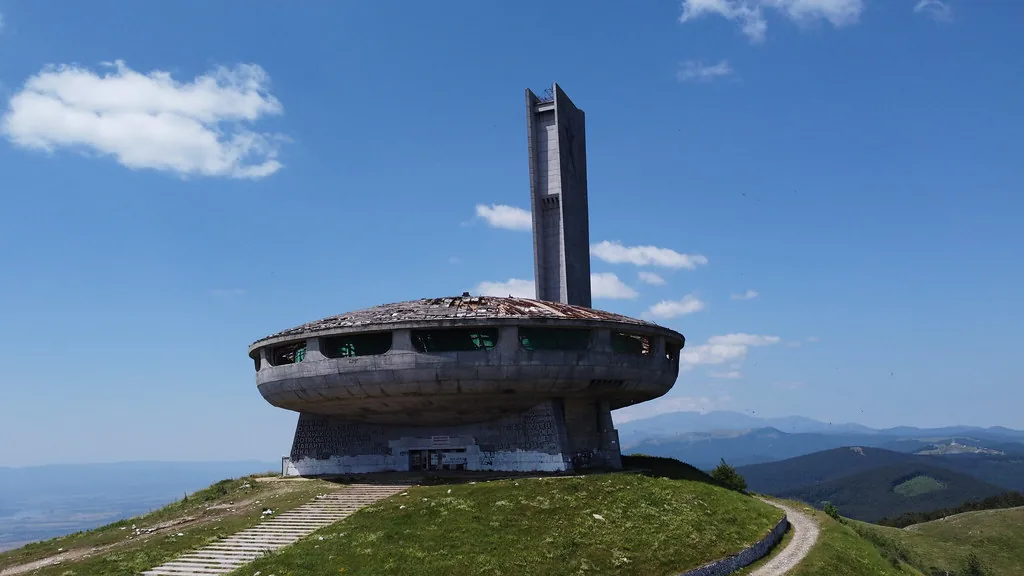
Perched at 1,441 metres on Buzludzha Peak in the Central Balkan Mountains, the Buzludzha Monument is one of the most surreal and haunting structures in all of Europe. A massive concrete disc — likened universally to a flying saucer — it was built by the Bulgarian Communist Party between 1974 and 1981 and served as the regime's grandest ideological showpiece. When communism fell in 1989, the building was abandoned overnight, and three decades of wind, snow, and neglect have transformed it into one of the continent's most photographed ruins.
In 2026, the exterior of the monument is free to visit and fully accessible year-round. The interior remains sealed for structural safety reasons despite significant conservation progress, but the exterior alone rewards the journey: the raw concrete tower, the decaying red star, and the sheer audacity of the architecture against an open Balkan sky make Buzludzha unlike anything else in Bulgaria — or anywhere else.
To experience the monument's scale and setting, here's a visual tour of the exterior:
A Monument Born from Communist Ambition
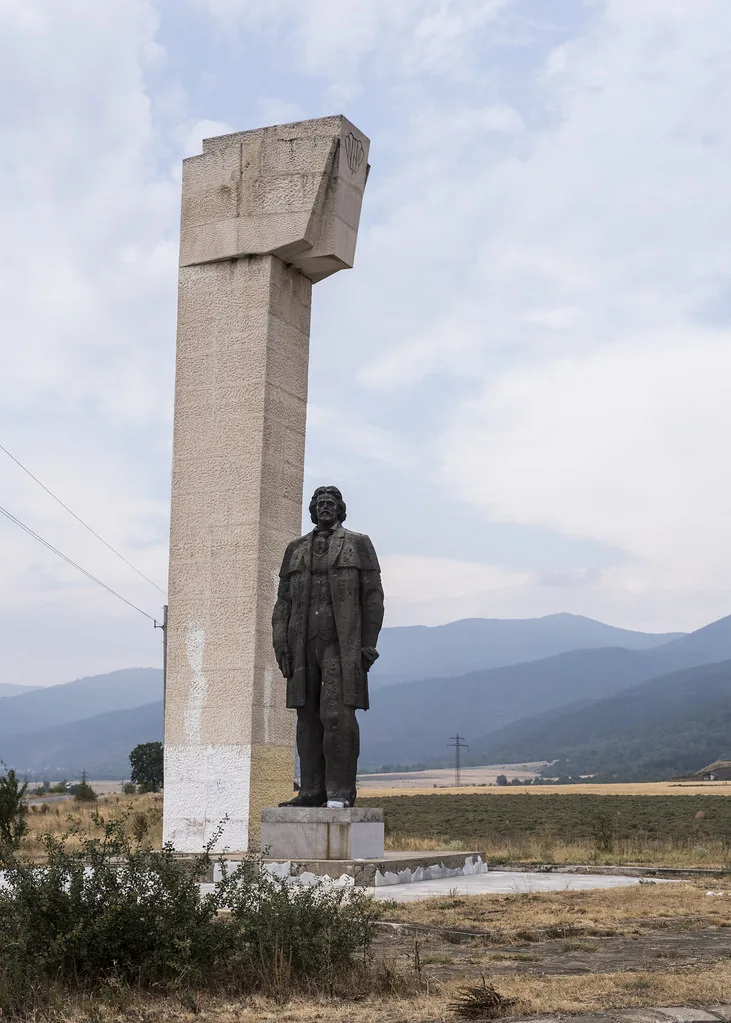
The story of Buzludzha begins not in 1981 but in 1891, when a secret socialist assembly was held on this very peak, led by Dimitar Blagoev — a gathering that preceded the founding of the Bulgarian Communist Party. The communist regime seized on this symbolism eagerly. When architect Georgi Stoilov designed the monument and construction began in 1974, the goal was nothing less than a permanent, mountain-top declaration of the party's power and permanence. The cost ran to approximately 14,186,000 leva — the equivalent of around $35 million in today's terms — and over 15,000 cubic metres of rock were removed to level the summit.
The monument was unveiled on August 23, 1981, chosen to coincide with the 1300th anniversary of the Bulgarian state. For eight years it functioned as an ideological headquarters, hosting state ceremonies and party events. Then, in November 1989, the regime collapsed. Heating was switched off, maintenance ceased, windows were stripped by scavengers for the copper frames, and the building was left to the mountain. What happened next — decades of slow, beautiful decay — created the ruin that draws visitors from across the world today.
Buzludzha is central to understanding Bulgaria's complicated relationship with its communist past, a thread explored more broadly in our guide to Bulgarian Traditions and Customs: A 2026 Guide. The monument is simultaneously a symbol of totalitarian hubris and an extraordinary feat of construction — a tension that makes it endlessly compelling.
The Architecture and the Mosaics
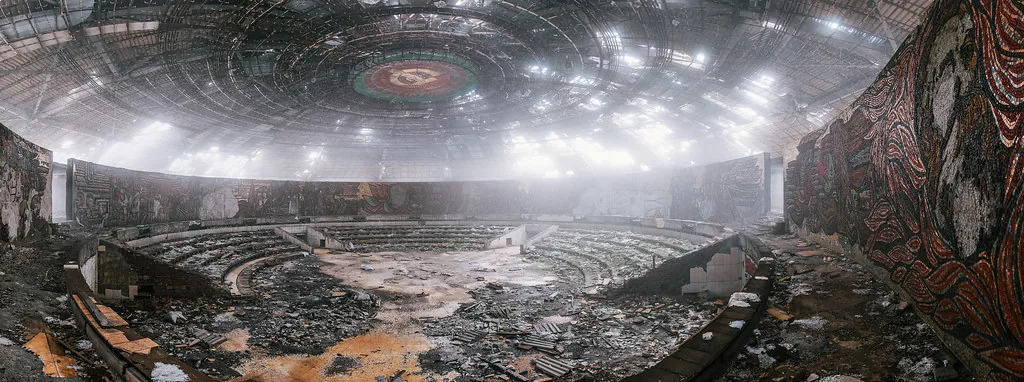
The building's form is immediately legible even from kilometres away: a huge concrete disc, roughly flying-saucer-shaped, mounted on a 70-metre concrete pylon tower. At the tower's apex, a red star — now badly deteriorated — once blazed with electric light. The disc itself contains approximately 937 square metres of interior mosaics, executed in 35 tonnes of cobalt glass. The subjects are the full visual vocabulary of socialist realism: the hammer and sickle, portraits of Marx and Lenin, fourteen corridor mosaics depicting workers and scenes from Bulgarian communist history.
Roughly one-fifth of the mosaics have been destroyed since 1989 — by weather penetrating the broken windows, by freeze-thaw cycles cracking the concrete, and by deliberate vandalism. The exterior stone mosaics that once decorated the outer walls are largely gone. What remains inside is still extraordinary by any measure, which is precisely why conservationists are working so urgently to stabilise the building before further losses occur. For now, though, those surviving mosaics are visible only through photographs — the interior is closed.
Current Access Status (2026)
This is the most important practical point to understand before visiting: the exterior is free and fully accessible; the interior is sealed and entry is strictly prohibited. There are no tickets, no admission fee, and no booking required. You drive to the summit, park, and walk freely around the base of the tower and the disc. Photography is unrestricted from the exterior.
The interior has been locked to public access for safety and structural reasons. Conservation work by the Buzludzha Project Foundation (BPF) has made substantial progress — a full Conservation Management Plan was completed in 2022, and the Getty Foundation has provided grants totalling at least $185,000 toward the effort. Europa Nostra placed the monument on its prestigious "7 Most Endangered" list, and ICOMOS Germany and Stara Zagora municipality are among the partners. The next critical milestone is funding and constructing a new roof and windows to halt ongoing water damage.
Despite all of this, bureaucratic and administrative obstacles mean that as of 2026 the interior remains sealed, and no firm reopening date has been announced. The long-term vision is to convert the monument into a Communist History Museum, but that timeline is genuinely uncertain. Visit the Buzludzha Project Foundation's official site for the most current updates before your trip.
Do not rely on older blog posts or forum comments saying the interior can be accessed via a gap or broken door. Unauthorised entry is prohibited, potentially dangerous, and harmful to the ongoing conservation effort. Respect the closure and enjoy the extraordinary exterior.
How to Get to Buzludzha Monument by Car
A private car is the only practical way to reach the monument. There is no public transport — no bus, no shuttle, and no taxi rank at the summit. If you are not driving, joining an organised guided tour from Sofia is your best alternative; group tours typically run around €20–€40 per person, while private tours can run up to €110, with a full-day round trip of roughly 11 hours from Sofia.
The recommended approach is from Kazanlak via the southern route — approximately 24 km and 30 to 40 minutes of driving. Leave Kazanlak heading north through the town of Shipka, then follow the mountain road up through Buzludzha Pass to the summit. This southern road is better maintained, stays open later into autumn, and has fewer of the extreme potholes that plague the alternative. The GPS coordinates for the monument parking area are 42°44'08.92"N, 25°23'37.86"E.
Coming from Sofia, plan for roughly 200 km and 2.5 hours to reach Kazanlak, then another 30–40 minutes up the mountain. If you are travelling from Gabrovo or Veliko Tarnovo in the north, your GPS may try to route you directly via the Shipka Pass mountain track — a road that is narrow, in poor condition (potholes, debris, limited guardrails), and frequently closed in winter. Override this routing and approach from the south via Kazanlak instead. The Buzludzha Project Foundation and local tour operators both advise against the north road.
| Approach | Distance to Monument | Driving Time | Road Condition |
|---|---|---|---|
| From Kazanlak (south, recommended) | ~24 km | 30–40 min | Paved, better maintained |
| From Sofia via Kazanlak | ~224 km total | ~3 hrs total | Motorway + mountain road |
| From Shipka Pass (north — not recommended) | ~12 km | 25–35 min | Poor; potholes, often closed in winter |
Parking at the summit is free and small — a limited number of spaces at the top, with overflow along the road. In peak summer months on weekends, arrive early. The final 2 km of road has notable potholes; a standard car handles it fine in dry summer conditions, but drive slowly and carefully. Fill your fuel tank in Kazanlak before heading up — there are no petrol stations on the mountain road.
Allow 1.5 to 2 hours total at the monument — 20 to 30 minutes of driving up from Shipka, at least an hour of walking the exterior and taking photographs, and the return descent. Factor this into your day if combining with Shipka Church and the Rose Valley (kazanlak) Visitor Guide below.
Best Time to Visit and Seasonal Conditions
Summer — June through August — is the optimal season for most visitors. Roads are fully open, weather on the peak is mild (though expect temperatures 5 to 8 degrees Celsius cooler than the valley below), and strong winds are common at 1,441 metres so a wind layer is worth carrying even on a warm day. The shoulder months of May and September offer fewer crowds and atmospheric light, but weather is more unpredictable — bring layers and check the forecast the morning you plan to go.
Winter presents a serious access risk. From roughly October through April, the final section of road to the parking area can become snowbound and impassable, with 30 to 40 cm of snowpack possible. The north road from Shipka Pass is especially unreliable in these conditions. There are no specific date-based closure announcements — conditions are weather-dependent year to year. If you are visiting in the colder months, call ahead to local tour operators or check recent visitor reports before committing to the drive.
For photography, the monument faces roughly southwest, making late afternoon and golden hour the best light on the main facade. The concrete tower and disc look spectacular in direct low sun. Fog and cloud — common in shoulder season — can produce moody, dramatic results but can also obscure the monument entirely. If you are making the journey specifically for photography, a summer golden hour or early morning visit is the most reliable choice. Drone photography is popular at the site; Bulgarian Civil Aviation Authority regulations apply near any listed heritage site, so check the current rules before flying.
Combining Buzludzha with Shipka and the Rose Valley
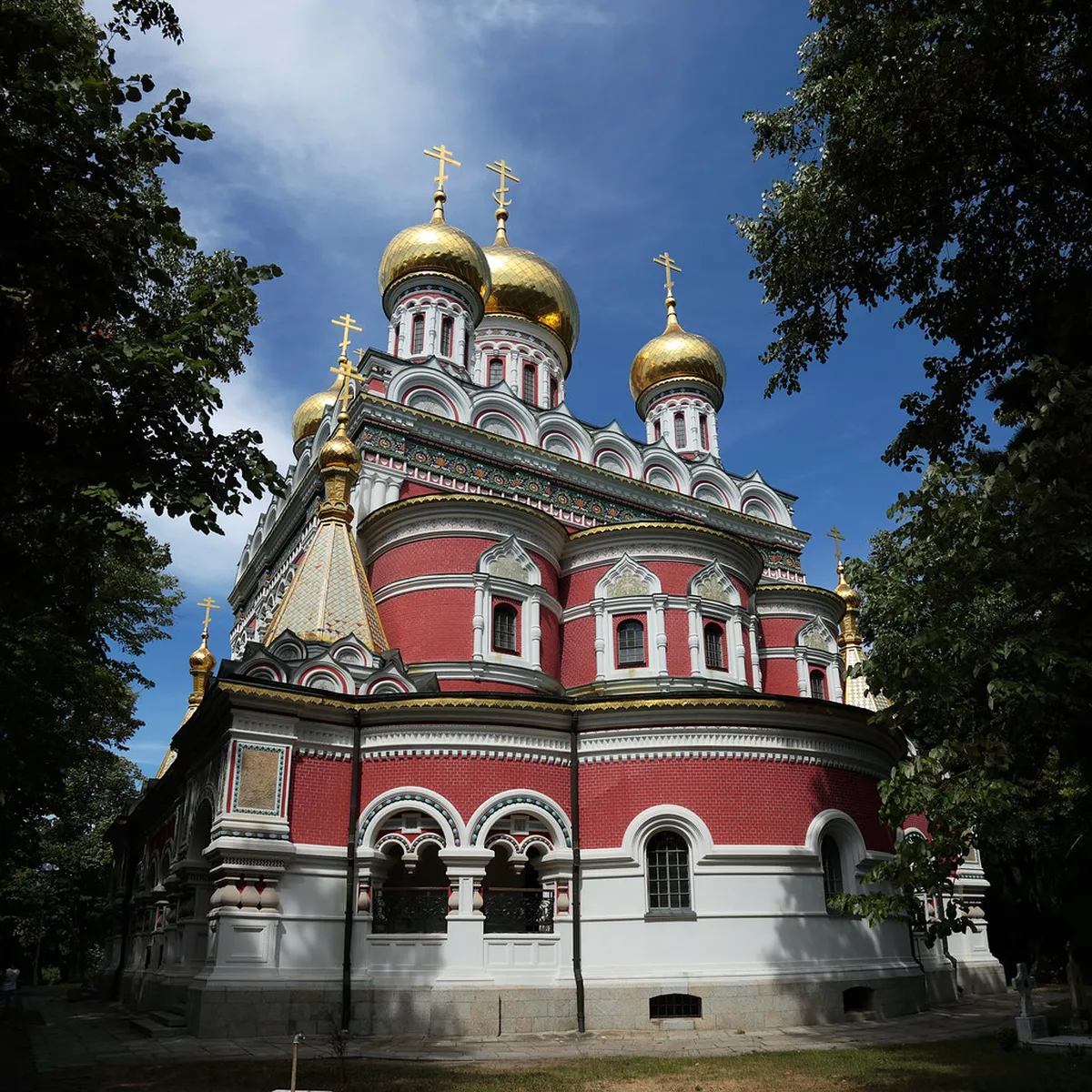
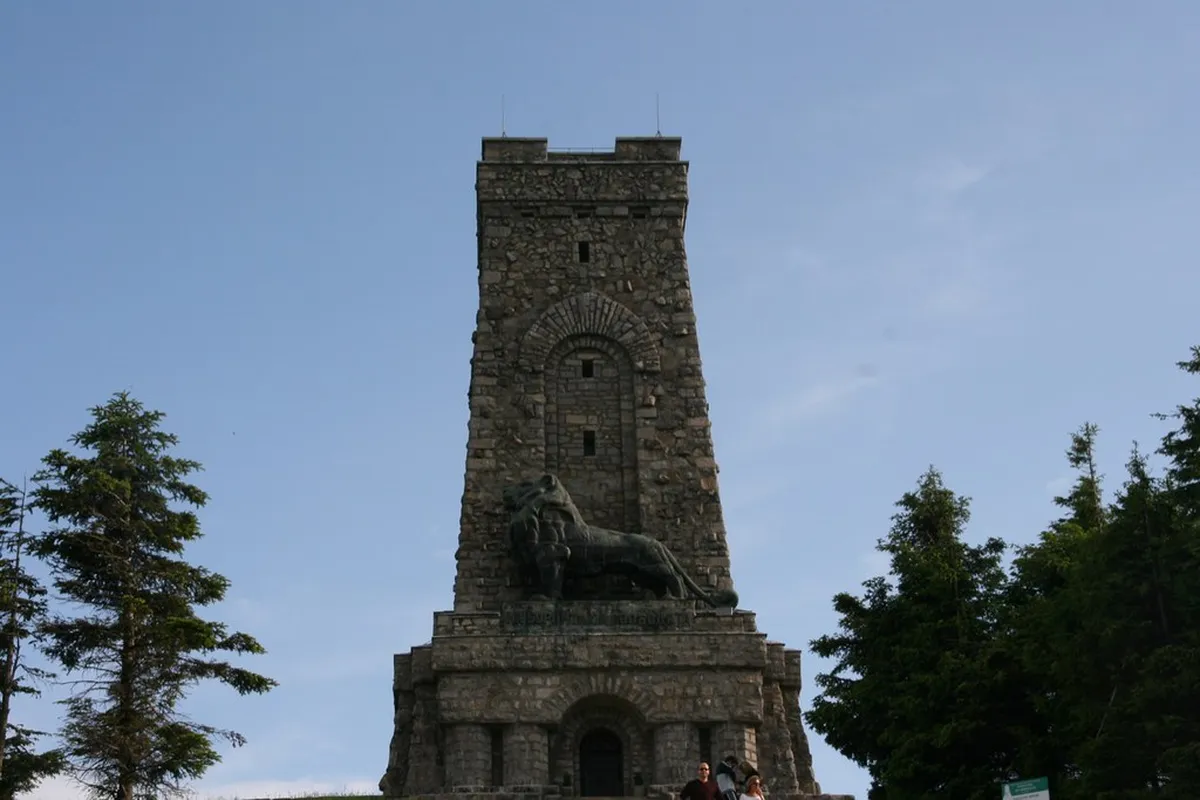
The most natural and rewarding day trip from Kazanlak combines Buzludzha with two stops on the descent: the Shipka Memorial Church and the Rose Valley. The Shipka Memorial Church (nativity Memorial Temple) Visitor Guide sits in Shipka village, roughly 12 km below the monument on the southern road. Built in 1902 to honour the Russian and Bulgarian soldiers killed defending Shipka Pass during the Russo-Turkish War of 1877–78, it is a striking Russian Orthodox church with golden domes and a peaceful garden setting. Entry is free and it is open 8:30 to 17:30 daily. The Shipka Pass Freedom Monument — a separate hilltop memorial above the pass with panoramic views — is also accessible by car and a short walk.
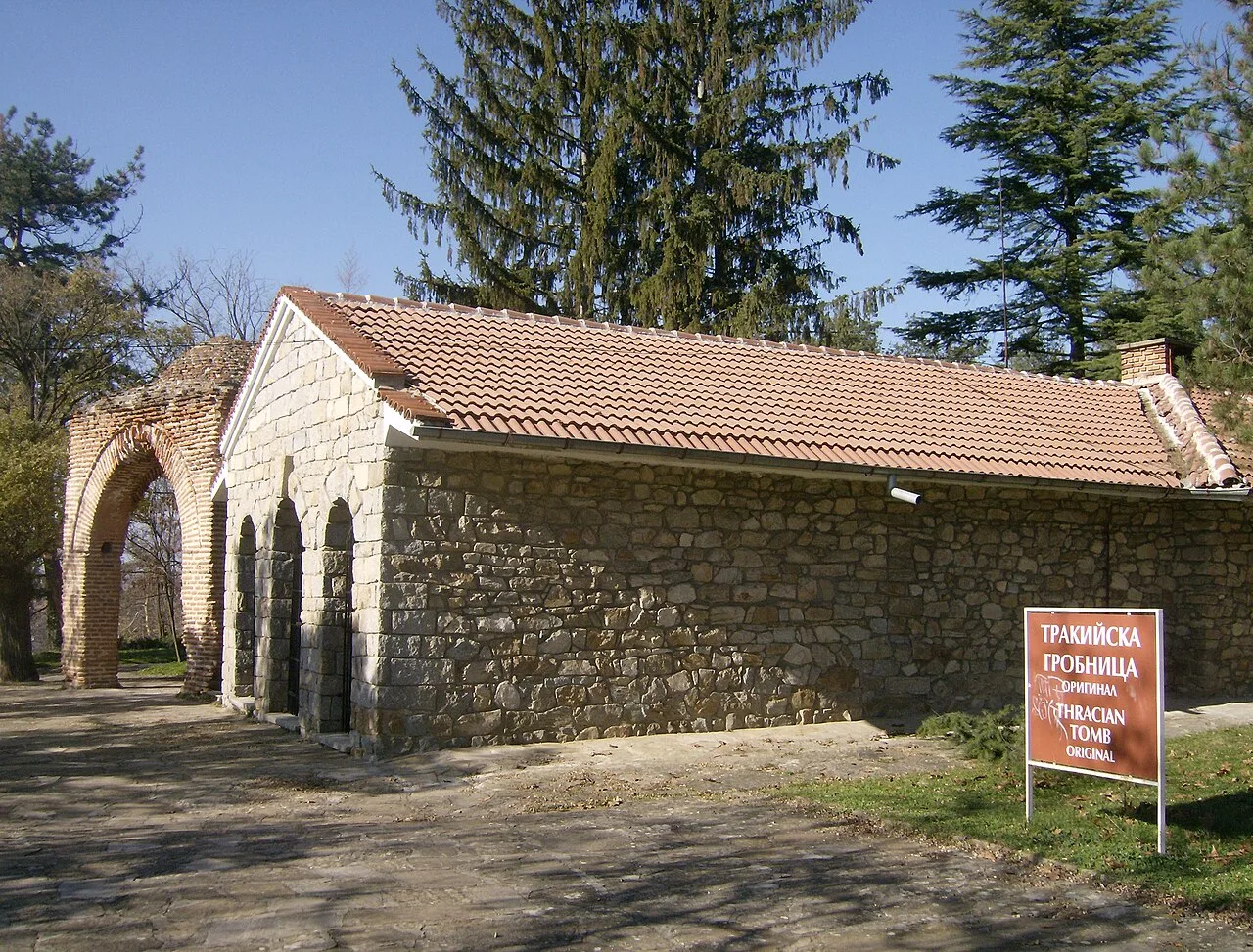
Back in Kazanlak at the foot of the mountains lies the Rose Valley — the Dolina na Rozite — the heartland of Bulgaria's rose oil industry and one of the country's most distinctive landscapes. If you are visiting in early June, the Rose Festival in Kazanlak is the most famous event in the Bulgarian calendar: in 2026 it runs on June 5–7. Festival weekend brings rose-picking demonstrations, parades, folk costumes, and enormous crowds — book accommodation in Kazanlak well in advance if your visit coincides with it. The Valley of the Thracian Kings, with a UNESCO-listed Thracian tomb, is also near Kazanlak and can be added to a full-day itinerary.
For those building a broader Bulgarian road trip, Buzludzha and the Rose Valley fit naturally into a Bulgaria Itinerary 2026 connecting Sofia, Plovdiv, and the Balkan mountain towns. You can also read our broader guide to Getting Around Bulgaria: The Ultimate Transportation Guide for tips on driving mountain roads and navigating between regions.
Buzludzha crowns the ridge above the Rose Valley, so it pairs naturally with the towns below. See our full guide to attractions in Kazanlak and the historic Shipka Pass and its memorial on the same road up the mountain.
Continue planning: Use Bulgarian Traditions and Customs guide and Kukeri: Bulgaria's Masked Ritual Dancers to connect this guide with the rest of your Bulgaria itinerary.
Frequently Asked Questions
Is the Buzludzha Monument open to visitors in 2026?
The exterior of the Buzludzha Monument is fully open and free to visit year-round with no ticket required. The interior remains sealed and is strictly off-limits for safety reasons. There is no confirmed date for interior access to be reinstated despite ongoing conservation work by the Buzludzha Project Foundation.
How do I get to the Buzludzha Monument?
A private car is essential — there is no public transport to the monument. The recommended route is from Kazanlak via the southern mountain road through Shipka village, approximately 24 km and 30 to 40 minutes of driving. Avoid the northern road from Shipka Pass, which is poorly maintained. GPS coordinates: 42°44'08.92"N, 25°23'37.86"E.
Is there an admission fee for the Buzludzha Monument?
No. Visiting the exterior of the Buzludzha Monument is completely free. There is no entry ticket, no admission fee, and no advance booking required. Parking at the summit is also free, though limited in capacity.
Is the road to Buzludzha open in winter?
Winter access is unreliable and often impossible. The final stretch of road to the parking area can accumulate 30 to 40 cm of snow and become impassable from around October through April. Road closures are weather-dependent with no fixed dates, so check recent conditions before attempting a winter visit.
What should I bring when visiting the Buzludzha Monument?
Bring warm and wind-resistant layers even in summer — the peak sits at 1,441 metres and temperatures are noticeably cooler than the valley, with strong winds common. Wear sturdy shoes for walking on uneven ground around the base. Fill your fuel tank in Kazanlak before heading up, as there are no petrol stations on the mountain road.
The Buzludzha Monument is an unmissable detour for anyone travelling through central Bulgaria. It is not comfortable heritage tourism — there are no cafes, no audio guides, no gift shop — but that rawness is precisely the point. Standing beneath a crumbling concrete disc in the wind at 1,441 metres, watching clouds move across the red star on the tower, you feel the full weight of what was built here and what was abandoned. It is one of the most affecting places in the country.
Plan your visit as part of a day that takes in Shipka Church, the Rose Valley, and the broader cultural landscape of the Kazanlak basin. For context on the society that built Buzludzha, explore our guide to Bulgarian Traditions and Customs: A 2026 Guide, which traces how the communist era shaped — and is still shaping — Bulgarian identity today. Whatever brings you to Bulgaria, this monument earns its place on the itinerary.