10 Best Things to Do in Troyan: A Guide to Bulgaria's Pottery Capital
Last updated August 2026, this guide covers the best things to do in Troyan, a Stara Planina base town in Lovech Province. Balkan Revival-era churches, working pottery studios, and marked mountain trails all sit within a short drive of the walkable town center. Day trips reach Troyan Monastery, Sostra Fortress, and the mineral pools at Chiflik, so plan on one focused day or a fuller two-day loop.
At a Glance: Troyan's Top Sights
Short on time? Three stops anchor most Troyan itineraries. Troyan Monastery draws the most visitors, and regional guides rank it the third-largest monastery in Bulgaria. The Museum of Folk Crafts sits in the town center and covers pottery, woodcarving, and blacksmithing under one roof. Chiflik's mineral-spring hotels sit about 15 km away and add a wellness stop after a day of hiking or sightseeing. Plan two full days if you want to add hiking or the Beklemeto Pass drive.
Chiflik's thermal hotels sit 15 km away with overnight rates around €122–€159; no public pools exist outside these two properties, so advance booking is essential before the drive from Troyan.
Troyan as a Stara Planina Base
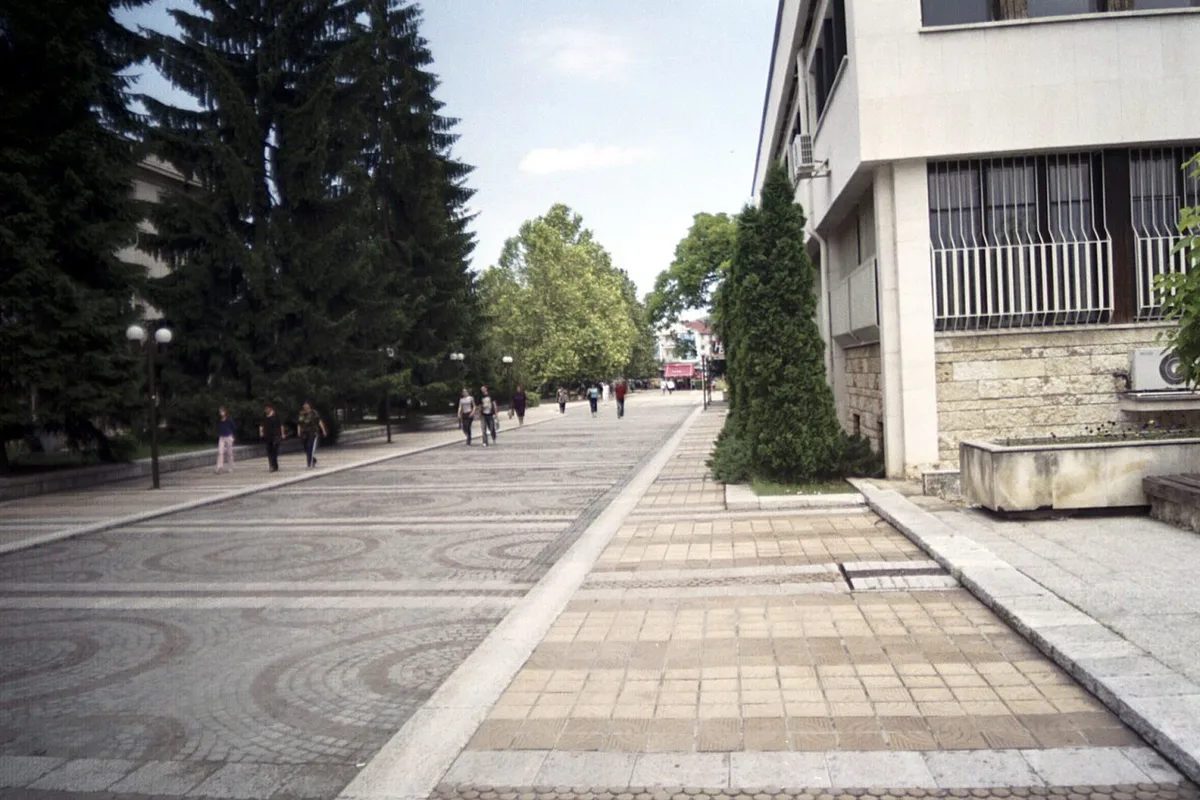
Troyan sits in Lovech Province, inside the Stara Planina range locals call the Troyan Balkan. The Beli Osam River runs through town and feeds both the Chiflik mineral pools downstream and several hiking approaches into Central Balkan National Park. That mix of river valley, mountain access, and a working crafts economy makes Troyan a solid overnight base rather than a pass-through stop. Two nights let you split the town-and-monastery day from a higher-effort hiking or road-trip day. If Troyan is one stop on a longer Bulgaria loop, budget two to three nights. That's especially true when the Beklemeto Pass or deeper trail routes are on the list.
10 Best Things to Do in Troyan
Troyan's sights cluster into three loops. Start with the town center, add the monastery-and-Oreshak corridor, then close with the wider Troyan Balkan for nature and wellness. Work through the list below in that order, or mix and match based on how many days you have.
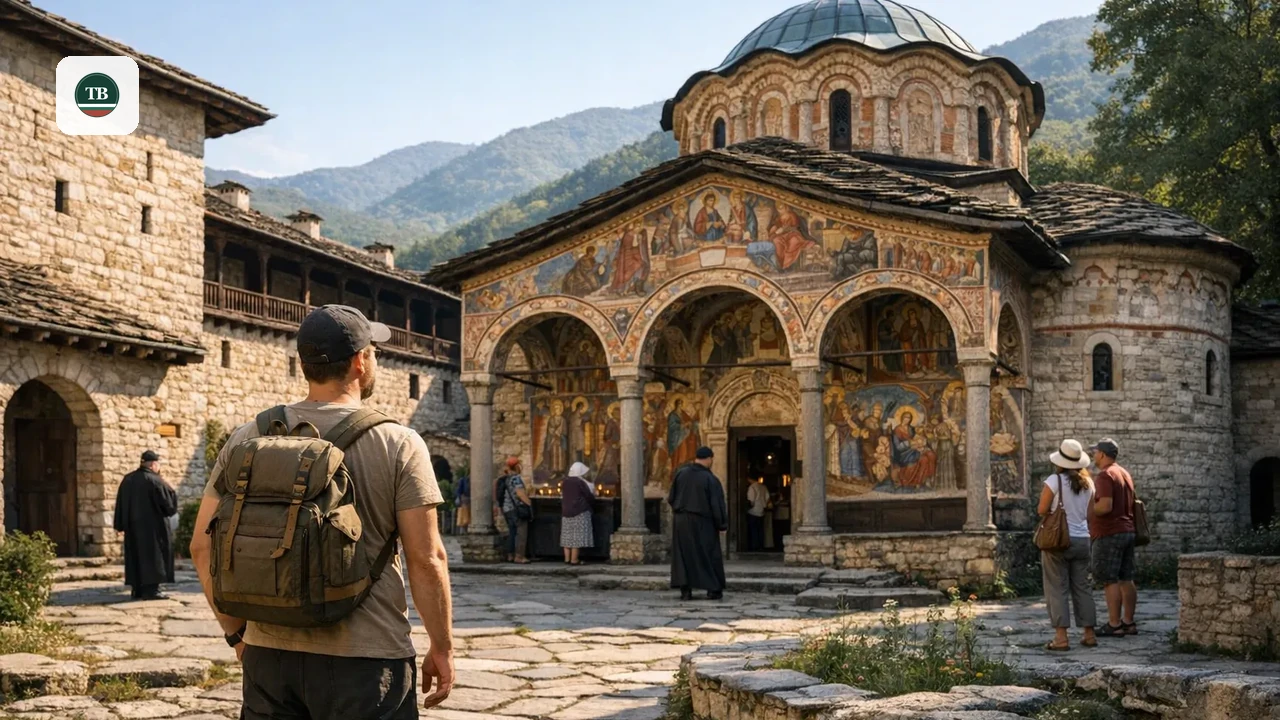
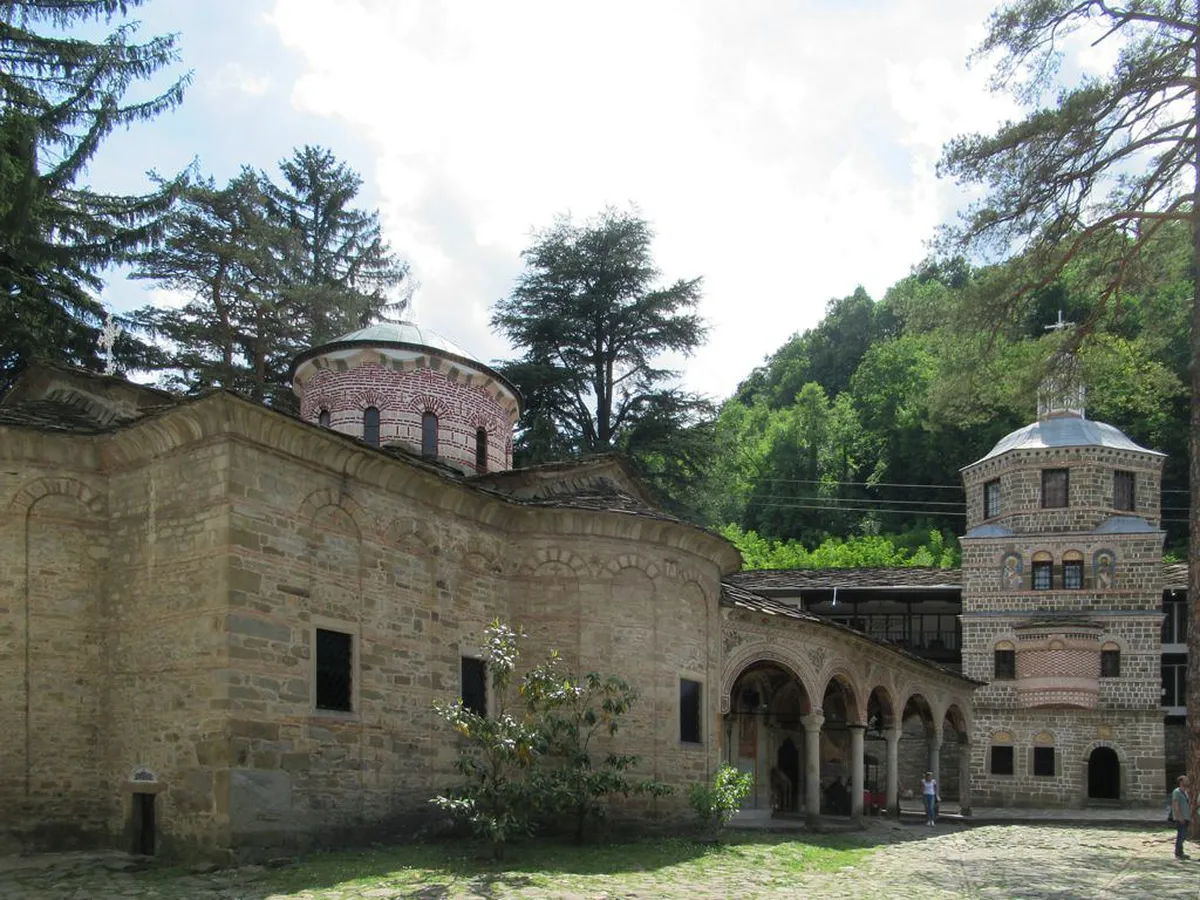
- Troyan Monastery 'Assumption of the Virgin'
- The current church dates to 1835 and was painted by icon painter Zahari Zograf.
- Regional guides rank Troyan Monastery the third-largest monastery in Bulgaria, after Rila and Bachkovo.
- A monastery museum wing covers revolutionary Vasil Levski, who founded a resistance committee here in 1871. For a combined route with the neighboring crafts exhibition, follow this Troyan Monastery and Oreshak day plan.
- Museum of Folk Crafts and Applied Arts
- Master builder Gencho Kanev designed the building, and the museum itself grew out of a 1962 conference on preserving Lovech-region crafts.
- Exhibits cover pottery, woodcarving, carpentry, blacksmithing, and beehive-making, with entry typically listed under 10 BGN.
- The building is 19th-century with stairs between levels, so travelers who need step-free access should call ahead through Troyan Municipality's official site.
- National Exhibition of Arts and Crafts, Oreshak
- Established in 1971 next to Troyan Monastery, the complex spans nine halls across roughly 4.2 acres.
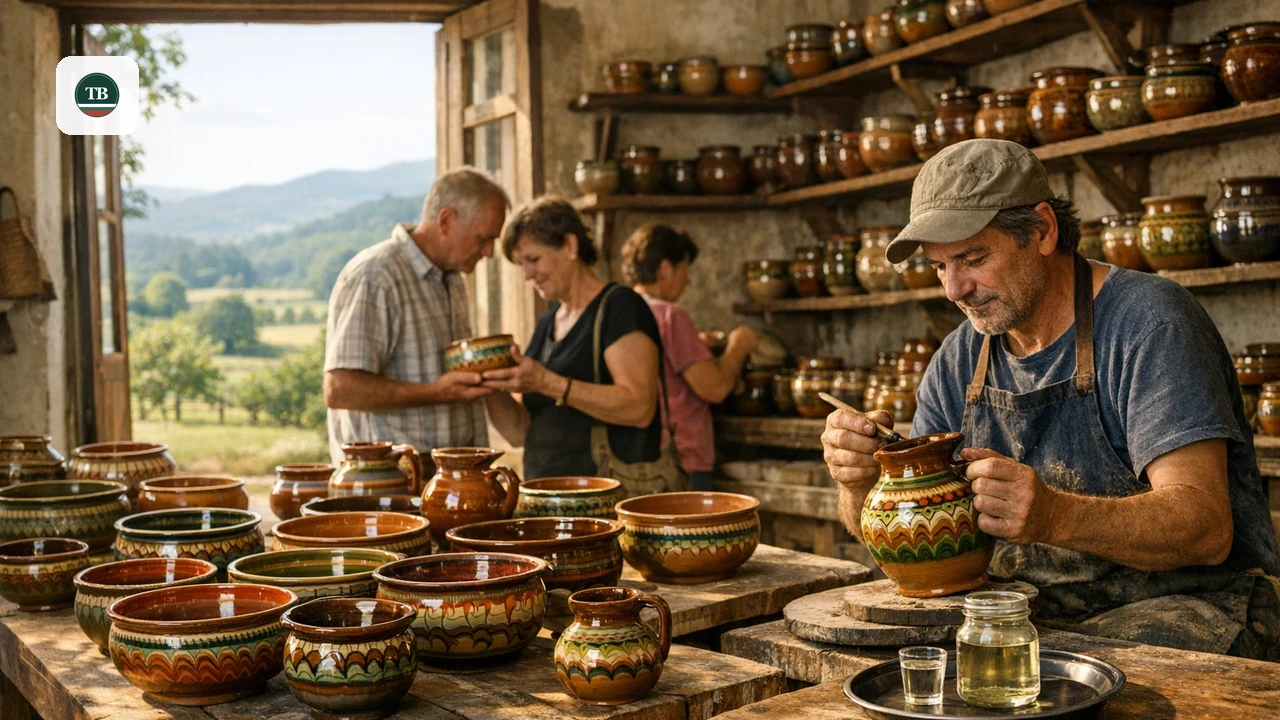
- Each hall includes a demonstration area, and ceramics-hall visits sometimes include a working potter at the wheel.
- A bazaar building on-site sells finished pieces directly, a practical first stop before shopping pottery elsewhere in town.
- Troyan Plum Rakia Exhibition
- A dedicated exhibition behind the Museum of Folk Crafts traces the town's plum rakia tradition and its typical golden color and mild taste.
- Tastings pair naturally with a pottery purchase, since rakia is often served from small Troyan-made ceramic cups. For background on both crafts, see this pottery and rakia traditions guide.
- Staff can point you toward nearby workshops still using traditional copper stills.
- Sostra Fortress
- These Roman ruins just outside Troyan mark the site of Trajanhisar, a fortified town linked to Emperor Trajan's second-century rule.
- There's no town-center transit link to the site, so plan to drive or arrange a taxi.
- Little infrastructure surrounds the ruins, so bring water and treat it as a 30- to 45-minute stop rather than a full excursion.
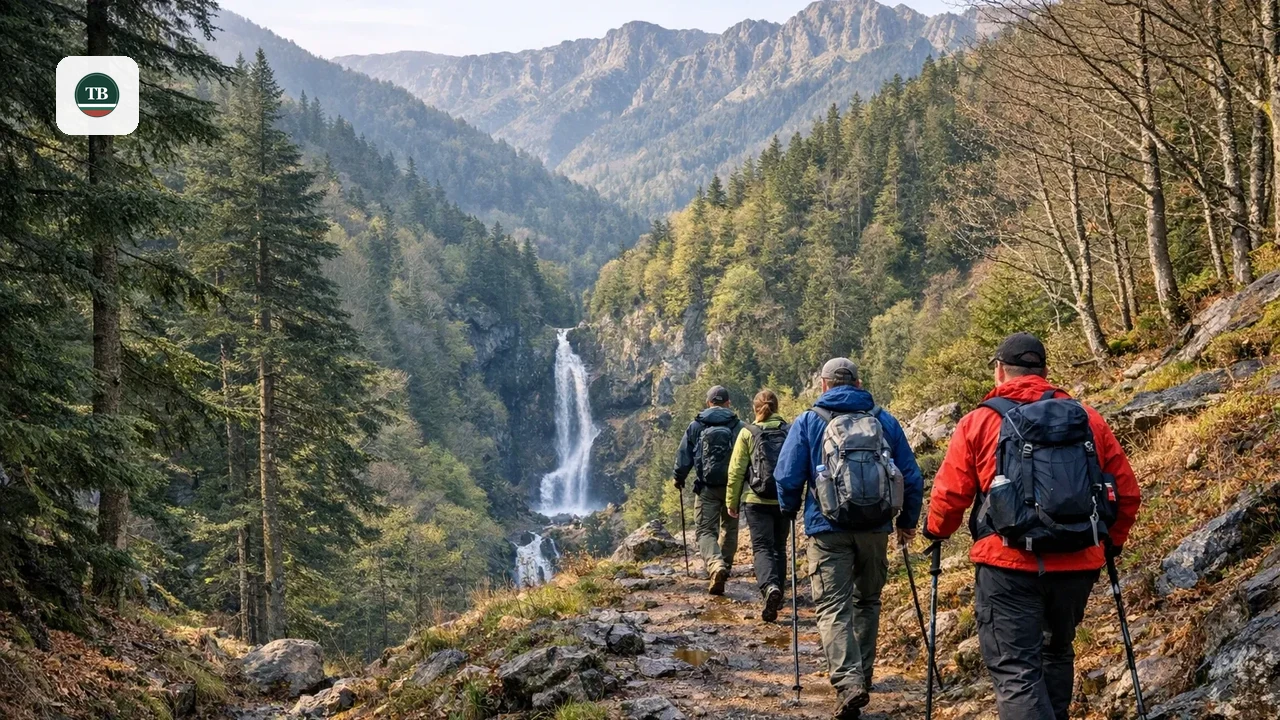
- Hiking in Central Balkan National Park
- Marked trails into Central Balkan National Park start within reach of Troyan, covering terrain from forest paths to ridgelines along the Stara Planina, per Visit Bulgaria's tourism portal.
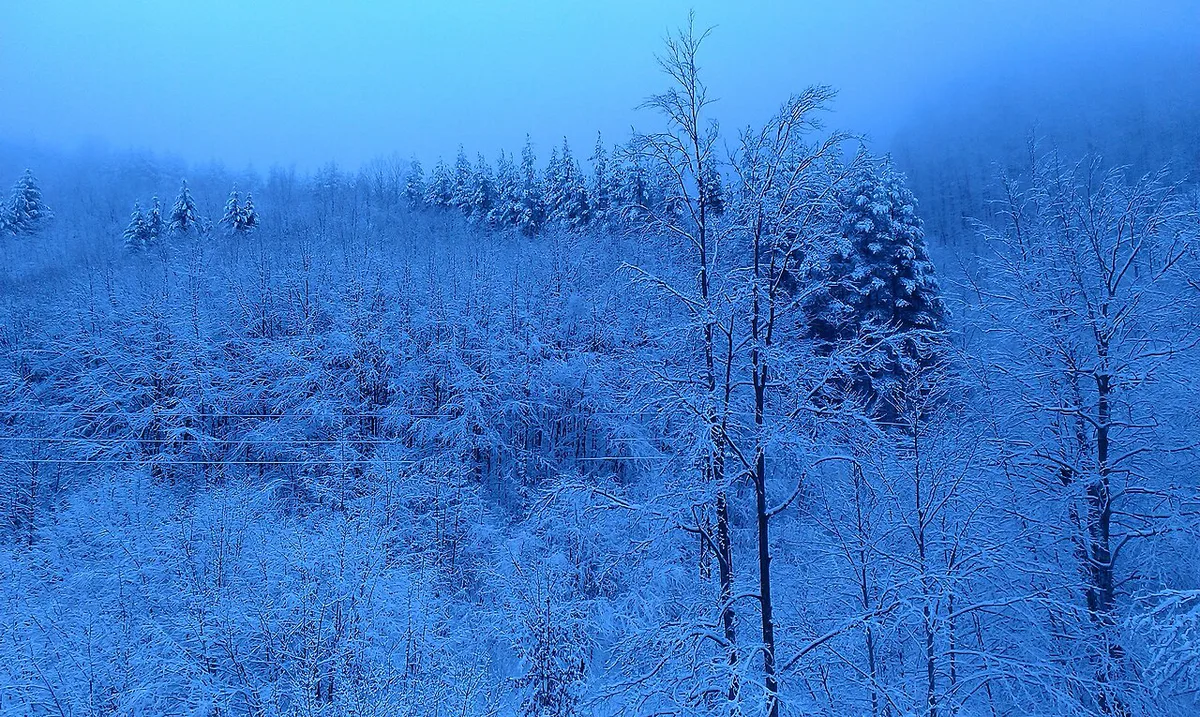
- Late spring through early autumn gives the most reliable trail conditions; winter hiking needs specialist gear and planning.
- Route-plan by access point with this hiking routes near Troyan guide, or check the broader Bulgaria hiking guide if you're routing beyond the Troyan Balkan.
- Beklemeto Pass and the Arch of Liberty
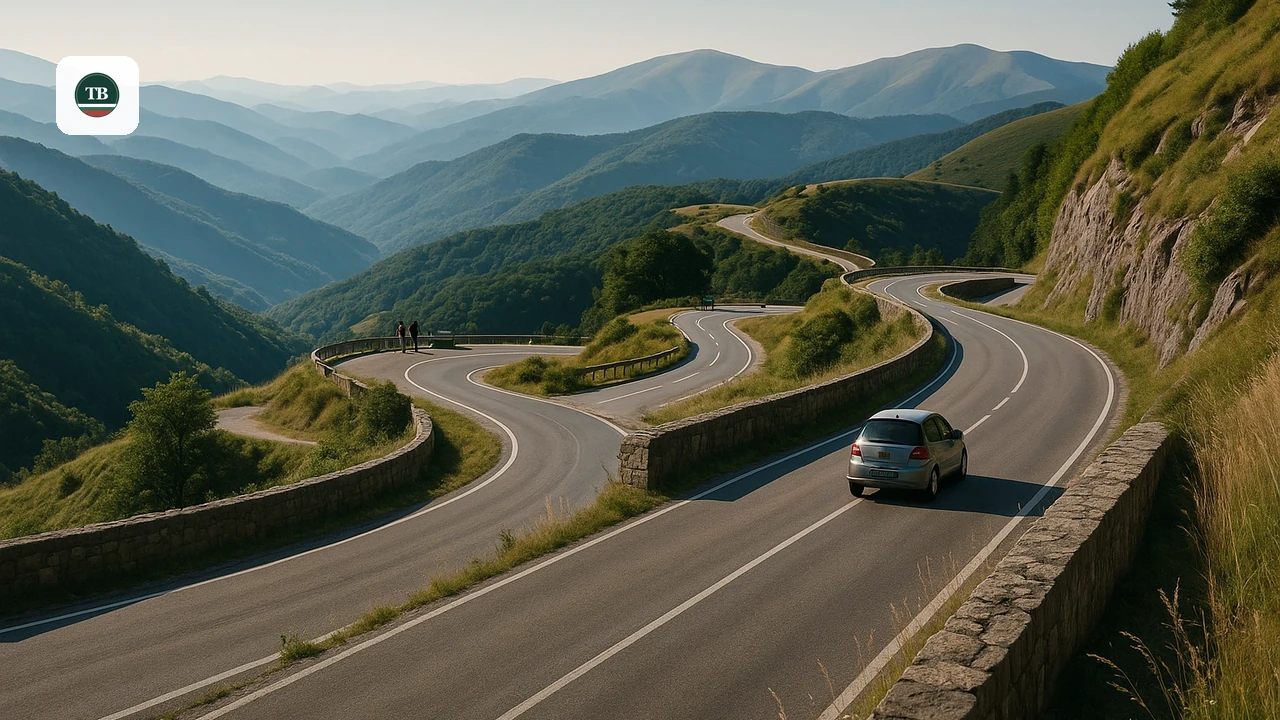
- The Troyan Pass road climbs to Beklemeto and the Arch of Liberty monument, with ridge views on clear days.
- This pass typically closes to traffic in winter under snow, so confirm current status before a cold-season drive.
- Plan the drive as part of a longer loop with this driving the Beklemeto pass route.
- Skoka Waterfall, Kaleytsa
- A short trail near the village of Kaleytsa leads to Skoka Waterfall, a compact drop good for a half-day add-on.
- Bring sturdy footwear; the path can be uneven and muddy after rain.
- Flow runs fuller in spring after snowmelt and thins out by late summer, so time your visit if seeing it at full force matters.
- Sopot Dam, Golyama Zhelyazna
- Sopot Dam, near the village of Golyama Zhelyazna, offers a quieter lakeside walk away from the main monastery-and-crafts circuit.
- It suits travelers who want a low-key nature stop without a full trailhead hike, and it pairs well with a Gumoshtnik village detour on the same loop.
- Facilities are minimal at the dam itself, so pack in a picnic if you plan to stay a while.
- Mineral Springs of Chiflik and Beli Osam
- Chiflik, about 15 km from Troyan on the Beli Osam River, has two established spa hotels, each with its own mineral pools.
- As of 2026, published overnight rates run around €122 at the 3-star Hotel Balkan with breakfast, and around €159 at the 2-star Hotel Blyan with breakfast and dinner. Day-only pool access is priced separately by each hotel, so confirm current rates directly.
- Public, non-hotel pool access in Chiflik is limited, so pick a hotel before you drive out rather than expecting a walk-up public bath.
Quick Guide: Time, Cost, and Best For
Use this table to sequence a Troyan visit around how much time and budget you have. Costs below use the local currency figures published by regional listings and the sources above.
| Activity | Time Needed | Cost (2026) | Best For |
|---|---|---|---|
| Troyan Monastery + Levski museum wing | 1-2 hours | Grounds free; museum wing under 10 BGN | Families, history travelers |
| Museum of Folk Crafts | 45-60 min | Under 10 BGN | Craft and culture fans |
| Oreshak Exhibition of Arts and Crafts | 1-2 hours | Under 10 BGN, bazaar purchases separate | Shoppers, families |
| Rakia Exhibition | 30 min | Under 10 BGN | Food and drink travelers |
| Sostra Fortress | 30-45 min | Free | History travelers with a car |
| Central Balkan National Park hiking | Half day to full day | Free, no entrance fee | Solo hikers, active travelers |
| Beklemeto Pass drive | 2-3 hours round trip | Fuel only | Road-trippers, photographers |
| Skoka Waterfall | 1-2 hours | Free | Families, casual walkers |
| Sopot Dam | 1 hour | Free | Quiet-nature travelers |
| Chiflik mineral springs | Half day to overnight | Overnight from about €122 | Wellness travelers, couples |
How to Spot Authentic Troyan Pottery
Authentic Troyan pottery carries the Troyan drop pattern, a raised, flicked glaze design applied by hand, usually in white, green, or brown against a warm base glaze. Mass-produced imports mimic the color scheme with printed or stenciled patterns that sit flat instead of standing in relief. Check pieces for slight asymmetry and visible tool marks, both signs of hand-thrown work rather than a mold. Ask sellers whether a piece was thrown on-site or sourced elsewhere; workshop staff are typically upfront about origin. Buying directly from the Oreshak bazaar or a town workshop lowers the odds of taking home a printed import. For wider souvenir shopping advice across the country, see this Bulgaria souvenir shopping guide.
Where to Eat in Troyan
Traditional mehanas anchor Troyan's dining scene, serving grilled trout sourced from the Beli Osam and Cherni Osam rivers alongside grilled meats and banitsa. Expect wood furniture, wool textiles, and menus built around the grilled fare typical of Stara Planina foothill towns. Many restaurants pour Troyan plum rakia as a starter, following the same golden-color tradition covered at the rakia exhibition. Book ahead on weekends and around Orthodox holidays, when mehanas near the monastery fill with day-trip groups.
Getting to Troyan and Getting Around
A car is the most practical way to reach Troyan and cover its outlying sights. Direct buses run from Sofia and Lovech, but reaching Troyan Monastery, Sostra Fortress, or the Chiflik spa hotels without a private vehicle takes far longer and may require a taxi. If Troyan is one stop on a longer trip, work it into a broader Bulgaria itinerary alongside other Stara Planina stops. Once in town, the center itself is walkable between the main square, the Museum of Folk Crafts, and the rakia exhibition. For a short in-town walk before or after the main sights, Forest Park Turlata adds marked paths and a labeled fruit-tree arboretum above the center.
The Beklemeto Pass drive requires 2-3 hours round trip and closes seasonally in winter, so plan this scenic route only for late spring through autumn when mountain conditions permit.
When to Visit: Seasonal Trade-Offs
Late spring through early autumn is the reliable window for hiking in Central Balkan National Park and for driving the Beklemeto Pass, which typically closes under snow in winter. Shoulder months like April and October can still work for lower-elevation trails, but check conditions before committing to a route. Summer weekends and major Orthodox holidays, including Pentecost, bring the largest crowds to Troyan Monastery; arriving early in the morning avoids the worst of it. Winter still works for the town-center museums and the Chiflik mineral pools, since both operate indoors regardless of mountain-road conditions. Confirm current pass and trail status before any cold-season visit.
Where to Stay: Town Center vs Mountain Guest Houses
Town-center guest houses put you within walking distance of the museums and the main square. Chiflik's spa hotels trade that convenience for on-site mineral pools about 15 km out. Solo hikers based near trailheads may prefer a guest house directly in town, while couples prioritizing spa time should book Chiflik directly for pool access outside day-visit hours. If you're deciding how many nights to give Troyan versus other Stara Planina towns, this guide to other top Bulgaria destinations helps with sequencing a longer trip.
| Property | Location | Price (2026) | Notes |
|---|---|---|---|
| Guest House TODA | Troyan center | About €44/night | Walk to museums and main square |
| Troyan Plaza Hotel (4-star) | Troyan center | About €85/night, breakfast included | Largest in-town hotel option |
| Eco Village Azareiya | Gorno Trape, about 10 km out | About €90/night per house | Quiet countryside base |
| Hotel Balkan (3-star) | Chiflik, about 15 km out | About €122/night, breakfast included | On-site mineral pools |
| Hotel Blyan (2-star) | Chiflik, about 15 km out | About €159/night, breakfast and dinner included | On-site mineral pools, fuller board |
Mistakes to Avoid in Troyan
A few planning slips cause most of the frustration travelers report around Troyan. Avoid these before you lock in an itinerary.
- Visiting Troyan Monastery on a major Orthodox holiday without a plan; go early morning or pick a weekday instead.
- Assuming public buses reach Chiflik or Sostra Fortress on a fixed schedule; confirm current routes or plan to drive.
- Buying pottery from the first souvenir stall without checking for the hand-applied Troyan drop pattern.
- Attempting the Beklemeto Pass drive in winter without checking current road status first.
- Skipping a reservation call to the Museum of Folk Crafts before a group visit or if step-free access is needed.
- Expecting a walk-up public pool in Chiflik; the mineral springs there are hotel-run, so book ahead.
Chiflik: How to Choose the Right Mineral-Pool Access
Chiflik is best treated as a pre-booked stop, not a walk-up detour.
Many travelers assume a general public bath system exists, then lose time confirming entry rules on arrival.
- Chiflik’s usable thermal pools are run through the two hotel operators: Hotel Balkan and Hotel Blyan.
- Both properties sit about 15 km from Troyan, so arriving by private transport is most practical.
- Day-pool passes are not shared across hotels; pricing and access are handled separately by each property.
- Public, non-hotel access is limited, so always confirm current opening and admission before you leave town.
For a short wellness visit, call the hotel you plan to use the morning you go. If you are also visiting Sostra Fortress, the Sopot Dam area, or Troyan Monastery, build in one extra transfer hour and a short buffer.
Explore things to do in other cities
- Primorsko's things to do
- Byala's things to do
- Hisarya's things to do
- Velingrad's things to do
- Lovech's things to do
- Sandanski's things to do
- Burgas's things to do
- Kranevo's things to do
- Tsarevo's things to do
- Dobrich's things to do
- Gabrovo's things to do
- Sveti Vlas's things to do
- Vratsa's things to do
- Blagoevgrad's things to do
- Shumen's things to do
- Stara Zagora's things to do
- Sliven's things to do
- Sapareva Banya's things to do
- Elenite's things to do
- Tryavna's things to do
- Ravda's things to do
- Pomorie's things to do
- Albena's things to do
- Bansko's things to do
- Plovdiv's things to do
- Smolyan's things to do
- Sozopol's things to do
- Ruse's things to do
- Koprivshtitsa's things to do
Frequently Asked Questions
How many days do you need in Troyan?
Two full days cover the main clusters well: one for the town center, Troyan Monastery, and Oreshak, and a second for hiking, the Beklemeto Pass, or the Chiflik mineral springs. A single well-planned day can still hit the monastery and the crafts museum if time is tight. If you're combining Troyan with other Stara Planina towns on a road trip, budget an extra night for driving time between stops.
Do you need a car to get around Troyan?
A car makes Troyan far easier to explore. Buses connect Troyan with Sofia and Lovech, but Troyan Monastery, Sostra Fortress, and the Chiflik spa hotels are difficult to reach without private transport or a taxi. Once in town, the center itself is walkable between the main square and the museums.
Is the Beklemeto Pass open year-round?
The Troyan Pass toward Beklemeto typically closes to traffic in winter under snow. Late spring through autumn is the more reliable driving window, so confirm current road status before a cold-season trip. Trail conditions inside Central Balkan National Park follow a similar pattern, with the most reliable hiking window from late spring through early autumn.
What is Troyan best known for?
Troyan is known for its pottery tradition, its plum rakia, and Troyan Monastery, which regional guides rank the third-largest monastery in Bulgaria. The town sits in the Stara Planina range in Lovech Province, with Central Balkan National Park trailheads nearby. The Museum of Folk Crafts and the Oreshak exhibition both showcase that craft tradition in detail.
How can you tell authentic Troyan pottery from an import?
Authentic pieces carry the hand-applied Troyan drop pattern, a raised glaze design with visible tool marks and slight asymmetry. Mass-produced imports usually show a flat, printed version of the same color scheme. Buying directly from a workshop or the Oreshak bazaar lowers the odds of taking home a printed import.
Explore More of Troyan and the Central Balkans
Dive deeper into Troyan's monastery heritage, mountain trails, scenic drives, and craft traditions, plus wider Bulgaria travel planning.