Troyan Pottery and Rakia: A Guide to Bulgaria's Twin Balkan Crafts
Last updated August 2026, Troyan pottery and rakia remain the two crafts that define this Central Balkan town, ahead of any single monument or trailhead. The swirled, multicolor glaze known as Troyanska sharka comes from workshops shaping clay in the same valley for generations. Plum orchards nearby supply both a commercial rakia brand and monastery-style home batches, and this guide explains how to buy authentic versions of each.
Troyan Pottery and Rakia: The Craft Identity of the Central Balkan
Troyan sits at the edge of the Central Balkan range, and its identity rests on two crafts rather than one landmark. Potters have thrown local red clay into cookware and decorative pieces for generations, marking each piece with the swirled sharka pattern. Nearby, distillers turn the valley's plum harvest into rakia. It exists both as a commercial regional brand and as a home tradition tied to Troyan Monastery. The two crafts overlap physically at the monastery itself, where pottery workshops and distilling history sit close together. Troyan's municipal site lists crafts and cultural heritage among the town's defining assets, alongside its Balkan Mountain access. Treat pottery as a craft to study, not a souvenir afterthought, and the two traditions make more sense together. Visitors who base a stop in Troyan around only one craft usually miss the connection between the two, since the same valley economy supports both. The rest of this guide separates the two, then brings them back together around timing, cost, and how to spot the real thing.
The Troyanska Sharka Pattern That Defines Troyan Pottery
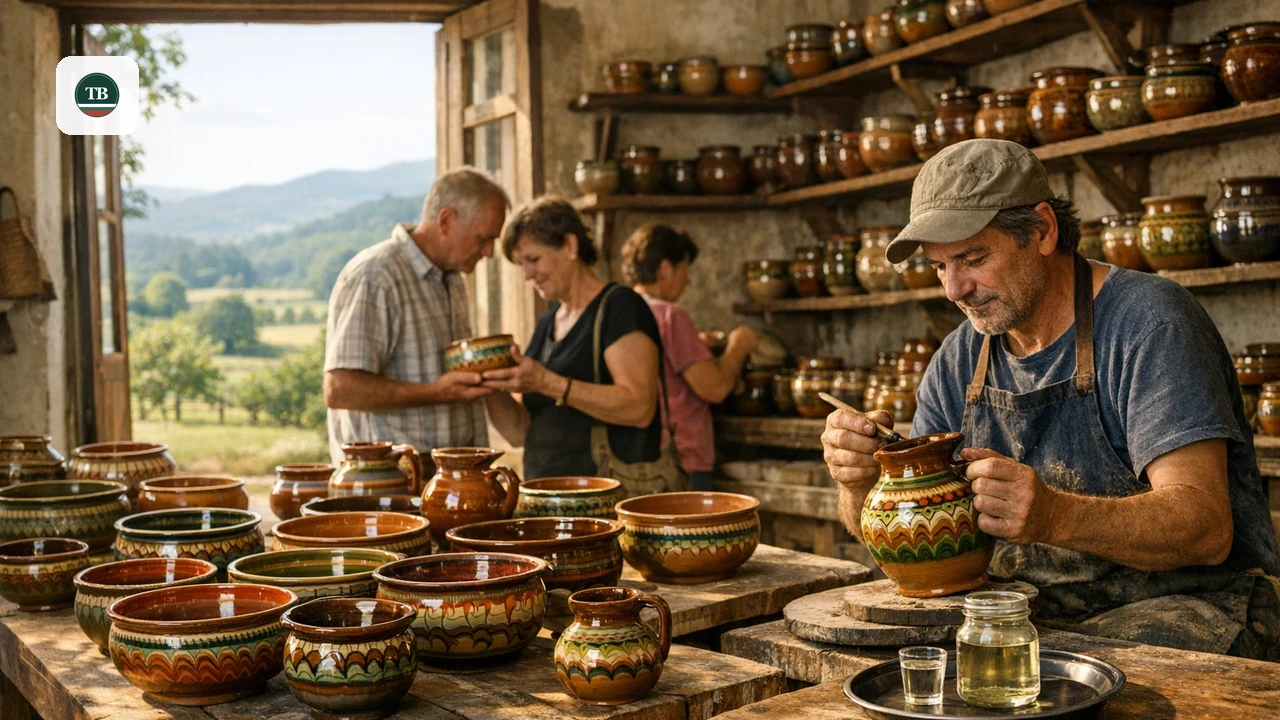
Troyanska sharka is the pottery decoration unique to this town, built from a repeating drop-and-line technique applied while the glaze is still wet. A potter loads several colors of liquid glaze into a rubber-tipped tool, then drags and taps it across the surface to form connected teardrop shapes. Traditional palettes rely on four base colors: brown, green, yellow, and white, layered over the local red clay body. That red clay comes from deposits near the town and gives finished pieces their characteristic weight and durability. Pieces are fired after the wet-glaze decoration is applied, which locks the drop pattern in place before the piece ever leaves the workshop. No two pieces come out identical, since the drop pattern shifts slightly with each pass of the tool. Older workshops in Troyan trained apprentices directly on this technique, and several working potters today learned it the same way, hand to hand rather than from a manual.
- Drop-and-line technique: glaze applied wet, then dragged into connected teardrop shapes
- Traditional colors: brown, green, yellow, and white
- Base material: local red clay, prized for weight and durability
- Result: no two finished pieces are exactly identical
Where to See and Buy Authentic Troyan Pottery
The Museum of Crafts and Applied Arts in Troyan holds the deepest historical collection of sharka pottery in the region, tracing the technique across generations of local workshops. It works well as a first stop before buying anything, since it shows what a well-executed drop pattern actually looks like up close. Opening hours shift by season, so check the museum's current schedule before planning a visit around it. A short drive away, the Oreshak Exhibition Grounds function as the working hub for contemporary potters, where several workshops sell directly from the bench. Some Oreshak workshops let visitors watch a full piece take shape from wet clay to finished glaze, though not every workshop offers this on a given day. Because the museum focuses on historical pieces and Oreshak sells current work, visiting both gives a full before-and-after view of the craft. Combining both stops pairs naturally with a wider visit. See 10 Best Things to Do in Troyan, Bulgaria: Monastery, Crafts & Hot Springs for how to sequence them alongside the town's other sights. For deeper crafts context, the Troyan Monastery and Oreshak guide covers the exhibition grounds in more depth.
- Weight: authentic pieces feel dense and solid, not hollow or light
- Glaze smoothness: run a finger across the surface for an even, unbroken finish
- Drop clarity: sharp, well-defined teardrops indicate a steady, practiced hand
- Base marks: look for an artisan's signature or workshop stamp underneath
Troyan Plum Rakia and the Monastery Distilling Tradition
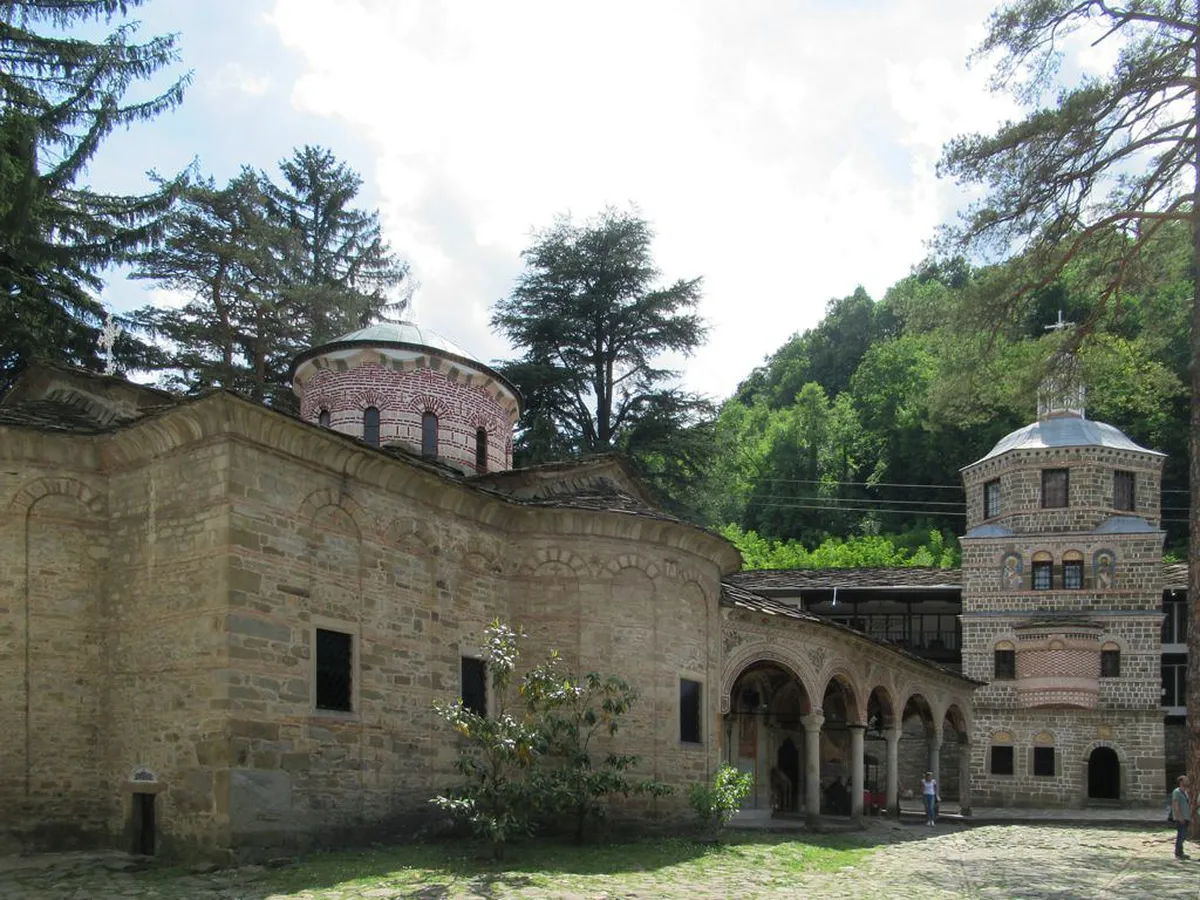
The valleys around Troyan sit in a micro-climate suited to plum orchards, with the fruit ripening reliably enough to support both commercial and household distilling. Troyanska Slivova is the region's established commercial rakia brand, distilled and bottled at scale under that name, and often marketed with a protected regional identity tied to the Troyan area. Exact geographical indication status is worth confirming with current official records before you repeat it as fact. Alongside it, monastery-style rakia continues as a smaller, home-batch tradition, with recipes passed down informally rather than published. Troyan Monastery has long been linked to this second stream, with distilling knowledge attributed to generations of resident monks. Local households outside the monastery also keep small batches for personal use and gifting, following similar informal recipes. Rakia production also supports the wider local economy, alongside pottery workshops and the seasonal tourism both crafts draw to the valley. Buying a bottle at the monastery gates or from a household producer usually means a different flavor profile than the commercial brand, often stronger and less filtered. Troyan Monastery and Oreshak covers the monastery's crafts and grounds in full, useful context before tasting anything there.
Rakia Tasting Etiquette in Troyan
Rakia in Troyan is typically served at room temperature or slightly warmed, never chilled, since cold mutes the plum aromatics. It comes in small glasses, sipped slowly rather than taken as a shot. The standard pairing is salata, a chopped tomato, cucumber, and cheese salad served alongside, which balances the drink's strength with something savory. Some households add a small dish of honey or jam alongside salata for a milder pairing, especially when serving guests unfamiliar with rakia's strength. Offering a toast before the first sip is customary at both monastery tastings and family tables. Declining a pour outright is fine, but finishing what is offered is generally more polite than leaving a glass half full.
- Temperature: room temperature or gently warmed, never chilled
- Glassware: small glasses, sipped slowly rather than shot
- Pairing: salata, a tomato, cucumber, and cheese salad
Timing Your Visit: The Plum Festival and the Troyan Pass
Late September usually brings the Bulgarian Festival of the Plum, when both crafts are on full display across pottery stalls and rakia tastings. Exact dates shift year to year, so check current listings, including Bulgaria's official tourism portal, before building an itinerary around it. Most road-trippers reach Troyan by crossing the Troyan Pass at Beklemeto. That mountain route also pairs well with hiking near Troyan on the same trip. Once you arrive, Troyan itself functions as the commercial hub, with shops, the museum, and everyday services. Oreshak, by contrast, hosts the tourist-facing craft market and exhibition grounds. Booking accommodation in Troyan rather than Oreshak usually gives easier access to the museum and everyday services between craft stops. Troyan also fits into a longer loop through the Balkan interior. A dedicated Bulgaria Road Trip Itinerary: 10 Essential Guide Sections works as a starting framework for that loop. Or build a custom route through Bulgaria's mountain routes instead. If you are still deciding where else to go, other top stops in Bulgaria helps place Troyan alongside them.
What Pottery and Rakia Actually Cost in Troyan
Neither craft publishes fixed price lists, since pottery is priced per piece by size and complexity and rakia varies by producer and batch. A simple, everyday Troyan drop mug or small bowl sits at the low end of the range, priced closer to a basic souvenir than a collectible. A large, hand-painted decorative plate with dense, precise sharka work costs meaningfully more, reflecting the hours a skilled potter puts into the pattern. Size, glaze density, and the complexity of the drop pattern all push the price up together, not any single factor alone. Bargaining is uncommon at the museum shop, but small workshops at Oreshak sometimes have room to negotiate on larger decorative pieces bought in person. Rakia follows a similar split. A bottle of Troyanska Slivova from a shop costs less than an unlabeled bottle bought directly from a small household producer or at the monastery gates, where scarcity and reputation drive the price up. Check current prices directly at the Oreshak Exhibition Grounds workshops or the Museum of Crafts gift shop, since both post rates on-site rather than online.
- Everyday pottery: mugs, bowls, small dishes, closest to standard souvenir pricing
- Decorative pottery: large plates or vases with dense sharka work, priced higher for time and skill
- Commercial rakia: Troyanska Slivova, sold by the bottle in shops
- Household or monastery rakia: unlabeled bottles, priced by the individual producer
Avoiding Imitations: How to Spot Authentic Craftsmanship
Mass-produced pottery printed with a sharka-style pattern circulates well beyond Troyan, including in souvenir shops in Sofia that have no connection to the town's workshops. The clearest tell is the base. Authentic pieces usually carry an artisan's signature or a workshop stamp, while imports are typically blank or carry a generic sticker. Machine-printed patterns also look flatter and more uniform than hand-applied drops, which vary slightly piece to piece. Weight is a secondary clue, since handmade pieces from local red clay tend to feel denser than lighter factory alternatives. Online marketplaces carry similar risk, since photos alone make it hard to judge weight or glaze texture, two of the clearest authenticity signals. Buying directly from Oreshak workshops or the museum shop all but guarantees the piece was made locally. Ask directly whether a piece was made in Troyan if the base carries no mark at all, since a straight answer at the point of sale is the simplest check. For a wider view of what counts as authentic across the country, the Bulgaria souvenirs guide covers the same signature-and-stamp test for other regional crafts.
A Practical Half-Day Plan for Both Crafts
Start at the Museum of Crafts and Applied Arts in Troyan to see historical sharka pieces before you shop, since it sets a reference point for quality. From there, head to the Oreshak Exhibition Grounds to watch potters work and to buy directly from the bench. If time allows, extend the stop toward Troyan Monastery, where distilling history and monastery-made rakia connect back to the pottery you just saw. Building the day in that order, museum first, then Oreshak, then the monastery, keeps the historical and commercial sides of both crafts in context rather than mixed together. Add extra time earlier in the day if you also want to fit in mountain trails nearby, since trailheads sit close enough to fold into the same loop.
Frequently Asked Questions
Is Troyan pottery dishwasher safe?
Traditional sharka glaze is fired for durability and generally holds up to normal use. Hand-painted decorative pieces are safer washed by hand, to protect fine painted detail over time.
Can you fly home with rakia bought in Troyan?
Yes, but pack bottles in checked luggage rather than a carry-on, since international rules limit liquids in carry-on bags. Wrap bottles well to prevent breakage, and check your airline's allowance for alcohol volume before you fly.
What is the best brand of rakia to buy in Troyan?
Troyanska Slivova, produced by Vinprom Troyan, is the most consistent commercial choice and easy to find in shops. For a different, less filtered profile, look for small household or monastery batches sold directly in Oreshak or at the monastery gates.
Where can you see a live pottery demonstration in Troyan?
Oreshak Exhibition Grounds is the most reliable spot, where working potters demonstrate the drop-and-line technique from the bench rather than behind a display case. Check current demonstration times on-site, since individual workshop hours vary.
When is the best time to visit for both crafts?
Late September usually brings the Bulgarian Festival of the Plum, the single best window for seeing both crafts together. Outside festival season, Oreshak's workshops and the Museum of Crafts in Troyan operate year-round, so a visit any time still covers both traditions.
Is Oreshak or Troyan town better for buying pottery?
Oreshak has the widest immediate selection, since several workshops sell directly from the exhibition grounds in one place. Troyan town works well if you also want the Museum of Crafts for context, or if you are short on time and only passing through the commercial hub. Buying at the monastery gates adds a rakia stop to the same trip, though pottery selection there tends to be smaller than at Oreshak.