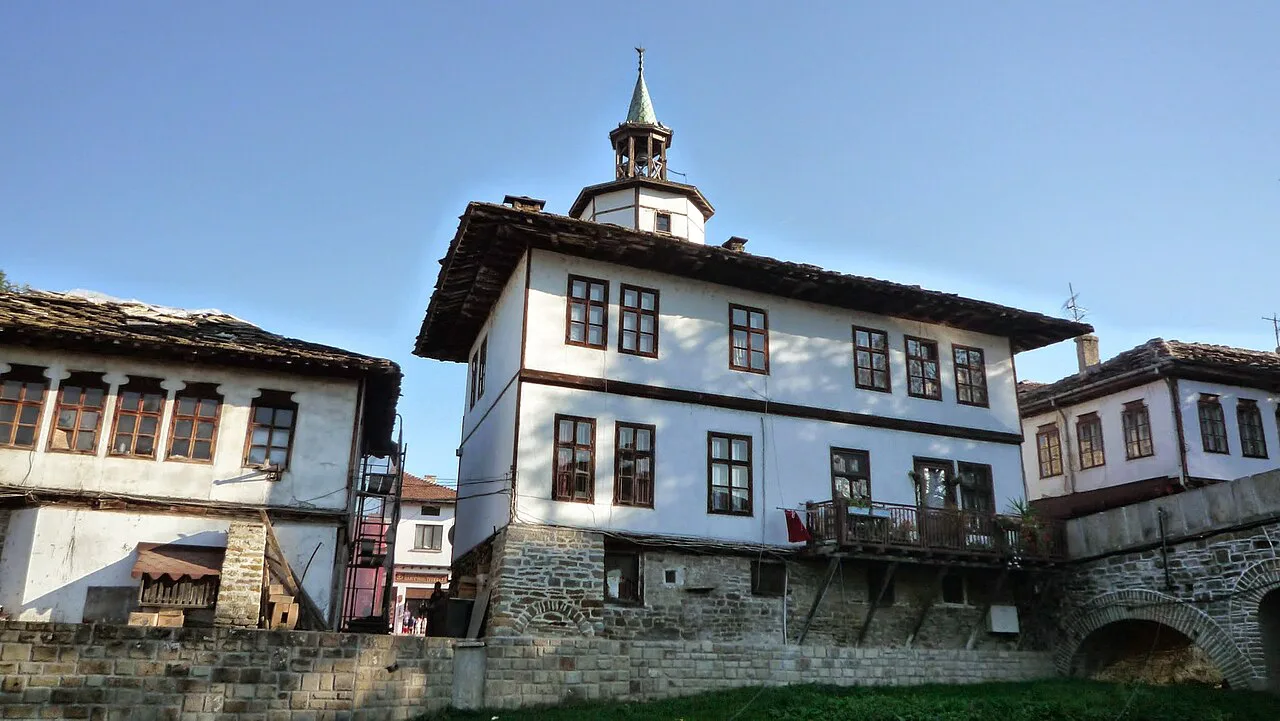
Tryavna Old Town and Woodcarving Guide
Last updated July 2026: Tryavna's walkable old town is one of Bulgaria's clearest introductions to National Revival architecture and the regional woodcarving tradition. The 1814 Clock Tower, Daskalov House's carved sun ceilings, and the iconostasis inside St. Archangel Michael Church form the core route. This guide explains how to sequence those stops, how much time to allow, and how to reach Tryavna from Gabrovo, Sofia, or Veliko Tarnovo.
Why Visit Tryavna, Bulgaria: Architecture, Woodcarving, and a 1190 Battle
Tryavna sits on the northern slopes of the Balkan range, in the Tryavna river valley, close to Gabrovo in central Bulgaria. The town preserves roughly 140 cultural monuments, museums, and expositions inside a compact National Revival-era core. Recorded history dates the settlement to the 12th century, and the 1190 Battle of Tryavna helped re-establish Bulgarian independence from Byzantine rule. Tryavna is also a birthplace town: writer Pencho Slaveykov and revolutionary Angel Kanchev both grew up here, and former NBA player Georgi Glouchkov is a native as well. What separates Tryavna from bigger old towns is the woodcarving. Generations of craftsmen developed a distinct icon-painting and wood-carving style known locally as the Tryavna School, and that style still fills the town's churches and house-museums. For context on how Tryavna compares with Bulgaria's other historic stops, see the Bulgaria's best historic towns roundup.
Best Things to Do in Tryavna's Old Town
Most sights cluster within about a 10-minute walk of Capitan Diado Nikola Square, the historic core of the old town. Start there and work outward on foot.
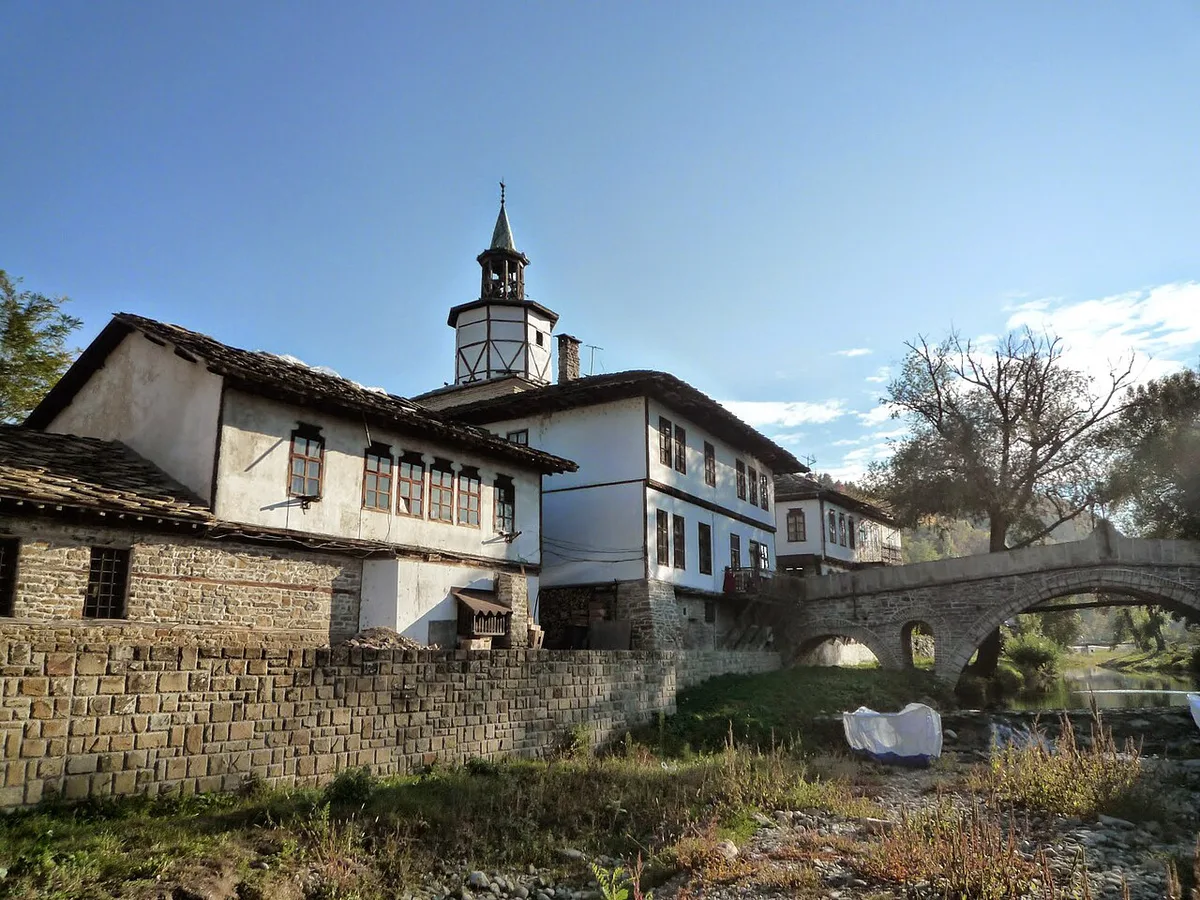
- Capitan Diado Nikola Square and the Clock Tower (1814): the architectural anchor of the old town, ringed by craft workshops and original stone paving.
- St. Archangel Michael Church: built in the late 12th century after Tsar Asen's forces defeated Byzantine emperor Isaac II; its wood-carved iconostasis and bishop's throne are considered masterworks of Tryavna woodcarving.
- Old School: one of the first secular schools built in Bulgaria, standing directly on Capitan Diado Nikola Square.
- Kivgireniyat Bridge: a stone footbridge over the river just behind the Clock Tower, and a strong vantage point for photographing the square.
- Raykov House: an ethnographic collection next to the Old School and the birthplace of Bulgarian chemist Pencho Raikov.
- Angel Kanchev House-Museum: the childhood home of the revolutionary and compatriot of Vasil Levski.
- Petko and Pencho Slaveykov House-Museum: in the old quarter, covering the poetic work of father and son.
- Kalinchev House: now an art gallery built around the Totio Gybenski donated collection.
- Museum of Asian and African Art: housed in a former public bathhouse on the riverside, a change of pace from the National Revival sites.
Daskalov House and the Tryavna School of Woodcarving
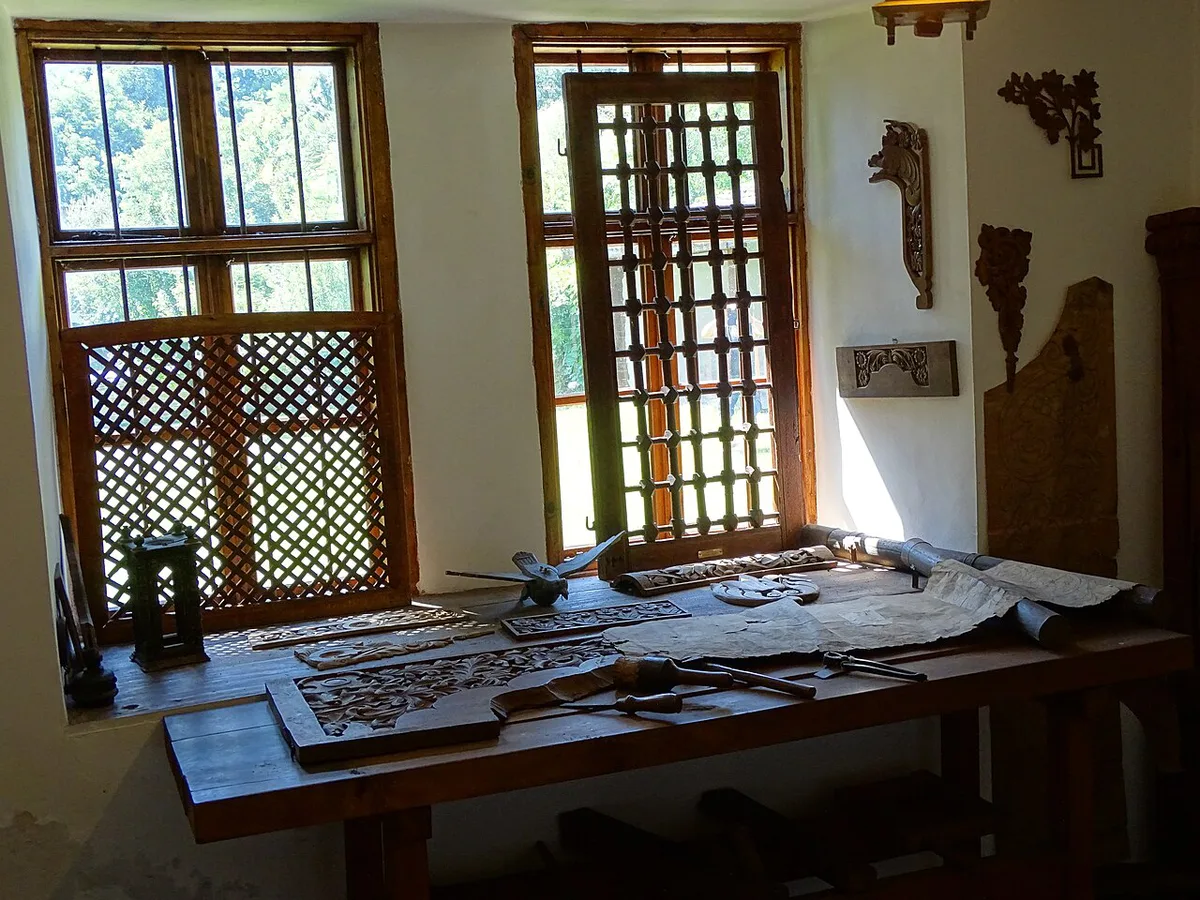
The Daskalov House, built in 1808, is Tryavna's most-visited museum and the clearest introduction to the Tryavna School of woodcarving and icon painting. Its two largest rooms each hold a hand-carved sun medallion ceiling. According to the museum's own history, master carvers Dimitar Oshanetsa and Ivan Bochukovetsa carved the two ceilings after a wager. Each worked for six months without seeing the other's progress. The result is two different sun designs in adjoining rooms, a detail many visitors miss on a quick walk-through. A separate Museum of Icon Painting and Woodcarving, housed in the Tsar's chapel a short distance from the center, displays more than 160 original icons by Tryavna-trained masters. Together, the two museums make the case for treating the Tryavna School as a highlight, not a footnote.
Planning Your Time: Half-Day, Full-Day, or Overnight
The compact core is walkable in about four hours. Capitan Diado Nikola Square, the Clock Tower, the Old School, and the Kivgireniyat Bridge sit within a few minutes of each other, and Daskalov House is a short walk further along the river. That covers the highlights but skips most of the house-museums and leaves no time to browse the artisan workshops still operating around the square. An overnight stay adds a quiet evening walk past the lit Clock Tower and time the next morning for the Museum of Icon Painting and Woodcarving and the Museum of Asian and African Art, both easy to skip on a rushed visit. Travelers building a longer Stara Planina loop often pair Tryavna with Troyan's craft workshops, Lovech's covered bridge, and Vratsa's mountain scenery.
Daskalov House's two hand-carved sun ceilings, each carved over six months by competing masters as a wager, are the highlight—but a rushed four-hour tour may miss the comparison between designs. Build in an overnight to linger.
- Start at Capitan Diado Nikola Square and the Clock Tower.
- Cross to the Old School, on the same square.
- Walk behind the Clock Tower to the Kivgireniyat Bridge for photos.
- Follow the river to Daskalov House for the sun-ceiling rooms.
- Continue to the Angel Kanchev and Slaveykov house-museums in the old quarter.
- Finish at the Museum of Asian and African Art, in the former public bathhouse on the riverside.
How to Get to Tryavna: Train, Car, and Bus
Tryavna has its own train station, ZHP Gara Tryavna, on a scenic north-south rail line, so it is reachable without a car. Driving is still the fastest option for most itineraries. Because Tryavna sits on the northern slopes of the Balkan range, winter snow can slow these roads. Check regional road-condition reports before a winter visit and build in extra driving time.
| Mode | From | Approx. Time | Notes |
|---|---|---|---|
| Car | Veliko Tarnovo | ~45 minutes | Shortest approach, on a regional road |
| Car | Sofia | ~3 hours | Mountain roads for the final stretch |
| Train | Regional rail network | Varies by service | Scenic north-south line; station is ZHP Gara Tryavna |
| Bus | Gabrovo | Short local connection | Regular local bus and minibus service |
Costs, Tickets, and Opening Hours in Tryavna
Entry fees for Tryavna's house-museums, including Daskalov House and the Museum of Icon Painting and Woodcarving, are set by the local municipal museum network. They typically run lower than ticket prices at larger National Revival sites in Plovdiv or Veliko Tarnovo. Confirm current admission prices and any multi-museum combined ticket at the tourist information point on Capitan Diado Nikola Square, or through Tryavna municipality's official channels, since small-town museum pricing can change without much notice.
Most house-museums in Tryavna close Monday or Tuesday. A four-hour day trip from Veliko Tarnovo works only mid-week; check opening hours before the 45-minute drive to avoid finding sites locked.
- Confirm same-day opening hours before setting out; small-town museums vary by season.
- Ask locally about a combined ticket covering Daskalov House and the icon-painting museum.
- Plan a closed weekday into your schedule, commonly Monday or Tuesday for smaller Bulgarian town museums.
- Budget more time than the ticket price suggests. The woodcarving detail rewards a slow pass, not a quick one.
Where to Stay: Old Town, Modern Center, or Voneshta Voda
Guesthouses inside the old town put you steps from the Clock Tower and the museums, inside restored National Revival houses, but expect narrow cobbled streets and limited parking. Hotels in the modern center trade some atmosphere for easier parking and a wider range of restaurants. Travelers with a car who want a spa add-on can base at Voneshta Voda, a resort village about 20 kilometers (12 miles) from Tryavna known for its mineral springs. It is a smaller-scale alternative to Bulgaria's larger spa towns. If mineral springs are the priority for the whole trip, compare it against the established spa infrastructure covered in Hisarya's spa town options.
Mistakes to Avoid in Tryavna
A handful of avoidable missteps account for most disappointing visits to Tryavna.
- Rushing past the woodcarving details. The carved eaves, door frames, and ceiling medallions are the point of the Tryavna School, not decoration to glance at.
- Assuming Tryavna feels like Veliko Tarnovo. Tryavna is much smaller and quieter, with far less foot traffic.
- Skipping a check on museum closing days before arriving.
- Driving up without checking winter road conditions on the approach from Gabrovo or Veliko Tarnovo.
- Treating the sights as scattered stops. The Clock Tower square, the Kivgireniyat Bridge, and Daskalov House form one connected walking route.
Historical Context and Tryavna's International Ties
Tryavna's National Revival identity traces back to its role defending a mountain pass under Ottoman rule, a role that earned locals certain privileges and helped the town develop as a hub for craftsmen and traders. That period produced both the architecture and the woodcarving tradition that define the town today. In the modern era, Tryavna maintains sister-city and twin-town relationships with municipalities abroad, part of the same civic profile that keeps its historical center under active preservation rather than treated as a static museum piece. The most recently published national census, from 2009, counted just under 9,900 residents in the town itself; check Tryavna municipality's current site for more recent figures.
For trip-planning details, see Tryavna - Wikivoyage.
Continue planning: Use 18 Best Places to Visit in Bulgaria and Hisarya Roman Ruins and Spa Day Trip Guide to connect this guide with the rest of your Bulgaria itinerary.
Frequently Asked Questions
Is Tryavna, Bulgaria worth visiting?
Yes, if National Revival architecture and woodcarving interest you specifically. Tryavna concentrates roughly 140 cultural monuments into a walkable core, and the Daskalov House sun-ceiling rooms and the St. Archangel Michael Church iconostasis are hard to match elsewhere in Bulgaria at this scale.
How far is Tryavna from Veliko Tarnovo?
The drive from Veliko Tarnovo to Tryavna takes about 45 minutes on regional roads, which makes it a realistic day trip or a first overnight stop on a Stara Planina route.
How much time should I plan for Tryavna?
Budget about four hours to cover the Clock Tower square, the Old School, the Kivgireniyat Bridge, and Daskalov House. Add an overnight stay to fit in the smaller house-museums and an evening walk through the square.
Is Tryavna better as a day trip from Gabrovo or an overnight stay?
Both work. Gabrovo sits close enough for a straightforward day trip by local bus or car, but an overnight stay in Tryavna's old town lets you see the square without day-trip crowds and reach museums that close earlier in the afternoon.
What is Tryavna known for?
Tryavna is known for National Revival architecture and the Tryavna School of woodcarving and icon painting, centered on Daskalov House, the Old School, and the wood-carved iconostasis inside St. Archangel Michael Church.
Does winter weather affect a visit to Tryavna?
It can. Tryavna sits on the northern slopes of the Balkan range, so winter snow can slow the roads from Gabrovo and Veliko Tarnovo. Check regional road-condition reports and allow extra driving time in winter.