Hisarya Roman Ruins and Spa Day Trip Guide
Last updated July 2026: Hisarya combines a roughly 2.3-kilometer ring of Late Roman city walls with mineral springs that still feed public fountains and hotel spa pools. The Camels Gate, the wall circuit, and a spring stop fit naturally into a day trip from Plovdiv, while Sofia requires an earlier start. This guide focuses on that ruins-and-spa route, practical timing, and transport.
Why Visit Hisarya, Bulgaria
Hisarya sits in Plovdiv Province, on the southern foothills of the Sredna Gora mountains facing the Upper Thracian Plain. The town layers a Roman spa city, once called Diocletianopolis, beneath a modern resort still built around mineral water. Visitors come for two distinct draws: a walkable loop of Late Roman fortifications, and mineral springs split between free public fountains and hotel spa pools. Hisarya ranks among top destinations in Bulgaria for travelers who want Roman-era ruins without a major-city crowd. Note that Hisarya is a distinct town from Hisar, Bulgaria, a separate settlement with a similar name.
- Province: Plovdiv Province, central Bulgaria
- Setting: southern foothills of the Sredna Gora mountains, facing the Upper Thracian Plain
- Population: 6,642 residents (2022 civil registration data)
- Elevation: 346 m (1,135 ft)
- Historic names: Augusta, Diocletianopolis, Sebastopolis, Alexiopolis, Neokastron
Diocletianopolis and the Roman City Walls
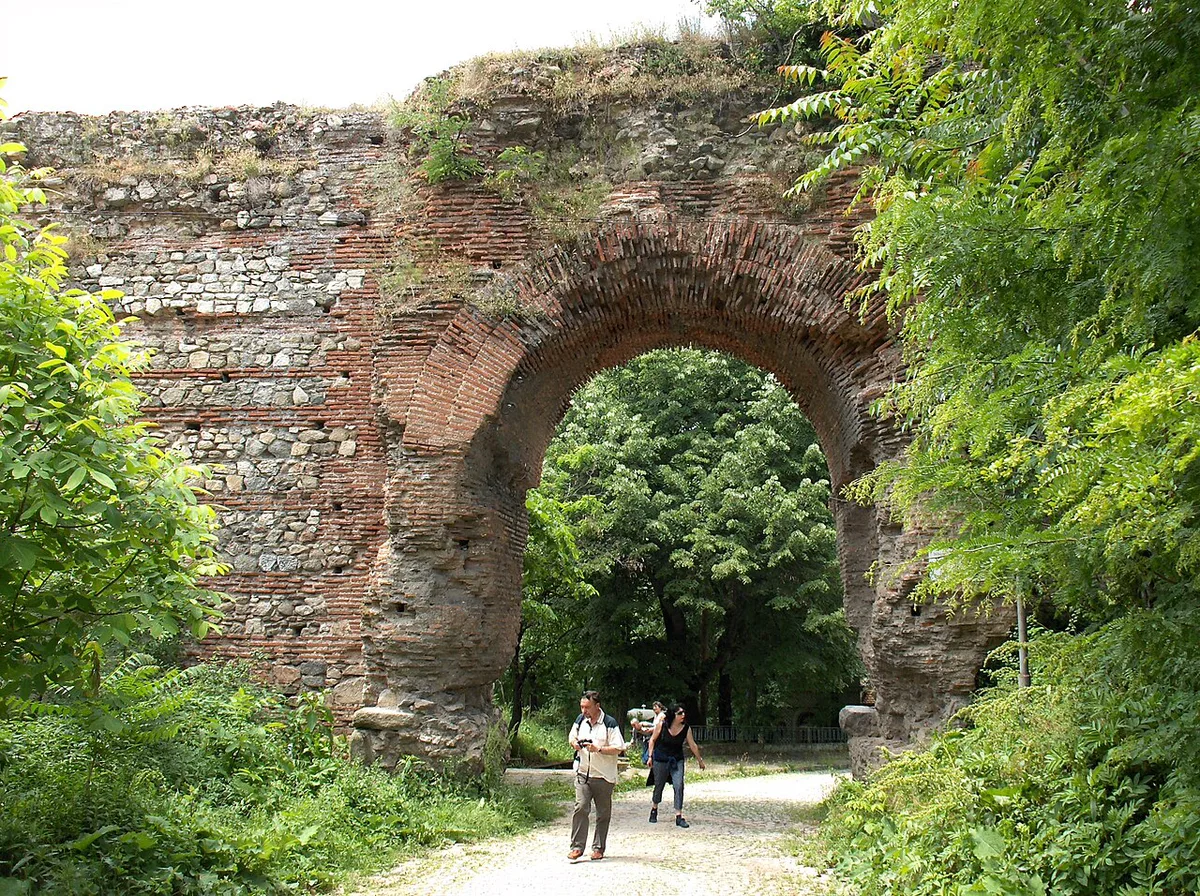
Diocletianopolis was one of the three most important Roman towns in the province of Thrace. Emperor Diocletian gave the settlement his name, and Emperor Septimius Severus is recorded as a visitor to the resort in Roman times. The town's Late Roman city walls form a loop roughly 2.3 kilometers around. Bulgarian sources describe them as the best-preserved Roman city walls in the country. Walking the loop shows wall sections, public building remains, and gate ruins built directly into the modern street grid.
Diocletianopolis was one of Thrace's three most important Roman towns with 2.3 kilometers of the country's best-preserved walls. However, post-Roman quarrying devastated the amphitheater and barracks, leaving them as low foundations, while the walls survived intact.
The Camels Gate: Hisarya's Roman South Gate
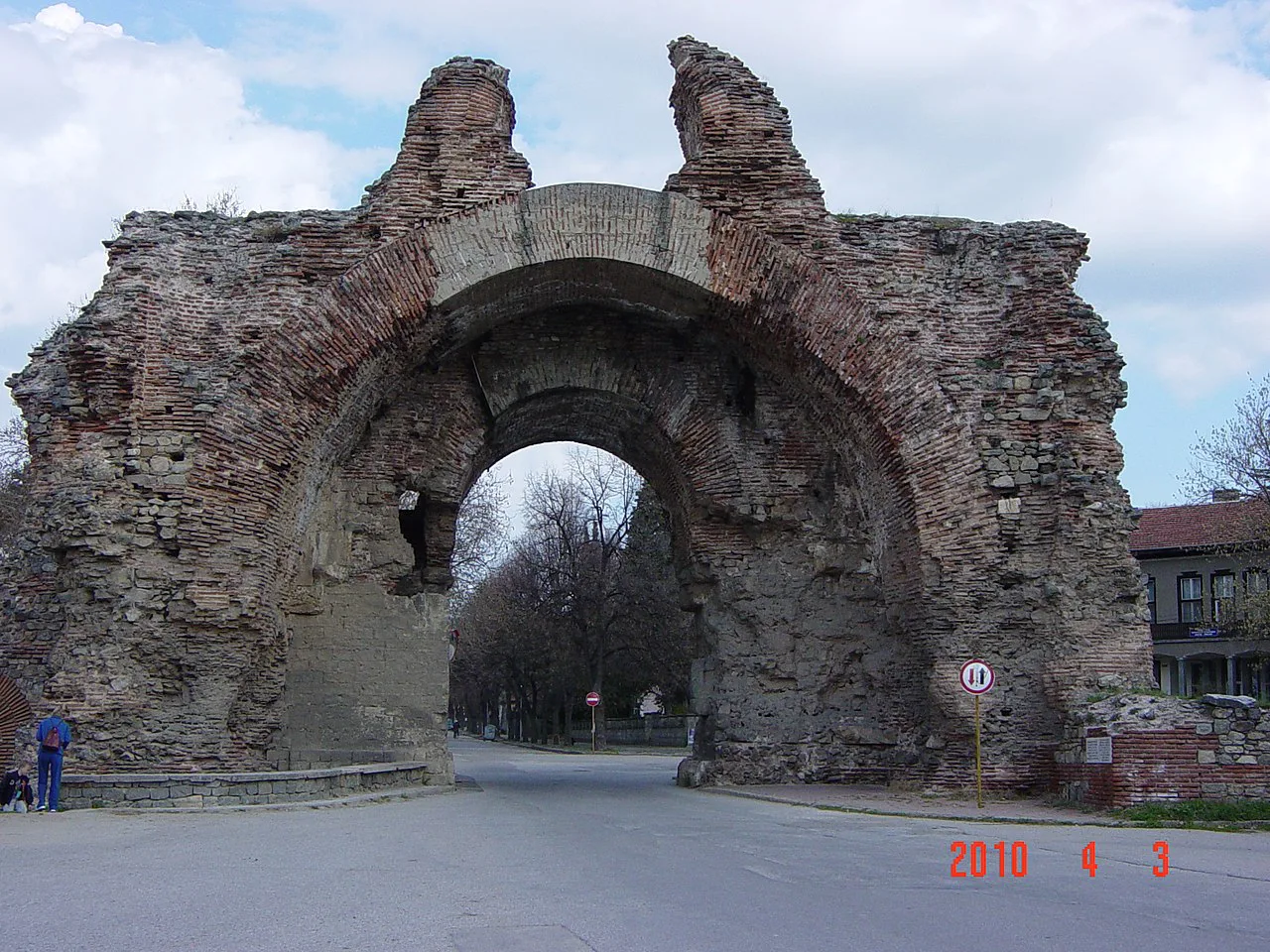
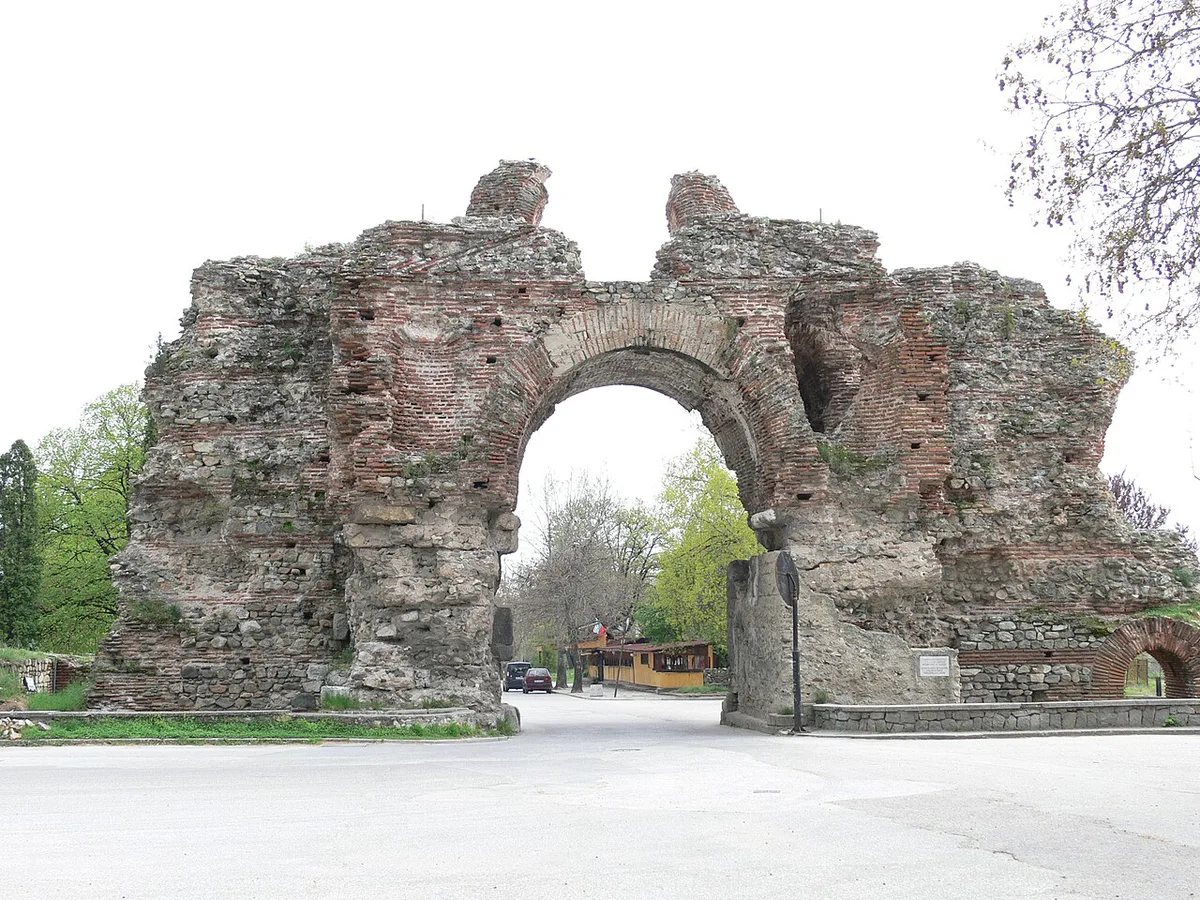
The south gate of the Roman walls is known locally as The Camels. Centuries of decay broke its arch in the middle, leaving two humped sections that resemble camels facing each other. Restoration work in the early 20th century stabilized the structure without fully rebuilding it. The broken profile that gave the gate its name is still visible today. It stands as the largest preserved Roman gate in Bulgaria, and it works as a free, walk-up landmark at any time of day.
Roman Amphitheater, Garrison Barracks, and Early Basilicas
Beyond the walls, Diocletianopolis preserved a small Roman amphitheater and the barracks that once housed its garrison. Archaeologists have also traced the foundations of early Christian basilicas here, among the oldest church sites documented in Bulgaria. Quarrying by nearby villages damaged much of the wider Roman city after the empire fell. That is why the walls and gate survive more completely than the amphitheater and barracks. Expect low walls, foundation outlines, and interpretive signage rather than an intact standing theater.
Mineral Springs and Spa Culture in Hisarya Bulgaria
Hot springs are the reason the site was settled in the first place, long before Rome arrived. Hisarya draws on 22 mineral springs, split between free public fountains and piped supply for hotel spa pools. Not every spring serves the same purpose. Some public fountains are meant for drinking, while others feed bathing pools or hotel treatment programs. The Momina Salza, or Maiden's Tear, spring is one of the named public sources worth seeking out on a walk through town.
| Water Source | Typical Use | Cost | Where to Find It |
|---|---|---|---|
| Public street fountains | Drinking, filling bottles | Free | Scattered through the town center |
| Momina Salza (Maiden's Tear) Spring | Drinking, a sightseeing stop | Free | Named public spring in town |
| Hotel spa pools | Bathing, wellness treatments | Included with a hotel stay, or a day-spa fee | Inside spa hotels |
More Things to Do Beyond the Ruins
The Archaeological Museum of Hisarya displays finds from the Roman and Thracian periods and adds context the open-air ruins alone do not. Hours shift by season, so check the museum's own listing or the Official Tourism Portal of Bulgaria before a visit. Hisarya's parks include century-old trees that host resident bird species. EU-funded programs after Bulgaria's 2007 accession have also gone toward recovering the ruins and renovating park and street infrastructure.
- Archaeological Museum of Hisarya: Roman and Thracian finds, seasonal hours
- Hisarya's century-old parks: shaded walks, resident bird species
- The Roman wall loop: a self-guided walk connecting the surviving gates
- Public mineral fountains: free stops for drinking water along the way
Who Should Visit Hisarya
History-focused travelers get a compact, walkable Roman site without the scale of a major excavation. Wellness-focused travelers get a working spa town where hotel pools and public fountains both draw on real mineral water. Families get low-key streets, parks, and ruins that are easy to explore without long lines or steep terrain. In our editorial assessment, Hisarya rewards a slower pace better than a rushed midday stop.
Planning a Day Trip from Plovdiv or Sofia
Hisarya sits close enough to Plovdiv for a straightforward day trip. A Sofia visit needs more of the day built around travel time. A day trip suits travelers whose main goals are the Roman walls, the Camels gate, and a public spring stop. An overnight stay makes more sense when a hotel spa pool is part of the plan. Most spa access is tied to an overnight stay rather than a walk-in visit. Summer heat can make a full midday walk around the open-air ruins uncomfortable, so an early start works better for the walls and gate in warmer months. Winter and shoulder-season months shift the focus naturally toward the indoor hotel spa pools, since outdoor sightseeing is less comfortable then. Travelers building a longer Bulgaria itinerary around Roman-era and spa towns often add the Troyan guide, the Tryavna guide, the Lovech guide, or the Vratsa guide to the same trip.
The exterior Roman walls, Camels gate, and public fountains cost nothing and are accessible anytime, but hotel spa pools require overnight stays. This makes same-day Plovdiv day trips viable for history and fountain stops, while spa-focused travelers need overnight accommodation.
- Train: Bulgarian State Railways (BDZ) serves the regional network; check current timetables for the Hisarya stop before travel.
- Bus/minibus: connects Hisarya with Plovdiv's bus station; confirm current departure times locally.
- Car: gives the most flexible schedule for a day trip or a Starosel side trip.
Starosel: A Thracian Side Trip from Hisarya
Many visitors add a side trip to Starosel, a village known for a Thracian tomb complex, while already in the area. The stop broadens a Roman-focused visit with a look at the Thracian period that came before Diocletianopolis. Opening hours and admission access change by season. Confirm current details locally or through the Official Tourism Portal of Bulgaria before planning the stop. Treat it as a half-day extension rather than a full separate trip, since it works best paired with a Hisarya visit.
Costs and Tickets in Hisarya
Walking the exterior of the Roman city walls and the Camels gate costs nothing, since the fortifications sit in open public space woven into the town's streets. Public mineral fountains are also free to use. The Archaeological Museum of Hisarya is more likely to charge standard small-museum admission, but a fixed 2026 figure was not available at the time of writing. Check the museum's own listing or the Official Tourism Portal of Bulgaria for the current price before a visit.
- Roman walls and Camels gate: free, always-open exterior viewing
- Public mineral fountains: free
- Archaeological Museum of Hisarya: standard small-museum admission likely; verify the current 2026 price on the museum's own listing
- Hotel spa pools and treatments: priced by the hotel, typically higher than a public fountain stop
Where to Stay in Hisarya
Hisarya's hotel stock ranges from large renovated spa hotel centers with pools and treatment areas, to smaller boutique hotels and guesthouses. Staying at a spa hotel is the most direct way to access hotel-grade mineral pools, since most spa programs are built around overnight guests. A guesthouse stay works well for travelers who mainly want the Roman ruins and a public-fountain stop, at a lower nightly cost than a full spa resort. Book earlier around spa season and any local events, since Hisarya's hotel capacity is smaller than a major city like Plovdiv.
- Large spa hotel resorts: pools and treatment areas, built around overnight mineral-water programs
- Boutique hotels: smaller scale, still close to the walls and town center
- Guesthouses: lower nightly cost, a good fit for a ruins-and-fountains focused stay
Getting Around Hisarya
The Roman walls form a loop around what was once the fortified core of Diocletianopolis, with the modern town extending outward from that ring. Treat the walled loop as the inner town and the surrounding streets, parks, and newer hotels as the outer town. Most sites, including the Camels gate, the amphitheater remains, and the central public fountains, sit within comfortable walking distance of each other. A rental car helps for reaching Hisarya itself from Plovdiv or Sofia, but it is not necessary once inside town.
Mistakes to Avoid in Hisarya
A few planning slips show up often among first-time visitors to Hisarya.
- Treating every mineral spring as interchangeable: some are for drinking, others for bathing, and mixing them up wastes a stop.
- Photographing only the Camels gate and skipping the rest of the walls loop, which covers most of the Late Roman fortification line.
- Assuming museum hours hold year-round: hours shift seasonally, so check before a visit.
- Planning spa access as a casual walk-in: most hotel spa pools are tied to an overnight stay, not a drop-in visit.
- Confusing Hisarya with Hisar, Bulgaria, a separate town with a similar name.
Visit the Late Roman Tomb of Hisarya
The Late Roman Tomb of Hisarya adds an important burial site to the remains of Diocletianopolis. It stands outside the fortified city, southwest of the Roman wall loop. The tomb dates from the fourth century and likely belonged to a wealthy local family.
A narrow brick corridor leads into a vaulted burial chamber with built-in niches. Its surviving floor mosaic uses geometric patterns, while traces of wall painting show how elite tombs were decorated. The compact interior offers a useful contrast with the city’s gates, baths, and public buildings.
Access may be controlled to protect the original decoration. The tomb should not be treated as an always-open roadside ruin. Ask the Archaeological Museum of Hisarya about current opening arrangements before walking there. Museum staff can also clarify whether entry requires a guide or separate ticket.
Allow about 30 minutes for the tomb itself, plus walking time from the Camels Gate. Combine it with the southwestern wall section to keep the visit geographically efficient.
Further reading: Bulgaria on Wikivoyage · Bulgaria on Wikipedia
Continue planning: Use 18 Best Places to Visit in Bulgaria and Lovech Covered Bridge and Varosha Day Trip Guide to connect this guide with the rest of your Bulgaria itinerary.
Frequently Asked Questions
Is Hisarya worth visiting as a day trip from Plovdiv?
Yes, for travelers focused on the Roman walls, the Camels gate, and a public mineral fountain stop. A day trip from Plovdiv covers the core Roman sites comfortably, though an overnight stay adds real access to a hotel spa pool.
Can you see the Roman ruins in Hisarya for free?
The exterior of the Late Roman city walls and the Camels south gate are free to see at any time, since they sit in open public space through the town. Enclosed sites such as the Archaeological Museum of Hisarya are more likely to charge standard admission, so check the museum's own listing before you go.
What is the best mineral spring to visit in Hisarya?
The Momina Salza, or Maiden's Tear, spring is one of the named public sources worth a stop, alongside other public fountains scattered through town. For a bathing-focused visit rather than a drinking-water stop, a hotel spa pool is the more direct option.
How do you get from Plovdiv to Hisarya by bus?
Bus and minibus services connect Hisarya with Plovdiv's bus station. Schedules on this regional route shift, so confirm current departure times directly with Plovdiv's bus station before travel, especially if the trip needs to fit inside a single day.
What is the significance of The Camels gate?
The Camels is the nickname for Hisarya's south Roman gate, earned when its arch broke in the middle and left two humped sections that resemble camels facing each other. Partial restoration in the early 20th century stabilized the structure, and it now stands as the largest preserved Roman gate in Bulgaria.
Is Hisarya the same as Hisar, Bulgaria?
No. Hisarya is a distinct spa town in Plovdiv Province. Hisar, Bulgaria is a separate settlement with a similar name, and the two are commonly confused in search results and travel listings.