Troyan Monastery and Oreshak: A Complete Guide
Last updated August 2026, Troyan Monastery and Oreshak form the best single day trip from Troyan for Bulgarian art, pilgrimage history, and hands-on pottery. The monastery sits on the Cherni Osam river about 10 km from Troyan in Lovech Province, and ranks as Bulgaria's third-largest monastery after Rila and Bachkovo. Ten minutes down the road, Oreshak village grew up around centuries of monastery pilgrims and now holds the region's best-known crafts exhibition.
Troyan Monastery and Oreshak: An Overview of Bulgaria's Third-Largest Monastery
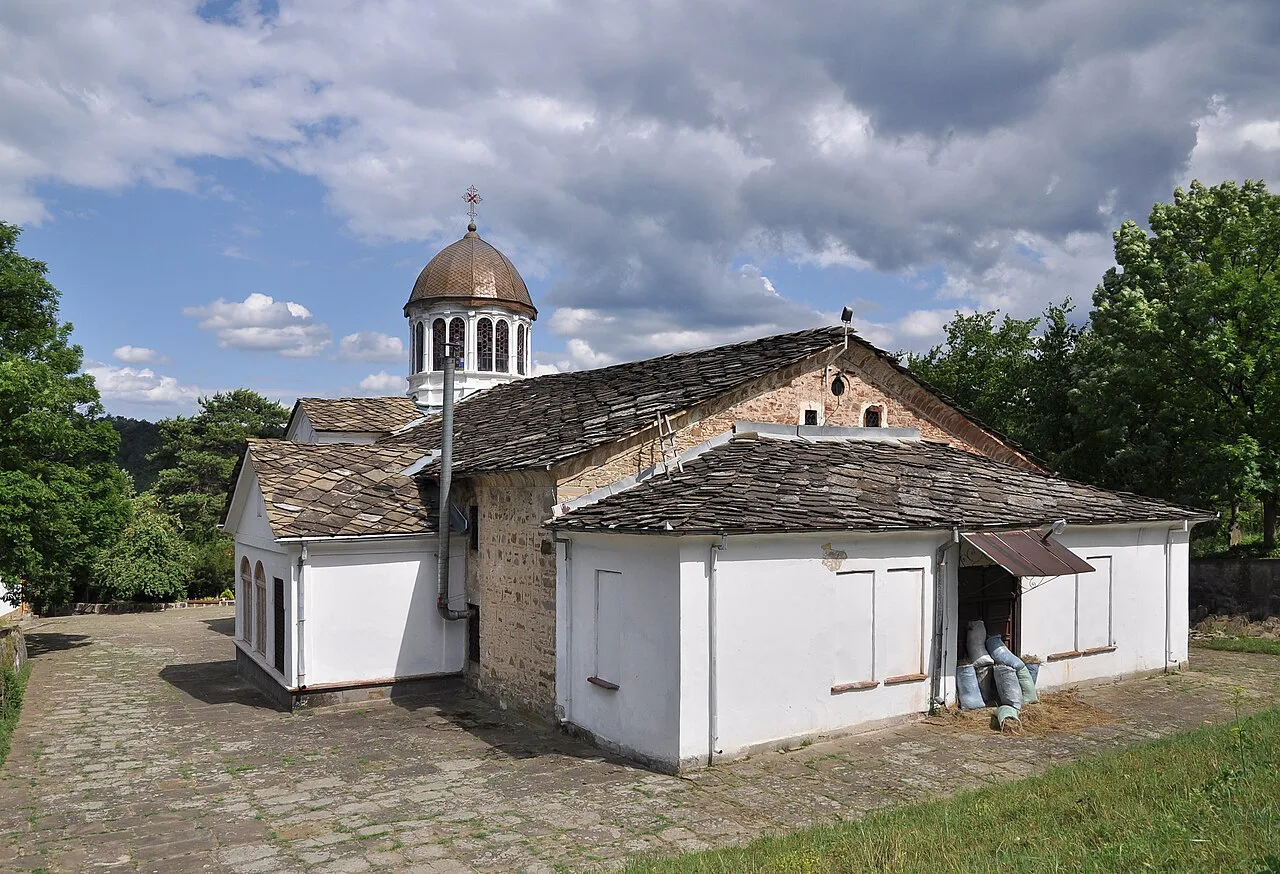
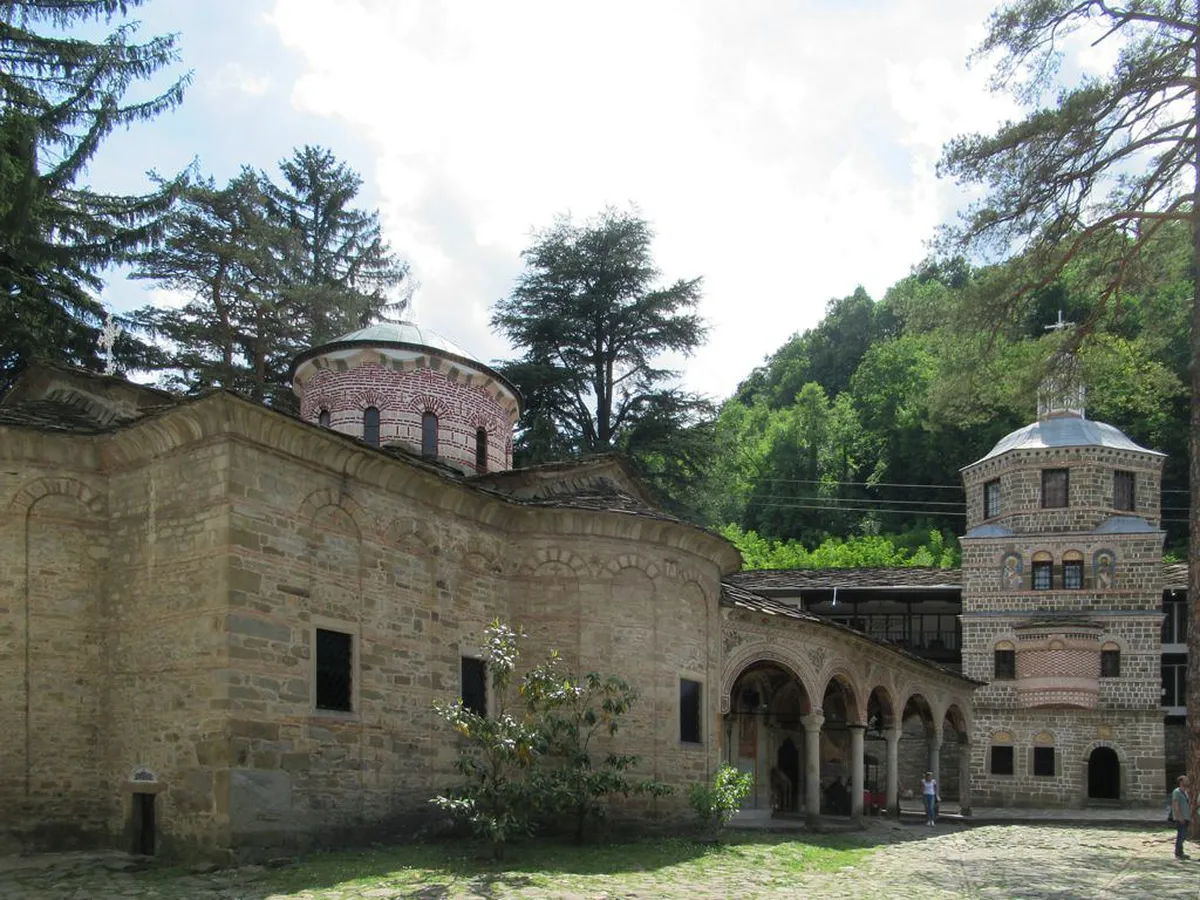
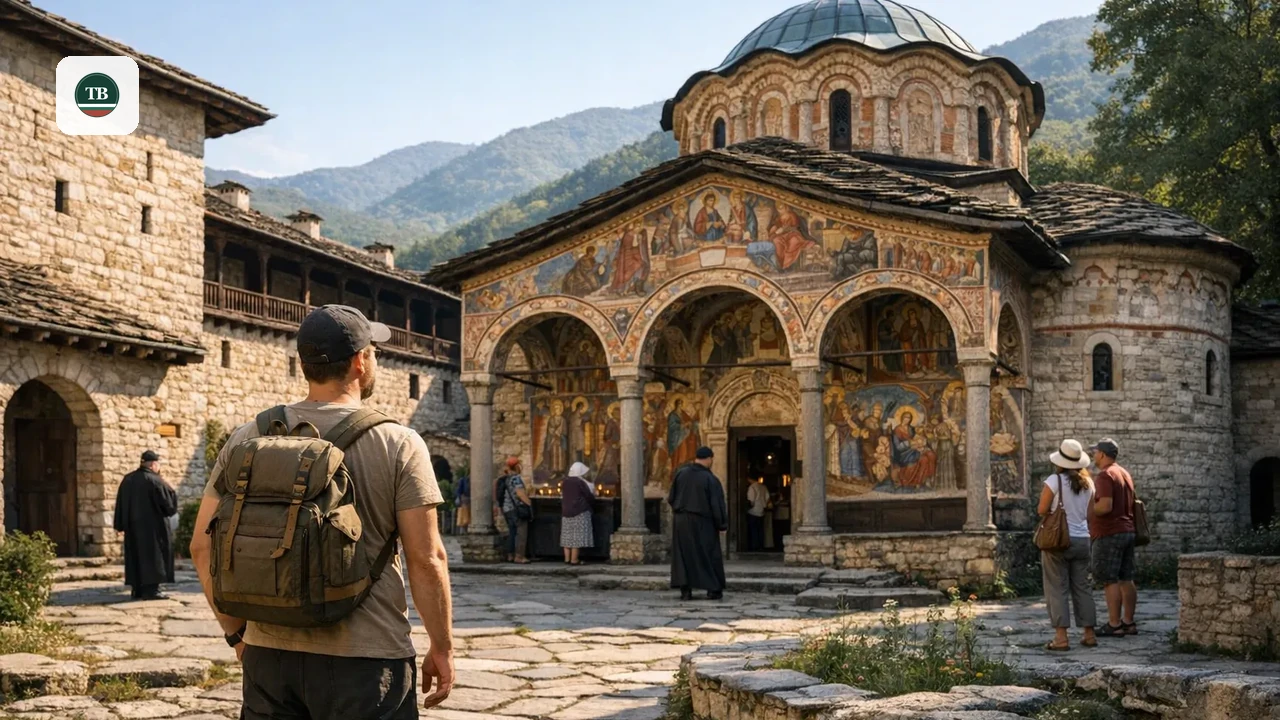
Troyan Monastery, known locally as Troyanski Manastir, was founded no later than the end of the 16th century, placing its roots at roughly 1600. Records place it among the three largest monasteries in Bulgaria, ranking behind only Rila Monastery and Bachkovo Monastery in scale. High stone walls enclose the courtyard in a fortress-like square, a defensive layout typical of monasteries built in this region under Ottoman rule. Centuries of practical necessity shaped that layout, since monasteries here needed to double as refuges during periods of unrest. This complex sits on the banks of the Cherni Osam river, about 10 km from Troyan in Lovech Province, at the northern edge of the Balkan Mountains. Today, the complex functions as an active Orthodox monastery, a pilgrimage destination, and a documented landmark of the Bulgarian National Revival period. A separate 10 Best Things to Do in Troyan, Bulgaria: Monastery, Crafts & Hot Springs guide covers the town center itself in more depth. Travelers assembling a wider route through the country can cross-check this stop against 18 Best Places to Visit in Bulgaria: A Complete 2026 Guide before committing a full day to Lovech Province.
The Church of the Dormition and Zahari Zograf's Frescoes
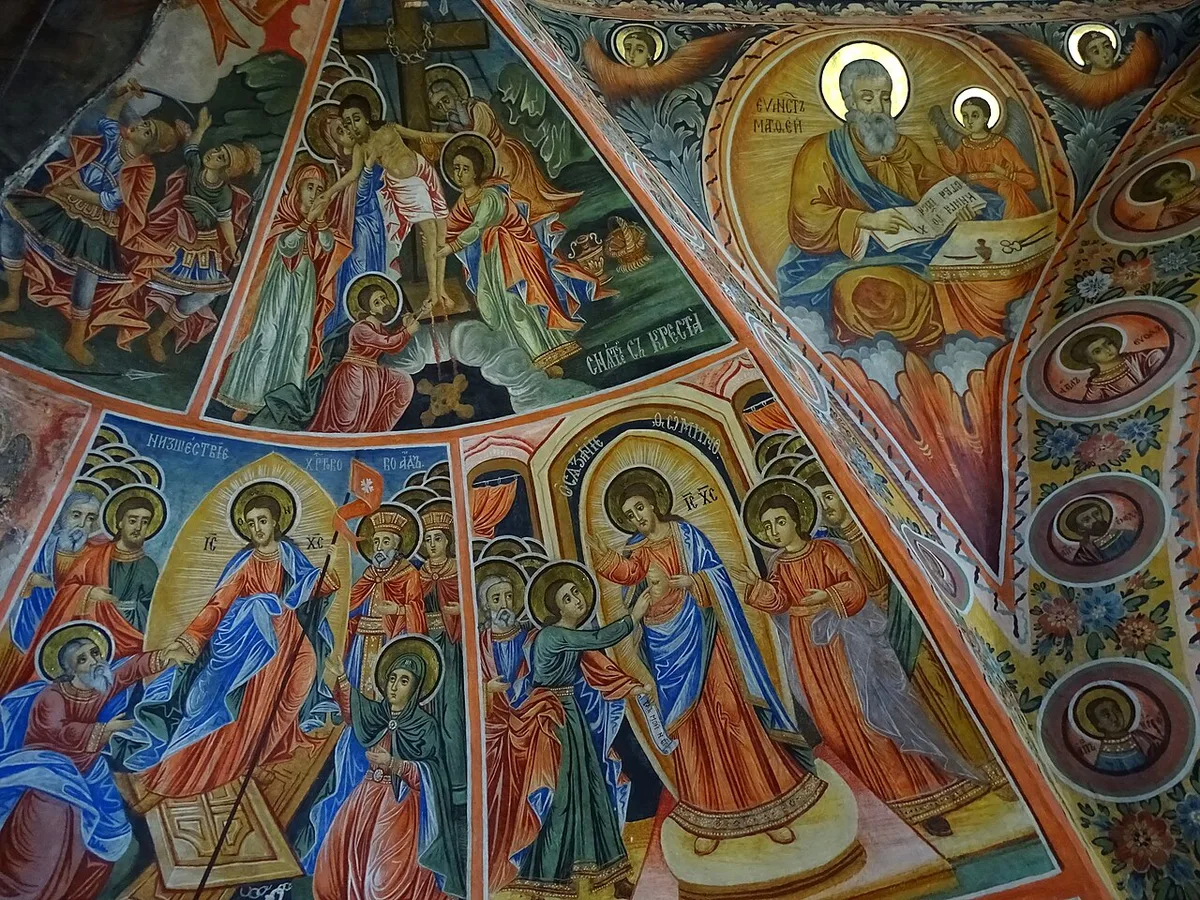
Its main church, the Dormition of the Most Holy Mother of God, anchors the monastery courtyard. Master-builder Konstantin reconstructed it in 1835, near the end of Ottoman rule, during the Bulgarian National Revival. Painter Zahari Zograf covered the interior and exterior between 1847 and 1849. Zograf also painted the central church at Rila Monastery, Bulgaria's largest monastery, giving Troyan a direct artistic link to that larger complex. His murals reproduce two recurring National Revival themes, the Wheel of Life and Doomsday, both moral allegories aimed at an illiterate congregation. One choice broke convention for its era. Zograf painted a self-portrait around one of the windows at the back of the church, an unusual claim of authorship for a 19th-century church painter. Visitors who look closely near the back windows can spot that self-portrait among the mural details. Inside, the iconostasis is a wood carving dated to 1839, finished a few years after the church's reconstruction.
Zahari Zograf's murals painted between 1847 and 1849 remain major attractions, yet photography is commonly restricted around the frescoes, so visitors must experience these celebrated National Revival works directly.
The Three-Handed Virgin Icon and Vasil Levski's Hiding Room
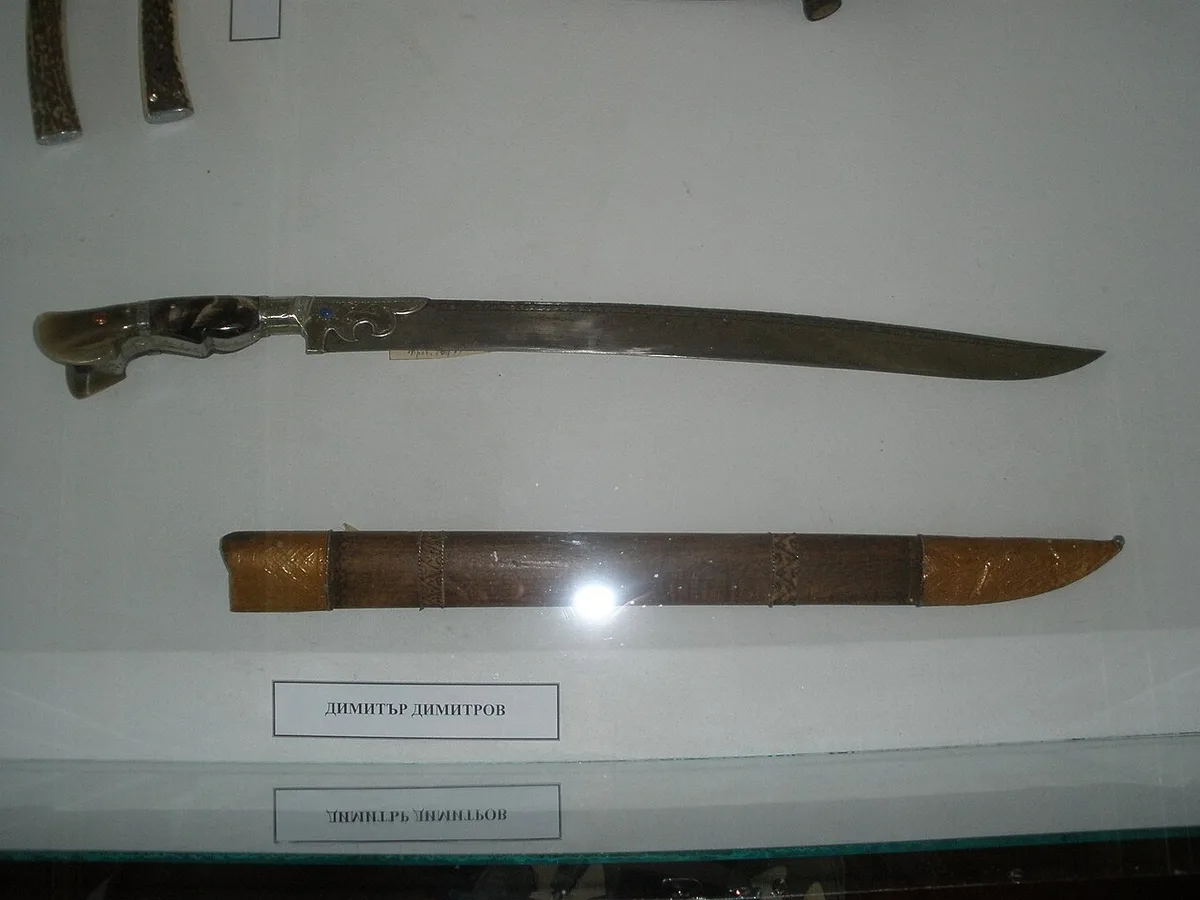
Troyan Monastery has held the Three-Handed Virgin icon, known in Bulgarian as Bogoroditsa Troeruchitsa, since the 17th century. It ranks among the holiest icons in Bulgarian Orthodoxy and draws pilgrims independent of the monastery's art or architecture. A well-known legend surrounds how the icon reached the monastery, though the specifics vary by telling; what is documented is that the monastery has kept it since the 1600s. A separate icon of St. George inside the main church draws its own pilgrimage each St. George's Day. History layers onto the religious significance here. Revolutionary Vasil Levski hid inside the monastery and met with fellow organizers during the Ottoman period. The room he used is now a small museum inside the complex. Visiting both the icon and the Levski room in one stop covers the monastery's two defining identities: spiritual pilgrimage site and site tied to the Bulgarian independence movement.
Oreshak: The Craft Village Built Around Monastery Pilgrims
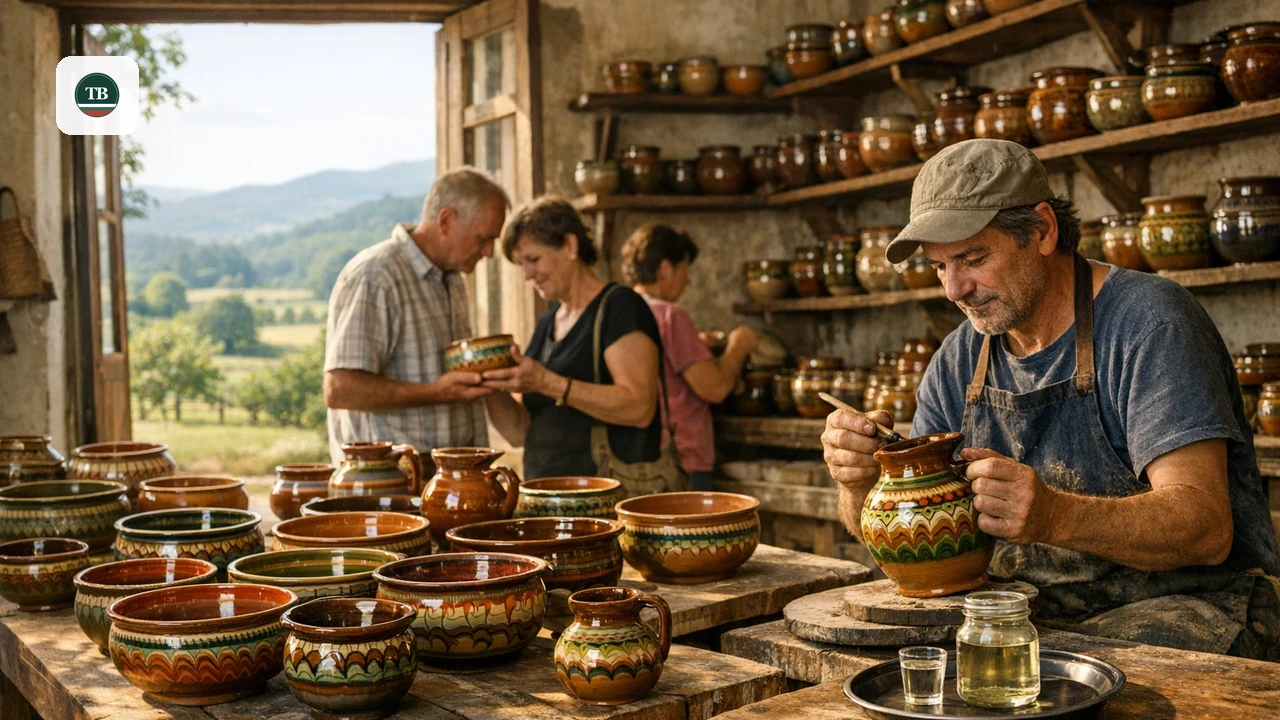
Oreshak sits about ten minutes from the monastery gates. Its identity is inseparable from centuries of monastery pilgrims passing through. Pilgrims needed lodging, food, and goods to carry home. Generations of local artisans built a permanent craft economy around that traffic. That history explains why Oreshak, not Troyan town itself, hosts the region's National Exhibition of Arts and Crafts. Exhibition halls here are often considered the top place in Bulgaria to see and buy authentic Troyan pottery, alongside woodcarving and other National Revival-era crafts. Workshops around the village let visitors watch potters and woodcarvers work rather than only browse finished pieces. For background on the pottery style and the rakia culture that runs alongside it, the Troyan Pottery and Rakia: Bulgaria's Twin Balkan Crafts Guide guide covers both in depth. Shoppers planning purchases beyond Oreshak can compare options in the Bulgaria Souvenirs: 15+ Authentic Gifts & Shopping Guide guide before deciding what to carry home.
A Suggested Route Through the Monastery and Oreshak
A logical visit order keeps the monastery's history and Oreshak's crafts from feeling rushed. Start at the fortress-like courtyard gate and take in the layout before entering the Church of the Dormition itself. Spend time on the Zograf frescoes and the iconostasis before moving to the Three-Handed Virgin icon. The Vasil Levski hiding-room museum sits nearby and adds extra time to the stop for anyone interested in the revolutionary history. From the monastery, the short drive to Oreshak leads into the National Exhibition of Arts and Crafts halls. Budget extra time in Oreshak for pottery workshops and a stop at a local guesthouse for lunch. Together, the monastery and Oreshak realistically fill half a day without rushing any single stop.
Best Time to Visit: Festivals, Crowds, and Seasons
Timing a visit to Troyan Monastery and Oreshak changes the experience more than almost any other decision. August 15, the Dormition of the Mother of God, is the monastery's namesake feast day and its busiest date of the year. Expect the largest crowds and the fullest liturgical calendar that day. The Festival of the Plum and Troyan Rakia usually runs in late September, tying Oreshak's crafts scene to the region's rakia harvest. Confirm exact dates locally before planning a trip around it, since festival scheduling can shift year to year. Spring brings the clearest mountain scenery along the Cherni Osam valley, with fewer crowds than the August feast day. Arriving before midday avoids the tour-bus groups that tend to cluster at the monastery in early afternoon.
Getting There, Hours, and Entry Fees
Most visitors reach Troyan Monastery and Oreshak by car, since public transport along this stretch of Lovech Province runs infrequently. Direct public transport from Sofia or Plovdiv to the monastery is limited, which is why car travel dominates most itineraries. Driving from Sofia routes through Lovech and Troyan before the final 10 km stretch to the monastery. Driving from Plovdiv approaches from the south, through Karlovo and over the mountains. Final approach to the monastery follows the Cherni Osam river valley regardless of season. Renting a car for the day is the more reliable option regardless of starting city. Confirm current opening hours and any fee changes directly with Troyan Municipality before visiting, since museum hours can shift seasonally. Drivers building a longer loop around north-central Bulgaria can slot this stop into a Bulgaria Road Trip Itinerary: 10 Essential Guide Sections rather than treating it as a standalone day.
Bulgaria's third-largest monastery sits 10 km from Troyan via the Cherni Osam river road, but infrequent public transport makes car rental essential for most day visitors.
- From Troyan town center: about 10 km to the monastery via the Cherni Osam river road.
- From Sofia: routed via Lovech and Troyan, roughly a half-day round trip once stops are included.
- From Plovdiv: routed via Karlovo and the mountain roads south of Troyan.
- Church and courtyard entry: free.
- Extra fees: the Vasil Levski hiding-room museum and other in-house exhibits charge a small separate fee, well under the cost of a sit-down meal in Oreshak.
Staying Overnight: Monastery Guesthouse vs Oreshak Guesthouses
Troyan Monastery accepts overnight guests, and Oreshak's guesthouses sit a short drive away. The choice comes down to atmosphere and comfort rather than availability. Monastery rooms are basic by design. Expect shared bathrooms in some wings, an early curfew tied to the liturgical schedule, and rooms split by gender or reserved for families. That trade-off suits pilgrims and travelers seeking quiet over comfort. Oreshak's guesthouses lean social and culinary, with private en-suite rooms and dining built around Troyan's regional food and rakia. This table breaks down the trade-off directly. Booking a few days ahead is reasonable insurance around major feast days and weekends, when rooms fill up faster than during quieter stretches of the year. Contacting the monastery directly, or an Oreshak guesthouse ahead of the August 15 feast day, is the safest way to secure a room during the year's busiest week.
| Feature | Monastery Stay | Oreshak Guesthouse |
|---|---|---|
| Vibe | Quiet, religious, early curfew | Social, traditional, food-focused |
| Comfort | Basic, often shared baths | Moderate to high, private en-suite |
| Best for | Pilgrims and solitude seekers | Families and food-focused travelers |
| Cost | Budget | Mid-range |
Nearby Stops to Extend the Trip
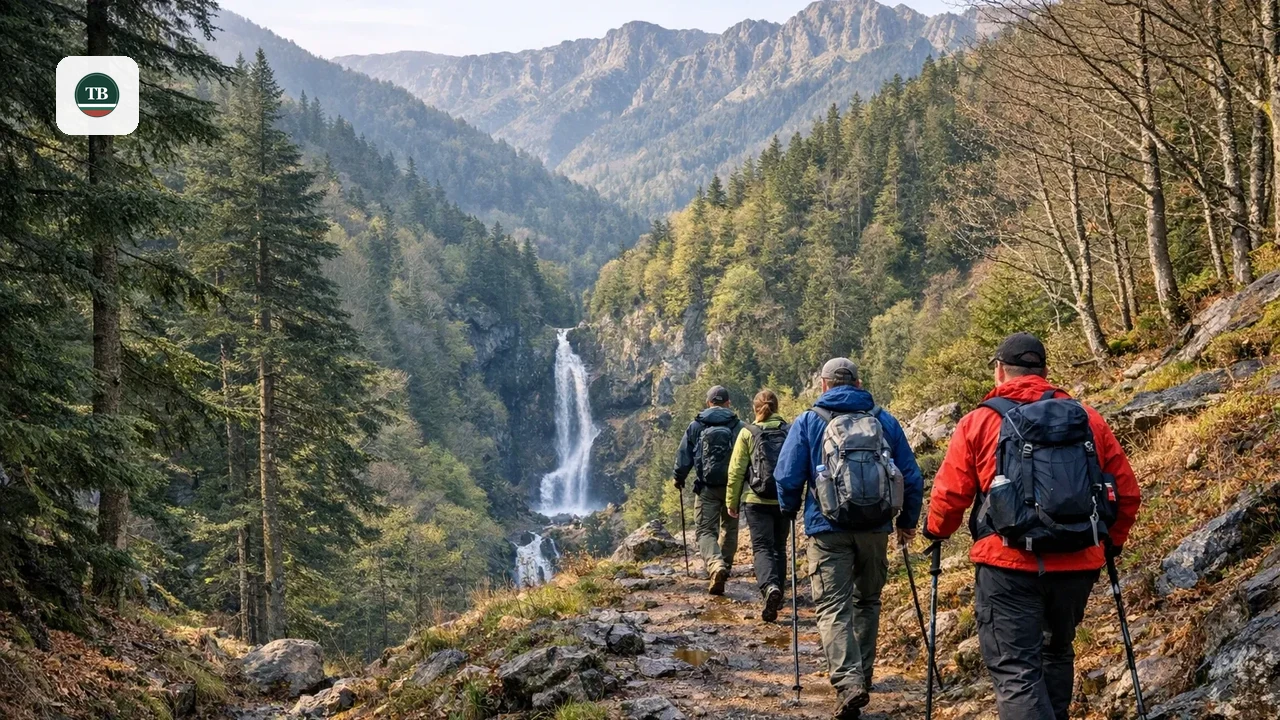
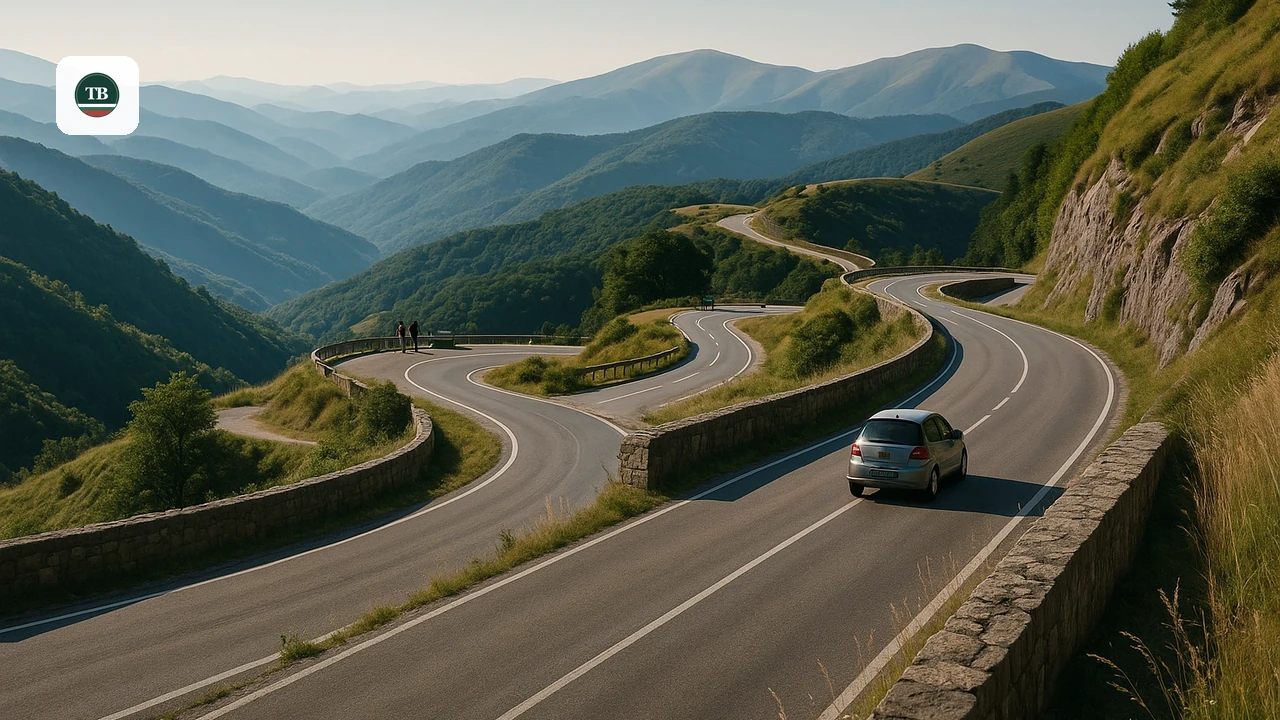
Troyan Monastery and Oreshak pair naturally with several nearby stops for travelers with a full day or more. The Troyan Pass road trip climbs south from Troyan toward Beklemeto and the Arch of Liberty monument, with mountain views along the way. Central Balkan National Park sits within Troyan Municipality, the same district as the monastery and Oreshak. Hiking near Troyan is a realistic add-on for anyone staying an extra night. Devetashka Cave and Shipka Pass both sit within range for a longer loop through north-central Bulgaria, though neither is a short detour from the monastery itself. Visit Bulgaria's official tourism portal outlines additional trailheads and mountain huts across the Balkan range for travelers extending beyond Troyan. For route planning specific to this area, Bulgaria's mountain hiking guide covers trailheads and seasonal conditions near Troyan. Combining two or three of these nearby stops with the monastery works well for travelers spending a full day or two based in Troyan.
Mistakes to Avoid at Troyan Monastery and Oreshak
A few avoidable mistakes account for most bad experiences at the monastery and in Oreshak. Most of these are easy to prevent with a little planning ahead of the trip.
- Skipping the dress code: shoulders and knees need covering to enter the church; bring a scarf or long layer even in summer.
- Photographing inside the main church: photography is commonly restricted around the frescoes and icons, so ask before raising a phone or camera.
- Counting on public transport: buses along this route run infrequently, and a rental car is the more dependable way to reach both stops in one day.
- Rushing the visit: a short photo stop skips the Levski museum, the icon, and the Oreshak crafts halls that make the detour worthwhile.
Frequently Asked Questions
How far is Troyan Monastery from Oreshak?
Troyan Monastery sits on the Cherni Osam river about 10 km from the town of Troyan. Oreshak village is roughly ten minutes away by car from the monastery gates, close enough to visit both in a single stop.
Is Troyan Monastery free to visit?
General access to the church and courtyard is free. Separate small fees apply to in-house exhibits such as the Vasil Levski hiding-room museum. Confirm current rates with Troyan Municipality before visiting.
What is the best time of year to visit Troyan Monastery and Oreshak?
August 15, the Dormition of the Mother of God, is the monastery's feast day and its busiest date. Spring offers quieter crowds and clearer mountain scenery along the Cherni Osam valley. The Festival of the Plum and Troyan Rakia usually runs in late September, adding a crafts-and-rakia angle to a visit.
Can you stay overnight at Troyan Monastery?
Yes, the monastery accepts overnight guests in basic rooms, with shared baths in some wings and an early curfew tied to the liturgical schedule. Travelers who want more comfort or dining options typically choose a guesthouse in Oreshak instead.
Who painted the frescoes at Troyan Monastery?
Zahari Zograf painted the interior and exterior of the Church of the Dormition between 1847 and 1849. He also painted the central church at Rila Monastery, and his Troyan murals include the Wheel of Life, Doomsday, and a self-portrait that broke convention for the era.
Is Troyan Monastery worth a detour if time in Bulgaria is limited?
Combining the monastery and Oreshak covers Bulgarian National Revival art, Orthodox pilgrimage history, and hands-on crafts shopping in roughly half a day. Few single stops in Lovech Province pack in that much range, which makes it an efficient detour even on a tight itinerary.