Hisarya Roman Fortress Walls and Ancient Ruins: A Complete Guide
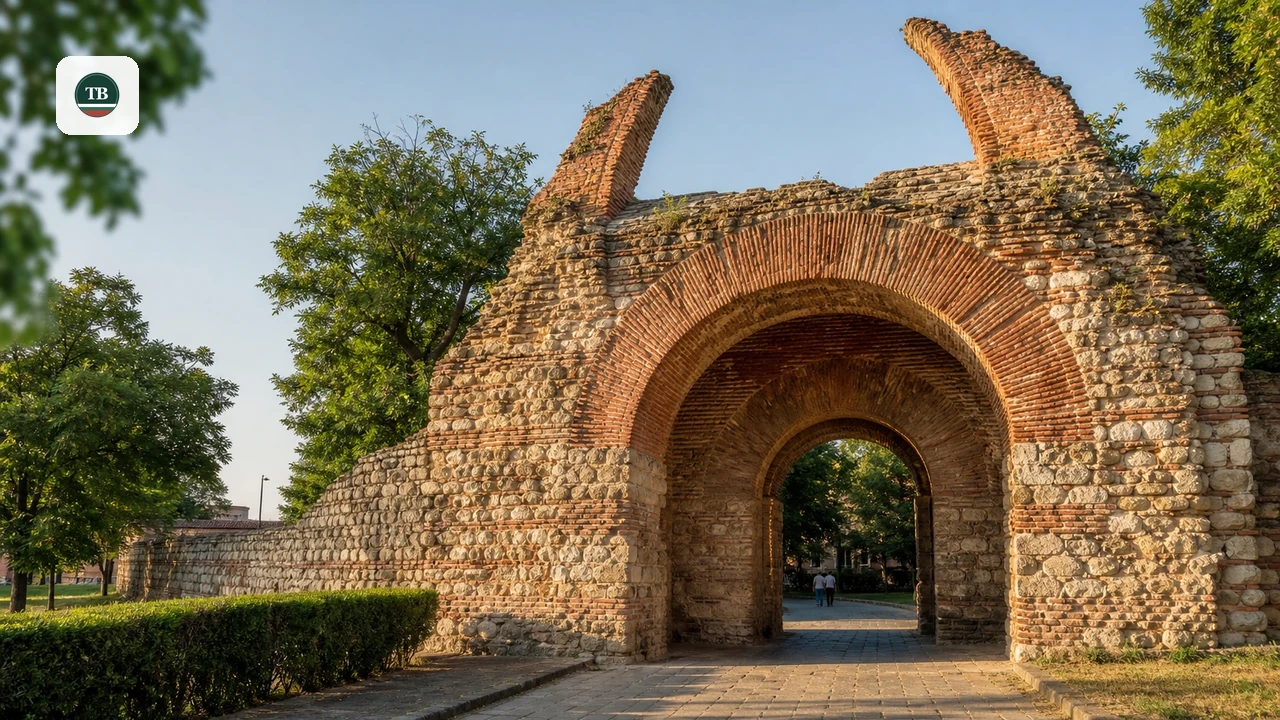
Last updated August 2026, this guide to Hisarya's Roman fortress walls and ancient ruins covers the 2,327-meter circuit, its 44 towers, and the still-flowing Roman baths inside ancient Diocletianopolis. Emperor Diocletian declared the settlement a city in 293 AD, and the walls now enclose roughly 30 hectares of parkland, ruins, and mineral springs. Its Camel's Gate, on the southern side, remains the most photographed stop along the circuit.
Hisarya's Roman Fortress Walls and Ancient Ruins Explained
Diocletianopolis rose after Emperor Diocletian declared the mineral-spring settlement a city in 293 AD, replacing earlier names that included Augusta. Archaeologists date the fortress wall to the same era: a 2,327-meter circuit enclosing about 30 hectares in an irregular quadrangle. 44 towers line the wall. Most are rectangular, but the southeast tower is fan-shaped and the northeast tower is octagonal on a circular base. Each tower rose three floors, giving defenders overlapping sightlines along the perimeter. City planners laid out Diocletianopolis on the Hippodamian grid common to Roman cities: wide streets crossing at right angles, plus a dual water system separating drinking water from the mineral water piped to the baths. Preservation-wise, Bulgarian heritage sources describe this as the most intact Roman-era fortress wall from the 3rd and 4th centuries anywhere in Bulgaria or Eastern Europe. Roman sources also credit Emperor Septimius Severus with visiting the settlement for leisure, underscoring its early reputation as a resort town built around the springs. A 528 AD travel guide attributed to the ancient author Hierocles ranked Diocletianopolis as the third-largest city in the Roman province of Thrace, behind only Philippopolis (modern Plovdiv) and Beroe (modern Stara Zagora). That ranking, combined with the wall's condition, is why heritage guides count Hisarya among the region's castles and fortresses in Bulgaria.
A Walking Route Through the Walls: West Gate to the Camel's Gate
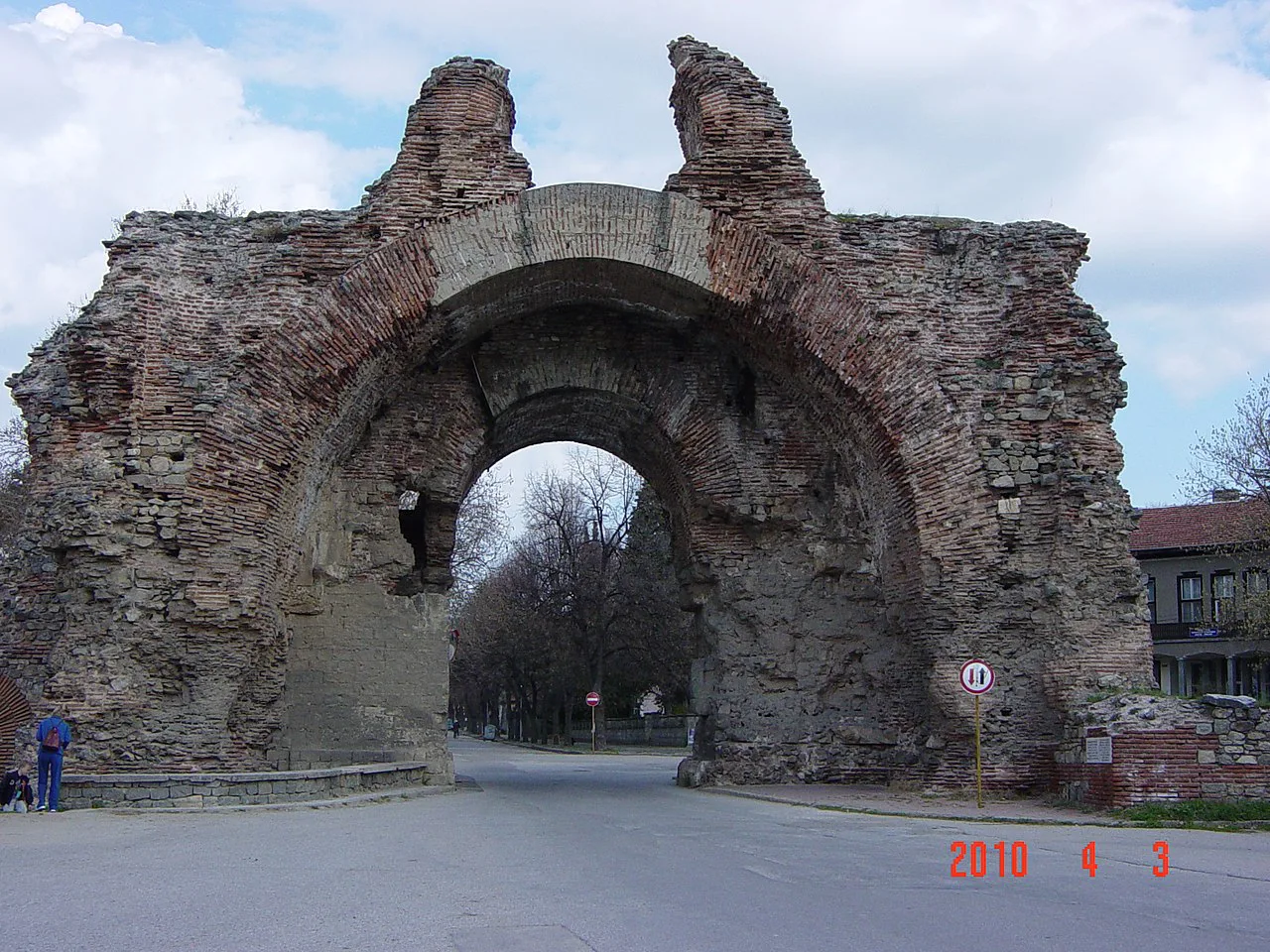
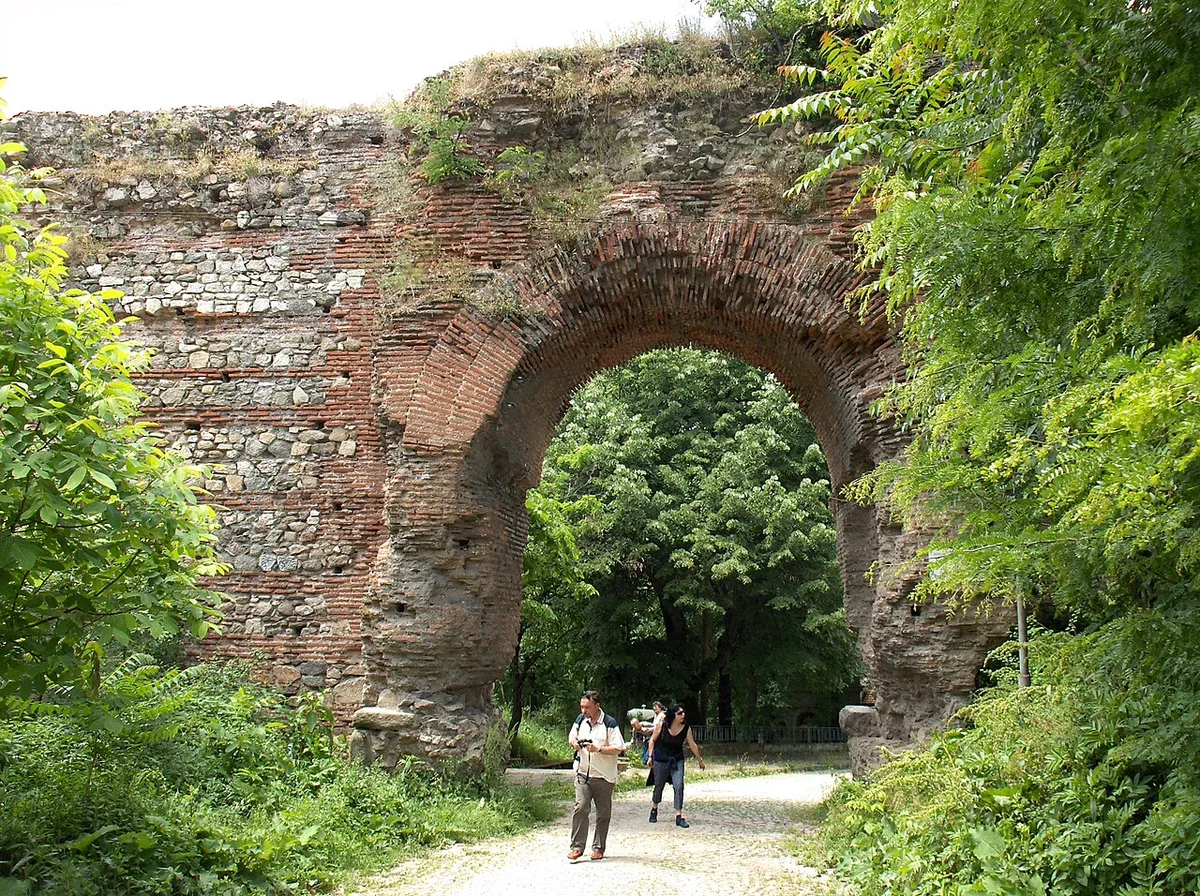
Most visitors start at the Western Gate. On-the-ground accounts describe it as the best-preserved of Hisarya's four gates and the closest point to the bus station. A footpath runs along the inside of the fortress wall, so following it in either direction covers the full circuit without backtracking. Central Park sits inside the walls partway around the route, with a recreated Roman colonnade, flower beds, and benches for a rest stop. Hikers wanting a longer countryside leg afterward can find nearby routes in the hiking and mountain trails guide. It finishes at the Southern Gate, the fortification's best-known landmark. Locals nicknamed the gate 'The Camels' because its broken central arch once resembled two camels facing each other. Architecturally, it compares to the Golden Gate of Constantinople and the Golden Gate of Diocletian's Palace in Split, sharing the same two-level battlement system and an inner gallery for troop movement. A 2023 conservation project restored the gate using materials matched to Roman-era construction technique, stabilizing the structure and covering over earlier, less accurate repairs. Research tied to that same restoration established that the Southern Gate was actually built later than the fortress's other three gates.
- Western Gate — start here, a short walk from the bus station and described as the best preserved of the four gates.
- Central Park and Roman colonnade — near the route's midpoint, with benches and a covered walkway.
- Roman Barracks — an open meadow just east of the Southern Gate, a good rest stop.
- Southern Gate (Camel's Gate) — the finish, with a battlement restored in a 2023 conservation project.
The Top Ancient Ruins Inside the Archaeological Reserve
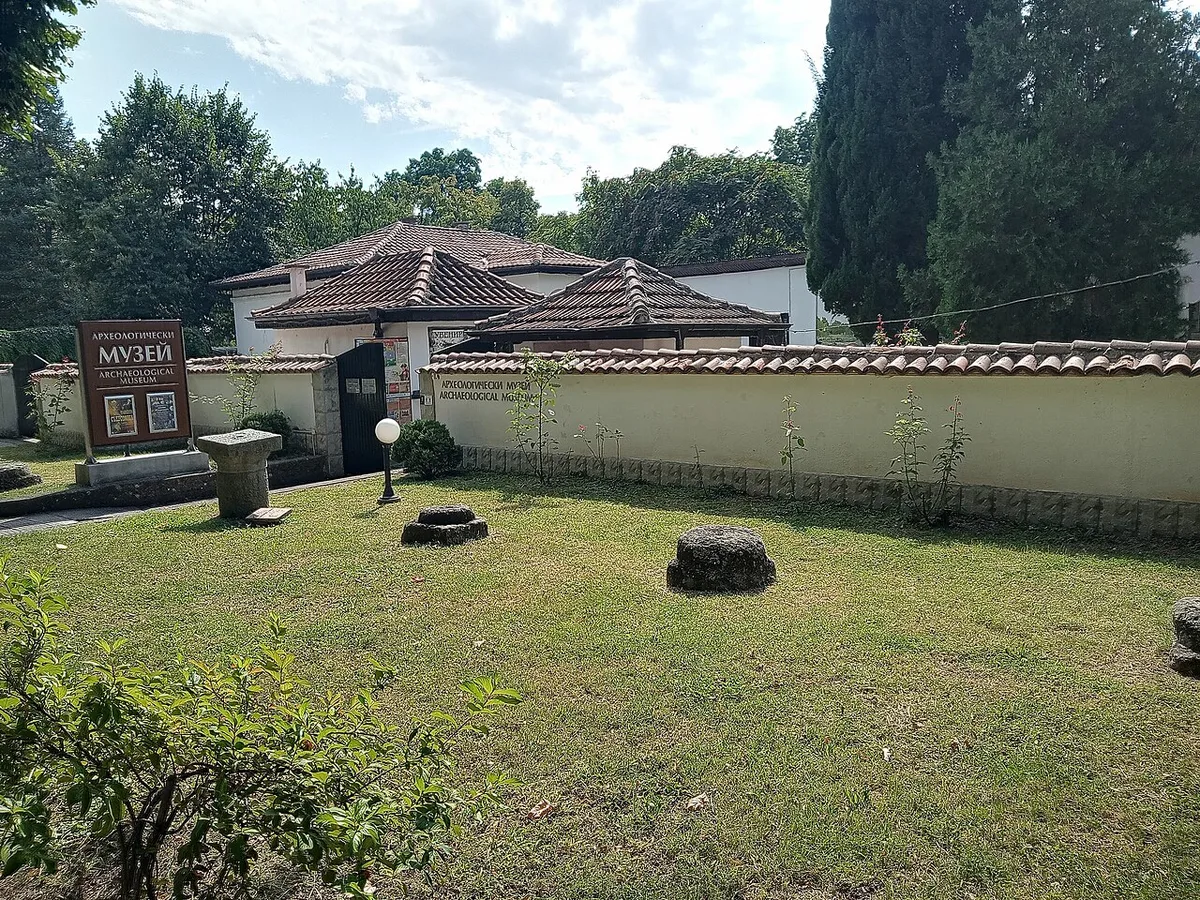
Four ancient structures anchor Hisarya's archaeological reserve beyond the walls themselves, and each rewards a different kind of visit. Excavations at the Roman Thermae have also turned up votive plaques dedicated to the nymphs, a marble lion's-head fountain spout, and bronze coins used to date the different construction phases. A 2023 excavation tied to an EU-funded conservation project uncovered two water-supply galleries under the northern baths, including a mineral-water aqueduct not previously documented at the site. Two inscribed votive plaques found at the thermae name individual worshippers. One, in Greek, credits a dedication by Severus, son of Ammonius, to the nymphs as patrons of trees. A second plaque names a worshipper called Flavia Chione, addressing the deities directly as the Mistresses Nymphs. Together with the lion's-head fountain spout that once fed water into a caldarium pool, these finds now form part of the collection at the Archaeological Museum of Hisarya.
- Roman Thermae — a bath complex completed in 153 AD per an on-site marble dedication, expanded through the 4th century to roughly 0.3 hectares. Part of it still carries flowing spring water, among the few working ancient bath sites in Bulgaria.
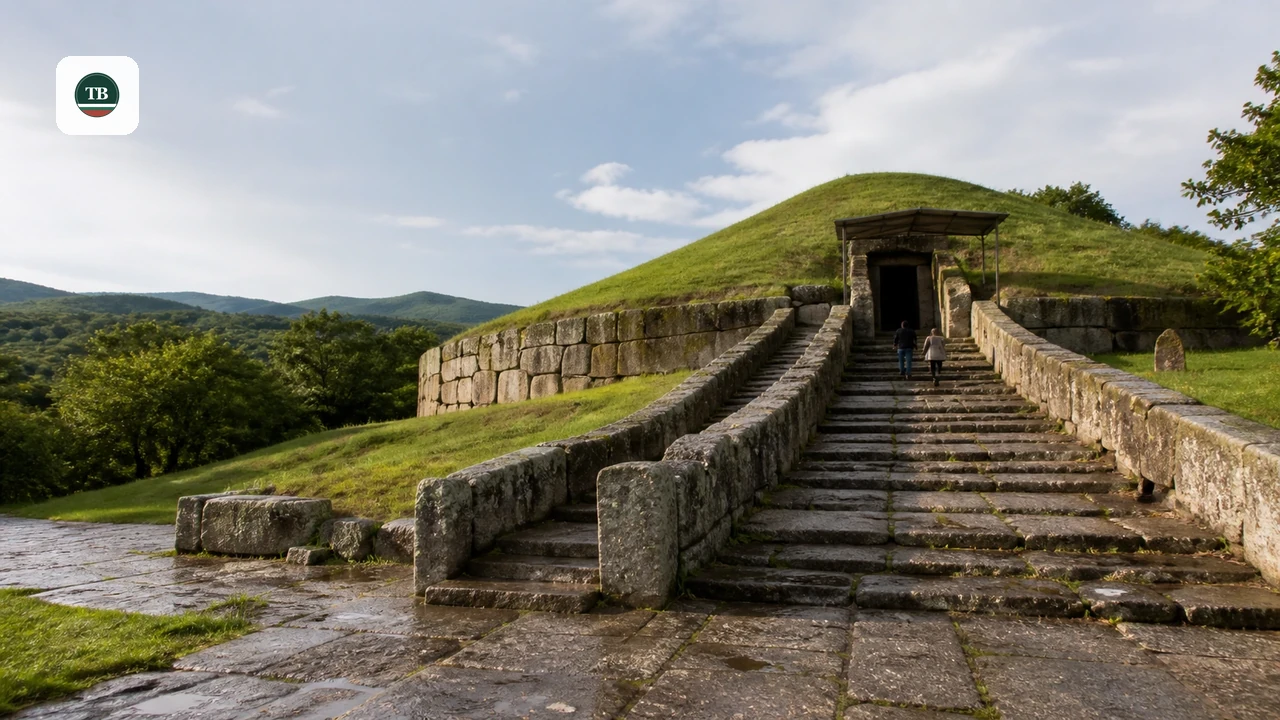
- Roman Tomb — a 4th-century mosaic burial chamber reached via a short countryside walk and a low crawl-through entrance; not suited to mobility or claustrophobia concerns.
- Roman Amphitheatre — dates to the end of the 3rd century, small in scale next to Plovdiv's Roman theater, and sits beside the thermae.
- Roman Barracks — an open meadow east of the Southern Gate, a quiet stop between the gate and the baths.
From Thracian Settlement to Roman Diocletianopolis
Thracian communities settled around Hisarya's mineral springs well before Rome arrived in the region, and archaeologists have found prehistoric remains beneath the later Roman layers. Rome absorbed Thrace as a province in the 1st century AD, and the settlement grew alongside the springs under names that included Augusta before Diocletian's 293 AD charter. Between the 5th and 6th centuries, Diocletianopolis reached its peak and expanded past the fortress walls into new suburbs. As Christianity spread, the mineral springs' healing reputation carried over to the new faith, and builders replaced pagan temples with Christian basilicas. Ten early basilicas have been documented in the area around Hisarya. Diocletianopolis later appears in diocese records from the 7th to 10th centuries as a bishopric under the Metropolitan of Philippopolis. Ottoman-era Hisarya shrank to a handful of houses scattered among the ruins, and nearby residents quarried fortress stone for their own construction. Recovery came slowly after Bulgaria's 1878 liberation, and organized protection did not begin until 1933, when General Todor Markov founded a local archaeological society. That collection became a state museum in 1957 and was reorganized as a dedicated Archaeological Museum in 1967. Hisarya was declared a resort of national importance that same year, 1957, and formally became a city under the name Hissarya in 1964.
The settlement rose from Thracian origins to prominence by 528 AD, when a travel guide ranked Diocletianopolis as the third-largest city in the Roman province of Thrace, evidence of the importance that warranted its fortress walls and elaborate bath complex.
Planning a Day Trip: Getting to Hisarya from Plovdiv and Sofia
Plovdiv is the easiest gateway to Hisarya. Most visitors arrive by bus from Yug Bus Station, next to the city's main railway station, and the ride takes roughly an hour. Tickets are bought at the station counter rather than online, and buses run through the day on a published timetable worth checking before travel. Traveling by train is possible but slower, since the route requires changing partway, which is why the direct bus remains the more practical choice for a single-day visit. From Sofia, reaching Hisarya generally means driving or connecting through Plovdiv by bus. Check current routes and schedules on Bulgaria's official tourism portal before planning a same-day trip from the capital. Budget four to six hours on site, and pair the stop with other day trips from Hisarya if building a longer central Bulgaria itinerary.
Visitor Essentials: Tickets, Hours, and the Archaeological Museum
Walking the fortress walls and the parkland inside them costs nothing, since they form part of Hisarya's public archaeological reserve. Small separate entry fees apply at the Roman Thermae, the Roman Tomb, and the Archaeological Museum, in line with other municipal heritage sites in Bulgaria. Confirm current admission and opening hours locally, since small-town museum hours shift more often than posted signage suggests. Information boards scattered around the reserve carry a printed site map, useful since standard mapping apps do not label every individual ruin inside the walls. Even on a tight schedule, the Archaeological Museum is worth the stop, since it holds artifacts recovered from the baths, including votive plaques to the nymphs and coins used to date the site's construction phases. Hisarya's museum has closed on short notice before, so checking the town's Facebook page on the day of a visit is worth the extra step.
Walking the fortress circuit shows structures from centuries past, but the Archaeological Museum houses votive plaques and coins from the Roman Thermae, built in 153 AD, that reveal how residents honored their gods and used the baths as a spiritual space.
| Route | Stops Included | Best For |
|---|---|---|
| Quick Loop | West Gate, wall footpath, Southern Gate (Camel's Gate), Roman Thermae exterior | 2-3 hours, or pairing with a spa afternoon |
| Deep Dive | Quick Loop stops plus the Roman Tomb, Archaeological Museum, and Roman Barracks | 4-6 hours, for history-focused visitors |
Beyond the Ruins: Mineral Springs and Where to Eat
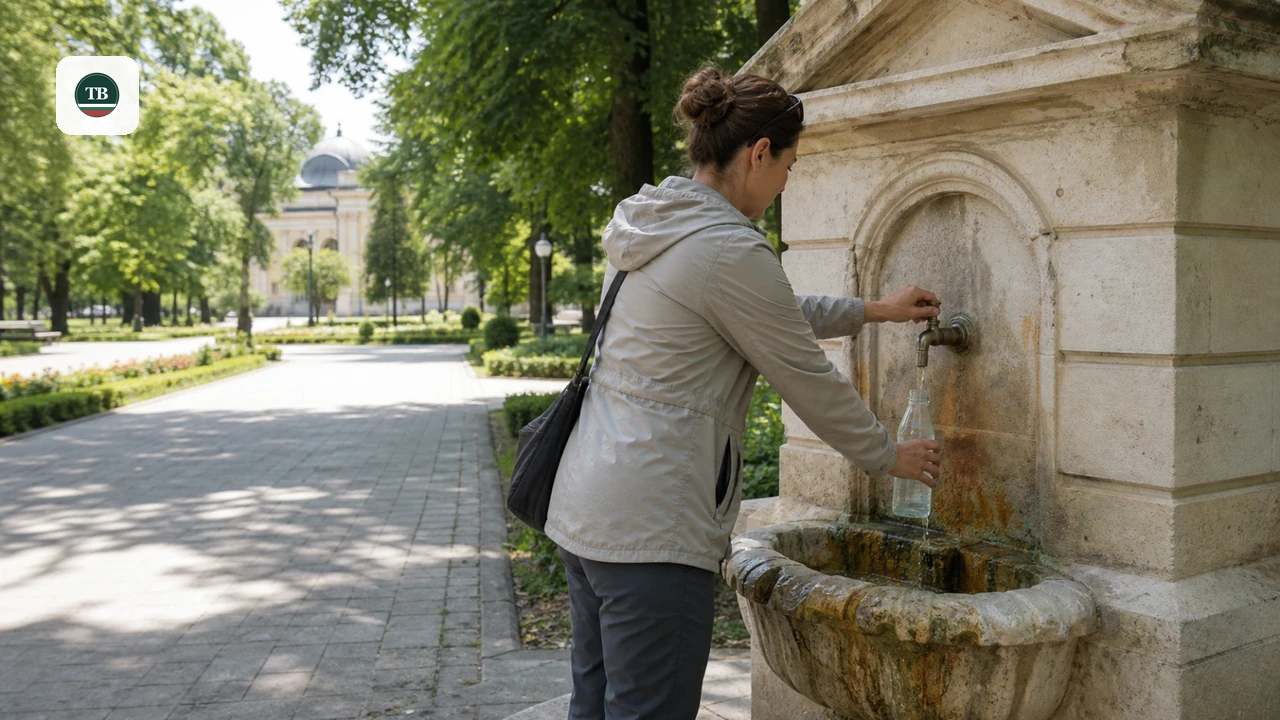
Hisarya's mineral water is not confined to museum displays. Several public taps around town, including one inside the Roman colonnade in Central Park, still run with hot spring water free to fill a bottle from. Lady's Teardrop spring, near the Roman Thermae, is another working tap set inside a small garden, popular with visitors topping up water before or after the ruins. Spa travelers pairing history with treatments can check the Hisarya mineral springs guide for the town's bathing options in more detail. For lunch or a beer near the park, Restaurant Balkan and Restaurant Rotonda both serve Bulgarian dishes with outdoor seating close to the fortress walls. Central Park Bar, near the Archaeological Museum, is another option for coffee or a Bulgarian beer between stops. Built in 1889, the Orthodox Church of St. Panteleimon sits within walking distance of the park and is free to enter, though a small shop inside sells candles and souvenirs. Additional dining, lodging, and sightseeing options appear in the other sights in Hisarya guide.
Mistakes to Avoid at Diocletianopolis
A few small planning slips account for most disappointing visits to the ruins.
- Skipping hours confirmation — the Archaeological Museum sometimes closes without much notice, so check the town's Facebook page the same morning rather than relying on posted hours.
- Wearing the wrong footwear — the wall footpath is uneven in places, and the Roman Tomb entrance requires crawling through a low passage, so flat closed shoes work better than sandals.
- Forgetting a water bottle — the Colonnade in Central Park has a free-flowing thermal water tap, so bring an empty bottle instead of buying water.
- Treating the ruins as a stand-alone stop — this is a common miss. Pairing the walls with the mineral springs, or with a broader look at Bulgaria's best places to visit, makes better use of the day-trip travel time.
Frequently Asked Questions
What is the best way to get to Hisarya from Plovdiv?
Direct buses from Yug Bus Station are the most reliable option, taking roughly an hour and running on a published timetable. Buy the ticket at the station counter rather than online. A train exists but requires a change and takes longer, so most day-trippers stick with the bus.
How long should you plan to spend at the Roman ruins in Hisarya?
Budget four to six hours for an unhurried visit. That covers the fortress walls and the Southern Gate, plus the Roman Thermae and the Archaeological Museum. Add extra time if the Roman Tomb is on the list, since reaching it means a countryside walk and a crawl through a low entrance.
Is the Camel's Gate the same as the Southern Gate?
Yes, they're the same structure. Locals call the Southern Gate 'The Camels' because its broken central arch once resembled two camels facing each other. A 2023 conservation project restored the gate's structure using materials matched to Roman-era construction technique.
Do you need to pay to see the fortress walls?
Walking the fortress walls and the parkland inside them is free. Expect a small separate entry fee at each of the Roman Thermae, the Roman Tomb, and the Archaeological Museum, so budget a little extra visiting all three.
What should you know before visiting the Roman Tomb?
Reaching the burial chamber involves climbing down steps and then crawling through a low entrance passage, so it does not suit visitors with mobility limitations or claustrophobia. Inside, a 4th-century mosaic floor and painted walls mark the grave of someone of high status in ancient Diocletianopolis. Wear clothing that can get dusty.
What should you pack for a day at Diocletianopolis?
Bring closed, flat shoes for the uneven wall footpath and the tomb crawl-through, plus an empty water bottle. Central Park's Colonnade has a free-flowing thermal water tap, so refilling on-site costs nothing. Sun protection is worth packing too, since much of the walking route has little shade.
Can you visit Hisarya as a day trip from Sofia?
Yes, though it takes longer than the direct Plovdiv bus route. Driving is the more flexible option, and connecting through Plovdiv by bus works if you prefer not to rent a car. Building in extra travel time keeps the visit relaxed rather than rushed.