The Thracian People: History, Culture, and Ancient Sites in Bulgaria
Last updated July 2026, the Thracian people remain one of ancient Europe's least understood civilizations, despite ruling large parts of the Balkan Peninsula for more than two millennia. Modern Bulgaria holds the densest concentration of their tombs, gold hoards, and fortress sites, stretching from the Valley of the Thracian Kings near Kazanlak to the rock-cut sanctuary at Perperikon. This guide separates verified Thracian history from later Greek and Roman accounts, then maps out exactly where to see it firsthand.
Who Were the Thracian People? A Timeline from 3500 BC to Rome
The Thracian people were an Indo-European-speaking population that inhabited large parts of southeast Europe in ancient history. Their exact origins remain uncertain, but researchers generally trace them to a mixture of Proto-Indo-European groups and earlier European farming populations. Thracian culture emerged during the early Bronze Age, around 3500 BC, and flourished through the third and second millennia BC. From that broader Thracian culture, the Getae and Dacian tribal groups also developed over time. Ancient Greek and Roman writers described the Thracians as disunited tribes rather than one nation, at least until they formed their first permanent state in the early 5th century BC. Rome gradually absorbed Thracian territory starting in the mid-2nd century BC, and the former Odrysian heartland became the Roman province of Thracia by 45-46 AD. That shift from tribal kingdom to Roman province sits inside the larger arc covered in this guide to Bulgaria's history. Thracian territory once stretched across several modern countries.
- Modern Bulgaria
- Romania
- North Macedonia
- Northern Greece and European Turkey
- Northwestern Anatolia (Asia Minor) in Turkey
The Odrysian Kingdom: Thrace's Greatest State
King Teres I founded the Odrysian Kingdom in the early 5th century BC, exploiting Persia's retreat after its failed invasion of Greece in 480-479 BC. Teres and his son Sitalces pursued an expansionist policy that made the kingdom one of the most powerful states of its era. The Odrysians allied with Athens for much of their early history and even joined the Peloponnesian War on the Greek side. By 400 BC, the kingdom showed clear signs of strain. King Cotys I sparked a brief renaissance that lasted until his murder in 360 BC. Macedon absorbed the Odrysian Kingdom around 340 BC, though it regained independence after Alexander the Great's death. Around 330 BC, King Seuthes III revived a smaller Odrysian state and founded a new capital, Seuthopolis. Ancient writers also linked Thracian ritual and feasting culture to wine, a thread picked up in this roundup of Bulgaria Fun Facts: History, Culture, and Travel-Ready Trivia (2026 Guide).
Top Thracian Sites to Visit in Bulgaria
Bulgaria concentrates more accessible Thracian archaeology than any neighboring country, with tomb clusters, temple complexes, and rock-cut fortresses spread across its center and south. Three sites anchor most Thracian-focused trips. Perperikon's rock-cut terraces predate the medieval carving at the Madara Rider relief by well over a thousand years, though both count among Bulgaria's most striking rock monuments. Perperikon's fortress ruins also appear in this guide to Bulgaria's castles and fortresses.
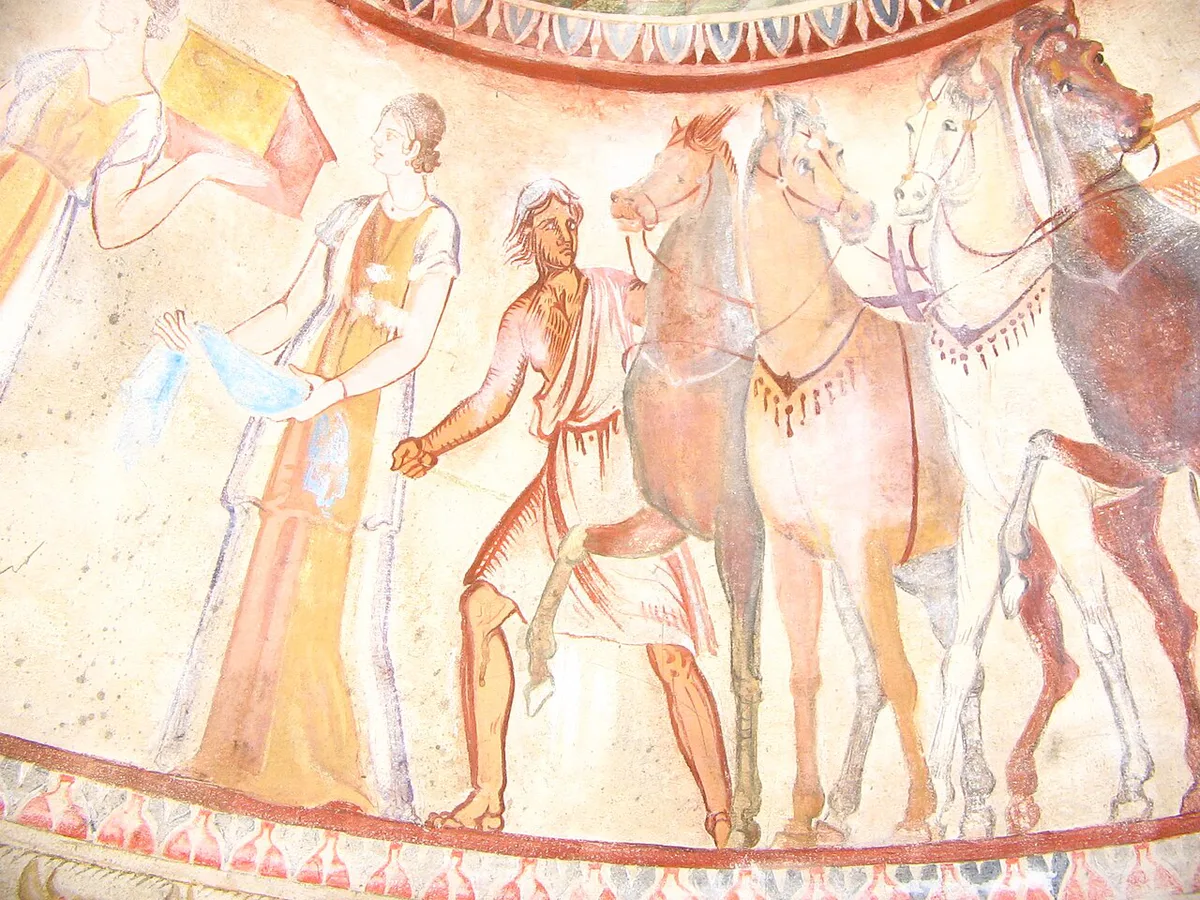
The Kazanlak Tomb, listed among Bulgaria's top Thracian sites for its painted frescoes, displays only a replica chamber—the original frescoes rarely see public access and remain protected inside.
- Valley of the Thracian Kings, near Kazanlak: a cluster of Thracian burial mounds, including the UNESCO-listed Kazanlak Tomb, known for its painted frescoes.
- Perperikon: a rock-cut sanctuary and fortress complex in the Rhodope Mountains, occupied from the Bronze Age through the Roman and medieval periods.
- Starosel: a Thracian temple-tomb complex built for a still-unidentified Thracian ruler.
Thracian Gold: Where to See the World's Oldest Treasures
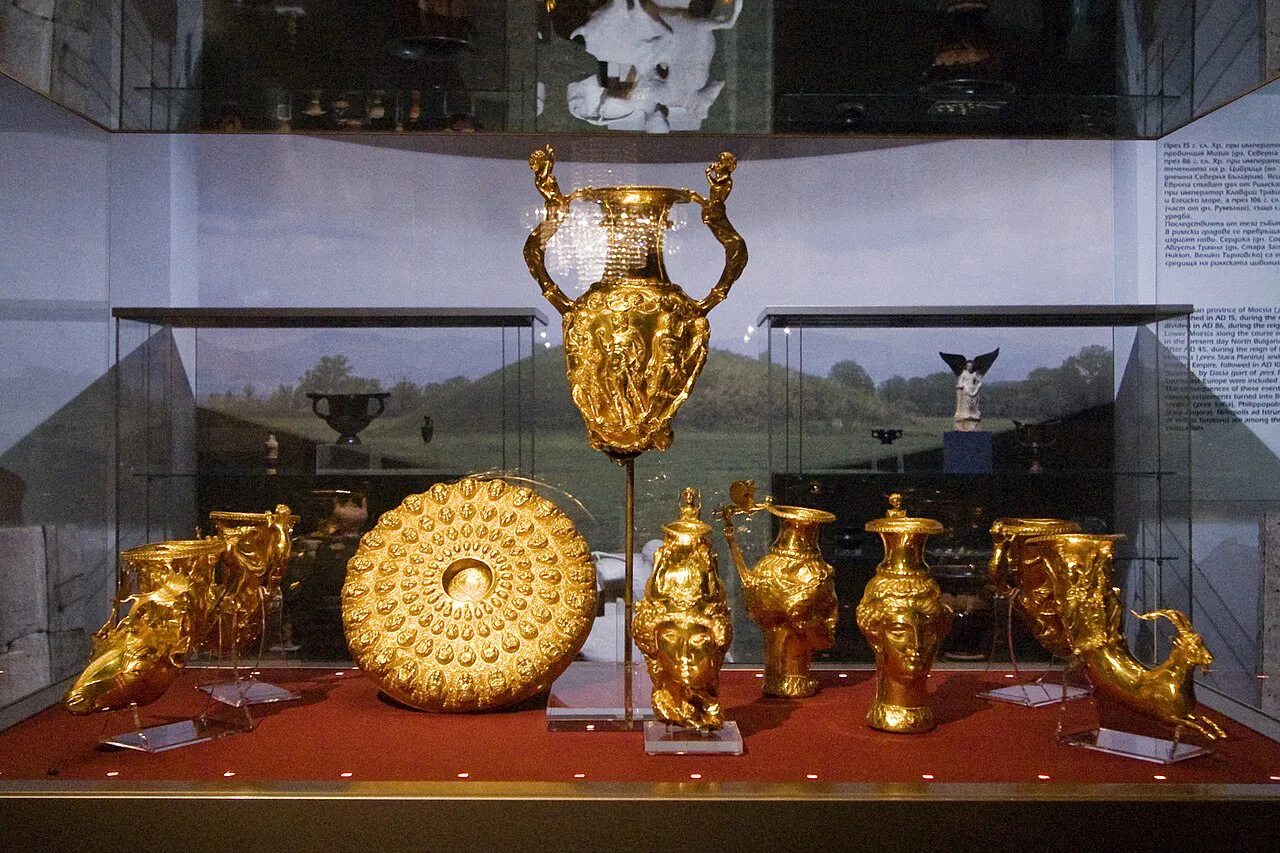
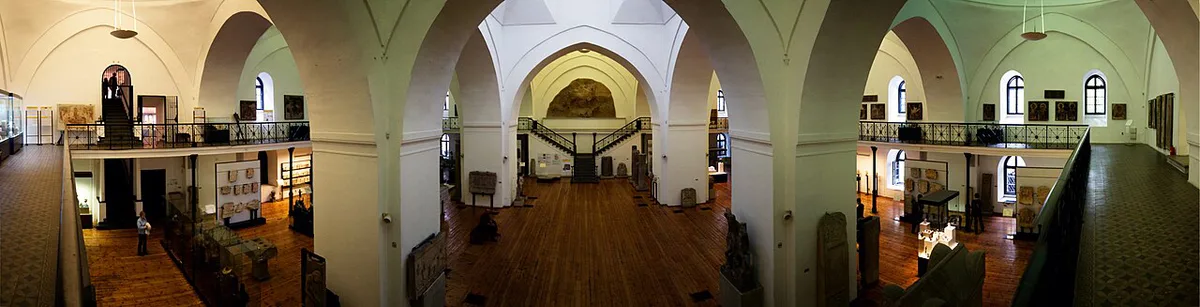
Thracian tombs produced some of the richest gold and silver hoards found anywhere in ancient Europe. Seeing them supplies context that empty tomb chambers alone cannot. Sofia's National History Museum holds one of the largest Thracian gold collections, drawn from burial mounds across the country. The Panagyurishte Treasure, a set of ornate gold vessels dated to the 4th-3rd century BC, ranks among the best-known Thracian finds anywhere. Exhibition locations for major Thracian treasures shift periodically between Sofia and regional museums. Confirm current display details with the National Institute of Archaeology before planning a single-museum trip around one specific piece. Skipping the gold is a common mistake among first-time visitors. The tombs show where Thracian elites were buried; the treasures show how wealthy those elites actually were.
Planning Your Visit: Timing, Transport, and Terrain
A rental car is effectively required for a serious Thracian itinerary in Bulgaria. Public transport does not reach the Valley of the Thracian Kings' scattered mounds or Perperikon's hilltop site with any useful frequency. Perperikon has no shade across its exposed stone terraces. Plan an early morning visit if traveling in summer, before the midday heat sets in. The site also demands sturdy footwear and a moderate fitness level, since its paths climb over uneven rock. Budget at least a half-day for Perperikon alone once travel time is included. Treat the Valley of the Thracian Kings as a separate half-day or full-day loop from a Kazanlak base, since the mounds sit apart from one another.
Costs, Tickets, and Opening Hours for Major Sites
Most Bulgarian museums and tomb sites charge modest, separate entry fees rather than one combined ticket. As of 2026, expect typical entry fees of roughly 5-10 BGN per site. Photography often requires a small additional permit fee on top of that. Confirm current opening hours directly with each site before visiting, since schedules shift seasonally. Iskra Museum in Kazanlak, which oversees the Valley of the Thracian Kings sites, publishes updated hours and prices on its own site. Perperikon and the National History Museum in Sofia do the same.
| Site | Typical Entry Fee (2026) | Notes |
|---|---|---|
| Kazanlak Tomb replica | ~5-10 BGN | Original tomb interior is rarely open to visitors |
| Valley of the Thracian Kings mounds | ~5-10 BGN per site | Several separate mounds, each ticketed individually |
| Perperikon | ~5-10 BGN | Photography permit usually extra |
| National History Museum, Sofia | ~5-10 BGN | Photography permit usually extra |
Which Thracian Site Is Right for You?
Interest and available time point toward different sites. Use interest as the main filter before adding any of these stops to a Bulgaria itinerary.
| Site | Best For | Effort & Access |
|---|---|---|
| National History Museum, Sofia | Gold and artifacts | Low effort, walkable in-city visit |
| Valley of the Thracian Kings | Tomb architecture and frescoes | Moderate effort, car recommended from Kazanlak |
| Perperikon | Rock-cut architecture and hiking | High effort, car required, no shade |
| Starosel | Temple-tomb complex, fewer crowds | Moderate effort, car required |
Base Cities: Where to Stay to Explore Thracian Heritage
Kazanlak works as the most direct base for the Valley of the Thracian Kings, sitting close to the mound cluster. Plovdiv suits travelers combining Starosel with a broader Bulgaria itinerary, since it puts the southern Thracian sites within reach by car. Sofia offers the easiest access to Thracian gold, thanks to the National History Museum, plus strong onward transport links to the rest of the country. Travelers based in Plovdiv or Sofia often pair Thracian sites with Bulgaria's historic churches on the same trip, since several sit along similar driving routes. Splitting a trip across two base cities usually works better than commuting long distances from a single hotel.
Perperikon (half-day) and the Valley (half-to-full day) sprawl too far apart for same-day visiting—which explains why Kazanlak and Plovdiv serve as complementary bases rather than optional convenience choices.
Common Mistakes to Avoid When Visiting Thracian Sites
A handful of avoidable mistakes shape most disappointing visits to Thracian sites in Bulgaria.
- The replica trap: the chamber open to visitors at the Kazanlak Tomb is a faithful replica, built to protect the fragile original frescoes. The authentic UNESCO-listed tomb is rarely opened to the public.
- Underestimating the terrain: Perperikon's stone paths are uneven and shadeless, so sturdy footwear and a moderate fitness level matter more than at a typical museum stop.
- Skipping the gold: visiting only tombs and fortresses misses the treasures in Sofia that explain how wealthy Thracian elites actually were.
- Assuming public transport works: rural Thracian sites like Perperikon and the Valley of the Thracian Kings mounds need a rental car, not a bus schedule.
- Booking a single day for everything: the Valley of the Thracian Kings, Perperikon, and the Sofia gold collections realistically need separate days, not one rushed loop.
Thracian Mythology vs. Greek Accounts
Most surviving Thracian mythology comes filtered through Greek sources, not first-hand Thracian texts, since the Thracian language left no substantial written record of its own. Greek mythology cast Thrax, the namesake of Thrace, as a son of the war god Ares, whom the Greeks regarded as Thrace's patron deity. Thracian religious life also produced its own recognized gods, including Bendis, Zalmoxis, and Sabazios, recorded mainly by Greek and Roman writers. Orpheus, the mythical poet and musician, was likewise linked to Thrace in Greek tradition. That link reinforced the Greek image of Thracians as both fierce and unexpectedly musical. Modern Thracology, the academic study of Thracian history and archaeology, works to separate these Greek-filtered myths from verifiable Thracian practice. Much of what gets labeled Thracian religion, in other words, is really Greek description of Thracian religion.
Physical Appearance and Warfare: The Warrior Image
Greek and Roman writers routinely called the Thracians warlike and barbarian. That label said as much about Greek and Roman self-image as it did about the Thracians themselves. Despite that framing, Thracian fighters were prized as mercenaries across the ancient Mediterranean world. Thracian peltasts, lightly armed infantry named for their crescent-shaped shields, fought in the Greco-Persian Wars and the Peloponnesian War. They later served in campaigns under Alexander the Great. Rome eventually named a type of gladiator, the Thraex, after Thracian fighting style and equipment. Tattooing was a documented Thracian custom, worn by both men and women rather than reserved for warriors alone. The best-known Thracian in Roman history is Spartacus, the gladiator who led the Third Servile War against Rome. Greek writers also credited Thracian culture with sophisticated poetry and music, an odd fit alongside the barbarian label that dominated most outside accounts.
From Thracian Legacy to Medieval Bulgaria
Thracian identity did not vanish the moment Rome created the province of Thracia. Local populations blended with Roman settlers into a mixed Thraco-Roman culture over the following centuries. Later Bulgarian, Greek, and Pomak communities in the region carry some threads of that older Thracian population, alongside many later migrations and empires. The Thracian language itself faded out of everyday use in the centuries that followed Roman rule. What remains most visible today is physical: tombs, gold, and fortress ruins rather than a living Thracian-speaking culture. That physical legacy is why the sites above matter more than any single museum label. Thracology, as a modern academic field, only formalized this evidence into a coherent picture from the 19th and 20th centuries onward, largely through Bulgarian and Romanian archaeology.
The Thracian Tomb of Sveshtari in Northern Bulgaria
The UNESCO-listed Thracian Tomb of Sveshtari offers a different perspective from the royal burials around Kazanlak. It stands within the Sboryanovo Archaeological Reserve near Isperih in northeastern Bulgaria.
Built during the third century BC, the tomb is associated with the Getae, a Thracian people living near the lower Danube. Its central chamber features ten sculpted female figures supporting the walls beneath a decorated frieze. This design has no close equivalent among other surviving Thracian tombs.
- Use Isperih as the nearest practical town for accommodation, supplies, and onward transport.
- Travel by car because rural public transport does not provide convenient access to the reserve.
- Check seasonal opening days before departure, as entry may depend on scheduled guided access.
Allow extra time for other parts of Sboryanovo. The reserve includes burial mounds, traces linked to the ancient Getic city of Helis, and the Demir Baba Teke religious complex. Sveshtari fits best into a northern Bulgaria road trip rather than a day trip from Kazanlak.
Further reading: Bulgaria on Wikivoyage · Bulgaria on Wikipedia
Continue planning: Use History of Bulgaria: 8 Key Eras from Antiquity to Modern Day and Bulgaria Castles: A Practical Guide to the Country's Best Fortresses and Ruins to connect this guide with the rest of your Bulgaria itinerary.
Frequently Asked Questions
Who were the Thracian people?
The Thracians were an Indo-European-speaking people who inhabited large parts of southeast Europe, including modern Bulgaria, from the early Bronze Age around 3500 BC until Roman conquest.
What was the Odrysian Kingdom?
The Odrysian Kingdom was the first permanent Thracian state, founded by King Teres I in the early 5th century BC and later revived by King Seuthes III around 330 BC from a new capital, Seuthopolis.
Can you visit the original Kazanlak Tomb?
No. The chamber open to visitors is a replica built to protect the fragile original frescoes, and the authentic UNESCO-listed tomb is rarely opened to the public.
Do you need a car to see Thracian sites in Bulgaria?
Yes, for most of them. Public transport does not reliably reach the Valley of the Thracian Kings' mounds or Perperikon's hilltop site, so a rental car is the practical option.
Where can you see Thracian gold treasures?
Sofia's National History Museum holds one of the largest Thracian gold collections, including pieces connected to finds like the Panagyurishte Treasure. Confirm current exhibition details with the National Institute of Archaeology before visiting, since displays shift periodically.
How much time should I plan for Thracian sites in Bulgaria?
Budget at least a half-day for Perperikon and a separate half-day or full day for the Valley of the Thracian Kings, plus a shorter museum stop in Sofia or Plovdiv for the gold collections.