The Best Castles and Fortresses in Bulgaria: A Traveler's Guide
Last updated July 2026, this guide to Bulgaria castles sorts the country's fortified hilltops, river strongholds, and Roman castra by era, access, and time needed. Most sites labeled a castle here are actually medieval fortresses, known locally as krepost, or Roman military camps called castra, so adjust your expectations before you go. Start with the four names everyone mentions first, Tsarevets, Belogradchik, Baba Vida, and Asen's Fortress, and use the rest of this guide to build a route around them.
What Castle Means in Bulgaria: Fortresses, Castra, and Ruins
Most sites labeled a castle in Bulgaria are not single fairy-tale towers. Many are krepost: fortified hilltop or river-bend settlements, rebuilt across centuries. Others are Roman castra, military camps whose walls later anchored medieval towns. A typical site starts as a Thracian-era hill. Rome reuses it, the Second Bulgarian Empire refortifies it, and the Ottomans eventually damage or abandon it. For the throughline connecting these eras, see the history of Bulgaria, which traces how each empire left its mark on the same defensible ground. That layering is why one site can mix Thracian foundations, Roman stonework, and medieval walls in a single visit.
The Big Four Bulgaria Castles for First-Time Visitors
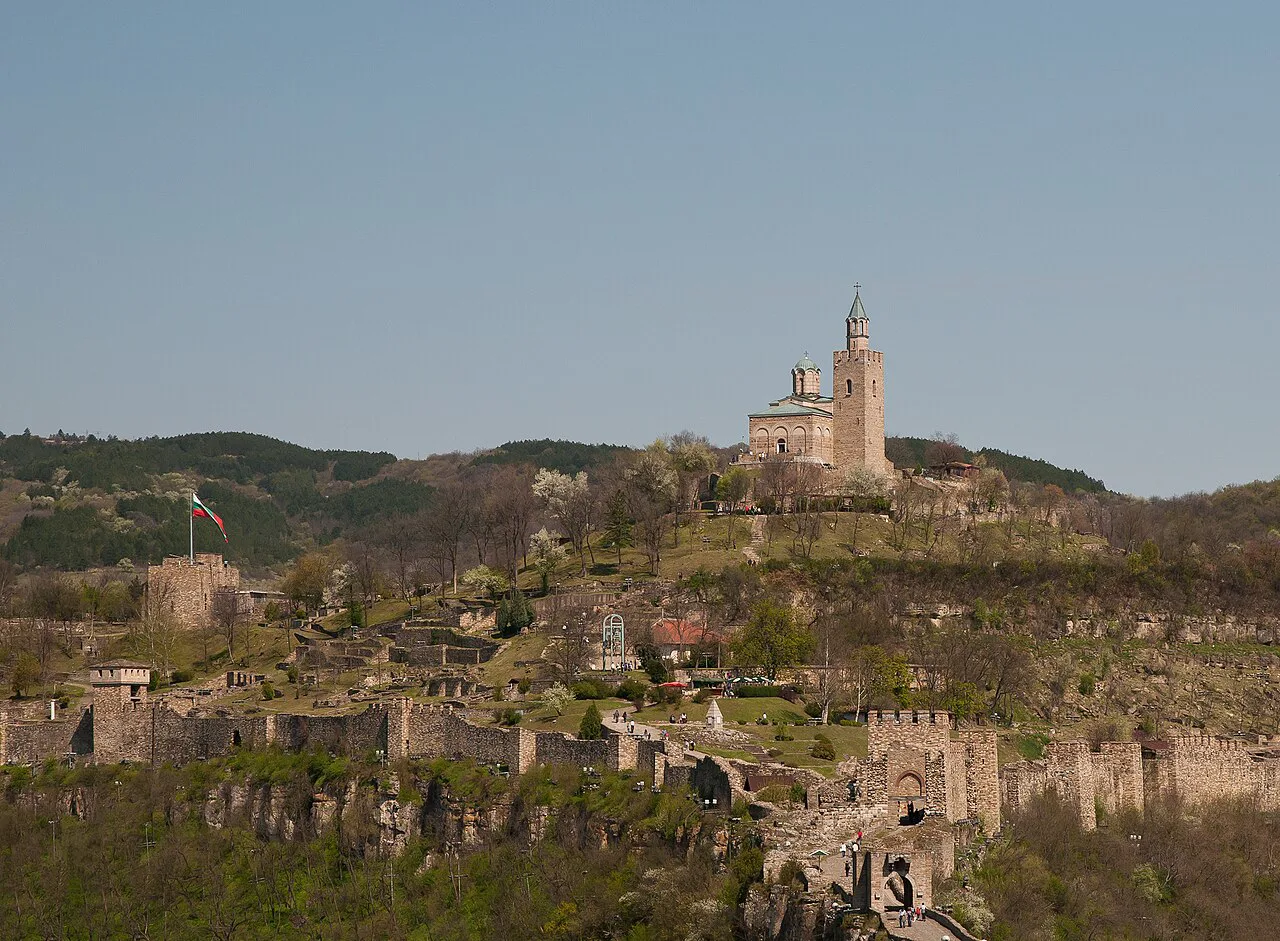
Four sites anchor almost every Bulgaria castles itinerary. Each covers a different era and a different kind of visit, from an entire hilltop capital to a single riverside keep. Asen's Fortress rewards the climb more than any other site on this list. The path up the ridge is steep, and the Church of the Holy Mother of God at the summit is among the country's most photographed religious sites. For more on how it fits the national picture, see Bulgaria's famous churches. Tsarevets, by contrast, is a level walk from central Veliko Tarnovo, so you can pair it easily with a full day in town.
| Site | Location | Era & Status | Standout Feature |
|---|---|---|---|
| Tsarevets | Veliko Tarnovo; walkable from the town center | Second Bulgarian Empire capital, 12th-14th centuries | Patriarchal Cathedral on the hilltop and an evening Sound and Light show over the walls |
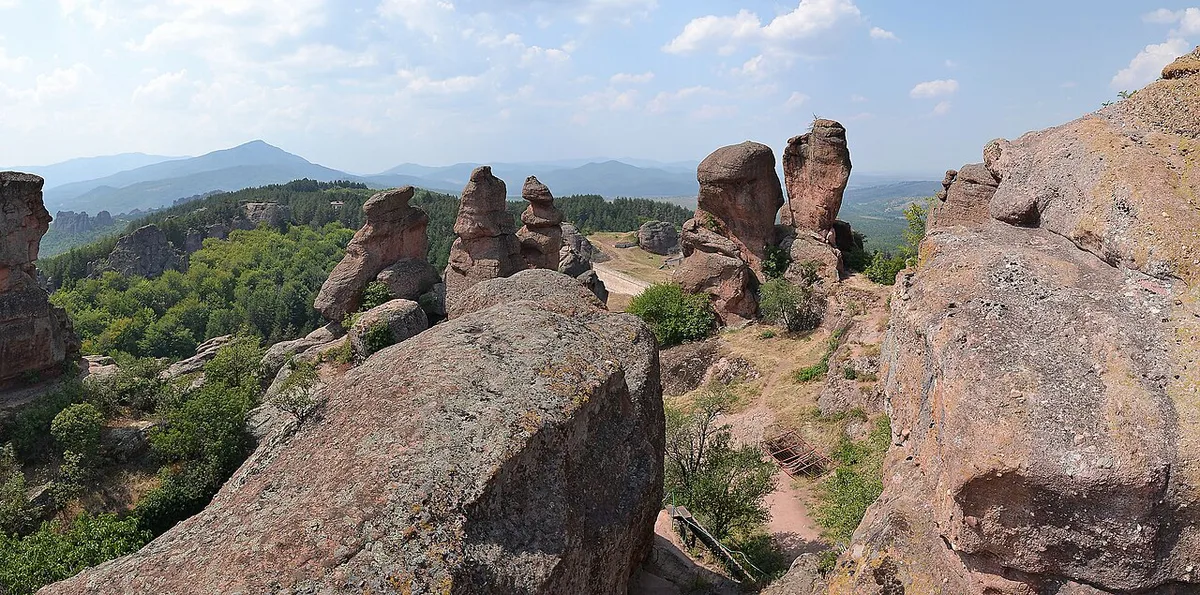
| Belogradchik Fortress (Kaleto) | Northern slopes of the Balkan Mountains; about a 3-hour drive from Sofia | Ancient fortress rebuilt through the Ottoman era; national cultural monument | Stone walls fused directly into the red Belogradchik Rocks |
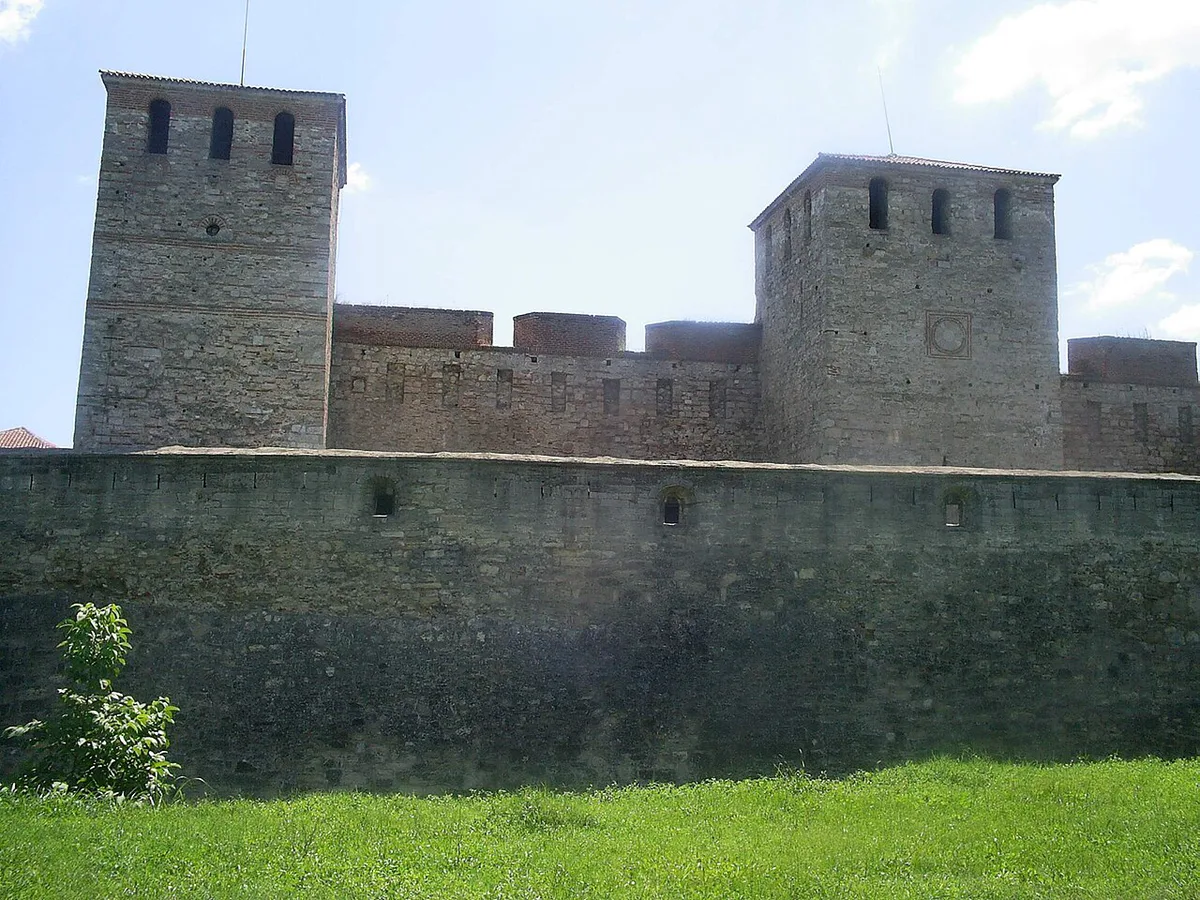
| Baba Vida | Vidin, on the Danube, at 39 m altitude | Medieval capital of the Second Bulgarian Empire and Tsardom of Bdin; fell to the Ottomans in 1422 | The only entirely preserved medieval castle in Bulgaria, with two curtain walls and three full-height towers |
| Asen's Fortress | 2-3 km south of Asenovgrad; elevation 279 m | Thracian and Roman origins, fortified through the Middle Ages | Church of the Holy Mother of God and Rhodope Mountain views |
Coastal and Roman Strongholds: Kaliakra, Castra Martis, and Cherven
Away from the Big Four, Bulgaria's coast and river borders hold sites Wikipedia files under castra rather than castle, but they carry just as much history. Kaliakra occupies a narrow headland 12 km east of Kavarna and 60 km northeast of Varna, with cliffs dropping 70 m to the Black Sea. Fortified walls, a water main, and bath remains survive from its time as a Bulgarian Empire stronghold. In the late 14th century, it also served as the residence of the Despot Dobrotitsa. The site sits on ground first used by the Thracians, long before Rome or Bulgaria's medieval rulers arrived. Castra Martis, in the modern town of Kula, has the best-preserved Roman walls in Bulgaria, and among the best in Europe, reaching 17 m in height. It guarded the road through the Vrashka Chuka pass until the Huns took it by treachery in 408. Cherven, 30-35 km south of Ruse, was one of the Second Bulgarian Empire's main military and administrative centers. By the second half of the 14th century, its built-up area exceeded 1 km2, with a distinctive tower still standing from that period. The Ottomans took Cherven in 1388, though it kept some administrative role before fading. Cherven anchors a broader northeastern Bulgaria route that also includes the Madara Rider.
Smaller Ruins Worth a Detour
Beyond the well-known names, a handful of smaller ruins reward you if you have a car and low expectations for facilities.
Anevo, Bozhenishki Urvich, Byalgrad, and Kovachevsko kale uniformly lack on-site facilities and close earlier in winter; three require unmarked-trail hiking, making all four appropriate only as supplements to multi-site trips, not standalone day destinations.
- Anevo Fortress: ruins 3 km from Anevo village in Sopot Municipality, on a steep hilltop at the southern foot of the Balkan Mountains. It was briefly the capital of a breakaway domain ruled by Voysil and Radoslav, brothers of Tsar Smilets, in the late 13th century.
- Bozhenishki Urvich: a ruined fortress on the Lakavishki Ridge, 3 km south of Bozhenitsa and 20 km from Botevgrad. It was active through the 13th and 14th centuries before Ottoman forces destroyed it.
- Byalgrad: 8 km from the village of Gugutka in Haskovo Province. Walls up to 8 m high and 2 m thick give it its name, meaning white town, for the pale limestone.
- Kovachevsko kale: a late Roman fortress 6 km west of Popovo, right off the Popovo-Byala road, with 17 U-shaped towers. That makes it one of the more straightforward smaller sites to reach by car.
- None of these four sites has on-site restrooms, cafés, or paved parking for the final stretch. Treat them as a detour from a bigger day, not a standalone stop.
Planning a Castle Route: Regional Clusters and Timing
Grouping sites by region turns a long list into a workable road trip. Access difficulty varies as much as the history does. Tsarevets is a paved walk from central Veliko Tarnovo, and parts of Baba Vida's riverside grounds suit visitors with limited mobility. Anevo and Bozhenishki Urvich sit on unmarked hilltop paths that need sturdy footwear. Belogradchik adds its own logistics factor: it is roughly a 3-hour drive from Sofia, so plan it as an overnight rather than a rushed day trip from the capital. A week focused on the northwest and central clusters comfortably covers the Big Four plus two or three smaller ruins. Multi-hour drives between regions, like the Sofia-to-Belogradchik run, mean you should plan on pairing at most two major sites per day.
Baba Vida uniquely combines medieval completeness (two curtain walls, three towers) with riverside grounds accessible to limited mobility visitors, unlike Asen's Fortress (steep climb) or Belogradchik (3-hour drive from Sofia)—making it the preserved-and-accessible anchor for multi-site routing.
- Northwest: Baba Vida in Vidin, Belogradchik Fortress, and Castra Martis in Kula sit within a single loop near the Danube.
- Central Balkan: Tsarevets and Devingrad share Veliko Tarnovo, while Anevo near Sopot and Bozhenishki Urvich near Botevgrad extend the route toward Sofia.
- Rhodope and southeast: Asen's Fortress near Asenovgrad pairs with the more remote Byalgrad in Haskovo Province.
- Northeast: Cherven and Kovachevsko kale sit within reach of Ruse and Popovo, on the same regional loop as the Madara Rider.
- Black Sea: Kaliakra sits between Kavarna and Varna, best combined with a coastal itinerary rather than an inland one.
Visitor Essentials: Tickets, Hours, and Guides
Ticket policies differ site by site, and none of the sources behind this guide publish one fixed national price list. For the current posted fee at a specific site, check the official Tourism Portal of Bulgaria (bulgariatravel.org). Municipal sites publish updates too: Vidin's site covers Baba Vida, and Veliko Tarnovo's covers Tsarevets. Confirm current admission and hours before a 2026 visit. Relative to major Western European castle tickets, Bulgaria's fortress admissions are consistently the cheaper option on a regional itinerary, even where a specific figure is not published site by site. Smaller ruins, including Anevo and Kovachevsko kale, often have shorter hours or close earlier in winter. Larger sites like Tsarevets and Baba Vida keep more consistent seasonal hours, but check current status ahead of your 2026 visit since posted hours can shift. Look for 100 Tourist Sites of Bulgaria program stamps at ticket booths. Collecting them at sites covered in this guide is a simple way to track your progress across a multi-site trip. A guide adds the most value at history-dense sites like Tsarevets and Asen's Fortress, where the Second Bulgarian Empire's political story is not obvious from the ruins alone. Smaller sites such as Byalgrad or Castra Martis are compact enough to read from a single information panel, so self-guided visits work well there.
Mistakes to Avoid at Bulgarian Fortress Sites
A few recurring mistakes shape most frustrated reviews of Bulgaria castles.
- Expecting a restored palace: several sites here, including Devingrad, survive only as scattered foundations, not standing towers. Baba Vida and parts of Tsarevets are the exceptions, with substantial rebuilt walls.
- Wearing the wrong shoes: the cliff-edge paths at Kaliakra and the rock-fused stairways at Belogradchik get uneven and slick after rain. Bring shoes with real grip, not flat sandals.
- Assuming every site has visitor infrastructure: Byalgrad and Anevo have no restrooms, cafés, or paved parking. Bring food and water, and plan a bathroom stop before you arrive.
- Underestimating drive times: the Sofia-to-Belogradchik route alone runs about 3 hours. Stacking two remote sites in a single day often means rushing the better one.
Which Bulgaria Castle Fits Your Trip
Match the site to your trip, not the other way around. If you're traveling with limited walking stamina, prioritize Baba Vida's riverside grounds or a level stroll through outer Tsarevets. If you're hiking and taking photos, put Belogradchik's rock-fused walls and Kaliakra's cliff-edge headland first. If history is the draw, Asen's Fortress, Cherven, and Castra Martis trace the Thracian-Roman-Bulgarian layering most clearly. For more context before you go, fun facts about Bulgaria rounds out the background.
Restored Castles vs. Archaeological Ruins: What You Will Actually See
Bulgaria’s fortress sites vary sharply in how much remains above ground. Choose carefully if you want complete rooms, towers, and walls rather than archaeological foundations.
- Best-preserved: Baba Vida has standing towers, courtyards, and two defensive walls. It offers the clearest experience of entering a medieval castle.
- Partly reconstructed: Tsarevets has extensive rebuilt walls, gates, and the restored Patriarchal Cathedral. Belogradchik combines surviving masonry with towering natural rock formations.
- Dramatic ruins: Asen’s Fortress centers on the standing Church of the Holy Mother of God. Cherven retains a prominent 14th-century tower, but much of its former town survives as excavated foundations.
Anevo, Bozhenishki Urvich, and Byalgrad suit travelers who enjoy hiking and interpreting fragmented walls. Devingrad is historically important but visually sparse. Information panels or a guide can make these less-restored sites easier to understand.
For strong architecture and minimal guesswork, prioritize Baba Vida and Tsarevets. Choose Belogradchik or Kaliakra when landscape and photography matter more than intact interiors.
Further reading: Bulgaria on Wikivoyage · Bulgaria on Wikipedia
Continue planning: Use History of Bulgaria: 8 Key Eras from Antiquity to Modern Day and Bulgaria Fun Facts: History, Culture, and Travel-Ready Trivia to connect this guide with the rest of your Bulgaria itinerary.
Frequently Asked Questions
What does castle mean in Bulgaria, since it is not always a single tower?
In Bulgaria, most sites called a castle are medieval fortresses (krepost) or Roman military camps (castra) built on defensible hills or river bends. Many were reused and rebuilt across the Thracian, Roman, and medieval Bulgarian periods, so a single site often shows several eras of construction at once.
Which Bulgarian castle is the best preserved?
Baba Vida in Vidin is the only entirely preserved medieval castle in the country, with two concentric curtain walls and three towers still standing to their original medieval height.
How far is Belogradchik Fortress from Sofia?
Belogradchik Fortress sits on the northern slopes of the Balkan Mountains, roughly a 3-hour drive from Sofia, so most visitors plan it as an overnight trip rather than a same-day round trip.
How many Bulgaria castles can you realistically see in one week?
A week focused on the northwest and central regions comfortably covers the Big Four, Tsarevets, Belogradchik, Baba Vida, and Asen's Fortress, plus two or three smaller ruins. Multi-hour drives between regions mean pairing at most two major sites per day.
Are any Bulgarian castles accessible for visitors with limited mobility?
Parts of Baba Vida's riverside grounds in Vidin are manageable for visitors with limited mobility, and Tsarevets offers a level, paved walk from central Veliko Tarnovo. Asen's Fortress, by contrast, requires a steep climb up a rocky ridge.