Plovdiv Roman Theater
The Plovdiv Roman Theater stands as a magnificent testament to the city's ancient heritage and architectural brilliance. This stunning venue remains one of the best-preserved classical theaters found anywhere in the world today. Visitors often feel transported back to the second century while walking among the marble rows. It serves as a central highlight of any Best Things to Do in Plovdiv list for history lovers.
Ancient Philippopolis thrived as a major hub under Roman rule many centuries ago. The theater acted as the heart of social and political life for the local citizens. Its strategic position in the natural saddle between the hills of Dzhambaz Tepe and Taksim Tepe provided both natural support and breathtaking views across the valley toward the Rhodope Mountains. Today, it continues to host world-class events that bridge the gap between the past and present.
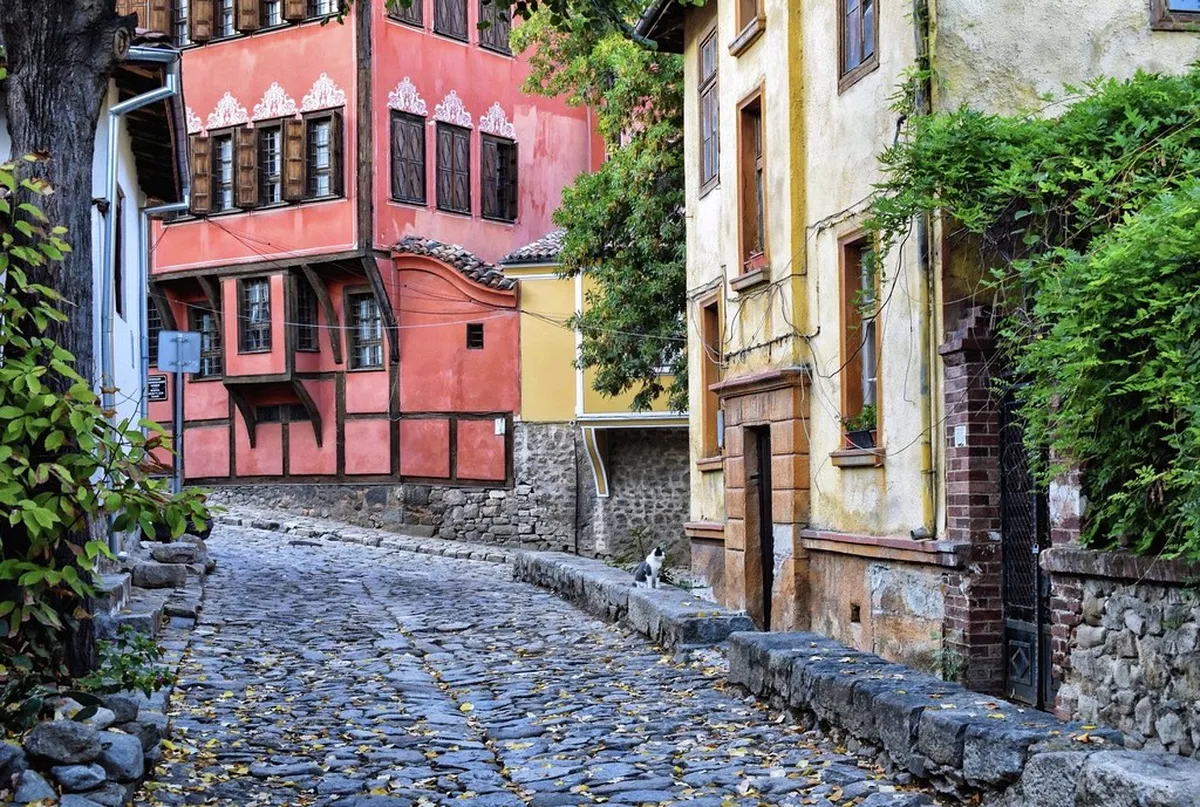
Exploring this site requires a bit of walking through the charming cobblestone streets of the historical district. You will find the entrance tucked away within the atmospheric Plovdiv Old Town area. The structure's sheer scale becomes apparent only once you stand at the very top of the seating area. Prepare for a visual feast that combines Roman engineering with the natural beauty of the Bulgarian landscape.
History of the Ancient Theatre of Philippopolis
Built during the reign of Emperor Trajan in the early second century AD, the theater was one of the most significant public buildings in Trimontium — the Roman name for what is now Plovdiv. It served as the primary venue for theatrical performances and important city assemblies in ancient Philippopolis. The site is remarkable not only for its Roman roots but also for the layers of culture beneath them. Archaeologists believe this location was previously a sanctuary to the Thracian goddess Bendis, and several preserved stelae and wall inscriptions in Greek suggest a multicultural civic life long before the Roman architects arrived.
The theater was a clear symbol of the city's status within the Roman province of Thrace. Wealthy citizens and officials occupied the front rows, which featured inscribed seat reservations on the marble — a practice common across elite Roman theaters of the empire. The Honorary Lodge, decorated with inscriptions in the style of all imperial-era venues, sat above the central vaulted passageway, a detail that still astonishes visitors today. Check out the Free Plovdiv Tour - Roman Theatre History for more deep historical context.
The building suffered significant damage during the invasion of Attila the Hun in the fifth century AD. For many hundreds of years, the structure remained buried under layers of earth and debris, and local residents eventually built houses directly over the hidden ruins without knowing what lay beneath. This long period of burial actually helped preserve the white crystalline marble and many of the statues from further erosion and deliberate plunder.
The 1970s Discovery and Restoration
A massive landslide in 1968 unexpectedly revealed the first glimpses of the ancient marble structure buried beneath the residential neighborhood. This natural event triggered one of the most significant archaeological excavations in Bulgarian history. According to a popular local account, a resident digging in his backyard first struck the carved stone seats — he called the authorities, and systematic excavation began immediately. The discovery fundamentally changed how scholars understood the layout and scale of ancient Philippopolis.
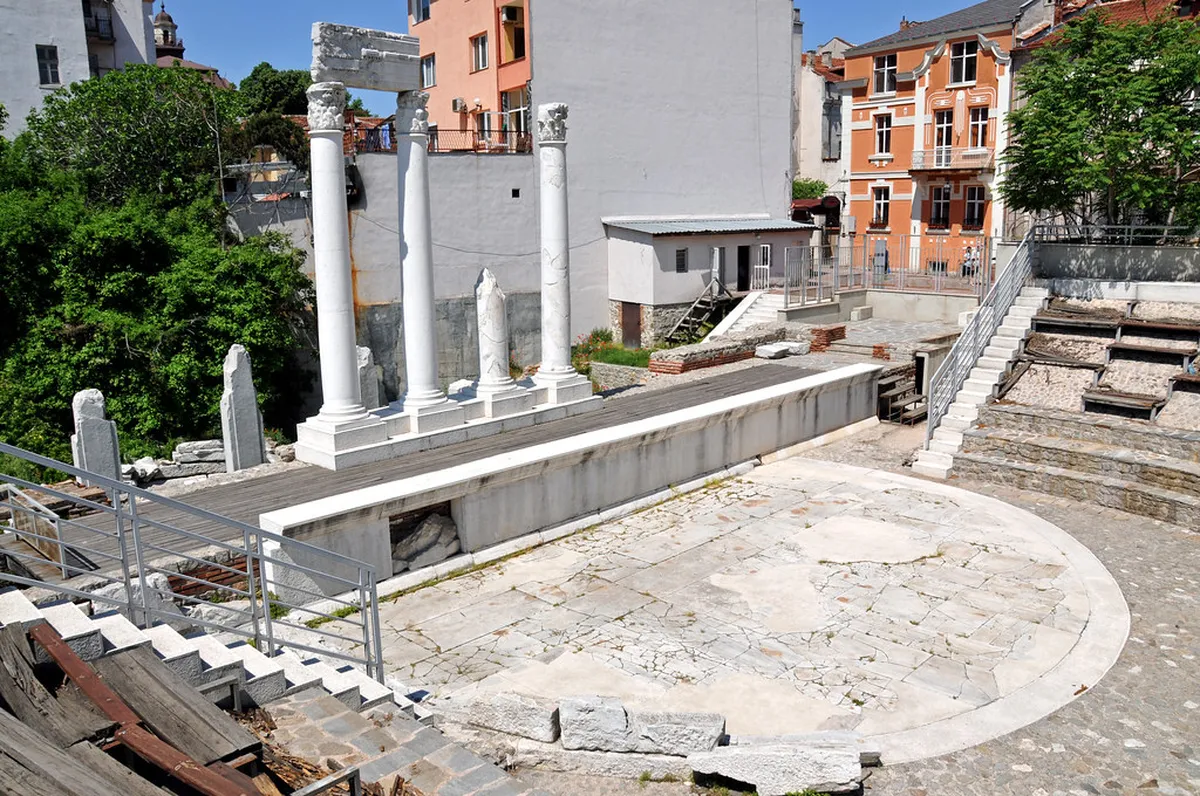
Teams worked throughout the 1970s to remove tons of earth and carefully uncover the seating, stage, and surrounding structures. Restoration experts focused on preserving the original materials while making the site safe for modern visitors. They carefully reconstructed the scaenae frons — the decorated three-story architectural backdrop of the stage — with its impressive columns and statues reflecting the grandeur of Roman civic design. Residents living above the ruins were relocated and provided with new homes before the full excavation could proceed.
Exactly ten years after excavation began, the theater opened to the public in 1978 as a protected cultural monument. It was later declared an archaeological monument in the sixth edition of the State Gazette in 1995. The project successfully integrated the ancient ruins into the modern fabric of the city, and it now stands as a source of great national pride. Walking through the restored gates feels like entering a living museum of classical engineering.
Architecture and Capacity of the Roman Theater
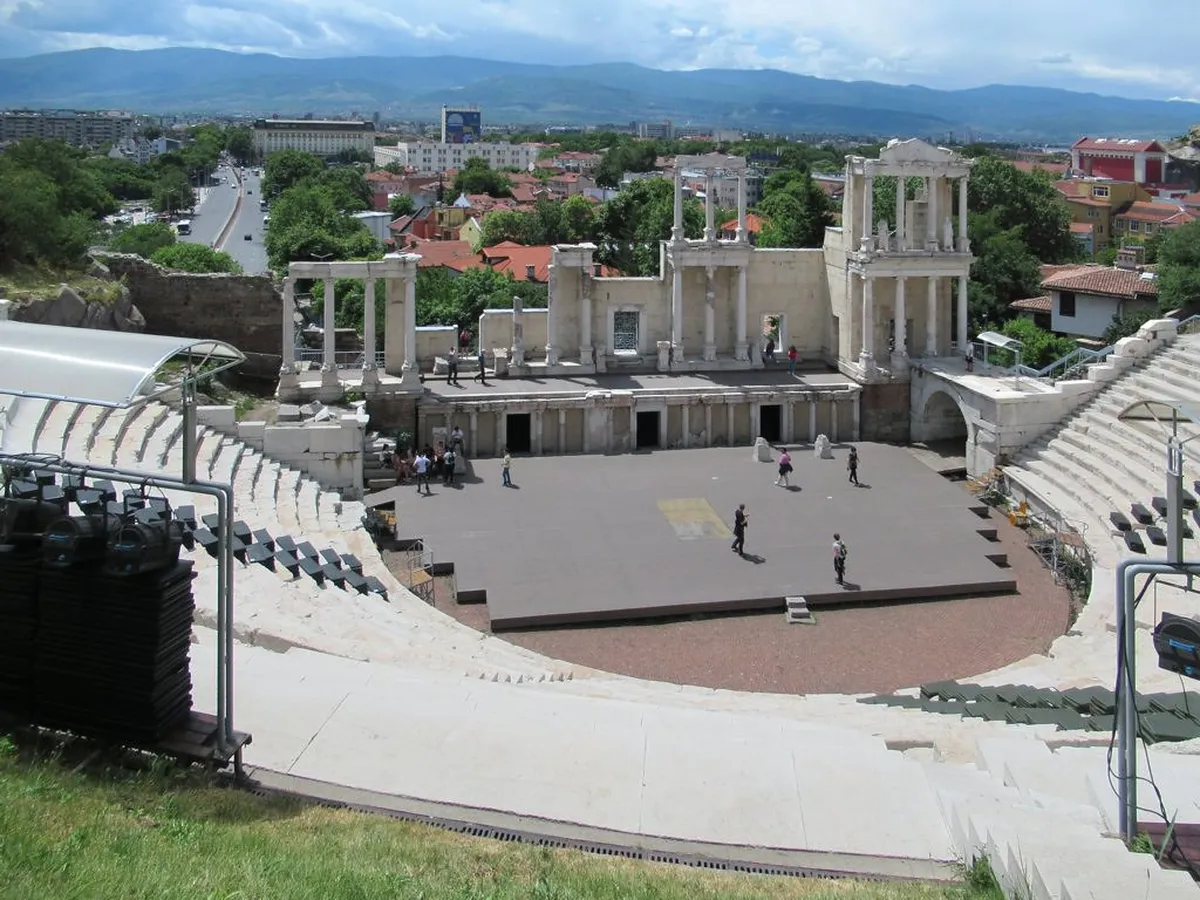
Many visitors mistakenly call this site an amphitheater, but it is technically a Roman theater. A Roman theater is semi-circular and designed for staged dramatic performances, whereas a true amphitheater — like the Colosseum in Rome — is fully oval and built for gladiatorial combat. The distinction matters here because the design of Philippopolis was optimized for acoustics: sound from the stage travels cleanly to the highest marble rows, a feat that still impresses acoustic engineers today. Engineers also used the natural slope of the hillside to support the weight of the heavy marble cavea without needing a freestanding outer wall.
The cavea, or seating area, contains 28 concentric rows of white marble divided into two tiers by a wide walkway called a diazoma. The entire structure spans 82 meters in diameter. One architectural feature that most visitors never notice is the underground vaulted corridor that runs from the middle of the orchestra pit, passes beneath the stage building, and continues beyond the visible ruins. A second vaulted passageway runs under the central sector of the highest seating rank and originally connected the cavea directly to the surrounding hillsides — a logistical solution that allowed large crowds to enter and exit efficiently. These subterranean passages remain partially accessible and are best appreciated on a guided visit.
Modern capacity is significantly lower than the original ancient limit due to safety and conservation regulations. The table below shows the difference at a glance:
- Ancient capacity: approximately 7,000 spectators
- Modern safety capacity: approximately 3,500 spectators
- Seating rows: 28 marble rows
- Diameter: 82 meters
- Stage backdrop: three-story scaenae frons with columns and statues
- Material: white crystalline marble quarried locally
| Ancient capacity | ~7,000 spectators |
| Modern safety capacity | ~3,500 spectators |
| Seating rows | 28 white marble rows (two tiers split by a diazoma) |
| Diameter | 82 meters |
| Stage backdrop | Three-story scaenae frons with columns and statues |
| Built / opened to public | Early 2nd century AD (Trajan) / reopened 1978 |
Halving the audience capacity is a deliberate conservation choice. Excessive foot traffic on ancient marble accelerates wear, and the cultural authorities have prioritized the longevity of the stone over maximizing ticket revenue.
Is It Roman or Greek — and Is It the Best-Preserved in the World?
The theater is unambiguously Roman, not Greek, even though its inscriptions are written in Greek and the site sits in a region with deep Hellenistic roots. The confusion is understandable: by the second century AD, Greek remained the everyday language of culture and administration across the eastern Roman provinces, so a Roman building in Thrace naturally carried Greek lettering. What makes it Roman is the engineering and the architecture — the semi-circular cavea, the multi-story stone scaenae frons, and the vaulted passageways are all hallmarks of imperial Roman theater design rather than the open hillside orchestras of earlier Greek theaters.
💡 Good to know: A quick way to remember the difference: a theatre (like this one) is semi-circular and built for staged drama and music, while an amphitheatre (like the Colosseum) is fully oval and built for gladiatorial games. Plovdiv has a theatre, even though signs and locals sometimes call it the "amphitheatre."
It is frequently described as one of the best-preserved ancient theaters in the world, and that reputation is earned rather than marketing. Centuries spent buried under earth and later under residential houses sealed the white crystalline marble away from looting and erosion, so the seating rows, orchestra pit, and much of the scaenae frons survived in remarkable condition. When archaeologists finally excavated it in the 1970s, they uncovered a structure complete enough to be restored as a working venue — a rarity that places it alongside the handful of antique theaters worldwide still hosting live performances today.
Attending a Performance Today
The theater is not just a relic of the past but a vibrant cultural venue used throughout the spring and summer season. It hosts the annual Opera Open festival, one of the most prestigious outdoor opera events in Southeastern Europe, which attracts internationally acclaimed performers and sells out weeks in advance. Watching a production under the open sky provides an atmosphere that no modern stadium can replicate. The natural acoustics of the stone cavea amplify voices with a clarity that audiences consistently describe as otherworldly.
Rock concerts and traditional Bulgarian folklore festivals also take place here throughout the warmer months of 2026. Performance tickets vary widely by event — headline opera nights can exceed 80 BGN per seat, while smaller folk concerts run closer to 15–25 BGN. Tickets for marquee shows sell out fast, so book online through the theater's official box office as soon as dates are announced. Arriving without a reservation for a major event is almost never worth the gamble.
Performances typically begin at sunset to take advantage of the cooler evening air and the dramatic effect of stage lighting illuminating the ancient columns. Spectators sitting on the marble rows for two-hour-plus operas often bring a small cushion or folded jacket — the stone, while beautiful, is unyielding. This is a tip that guidebooks rarely mention but every local who attends regularly takes for granted. The immersive combination of ancient architecture, open sky, and live performance makes this one of the most memorable evenings possible in Bulgaria.
Practical Information: Tickets, Hours, and Location
General daytime admission to the theater costs 5 BGN (approximately 2.50 EUR) for adults. Students and seniors typically receive a reduced rate at the ticket office on the day of their visit. Holders of the Plovdiv City Card receive free entry to the Ancient Roman Theater along with eight other sites and museums across the city — the card pays for itself quickly if you plan to visit multiple landmarks in a single day. You can purchase the Plovdiv City Card at the tourist information offices in the Old Town or at select hotels.
The site is open daily, but hours shift by season. In summer, the theater generally stays open from 09:00 to 18:00 and may extend to 20:00 on evenings without a performance. In winter, hours shorten considerably and some facilities close. On performance days, ticket office staff may restrict access to the stage area from early afternoon while the production crew sets up. Always check the current schedule at the entrance booth or via the official Lost in Plovdiv listings before you visit.
💡 Good to know: If you plan to see two or more landmarks in a day, the Plovdiv City Card is the smarter buy — it covers free entry to the Roman Theater plus eight other sites and museums, so it usually pays for itself before lunch. Pick one up at the Old Town tourist information office or a participating hotel.
The theater sits in the Old Town, accessible on foot from the main pedestrian street ul. Knyaz Alexander I in about ten minutes. Wear comfortable shoes — the surrounding cobblestone alleys are atmospheric but uneven. Public buses serving the city center stop at the base of the hill. There is no dedicated car park adjacent to the site, so most visitors on a day trip arrive by foot or taxi from the central bus and train stations, both of which are under 2 km away.
Nearby Attractions in Plovdiv Old Town
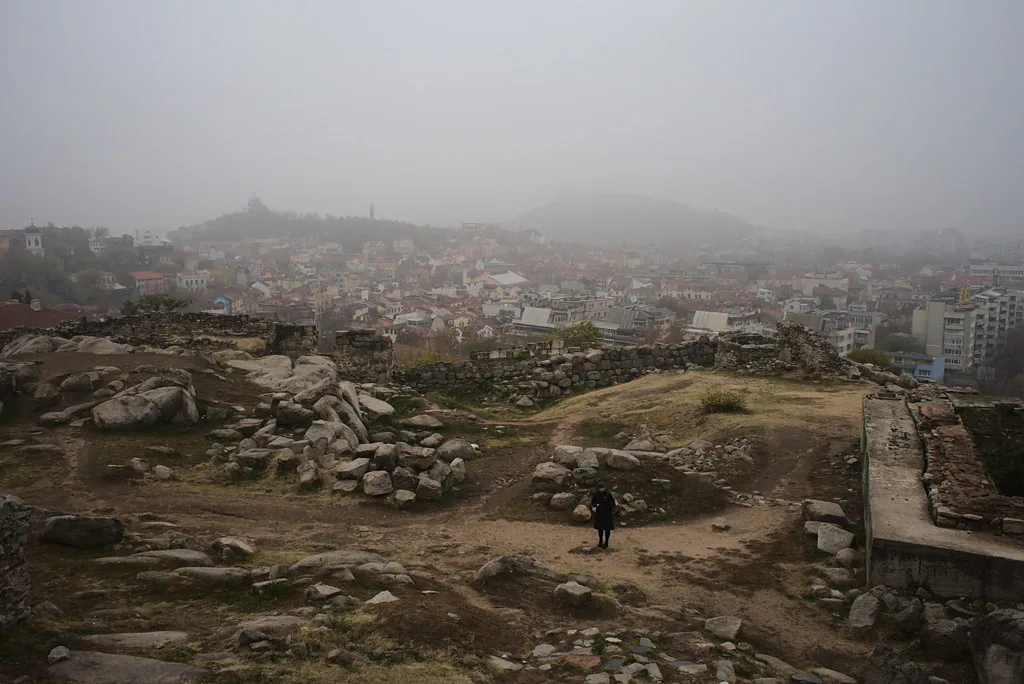
After visiting the theater, a short walk uphill brings you to Dzhambaz Tepe, one of Plovdiv's three ancient hills. This peak offers some of the most panoramic views of the city, the Thracian Plain, and the Balkan Mountains. The nearby Taksim Tepe also holds ancient ruins that complement the theater's history. Exploring both hills together gives you a far better sense of why the Romans chose this specific saddle of land as the location for their grandest civic building.
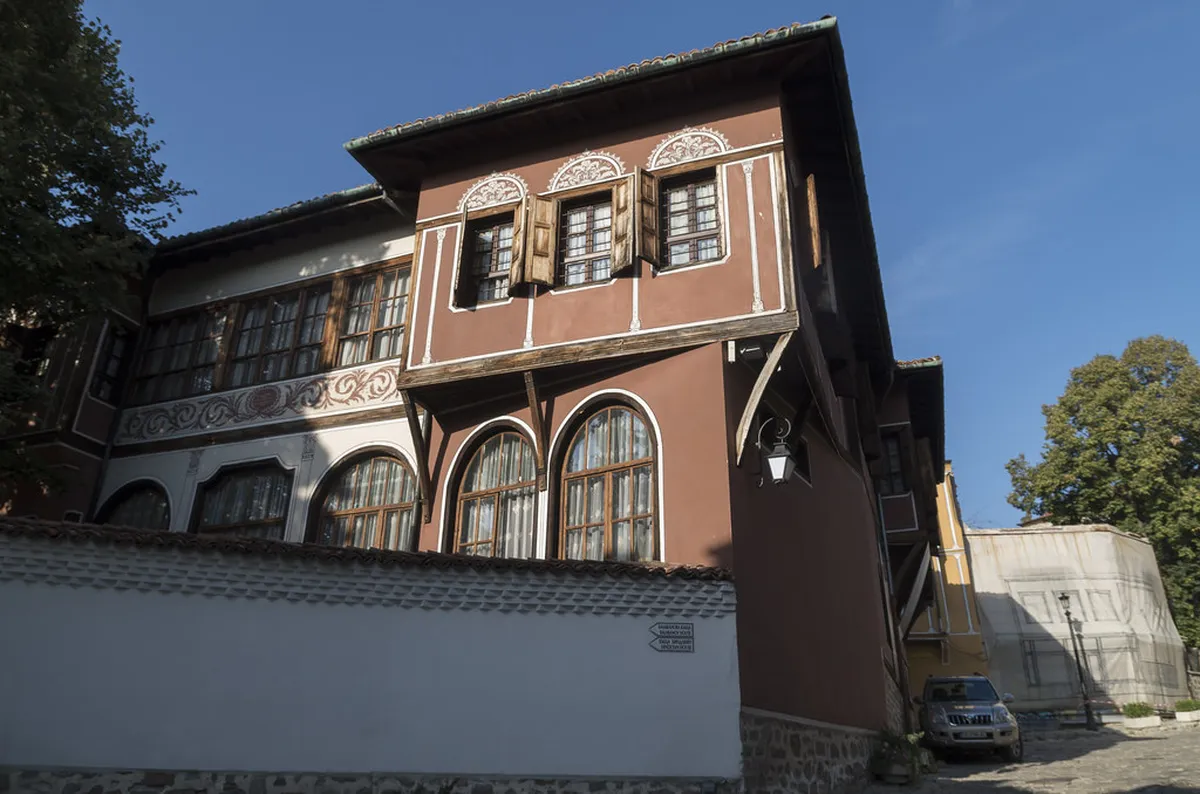
The Old Town is filled with colorful 19th-century Bulgarian National Revival houses that now serve as museums, galleries, and guesthouses. The Ethnographic Museum and the Ultimate Balabanov House Visitor Guide are both within a five-minute walk from the theater entrance. Narrow alleys connect small courtyards where local artists sketch and sell work, providing a vivid contrast to the Roman masonry above them. You can see the full range of the city's layered history — Thracian, Roman, Ottoman, and Bulgarian Revival — all within a single afternoon on foot.
Plovdiv's café culture is strongest in this district. Stop at one of the terrace cafes along ul. Artin Gidikov for a traditional Bulgarian coffee and a view of the theater facade. If you want to extend the day, the Kapana creative district is a 15-minute walk downhill and offers some of the best restaurants and bars in the city. See our Plovdiv attractions hub for a full day-by-day breakdown of the best the city has to offer in 2026.
Why the Theater Sits in One of Europe's Oldest Cities
Part of what makes the Roman Theater so striking is its setting: Plovdiv is widely cited as one of the oldest continuously inhabited cities in Europe, with settlement layers reaching back roughly 8,000 years. The Roman period that produced this theater in the early second century AD is, in that timeline, comparatively recent — the same saddle of land between the hills had already been settled by Thracians for thousands of years, and the theater itself was built over an earlier sanctuary to the Thracian goddess Bendis. That depth is exactly why a single afternoon here lets you walk through Thracian, Roman, Ottoman, and Bulgarian Revival layers within a few hundred meters.
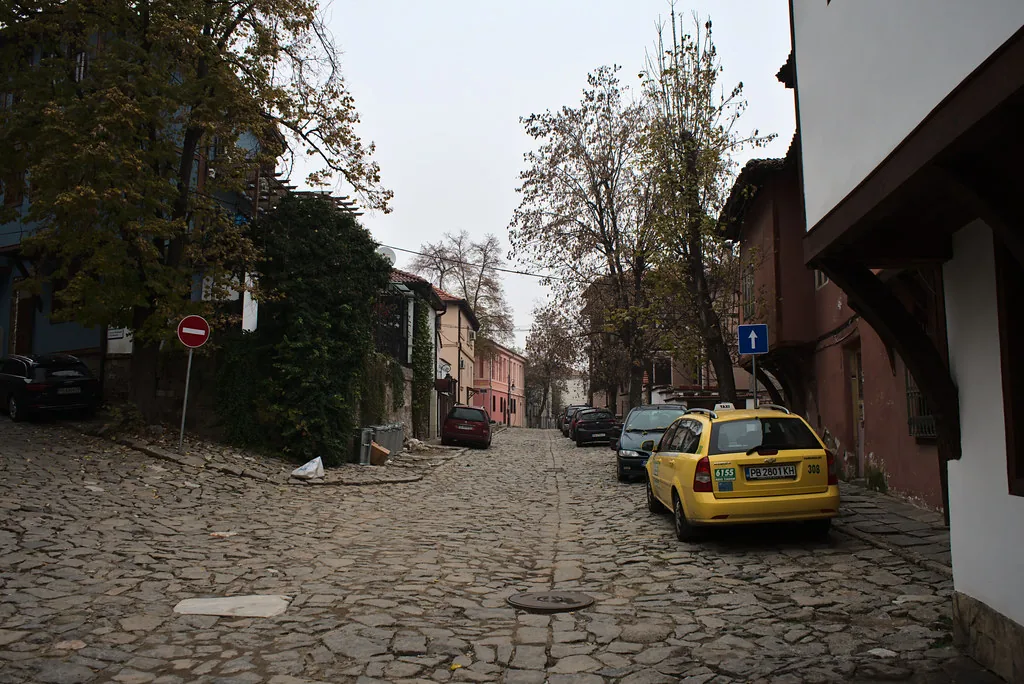
This long history is the main reason Plovdiv is famous well beyond Bulgaria. It served as the European Capital of Culture in 2019, and its Old Town remains one of the best open-air museums of layered civilization on the continent. The Roman Theater is the most photographed and most-visited single monument of that heritage, which is why it anchors nearly every itinerary. Understanding that you are sitting in a venue built by Romans, on a hill settled millennia before them, transforms a quick photo stop into a genuine encounter with deep time.
For more Plovdiv reading, see our 10 Best Museums in Plovdiv: The Ultimate Cultural Guide and Plovdiv Old Town Guide: Architecture, History, and Travel Tips guides.
Combine this with our main Plovdiv guide for a fuller itinerary.
Frequently Asked Questions
Is the Plovdiv Roman Theater an amphitheater?
No, it is a classical Roman theater rather than an amphitheater. While an amphitheater is fully circular for games, this theater is semi-circular and designed for stage performances. You can learn more about local culture at Plovdiv Events 2026 throughout the year.
How much are tickets for the Roman Theater in Plovdiv?
Standard tickets for adults generally cost 5 BGN, which is approximately 2.50 Euros. Students and seniors often receive discounted rates at the ticket office. Using a city pass can also help you save money on multiple attractions.
Can you see the Roman Theater for free?
You can see the theater from several vantage points on the surrounding hills without paying an entrance fee. However, you must buy a ticket to walk onto the stage and sit in the marble rows. The view from the top fence is quite impressive for quick photos.
What performances are held at the Plovdiv Ancient Theater?
The venue hosts a variety of events including opera, ballet, rock concerts, and folklore festivals. The Opera Open festival is the most famous event held here every summer. It is widely considered one of the most prestigious outdoor stages in Southeastern Europe.
Is the Plovdiv Roman Theater the best preserved in the world?
It is consistently ranked among the best-preserved ancient theaters in the world. Centuries spent buried under earth and houses protected its white marble from looting and erosion, so the seating rows, orchestra, and much of the stage backdrop survived intact. That is why it can still host live opera and concerts today, which very few antique theaters can.
Why is Plovdiv famous?
Plovdiv is one of the oldest continuously inhabited cities in Europe, with roughly 8,000 years of settlement layers. It is famous for that depth of history — Thracian, Roman, Ottoman, and Bulgarian Revival heritage layered together — and the Roman Theater is its most iconic monument. Plovdiv was also named European Capital of Culture in 2019.
The Plovdiv Roman Theater remains a crown jewel of Bulgarian archaeology and modern culture. Its ability to host thousands of people today proves the enduring quality of Roman engineering. Whether you visit for the history or a live show, the experience is memorable. Make sure to include this landmark at the top of your travel plans.
Walking through the marble rows offers a quiet moment of reflection on the city's long history. The site beautifully balances its role as a museum and a functional performance space. It serves as a bridge between the ancient world of Philippopolis and the modern energy of Plovdiv. Few places on earth allow you to touch history while enjoying world-class art.