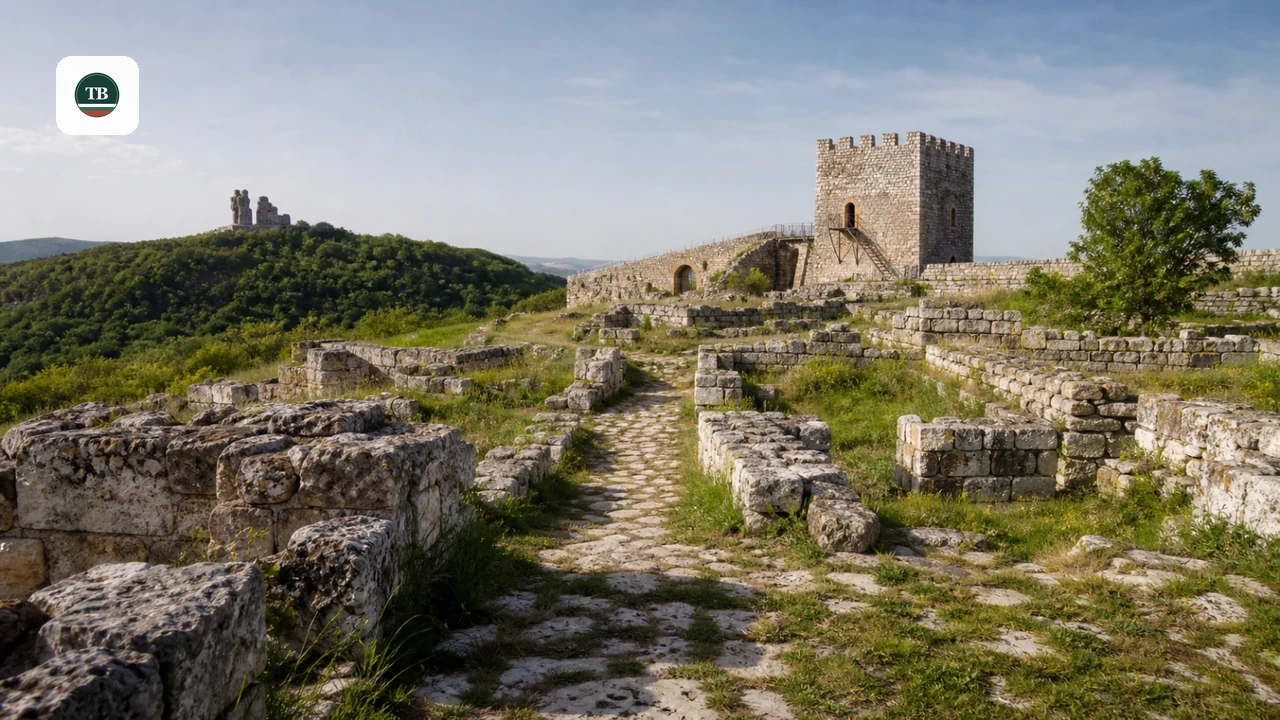
Shumen Fortress and Founders of the Bulgarian State Monument
Last updated August 2026. Shumen Fortress and the Founders of the Bulgarian State Monument sit on the same plateau above Shumen, Bulgaria, though the two sites are nearly 1,300 years apart in age. Restored walls from the Second Bulgarian Empire remain at the fortress, while the monument's concrete pillars mark 1,300 years since the Bulgarian state's founding in 681.
Shumen Fortress and Founders of the Bulgarian State Monument: Visit Planning Basics
Both sites sit within Shumen Plateau Nature Park on Ilchov Bair Hill, about 3.7 miles from central Shumen by road, according to Visit Bulgaria's official monument page. Morning visits avoid the afternoon heat on the open stairway and catch better light for photographing the mosaic panels. Budget 3 to 4 hours to see the fortress and the monument together, including the drive or climb between them. Drivers can reach both points using the plateau's road network without returning to central Shumen between stops. The Shumen Municipality tourist information office on Slavyanski Blvd can confirm same-day hours before setting out. A broader 10 Best Things to Do in Shumen, Bulgaria (2026 Guide) guide covers what else fits into the same day.
- Hours: 08:00 to 20:00, May through October.
- Hours: 08:30 to 17:00, October through April.
- Entrance fee: 3 BGN, paid at the ticket office beside the monument.
- Guided tours: offered in Bulgarian, Russian, German, English, French, and Czech.
- Suggested duration: 3 to 4 hours to cover both the fortress and the monument.
The Founders of the Bulgarian State Monument: Khans, Mosaic, and the Lion
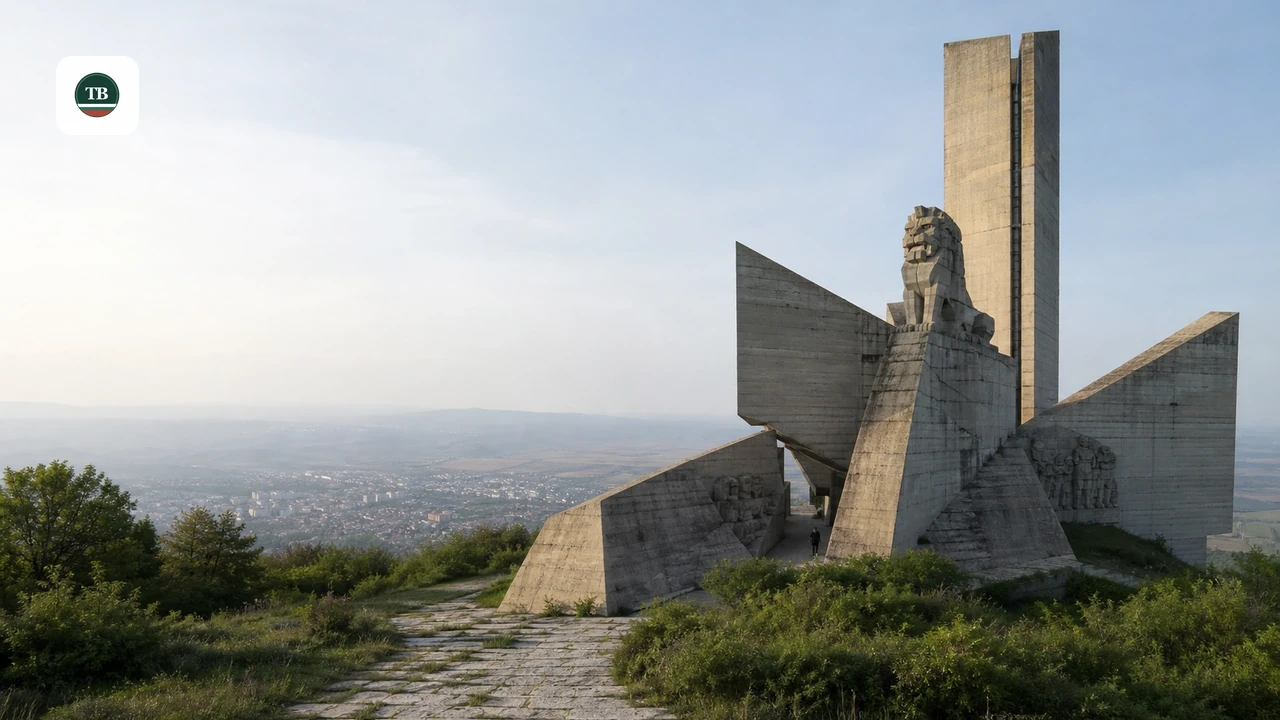
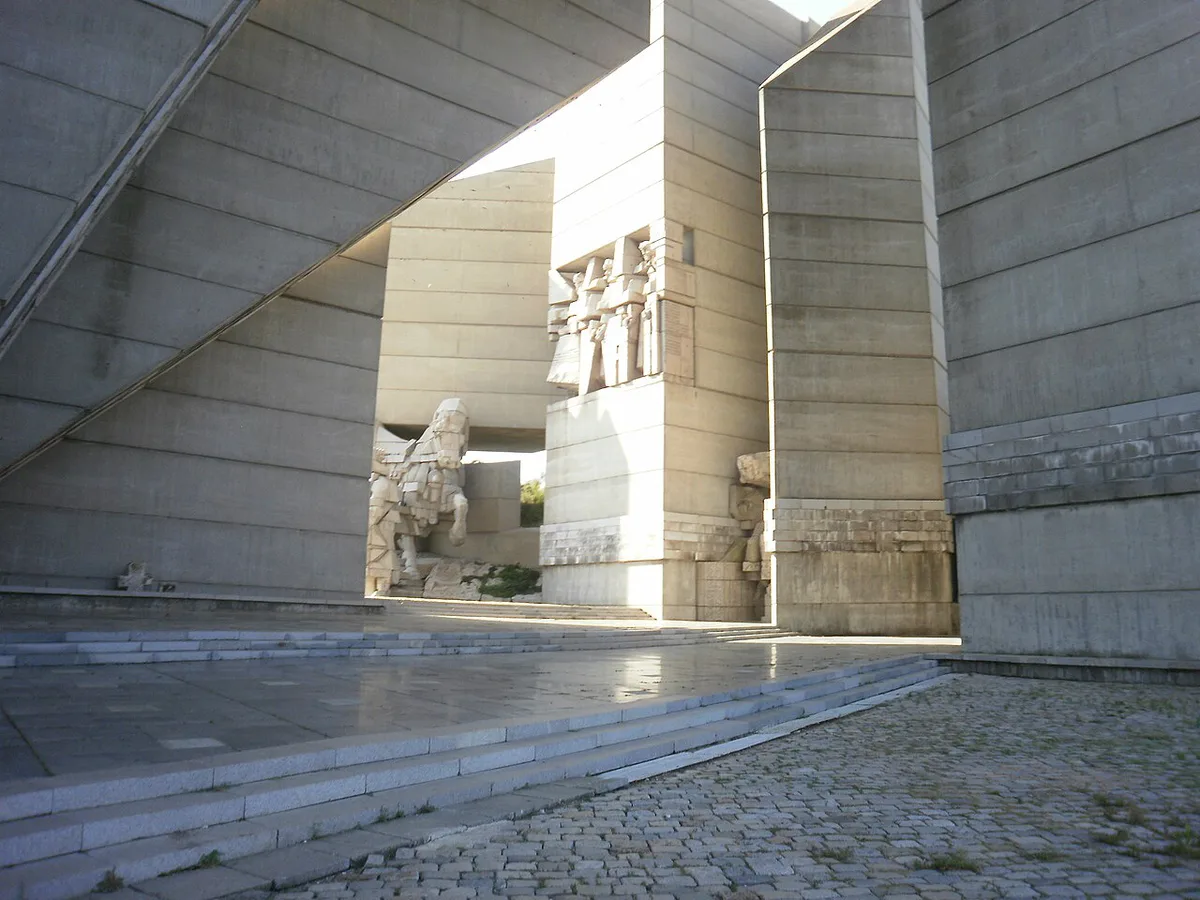
Construction on the monument began in August 1979, and it opened on November 28, 1981, marking 1,300 years since Bulgaria's founding. Sculptors Krum Damyanov and Ivan Slavov created the Cubist figures, while architects Georgi Gechev and Blagoy Atanasov designed the concrete structure, according to Visit Bulgaria's account of the monument. Khan Asparuh appears first in the sequence, sword planted in the ground, followed by towering figures of Tervel, Krum, and Omurtag. Words attributed to Omurtag are carved beneath their figures, reflecting on the rulers who come after him. A cross-shaped opening near the top lets light through the structure, marking Bulgaria's conversion to Christianity in the 9th century. Eleven more figures depict the Golden Age under Simeon the Great, set opposite a reconstructed section of the Veliki Preslav fortress wall. Visit Bulgaria describes the mosaic panels covering the pillars as the biggest outdoor mosaic-triptych in Europe.
- 459 feet long and 230 feet tall, built as two groups of angled concrete pillars.
- 21 sculptures in total, including 59-foot figures of Khans Tervel, Krum, and Omurtag.
- A 1,000-ton granite lion tops the memorial.
- Three alphabets appear across the complex: Runic script, the Glagolitic alphabet, and Cyrillic.
- Visible from around 19 miles away on clear days, according to published accounts of the site.
Shumen Fortress: Walls, Towers, and the Old Town
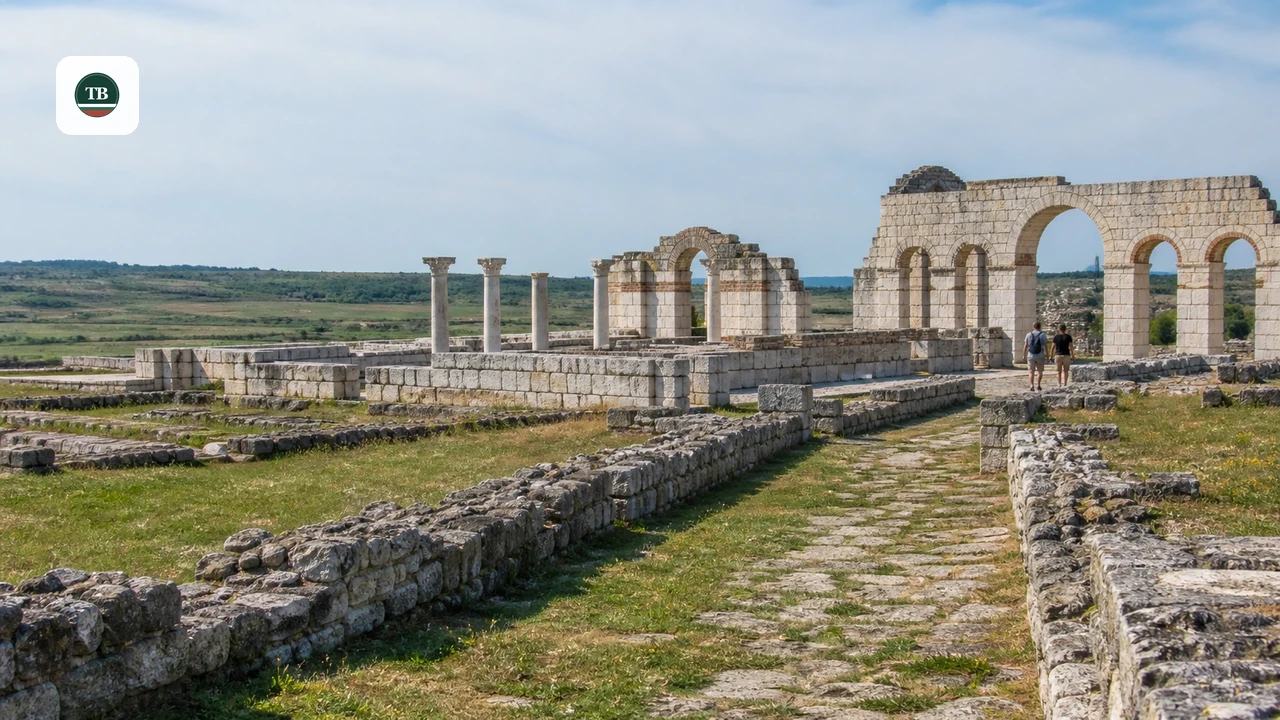
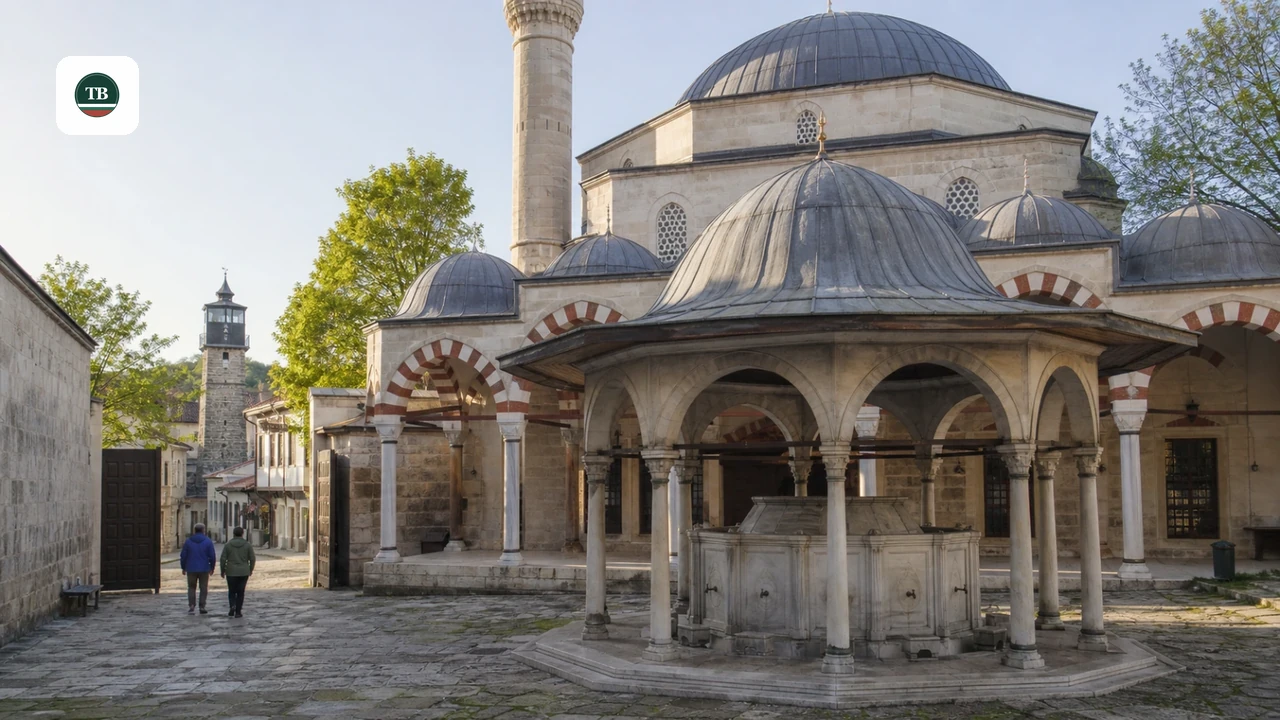
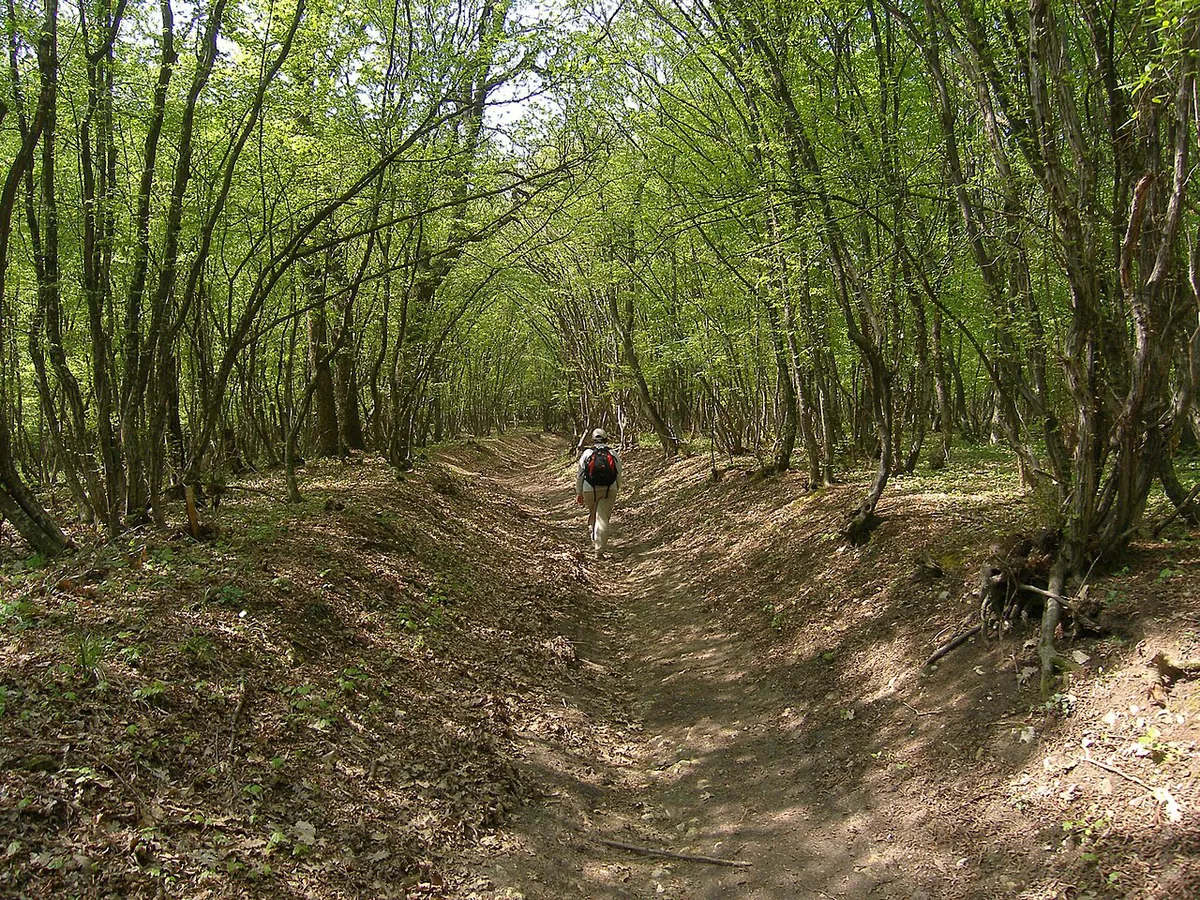
Shumen Fortress rises above the modern city as a hilltop ruin from the Second Bulgarian Empire era, with restored walls and towers open for walking. A short uphill walk, or a short drive, reaches the site from central Shumen, on a different stretch of the plateau road than the monument. Views from the tower sections take in the city below and the plateau ridge beyond it. An on-site museum adds context for the fortress's role in the medieval town. Opening hours for the fortress run separately from the monument's schedule, so confirm current times locally before visiting both in one trip. A fuller look at Old Town and Tombul Mosque rounds out a half day in Shumen's historic center. Travelers building a wider castle circuit can compare the site against Bulgaria's best castles and fortresses.
The 1,300 Steps vs Driving Up the Plateau
A processional stairway of 1,300 steps climbs from the Vasil Drumev Drama Theatre in central Shumen to the monument, with 13 landings spaced along the route for rest stops. Climbers get wide views on the way up, but the largely unshaded stairway does not suit every traveler or every season. A scenic road also runs from Shumen to the monument, with parking available near the top for anyone driving or arriving by taxi. Families, travelers with mobility limits, and anyone visiting during a hot afternoon are generally better served by the road. Neither route currently accommodates travelers who need step-free access. The Bulgarian Ministry of Tourism reports no access for people with disabilities at the monument.
Neither the 1,300 steps nor the scenic drive offers step-free access for travelers; the Bulgarian Ministry of Tourism notes that people with disabilities lack access to the monument.
| Aspect | Stairs | Driving or Taxi |
|---|---|---|
| Starting point | Vasil Drumev Drama Theatre | Central Shumen via the scenic road |
| Distance/effort | 1,300 steps across 13 landings | About 3.7 miles by road |
| Shade | Largely exposed | Shaded inside a vehicle |
| Best for | Fitness travelers and photographers | Families, mobility limits, hot afternoons |
| Cost | No charge | Fuel or taxi fare |
Nearby Attractions: Madara Rider, Pliska, and Preslav
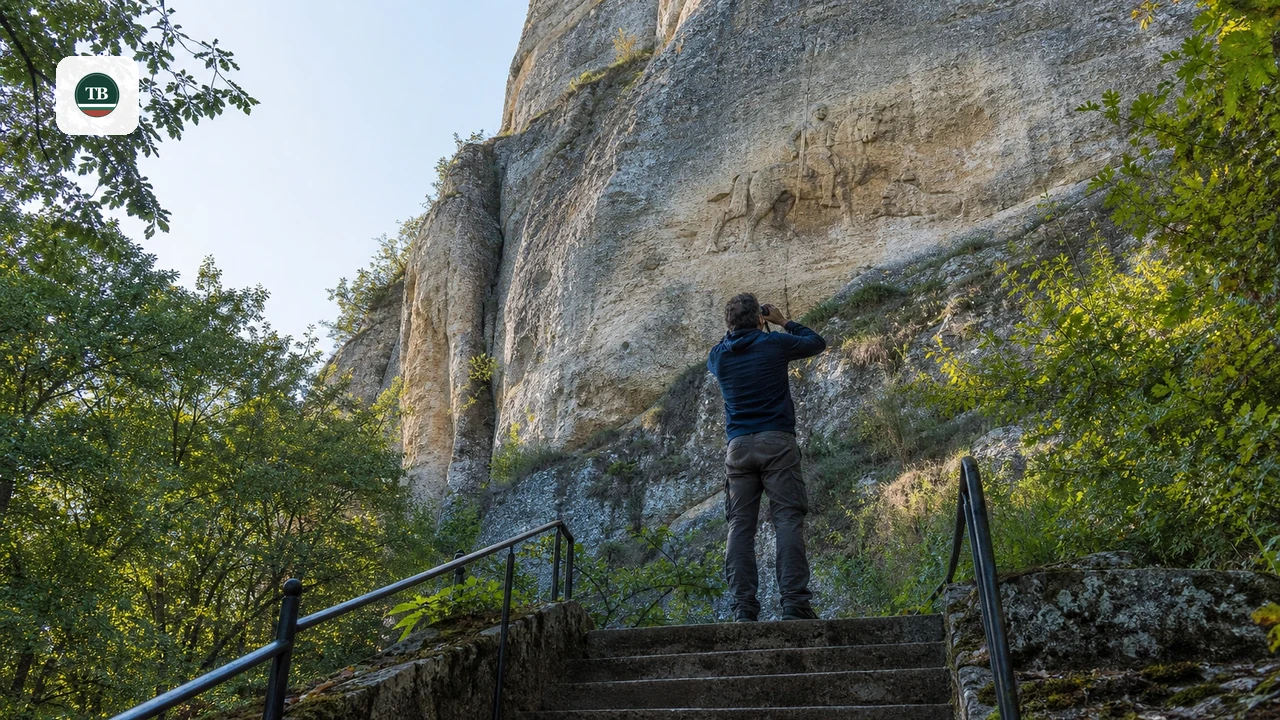
Two other First Bulgarian Empire sites sit within reach of the plateau, tied to the same khans shown in the monument's mosaic. A Madara Rider day trip reaches the rock relief and archaeological reserve associated with the early Bulgarian rulers. A separate Pliska and Preslav day trip covers the first two capitals of the Bulgarian state. Related listings for the monument also point to the Regional History Museum in Shumen and the Chudnite Skali rock formations as nearby stops. Travelers routing through the wider region can fold the fortress and monument into a Bulgaria Road Trip Itinerary: 10 Essential Guide Sections that continues toward the northeast. For a full national trip plan, a complete Bulgaria itinerary places Shumen alongside the country's other regions. A shortlist of 18 Best Places to Visit in Bulgaria: A Complete 2026 Guide helps prioritize what comes next after Shumen.
Essential Tips: Shade, Footwear, and Photography
A few practical choices make the plateau visit smoother, especially on the stairway side.
Photography is best in the morning when low light defines the concrete panels; hours of 08:00 to 20:00 from May through October provide an extended window.
- Bring water and sun protection; the 1,300-step stairway has little shade.
- Wear closed, supportive shoes for the fortress ruins and for the long stair descent.
- Photograph the monument in the morning, when low light defines the angled concrete panels.
- Confirm current hours and accessibility needs before visiting, since step-free access is not currently available at the monument.
- Check the 10 Best Bulgaria Hiking Trails to Try in 2026 for other trails across the same plateau if time allows.
Frequently Asked Questions
How many steps lead to the Founders of the Bulgarian State Monument?
The stairway from the Vasil Drumev Drama Theatre has 1,300 steps, broken up by 13 landings for rest stops along the way.
What are the monument's opening hours?
Hours run 08:00 to 20:00 from May through October, and 08:30 to 17:00 from October through April. Check the season before setting out.
Is there an entrance fee for the Founders of the Bulgarian State Monument?
A modest 3 BGN entrance fee is charged at the ticket office beside the monument, and that fee goes toward its upkeep.
Can you visit Shumen Fortress and the monument on the same day?
Yes. Budget around 3 to 4 hours total, using either the stairway or the scenic road between the two points on the plateau.
Is the monument accessible for visitors with disabilities?
The Bulgarian Ministry of Tourism reports no access for people with disabilities at the monument. Travelers with mobility needs should plan around the stairway and uneven ground.
How much time should I plan for the whole visit, including nearby sites?
Plan 3 to 4 hours for the fortress and monument alone. Add a half day if a Madara Rider or Pliska and Preslav day trip fits into the same itinerary.