Best Museums in Tryavna, Bulgaria
Last updated August 2026, this guide ranks the best museums in Tryavna for travelers who want the woodcarving and icon-painting history explained. Tryavna's museum network runs more than eight sites, anchored by the woodcarving showcase at Daskalov House. The comparison table and walking route below help you fit the right mix into two hours or a full day.
The Tryavna Artistic School: Why the Town Has So Many Museums
Tryavna's museums trace back to one movement, the Tryavna Artistic School. Bulgaria's official tourism portal lists Tryavna among the country's National Revival heritage towns. That school began in the late 17th and early 18th centuries. It split into three craft branches: icon painting, woodcarving, and architecture and construction. Local masters carried those crafts into most buildings in the old town. That history is why Tryavna carries an Architecture-Historical Reserve designation. It also explains the town's museum split. A dedicated woodcarving museum, a dedicated iconography museum, and an Old School museum each cover one branch of the same tradition. Architecture fans can go deeper with the Tryavna Old Town Guide: Best Things to Do & Planning Tips, which covers the Revival-period streetscape in full. Beyond museums, the full 8 Best Things to Do in Tryavna, Bulgaria (2026 Guide) guide covers the rest of town. Zoomed out, the 18 Best Places to Visit in Bulgaria: A Complete 2026 Guide list places Tryavna in wider trip context. This museum network runs more than eight sites under one administration:
- Art Gallery
- The Slaveykov House
- Daskalov House (Museum of Woodcarving and Ethnographic Arts)
- Kazakov Art Gallery
- The Raykov House
- The Old School
- Tryavna Iconography School Museum
- Museum of Asian and African Art
- The Popangelov House
- Angel Kanchev House
Best Museums in Tryavna: The Essential Three to See First
Three museums cover most of what a first visit needs, and each one anchors a different craft.
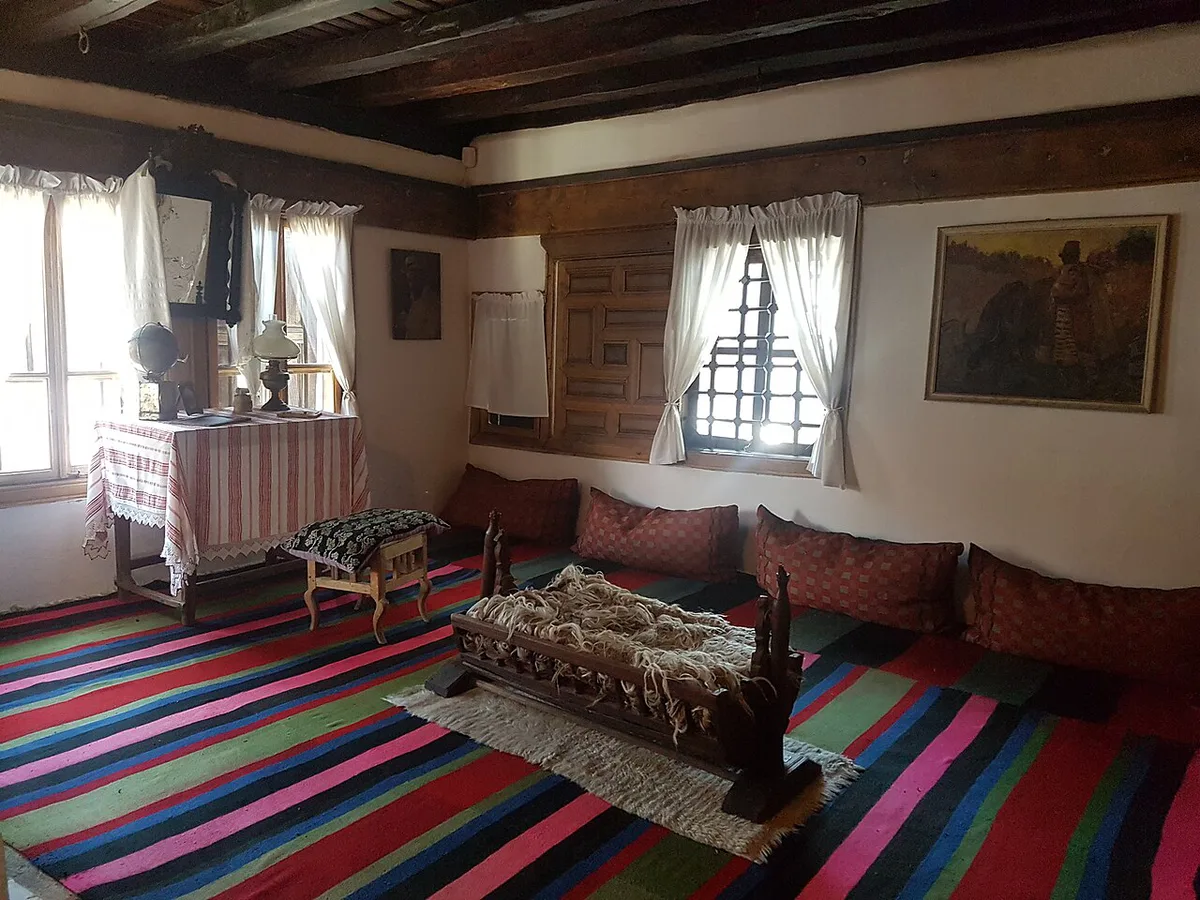
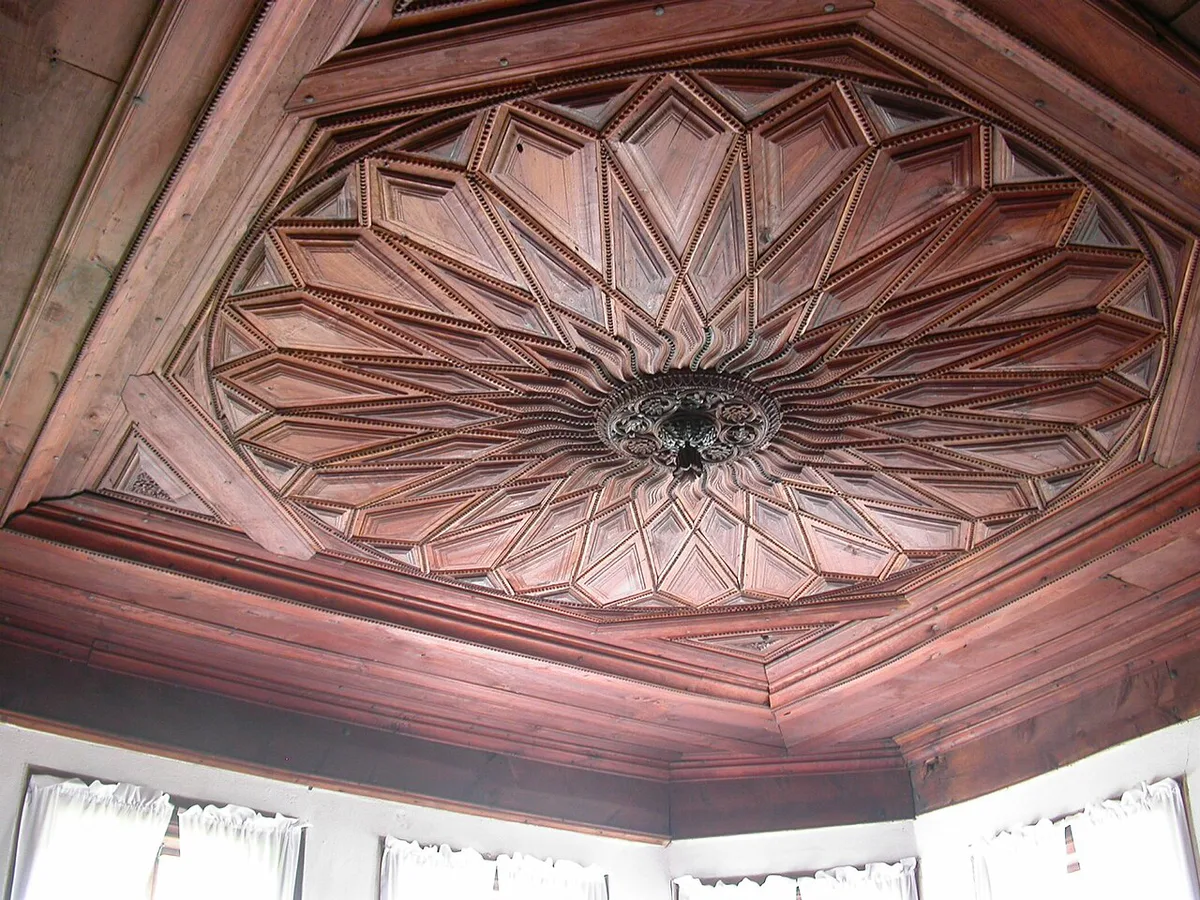
- Daskalov House (Museum of Woodcarving and Ethnographic Arts) was built 1804-1808 for merchant Hristo Daskalov's two sons. It is the only museum in Bulgaria devoted entirely to woodcarving. Its two carved sun ceilings came from a 1808 wager between master Dimitar Oshanetsa and his assistant Ivan Bochukovetsa. Each wanted to carve the finer ceiling. Look closely: the two suns are carved in noticeably different styles, one per craftsman. The museum also displays iconostases, church carving, and a hands-on wood-carving workshop area.
- The Old School (Slaveykov School) was one of Bulgaria's first secular schools. Its reconstructed classroom demonstrates the Bell-Lancaster mutual-teaching method used here, where older students taught younger ones. The site also holds a donated gallery from Dimitar Kazakov Neron and his brother Nikola Kazakov. A working clock mechanism that once ran the town's clock tower is on display too.
- Tryavna Iconography School Museum sits near the clock tower. It holds 160 original icons and the tools local icon painters once used. The collection traces the Tryavna style. Expect warm color palettes and distinctive facial rendering, the two traits that define the local Revival-era icon school.
Specialized Museums in Tryavna: Asian Art and Local Houses
Three smaller collections round out a fuller day and reward travelers who want more than the essential three.
- Museum of Asian and African Art was donated by Bulgarian sculptor Zlatko Paunov. It holds more than 380 exhibits from Nepal, Tibet, China, India, and several African countries. Most date from roughly the 2nd to the 20th century and were made for religious use. The contrast with the woodcarved Revival interiors nearby makes it a useful change of pace partway through a museum day.
- Slaveykov House Museum was home to poet Petko Slaveykov, who lived 1827 to 1895. He and his wife raised their children there, including poet Pencho Slaveykov. The exhibition documents the family's role in Bulgarian cultural life.
- Raykov House gives an ethnographic look at 19th-century urban domestic life. It was also the birthplace of Pencho Raykov, Bulgaria's first professor of chemistry.
How Long Each Tryavna Museum Takes
Two hours covers the essential three museums at a comfortable pace. A full day adds the specialized collections and leaves room for the old town itself.
Two hours allows a comfortable circuit through the three essential collections plus access to smaller specialized museums, which typically justifies choosing a combined ticket over paying per-museum entry.
| Museum | Time Needed | Best For | Key Highlight |
|---|---|---|---|
| Daskalov House (Museum of Woodcarving) | 45-60 minutes | First-time visitors, families | Two sun ceilings from the 1808 carving wager |
| The Old School (Slaveykov School) | 30-45 minutes | History and education enthusiasts | Bell-Lancaster classroom and the Kazakov brothers gallery |
| Tryavna Iconography School Museum | 30 minutes | Art lovers | 160 original icons in the Tryavna style |
| Museum of Asian and African Art | 30 minutes | Culture-focused travelers wanting contrast | 380+ exhibits donated by sculptor Zlatko Paunov |
| Slaveykov House Museum | 20-30 minutes | Literature and history readers | Home of poet Petko Slaveykov, 1827-1895 |
| Raykov House | 20 minutes | Ethnography enthusiasts | 19th-century domestic life and Pencho Raykov's birthplace |
- If you only have 2 hours: visit Daskalov House first, then the Iconography School Museum near the clock tower, then the Old School if time allows.
- Full day: add the Museum of Asian and African Art, Slaveykov House, and Raykov House to the essential three.
A Walking Route From the Clock Tower
This route starts at the clock tower and avoids doubling back through town.
- Step 1: Start in the central square, Cap. Dyado Nikola, beneath the clock tower, and visit the Tryavna Iconography School Museum nearby.
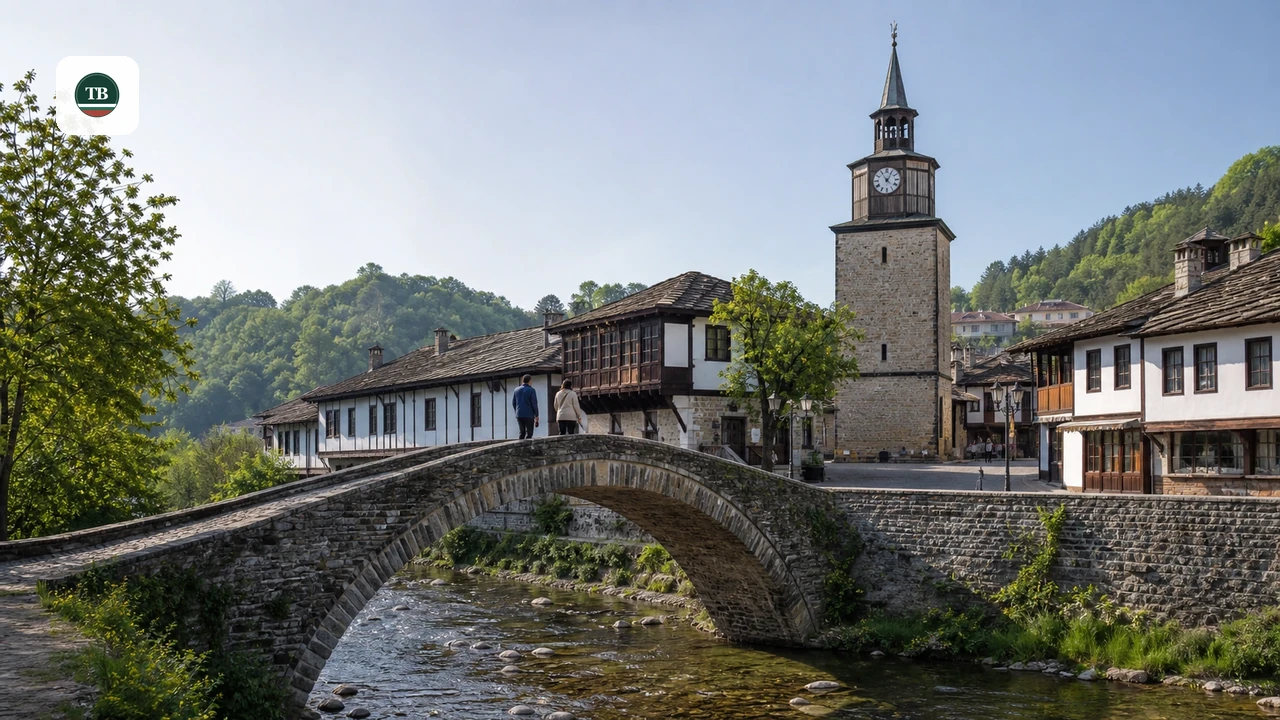
- Step 2: Cross the Stone Bridge to Slaveykov Street, where Daskalov House (Museum of Woodcarving) is located.
- Step 3: Continue to the Old School Museum for the classroom exhibit and the Kazakov brothers gallery.
- Step 4: Finish at the Museum of Asian and African Art, then add Slaveykov House or Raykov House on a full-day visit.
Tickets, Hours, and Getting to Tryavna's Museums
Tryavna's museum network sells a combined ticket covering multiple sites for one price. You can book it through the museums' official online ticket portal. Buying single tickets at each door instead means paying separately every time. The combined pass is worth choosing once a visit covers three or more sites. Confirm current leva pricing on the portal before you travel, since museum prices change year to year. Guided tour talks in Bulgarian and English are also available with advance booking. Driving gives the most flexibility for pairing the museums with the Stone Bridge, the old town square, and a Bozhentsi side trip. Travelers coming from the north typically connect through Veliko Tarnovo, then continue to Tryavna by local bus or train. The Bulgaria Road Trip Itinerary: 10 Essential Guide Sections lays out a longer route through this part of the country.
- Daskalov House: 9:00 to 19:00, April through October.
- Daskalov House: 9:00 to 17:00, November through March, open every day of the year.
- Tryavna Iconography School Museum: hours have run separately from Daskalov House in the past, so confirm the current schedule before visiting.
- Direct buses from Sofia: just under four hours.
- Tourist Information Center, 33 Angel Kanchev Street: Monday-Saturday 9:00-12:30 and 13:30-18:00, April through September.
- Tourist Information Center: Monday-Saturday 8:00-12:30 and 13:30-17:00, October through March.
Beyond the Museums: Old Town, Stone Bridge, and Bozhentsi
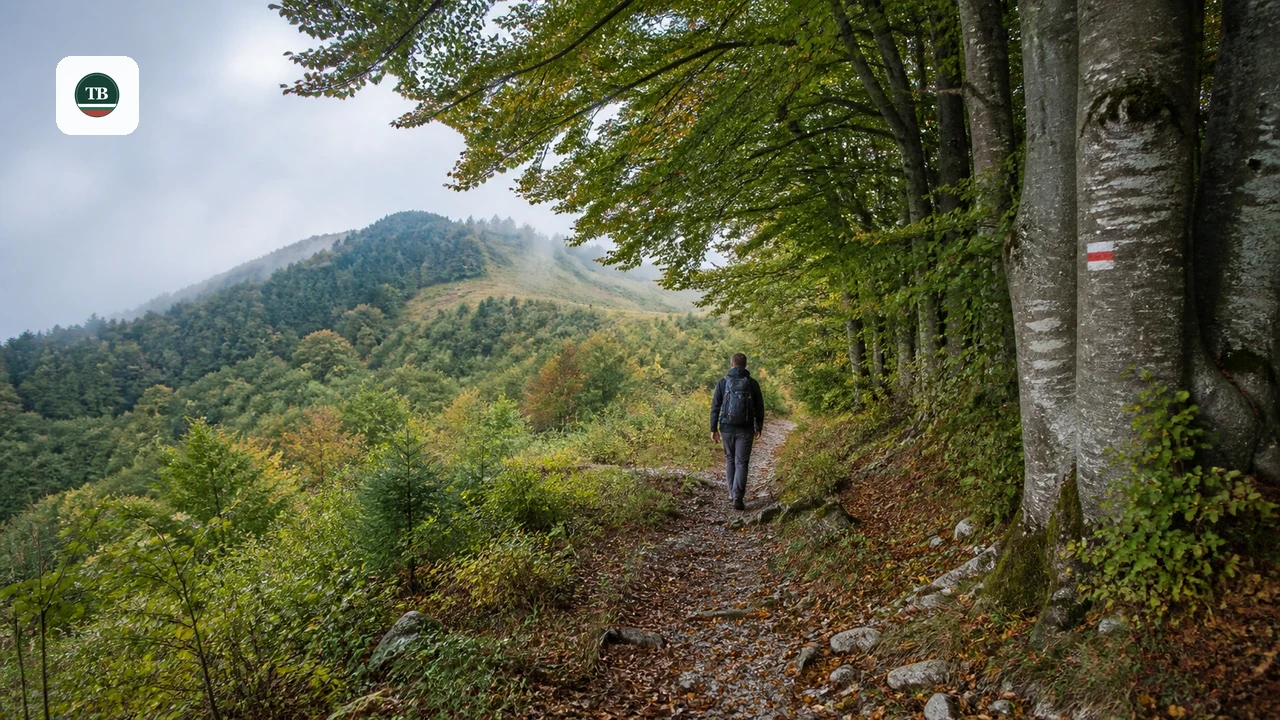
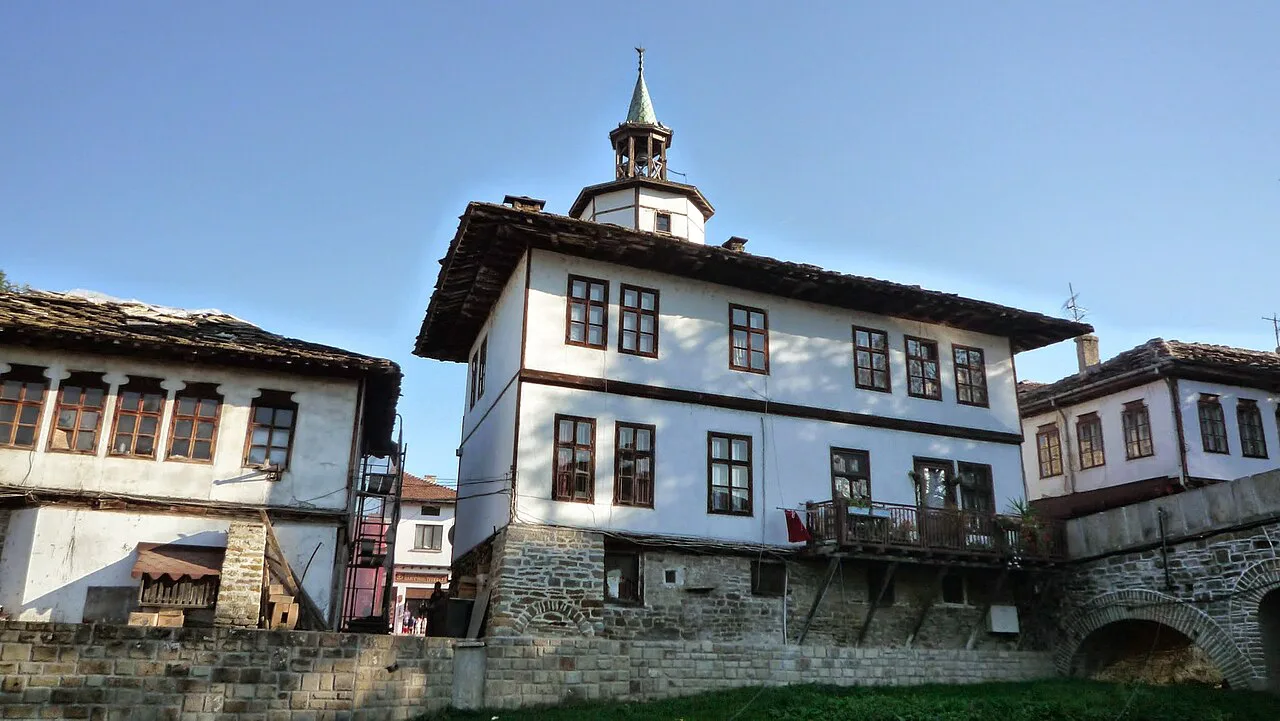
Tryavna's Revival-era architecture works as its own open-air museum. The clock tower anchors the central square, Cap. Dyado Nikola, and its original clock mechanism is now on display inside the Old School Museum. The Stone Bridge is the town's other landmark, linking the old square to the crafts street where Daskalov House stands. The photo-friendly core includes Slaveykov Street itself, lined with workshop-fronted Revival houses. Culture-focused itineraries that want to extend the same craft theme regionally sometimes add the Etar Architectural-Ethnographic Complex, a separate open-air museum built around Bulgarian Revival-era craft traditions. Bozhentsi Architectural Reserve sits roughly 9 miles from Tryavna and makes a logical half-day extension. Some travelers hike between the two towns, a route that takes around two hours each way. For route planning, see the The Best Day Trips from Tryavna, Bulgaria (2026 Guide) guide. For trail specifics, check the Hiking Near Tryavna: Trails, Routes & Practical Guide guide. Marked trails beyond Bozhentsi climb to two regional peaks: Golyam Krastets at 6,673 feet and Barzovets at 2,944 feet. Both routes are covered in the 10 Best Bulgaria Hiking Trails to Try in 2026.
Adding Bozhentsi to a museum day requires about two hours each way of hiking, which eliminates any evening option in November through March when Daskalov House closes at 17:00.
Mistakes to Avoid Before You Go
A few small planning choices make the difference between a rushed visit and a good one.
- Don't assume every site keeps Daskalov House's hours. Daskalov House opens daily year-round, but some smaller specialist museums keep separate schedules, so confirm each one first.
- Don't rush the woodcarving museum. Daskalov House displays three carving types, shepherd's carving, home-decoration carving, and church carving, and each rewards a closer look.
- Don't skip the workshop area. Daskalov House sets up a wood-carving demonstration space with tools on display, and offers leaf-painting and wood-carving workshops for groups and individuals with advance reservation.
- Budget time for souvenirs. Information materials and souvenirs are sold on-site at the museums, and the Bulgaria souvenirs guide covers which woodcarving pieces are worth buying around town.
- Don't add Bozhentsi to the same day without checking daylight. The hike runs about two hours each way on top of a museum day.
Frequently Asked Questions
What is the Tryavna Artistic School?
It is the National Revival-era movement that split into icon painting, woodcarving, and architecture and construction. Each of Tryavna's core museums tracks one of those three branches, which is why the town supports several specialist collections, each covering one craft.
How much time do you need for the museums in Tryavna?
Budget 45 to 60 minutes for Daskalov House alone. Add 20 to 45 minutes each for the Old School, the Iconography School Museum, and the smaller specialist houses. Two hours covers the essential three museums. A full day adds the Asian and African Art Museum, Slaveykov House, and Raykov House.
Is there a combined ticket for Tryavna's museums?
Yes. The museum network sells a combined ticket covering multiple sites for one price, bookable through the museums' official online ticket portal. Buying single tickets at each door instead costs more once you're visiting three or more sites, so confirm current leva pricing on the portal before you travel.
What are the opening hours for Tryavna's museums?
Daskalov House runs 9:00 to 19:00 from April through October and 9:00 to 17:00 from November through March, open every day of the year. Confirm the Iconography School Museum's current hours separately, since it has run a different schedule from Daskalov House in the past.
How do you get to Tryavna from Sofia?
Direct buses take just under four hours. Driving gives more flexibility for combining the museums with the Stone Bridge and a Bozhentsi side trip. Travelers coming from the north typically connect through Veliko Tarnovo first.
Is Bozhentsi worth adding to a museum day in Tryavna?
Bozhentsi Architectural Reserve sits roughly 9 miles from Tryavna and makes a logical half-day extension. Some travelers hike between the two towns, a route that takes around two hours each way.
What's the most efficient order to see Tryavna's museums?
Start at the clock tower and the nearby Iconography School Museum. Cross the Stone Bridge to Daskalov House on Slaveykov Street next. Finish with the Old School and, on a full day, the Asian and African Art Museum.