
Nessebar Bulgaria: Complete Guide to the Pearl of the Black Sea 2026
Nessebar is a UNESCO World Heritage town on a rocky peninsula near Sunny Beach — ancient churches, cobbled lanes, and Black Sea beaches in one place.
On this page
Nessebar Bulgaria: Complete Guide to the Pearl of the Black Sea (2026)
Nessebar is one of those rare places that seems to belong to a different era. Perched on a small rocky peninsula jutting into the Black Sea, this UNESCO World Heritage town holds more than 3,000 years of layered history — Thracian ramparts, Greek temples, Byzantine churches, and wooden National Revival houses stacked together on cobblestone lanes barely wide enough for two people to pass. It is sometimes called "the Pearl of the Black Sea" and "the Town of 40 Churches," and while only around nine to eleven of those medieval churches survive today, the ruins of the rest still haunt the skyline.
What makes Nessebar especially accessible is its location. At roughly 35 km from Burgas and just 3 km from the Sunny Beach resort strip, it sits at the heart of Bulgaria's busiest coastal corridor. You can spend a morning among Byzantine ruins, eat grilled fish on a harbour terrace, and be back on a sun-lounger by afternoon. This guide covers everything you need to visit in 2026: what to see, how to get there, when to go, and how to combine Nessebar with the wider Black Sea coast.
The UNESCO Old Town: What to See
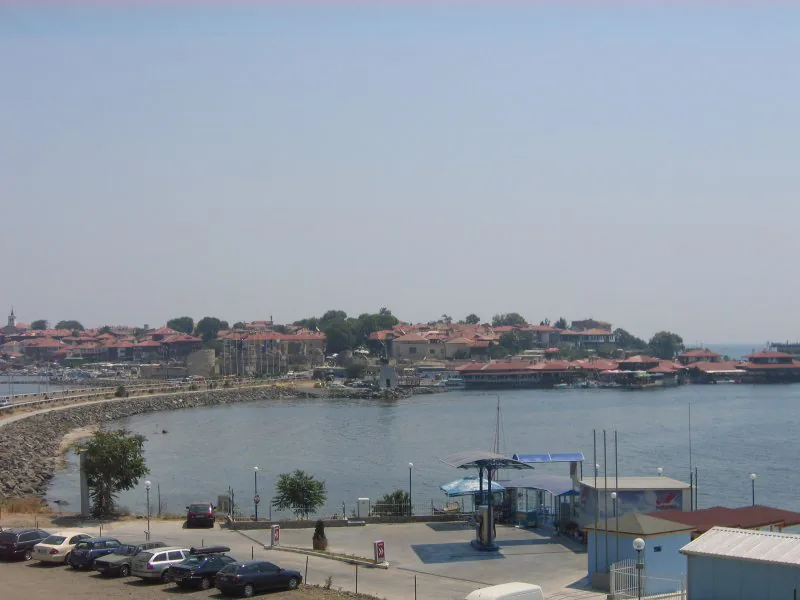
The Old Town was inscribed on the UNESCO World Heritage List in 1983 under criteria (III) and (IV), recognised as a site where Greek, Roman, Byzantine, and Bulgarian civilisations built on top of one another across millennia. The peninsula was originally an island; a narrow man-made isthmus now tethers it to the mainland, and crossing it — past the wooden windmill that serves as the town's unofficial symbol — marks the transition from modern resort to ancient settlement.
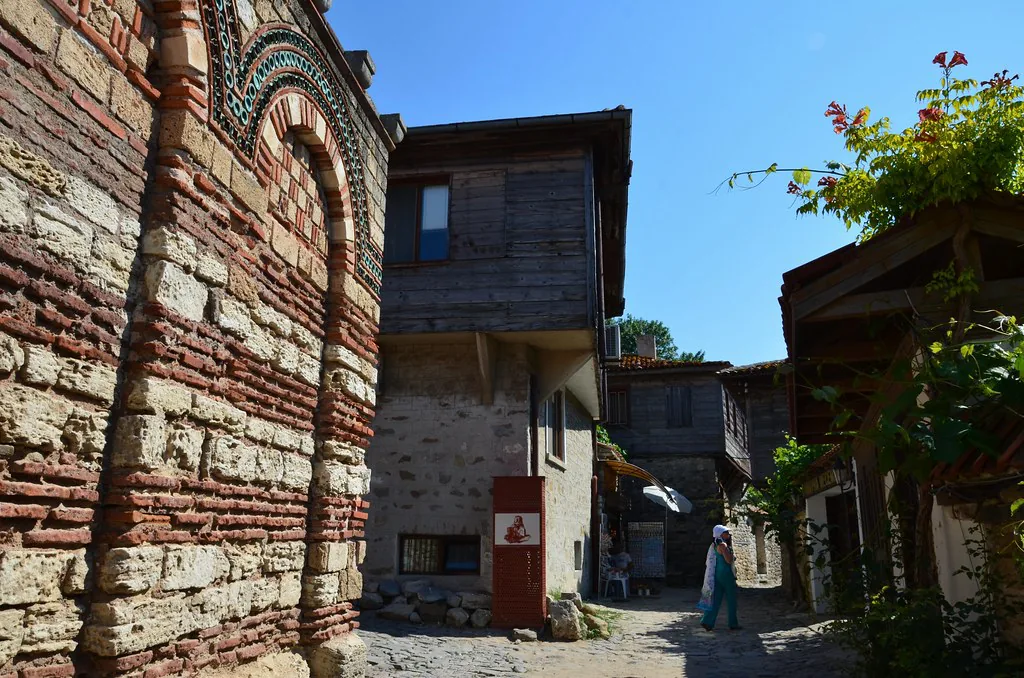
The churches are the main draw. St. Sophia Basilica (5th–6th century) is the largest surviving ruin, a three-nave structure with arched windows that photographs dramatically at any hour. The Church of St. Stephen (10th–11th century, with interior renovations through the 18th century) has the best-preserved interior on the peninsula: over 1,000 frescoes cover its walls and functions today as a museum. The Church of Christ Pantocrator (13th–14th century) showcases the finest Byzantine exterior in town — decorative polychrome ceramic discs and red-brick ornamentation that catch the afternoon light; it now serves as an art gallery. For drama, nothing matches the Church of St. John Aliturgetos, a roofless shell balanced on the eastern cliff face with the sea beyond it. The Church of St. John the Baptist (10th–11th century) is one of the oldest standing structures, compact at 12 × 10 metres and well preserved.
Beyond the churches, the Old Town holds ruins of a Temple of Apollo (Hellenistic period), an Agora site, partially excavated Roman Baths from the 6th century AD, ancient city walls, and traces of the original Thracian fortifications. The streets are cobblestone throughout and entirely pedestrian — no cars enter the Old Town.
The Archaeological Museum
Near the isthmus entrance, the Archaeological Museum is the best single place to grasp Nessebar's full depth. Four halls trace the town's history from the Eneolithic period through Greek, Roman, Byzantine, and Bulgarian medieval eras. Standout exhibits include 12th-century BC ship anchors recovered from the seabed, ancient coins (Nessebar — then called Messambria — minted its own silver coins around 440 BC and gold coins in the Hellenistic period), marble reliefs, gold jewellery, pottery, and a collection of religious icons.
Entry to the museum alone is approximately 9 BGN for adults and 4.50 BGN for children (based on 2025 pricing — verify on arrival in 2026). The best value is the combination ticket covering all seven municipal attractions, priced at around 35 BGN for adults and 17 BGN for children. Individual church entry typically runs 5–9 BGN each. If you plan to visit more than two or three sites, the combo ticket pays for itself quickly.
Arrive at the Old Town before 9–10 AM in July and August. The isthmus and main lane through the Old Town fill rapidly once tour groups arrive from Sunny Beach, and the peninsula is genuinely small — summer crowds can make the experience feel more like a market than a historic site. Early morning light is also better for photographing the churches.
The Beaches Around Nessebar
Nessebar has three distinct beach areas, each with a different character. The Old Town Beach, tucked below the peninsula itself, is small and partly pebbly — quieter than the resort strips and useful if you want to swim close to the historic core without going far. The North Beach is wide, sandy, and lined with sunbed rentals and restaurants; it sits between the Old Town and Sunny Beach and is essentially the southern continuation of that resort strip, with full facilities. The South Beach carries a Blue Flag designation, offers wide golden sand, and includes a partly nudist section toward its far southern end.
If you are staying in Sunny Beach and visiting Nessebar as a day trip, you will pass through or near the North Beach either way. For a wider overview of the coast, Bulgaria's best Black Sea beaches covers the full stretch from Varna south to the Greek border, including how Nessebar's beaches compare to quieter alternatives.
How to Get to Nessebar
From Burgas: The most reliable public transport option is Bus Route 10 from Burgas South Bus Station. Buses run approximately every 30 minutes throughout the day (first departure around 06:10, last around 22:40), stopping at Pomorie and Ravda along the way. The journey takes roughly one hour to one hour and ten minutes. The fare is approximately 8 BGN (around €4) — confirm current prices and timetables at the bus station or via local transport apps before travelling, as schedules can vary seasonally.
From Sunny Beach: Several options run between the resort and Nessebar, all taking roughly 10–15 minutes by road:
- Di Es Orange Bus — around 2 BGN for adults, children travel free on some routes
- Open-top tourist bus — 4–5 BGN
- Tourist train (mini-train) — approximately 6 BGN per segment; depending on your hotel location in the resort you may need more than one connection
- Water taxi (sea taxi) — the most scenic option in summer. The crossing takes around 30 minutes and runs approximately every 30 minutes between roughly 9 AM and 9–10 PM. Fares are approximately 15 BGN for adults and 5 BGN for children, though this is a seasonal summer-only service and exact schedules depend on weather and demand — check locally on the day
- Taxi — quick and inexpensive for the short distance
From Sofia: Nessebar is roughly 430 km from Sofia, about 4.5–5.5 hours by car. Flying to Burgas Airport is the practical alternative for long-distance travellers. See getting around Bulgaria for transport options across the country.
If you are driving, park in the New Town — the Old Town is pedestrian-only. Parking typically costs around 2 BGN per hour in the designated areas (rates vary; check current signage).
The water taxi only operates in summer (roughly June through September) and is weather-dependent. If it is running, it is the most enjoyable way to arrive — the approach by sea to the rocky peninsula is one of Nessebar's great views. But do not plan your return journey around it without checking availability on the day.
Best Time to Visit Nessebar
The Old Town's appeal is genuine but its size is not: the peninsula is tiny, and in July and August — particularly August — it becomes extremely congested as visitors pour in from Sunny Beach and Burgas. The souvenir shops along the main lane dominate the ground-floor experience, and the atmosphere can feel more commercial than historic during peak hours.
Late May through June and September through October are the optimal windows: warm enough for swimming, most restaurants and services open, but with noticeably fewer crowds. Spring (March–April) is very quiet and atmospheric for the ruins but many restaurants may still be closed for the season.
Nessebar hosts cultural events in summer — a folklore festival is typically held in late July and late August, and a salsa event around late May. Specific 2026 dates had not been confirmed at the time of writing; check the Nessebar municipality website or Sunny Beach event listings for the current season's schedule.
For a broader view of when Bulgaria's coast is at its best, see our guide to the best time to visit Bulgaria.
Where to Stay: Old Town vs New Town
Accommodation splits naturally between two very different experiences. Staying in the Old Town means waking up inside the UNESCO site — stone walls, quiet cobbled lanes in the early morning before the day-trippers arrive, and immediate access to the churches. There are guesthouses and small hotels within the peninsula, though options are limited and book up well in advance for summer. The atmosphere in the evening, once the crowds leave, is worth seeking out.
Staying in New Town gives more hotel variety and easier parking, with a short walk or drive to the Old Town. It also puts you within easy reach of the main beaches. For those prioritising beach access, Sunny Beach (3 km north) has the largest concentration of hotels on this stretch of coast, though it is very much a mass-market resort town. A quieter alternative is Sozopol, Nessebar's sister UNESCO town about 42 km to the south, which has its own old town on a peninsula but with a more relaxed pace.
Combining Nessebar with Sozopol and Burgas
The southern Black Sea coast lends itself well to a multi-stop itinerary. Burgas is the regional transport hub and a pleasant city in its own right — sea gardens, pedestrian streets, and a good Archaeological Museum. It makes a practical base if you prefer a city over a resort, with Nessebar 35 km away on Bus Route 10. See things to do in Burgas for the full picture.
Sozopol is Nessebar's natural pairing: also an old town on a rocky peninsula, also with ancient roots and a church-dotted skyline, but considerably quieter and less commercialised. The two towns share a "medieval peninsula" character that makes the contrast between them the interesting part — Nessebar is the grander ruin, Sozopol the more lived-in town. The direct road distance is approximately 42 km (around one hour by car). In summer, a fast ferry service (Bulgaria Fast Ferry Ltd) runs between the two towns several times daily, taking around 40 minutes — a scenic option worth checking for current summer schedules. Read our full guide to Nessebar vs Sozopol to decide which suits your trip.
For a broader itinerary framework covering Nessebar, Sozopol, Burgas, and the wider coast, see the Bulgaria itinerary guide.
| Route | Distance | Approximate time | Transport option |
|---|---|---|---|
| Burgas → Nessebar | ~35 km | ~1 hr 10 min | Bus Route 10 (~8 BGN) |
| Sunny Beach → Nessebar | ~3 km | ~10–30 min | Bus / tourist train / water taxi |
| Nessebar → Sozopol | ~42 km | ~1 hr by road / ~40 min by ferry | Car or summer ferry |
| Sofia → Nessebar | ~430 km | ~4.5–5.5 hrs | Car or fly to Burgas |
Frequently Asked Questions
Is Nessebar worth visiting in 2026?
Yes — the UNESCO Old Town is genuinely historic and unlike anywhere else on the Bulgarian coast. The key is timing: visit early in the morning or outside of July–August peak season to avoid the heaviest tourist crowds. The churches, cliff-side ruins, and cobbled lanes are worth the trip even for a half-day stop from Sunny Beach or Burgas.
How do I get from Sunny Beach to Nessebar?
Several options connect Sunny Beach to Nessebar. The Di Es Orange Bus is the cheapest at around 2 BGN; the open-top tourist bus runs 4–5 BGN; a tourist mini-train costs approximately 6 BGN per segment. In summer, a water taxi makes the crossing by sea in around 30 minutes for approximately 15 BGN adults / 5 BGN children. A regular taxi is also quick and inexpensive for the short distance.
How many hours do you need in Nessebar?
A thorough visit to the Old Town — including the key churches, the Archaeological Museum, and a walk around the cliff-edge perimeter — takes around three to four hours. Add time for lunch at one of the harbour restaurants and a swim at the North Beach and you have a full half-day. Most visitors arriving as a day trip from Sunny Beach spend four to five hours in total.
What is the combination ticket for Nessebar's museums?
The Nessebar municipality offers a combination ticket covering all seven of its managed attractions (the Archaeological Museum plus the main open churches and sites). The price in 2025 was approximately 35 BGN for adults and 17 BGN for children. Confirm the current 2026 price at the museum entrance or the ticket office near the isthmus. If you plan to visit more than two or three sites individually, the combo ticket is better value than buying separate entries.
Is Nessebar better than Sozopol?
They are different in character rather than one being strictly better. Nessebar has grander ruins and more surviving medieval churches, but it is more commercialised and significantly more crowded in summer. Sozopol is quieter, more authentically lived-in, and has a warmer local atmosphere. If you can, visit both — they are about 42 km apart and a summer ferry connects them in roughly 40 minutes. The full comparison is in our dedicated guide to Nessebar vs Sozopol.
Nessebar rewards visitors who engage with it on its own terms — early morning walks through Byzantine ruins, an afternoon on a sandy Blue Flag beach, and an evening beer on the harbour watching the sun go down over the Black Sea. It is not a hidden gem (the tour buses from Sunny Beach make that impossible), but it is the real thing: a place where 3,000 years of civilisation genuinely compressed onto a small rocky peninsula, and where the evidence is still standing in the form of frescoed churches, ancient walls, and a windmill at the gate.
Plan your visit for late May, June, or September if you can, arrive before the crowds, buy the combination museum ticket, and allow at least half a day. If you have more time on the coast, Sozopol to the south and Burgas to the north each add their own dimension to what the Black Sea coast has to offer.