
Best Things to Do in Plovdiv: Complete 2026 Guide
Best things to do in Plovdiv in 2026: Roman Theatre, Old Town, Kapana quarter, day trips & more. Complete guide with 2026 prices, hours & insider tips.
On this page
Best Things to Do in Plovdiv: Complete 2026 Guide
The best things to do in Plovdiv in 2026 are exploring the Ancient Roman Theatre, wandering the cobblestone Old Town, discovering the Kapana creative quarter, climbing Nebet Tepe hill, and tasting Bulgarian cuisine in local mehanas. Most visitors need 2–3 days to cover the city highlights; 4–5 days lets you add day trips to Bachkovo Monastery and the Rhodope Mountains. In our experience, Plovdiv consistently surprises visitors who expect a smaller, quieter version of Sofia — the cultural density, food scene, and walkability rival far more famous European destinations.
Plovdiv is one of Europe's oldest continuously inhabited cities and Bulgaria's unofficial cultural capital. Founded over 8,000 years ago on seven hills above the Maritsa River, it blends Thracian ruins, Roman amphitheatres, Ottoman mosques, and National Revival mansions into a single walkable downtown. In 2019 it served as a European Capital of Culture, cementing its place on the international travel map — and in 2026, its Old Town, Kapana creative district, and buzzing food scene make it arguably the most rewarding stop in Bulgaria. This guide covers every essential experience, with updated 2026 prices, hours, and local tips so you can plan without guesswork.
1. Ancient Roman Theatre — Plovdiv's Most Iconic Landmark
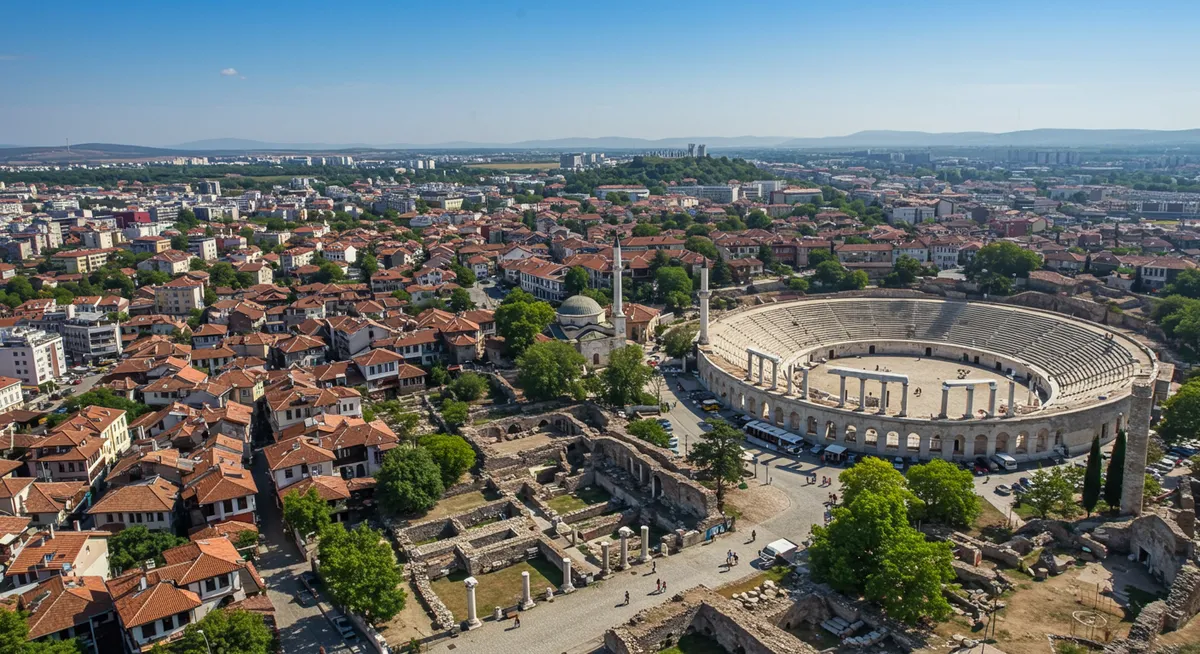
Plovdiv's Roman Theatre is the city's single most-visited attraction in 2026 — a 1st-century AD amphitheatre seating 7,000 spectators that still hosts live opera and concerts each summer. We recommend allocating at least 45 minutes here: the marble acoustics, carved inscriptions, and panoramic Old Town views reward slow exploration.
The Ancient Roman Theatre of Philippopolis is the single most photographed sight in Plovdiv, and with good reason. Built in the 1st century AD under Emperor Trajan, the theatre was designed to seat roughly 7,000 spectators across 28 rows of white marble. It was rediscovered by accident in 1969 after a landslide exposed the tiered seating, and restoration work through the 1980s made it structurally sound enough to host live performances again.
2026 practical details: Entry to the viewing platform is 5 BGN (approximately €2.55) for adults and 2 BGN for students, payable at the gate on Dr Chomakov Street. The site is open daily 09:00–18:00 (last admission 17:30). Guided tours in English depart at 10:00 and 14:00 during summer; check at the box office for off-season schedules. Approximately 30–40 outdoor concerts and festivals are scheduled each summer season, including the Plovdiv Opera Open festival — buy tickets through the Plovdiv Philharmonic box office at Tsar Boris III Obedinitel Blvd 3. The Visit Plovdiv official tourism portal publishes the full summer events calendar each March.
Beyond the stats, the theatre rewards slow exploration. Walk behind the stage to see the freestanding Corinthian columns reconstructed from original fragments. Read the carved inscriptions on the marble seat blocks — wealthy families paid to have their names etched as permanent reservation markers. The panoramic views over the red-tile rooftops of the Old Town from the upper tiers are among the best in the city, especially in golden-hour light.
Insider tip: Arrive 15 minutes before an evening performance — the combination of warm stage lighting, cool Rhodope air, and marble acoustics is genuinely extraordinary. Off-season, you'll have the whole site to yourself on weekday mornings.
After the theatre, continue downhill into the Old Town or check out the best viewpoints in Plovdiv for a broader city panorama. For a deep dive into the theatre's history, ticket-buying, and concert calendar, see the dedicated Plovdiv Roman Theatre guide.
2. Plovdiv Old Town (Staria Grad) — Three Hills of History
Plovdiv's Old Town in 2026 is a UNESCO-listed architectural reserve spanning three hills, where 18th-century National Revival mansions share lanes with Roman walls and Ottoman-era fountains. In our experience, a morning walk starting at Hisar Kapia Gate and ending at the Roman Theatre takes about 2 hours and covers the essential highlights.
Plovdiv's Old Town occupies three of its original seven hills and is one of the largest and best-preserved old towns in the Balkans. The neighbourhood is officially a protected architectural reserve, meaning every building must maintain its period exterior. Walking its narrow stone-paved lanes — some too steep for any vehicle — you pass continuously from the 2nd century AD (Roman walls) to the 18th–19th century (Bulgarian National Revival houses) without a single modern intrusion visible in the streetscape.
What to look for in 2026: The Georgiadi House (now home to the History Museum), the Balabanov House (free temporary art exhibitions, open Tue–Sun 09:00–17:00), and the Zlatyu Boyadzhiev House (dedicated to Bulgaria's most celebrated folk-expressionist painter, entry 3 BGN / ~€1.55) are all within a 400 m walking radius. The cobblestone lanes of Kiril Nektariev and Artin Gidikov streets host the highest concentration of art galleries and independent boutiques.
The Old Town is entirely walkable and free to explore at any hour. Many art gallery owners leave their doors open until 22:00 in summer, creating an informal evening gallery walk. More than 30 working ateliers and art studios operate in the area. In 2026, a free printed walking map is available at the Plovdiv Tourist Information Centre on Tsentralen Square (open Mon–Fri 09:00–18:00, Sat 10:00–16:00).
Plan your time in the Old Town as part of a broader Plovdiv 1-day itinerary if you're on a tight schedule, or spread it across a Plovdiv 3-day itinerary for a more leisurely pace that includes every museum. The complete Plovdiv Old Town guide maps every mansion, gallery, and viewpoint with opening hours.
3. Kapana Creative Quarter — Plovdiv's Living Arts District
Kapana is Plovdiv's most vibrant neighbourhood in 2026 — a six-block grid of independent coffee roasters, design studios, craft beer bars, and contemporary galleries in refurbished pre-war buildings. We recommend spending a full afternoon here: start with a flat white at Cafeino, browse the Saturday ceramic market, and finish with dinner at one of the mehana-style bistros.
Kapana (Bulgarian for "The Trap," a nod to its labyrinthine pre-war street grid) was a rundown artisan quarter until the lead-up to Plovdiv's 2019 Capital of Culture year triggered rapid creative regeneration. Today it is unambiguously the most vibrant neighbourhood in the city: independent coffee roasters, design studios, vintage record shops, craft beer bars, and contemporary galleries share roughly 30 refurbished buildings across a six-block area between Rayko Daskalov and Gurko streets.
2026 highlights: The Kapana Fest runs annually each June–July and fills the cobblestone plazas with live music, street food, and open ateliers — free entry. On the first Friday of every month, galleries across the quarter hold simultaneous openings (art walk, free). For coffee, look for Cafeino (specialty single-origin espresso, from 3.50 BGN / ~€1.80) and Barista Coffee (pour-overs, open from 08:00). The Kapana Marketplace on Stefan Stambolov Square operates Sat–Sun 09:00–14:00 with locally made ceramics, textiles, and food products.
Kapana is also Plovdiv's best area for craft beer in 2026. Brewdog Plovdiv and several local taprooms (Shtastlivetsa, Rabarbarela) serve rotating seasonal taps alongside Bulgarian craft producers. Beer prices average 5–8 BGN (~€2.55–€4.10) per 0.5 L pint.
For a deeper dive into Plovdiv's nightlife scene that extends from Kapana into the riverside bars, see the full Plovdiv nightlife guide. The dedicated Kapana quarter guide covers every gallery, studio, and eatery with current opening hours.
4. Nebet Tepe — Plovdiv's Ancient Acropolis
Nebet Tepe ("Prayer Hill") is the highest of Plovdiv's three Old Town hills at 227 m and the site of the original Thracian-era fortress. Archaeological surveys date continuous occupation here to at least 4000 BC, making this hilltop one of the oldest fortified settlements in Europe. The visible stone walls today are mostly Thracian and early Byzantine in origin, though Roman and medieval Bulgar layers are also present.
2026 visit notes: Access is free at all hours. The hilltop is a favourite sunrise and sunset spot for locals; arrive by 07:00 for the sunrise over the Rhodope Mountains with virtually no crowds. On clear days you can see as far as the Balkan Mountains to the north. A new informational trail with bilingual (Bulgarian/English) plaques was installed in 2024, making self-guided exploration much easier. Evening visits are popular because the Old Town streetlights create a warm glow in the valley below.
Two other hills close by — Dzhendem Tepe (Youth Hill) and Sahat Tepe (Clock Tower Hill, with a 19th-century Ottoman clock tower) — are easily combined into a half-day hilltop circuit. All are free to visit.
For the definitive list of scenic vantage points across the city, visit the best views in Plovdiv guide, which maps every rooftop, hill, and riverside spot with GPS coordinates.
5. Regional Ethnographic Museum — Bulgarian Life in Full Colour
The Regional Ethnographic Museum occupies the Kuyumdzhioglu House, a landmark of Bulgarian National Revival architecture completed in 1847 for a wealthy Greek merchant. The building itself justifies the entrance fee: the facade is a patchwork of blue, ochre, and white panels projecting outward over the street on three overhanging floors — an instantly recognisable silhouette of the Old Town. Inside, the painted wooden ceilings, gilded cornices, and glazed bay windows are among the most ornate examples of the period anywhere in Bulgaria.
2026 visit details: Entry is 5 BGN (adults) / 2 BGN (students and children). Open Tue–Sun 09:00–17:30; closed Monday. Audio guides in English are available at the ticket desk for 3 BGN extra. The collection across three floors includes over 40,000 artefacts: hand-embroidered regional costumes, copper metalwork, 19th-century weaving looms, and a recreated village house interior with period furniture. Temporary exhibitions on floor two change quarterly.
The museum requires at least 90 minutes to explore properly. The ground-floor courtyard with its central fountain and pomegranate trees is a pleasant spot to rest and re-read your notes. A small gift shop sells high-quality reprints of ethnographic textile patterns and traditional music recordings.
If folk heritage is your focus, pair this with a visit to the complete ethnographic museum guide or browse the best photography spots in Plovdiv, many of which are concentrated in the same Old Town quarter.
6. Roman Stadium of Philippopolis — Buried in Plain Sight
Few cities have a major Roman monument literally embedded beneath their main shopping street. The Stadium of Philippopolis, built in the 2nd century AD under Emperor Hadrian, once stretched 240 m long and seated up to 30,000 spectators for athletic games. The majority of it lies under the pedestrian zone of Knyaz Alexander I Street, but the northern curved end — the sphendone — is preserved in an open archaeological pit visible from the street and accessible via a dedicated underpass at Dzhumaya Square.
2026 specifics: Viewing the street-level excavation is free and unrestricted. The underpass beneath Dzhumaya Mosque gives access to the preserved seating rows and tunnel entrance — currently free to enter, though a minor access fee is under review for 2027. A scale model of the full 2nd-century stadium is displayed in the underpass, allowing you to visualise the original scope. The excavation is fully lit and accessible 24 hours. Nearby information panels were updated in 2025 with new archaeological findings.
The stadium's location on the main pedestrian boulevard makes it the most effortlessly visited ancient monument in Plovdiv — you essentially walk past it while moving between the Old Town and Kapana. The contrast between the iPhone-toting shoppers above and the 1,900-year-old marble seating below is disorienting in the best possible way. The dedicated Roman Stadium guide covers the full archaeological context and surrounding monuments.
7. Dzhumaya Mosque & the Ottoman Quarter
Plovdiv's Ottoman heritage is among the best-preserved in Bulgaria, and the Dzhumaya Mosque (Friday Mosque) at Dzhumaya Square is its most impressive surviving monument. Built in 1363 during the early Ottoman period, the mosque features nine domes supported on internal columns, a 33-metre minaret, and an ornate 14th-century portal. It remains an active place of worship in 2026 — respectful visitors are welcome outside prayer times.
2026 visit details: Entry is free; modest dress is required (scarves available at the entrance). The mosque is open daily outside the five daily prayer times — arrive between 09:00 and 11:30 or 14:00 and 17:00 for the best access. The surrounding Dzhumaya Square is the social hub of central Plovdiv, ringed by cafes and the entrance to the Roman Stadium underpass. The minaret is not open to visitors, but the interior dome paintings and carved wooden minbar (pulpit) are visible from the prayer hall. Combine this stop with the Roman Stadium directly adjacent — both take under an hour together.
The broader Ottoman-era quarter stretching north along Knyaz Alexander I towards the Dzhumaya area retains several 19th-century commercial buildings with arched facades. The Bezisten (covered market hall) on Knyaz Alexander I once served as a textile trading hub and its arched Ottoman stonework is still visible on the street-facing exterior, though the interior now houses modern shops.
8. Tsar Simeon Garden & Singing Fountains — Plovdiv's Evening Centrepiece
The Tsar Simeon Garden is Plovdiv's largest and most historically significant park, occupying 90,000 sq m in the city centre. Laid out in 1892 — making it one of the oldest public gardens in Bulgaria — it features 200-year-old plane trees, formal French-style flower beds, the glass-and-iron Plovdiv International Fair pavilions from the early 20th century, and the much-photographed Municipal Clock Tower (1880).
The park's centrepiece attraction in 2026 is the Singing Fountains — a choreographed water, light, and music show operating at the central fountain plaza. Shows run May–October, daily from 21:00 (Fri–Sat 21:00 and 22:00), free admission. Each show lasts approximately 20 minutes and cycles through Bulgarian folk music, classical pieces, and contemporary pop tracks. On summer weekends the surrounding paths fill with families and the fountain plaza becomes an informal outdoor cinema atmosphere.
2026 practical notes: The park has free Wi-Fi. Rental bikes and electric scooters (Lime, Bolt) dock near the main northern entrance. Several good restaurants with terrace seating line the Knyaz Boris I Blvd edge of the park — expect 20–35 BGN (~€10–€18) for a two-course meal at a mid-range venue. The park connects directly to the main pedestrian boulevard and is a 5-minute walk from the Roman Stadium.
9. Food & Drink in Plovdiv — Mehanas, Craft Beer & Modern Bistros
Plovdiv's food scene in 2026 is more developed than any other Bulgarian city outside Sofia, combining traditional mehanas (taverns) with a growing cluster of modern restaurants that use local Rhodope produce in contemporary European formats. The city also has an increasingly serious wine culture — the Thracian Valley wine region immediately south of Plovdiv produces some of Bulgaria's best Mavrud, Rubin, and Syrah.
Must-try dishes in 2026:
- Shopska salad — tomatoes, cucumber, pepper, onion, and grated white sirene cheese; order it everywhere, 6–8 BGN (~€3–€4)
- Banitsa — flaky filo pastry with cheese, spinach, or pumpkin; best fresh from a bakery at 07:00, 1.50–2.50 BGN per piece
- Kavarma — slow-cooked pork or chicken clay pot with peppers and onions; 12–18 BGN (~€6–€9)
- Kebapche — spiced minced-pork grilled sausage with fresh bread; street-food staple, 3–5 BGN
- Thracian Valley wine — ask specifically for Mavrud, the indigenous red variety; house wine from 4 BGN / 250 ml in mehanas
Recommended venues (2026): Pavaj (Old Town courtyard mehana, 15–30 BGN mains), Szeged (Hungarian-Bulgarian fusion, near the Roman Theatre, 18–35 BGN mains), Shtastlivetsa (Kapana, craft beer + traditional dishes), and the open-air market at the Central Market Hall (daily 07:00–14:00) for fresh produce and street snacks.
For a comprehensive breakdown of restaurants, wine bars, and breakfast spots neighbourhood by neighbourhood, visit the Plovdiv food & drinks guide and our roundup of the 15 best restaurants in Plovdiv.
10. Plovdiv City Card — Save Money on Museums & Tours
The Plovdiv City Card is the most cost-effective way to experience Plovdiv's museums and cultural sites in 2026 — covering 11 top attractions, a free wine-tasting tour, and 30+ discounts at restaurants, shops, and tour operators. We recommend it for any visitor spending 2+ days in the city, as it pays for itself after three museum visits.
2026 City Card details: The card is available as a 24-hour pass (24 BGN / ~€12.30) or a 72-hour pass (36 BGN / ~€18.40) in adult and adult+child versions. It covers free admission to 11 museums and galleries including the Ancient Roman Theatre, the Balabanov House, and the Hildliyan House, plus a complimentary wine-tasting tour of a local Thracian Valley winery. A free designer city map and companion app are included. Purchase at the Tourist Information Centre on Tsentralen Square, at participating hotels, or online at plovdivcitycard.com.
Is it worth it in 2026? A standalone Roman Theatre entry costs 5 BGN; the Ethnographic Museum costs 5 BGN; the History Museum costs 5 BGN. With a 24-hour card at 24 BGN you break even after five paid sites — and the wine tour alone is valued at 30–40 BGN on the open market. For culture-focused visitors, the 72-hour pass represents excellent value. Budget travellers who stick to free attractions (Nebet Tepe, Roman Stadium exterior, Old Town walking) may not benefit.
Note that the Plovdiv City Card is distinct from paid tour products sold on booking platforms under similar names — purchase only from the Tourist Information Centre or the official plovdivcitycard.com site to avoid overpaying.
11. Day Trips from Plovdiv — Bachkovo Monastery, Perperikon & the Rhodopes
Plovdiv's location in the Upper Thracian Plain, at the northern foot of the Rhodope Mountains, makes it one of Bulgaria's best bases for day trips. Three destinations stand out in 2026 as unmissable.
Bachkovo Monastery (30 km south, 45 min by car or bus from Yug Bus Station) is the second-largest Eastern Orthodox monastery in Bulgaria, founded in 1083. Its main church houses 17th-century frescoes and a venerated icon of the Virgin Mary. Entry to the grounds is free; the museum inside costs 5 BGN. Open daily 07:00–21:00. Buses depart Plovdiv's Yug Station every 30–60 minutes from 07:00, fare ~3 BGN.
Perperikon (90 km south-east, 1.5 hrs by car) is a megalithic rock complex in the Eastern Rhodopes believed to be the Oracle of Dionysus mentioned by ancient sources. The site dates to at least 5000 BC and contains a massive rock-cut palace, fortress walls, and ritual altar carved directly into a granite ridge 470 m above sea level. Entry: 10 BGN adults; open 09:00–17:00. No direct public bus — hire a car or join an organised tour from Plovdiv (full-day tours from ~60 BGN per person).
Rhodope Mountains hiking: The mountains begin less than 20 km south of the city. The Trigrad Gorge and Devil's Throat Cave (110 km, 2 hrs by car) is the most dramatic natural attraction in the region — a 42 m waterfall disappears into a cave system where the river reappears 2 km downstream. Entry to the cave: 8 BGN; open Apr–Oct 09:00–17:30.
For a complete list of excursions with transport options and tour operators, see the day trips from Plovdiv guide and the dedicated Bachkovo Monastery from Plovdiv article.
12. Plovdiv Nightlife — From Kapana Bars to Riverside Clubs
Plovdiv's nightlife in 2026 has two distinct modes. The first is the laid-back, indie-leaning bar scene concentrated in Kapana, where dozens of small venues operate until 02:00–04:00 on weekends, serving craft beer, natural wine, and cocktails to a young, creative crowd. The second is the larger club district along Knyaz Alexander I and the riverside, where mainstream clubs host DJ nights on Fri–Sat from ~23:00.
2026 nightlife benchmarks: Cocktail prices in Kapana bars average 10–14 BGN (~€5–€7). Club entry on weekends is typically 10–15 BGN. Plovdiv has a growing live-music scene — the Plovdiv Live Music venue on Gladstone Street hosts jazz, blues, and folk acts most Thursday evenings from 20:00, no cover charge. The Kapana bar strip reaches peak atmosphere between 22:00 and midnight on Fridays.
For a full map of bars, clubs, and late-night food options, the Plovdiv nightlife guide covers every zone by neighbourhood and vibe.
13. Plovdiv Travel Budget — Daily Costs in 2026
Plovdiv is one of the most affordable city-break destinations in Europe in 2026. A budget traveller spending 2–3 nights can experience the full range of highlights for under 200 BGN (~€100) per day including accommodation, food, transport, and activities.
Budget traveller (hostel dorm, street food, free attractions): 80–100 BGN / day (~€41–€51). A hostel dorm costs 25–40 BGN; a full street-food day (banitsa for breakfast, kebapche for lunch, mehana dinner) totals 25–35 BGN; public transport is 1.60 BGN per ride. Most of Plovdiv's best attractions — Nebet Tepe, the Roman Stadium exterior, the Old Town, Kapana — are completely free.
Mid-range traveller (3-star hotel or apartment, sit-down restaurants, paid museums): 150–200 BGN / day (~€77–€102). A mid-range double room costs 80–130 BGN; two restaurant meals with wine total 60–80 BGN; museum entries (Roman Theatre + Ethnographic Museum) add 10 BGN. The 72-hour Plovdiv City Card at 36 BGN covers museum costs for a 3-day stay and saves money overall.
Upscale traveller (boutique Old Town guesthouse, fine dining, private tours): 350–500 BGN / day (~€180–€256). Boutique guesthouses in the Old Town start at 150–200 BGN per night; a fine-dining dinner with Thracian Valley wine costs 80–120 BGN for two. Private guided tours of the Roman Theatre or Old Town run 60–90 BGN for a 2-hour tour.
Key money-saving tips for 2026: Refill water bottles at Old Town fountains (safe to drink); visit the Ethnographic Museum on Bulgarian national holidays (free entry); walk everywhere in the centre — taxi and scooter costs are avoidable; eat lunch at the Central Market Hall where daily specials cost 8–12 BGN.
14. Where to Stay in Plovdiv — Best Areas & Accommodation Budget
The most popular area to stay for first-time visitors is the Old Town and its immediate edges — you wake up inside the historic reserve and can walk to every major sight within 15 minutes. Boutique guesthouses in refurbished National Revival buildings dominate this area and are Plovdiv's most characterful accommodation option. Expect to pay 80–160 BGN (~€40–€82) per night for a double room with breakfast.
The Kapana and Tsentar (City Centre) areas offer the widest range of mid-range hotels and apartments — better value than Old Town and still walkable to all attractions. Budget hostels cluster near the main pedestrian zone with dorm beds from 25–40 BGN (~€12–€20).
The Kyuchuk Paris and Karshiyaka neighbourhoods across the Maritsa River are quieter residential options popular with longer-stay visitors and digital nomads — 10-minute walk or 5-minute tram ride from the centre.
For a full breakdown of every neighbourhood's pros, cons, and best-value picks in 2026, see the best areas to stay in Plovdiv guide and the companion Plovdiv neighbourhood guide.
15. Getting Around Plovdiv — Transport & Getting There from Sofia
Plovdiv is extremely walkable — the Old Town, Kapana, the Roman Stadium, and Tsar Simeon Garden all sit within a 1 km radius. For longer distances, the city has an affordable public transport network.
2026 transport snapshot:
- Walking: Old Town to Roman Stadium: 8 min. Old Town to Kapana: 5 min. Old Town to Tsar Simeon Garden: 10 min.
- Bus/trolley: Single ticket 1.60 BGN (~€0.82); day pass 5 BGN. Routes cover the entire city, updated maps at plovdiv.bg/transport.
- Taxi: Starting fare ~0.89 BGN/km by day. From train station to Old Town: ~5–7 BGN. Use the Taxi Maxim app to avoid overcharging.
- E-scooter: Bolt and Lime scooters docked throughout centre; ~0.20 BGN/min after a ~1 BGN unlock fee.
Getting from Sofia to Plovdiv: The bus is the most popular option — Etap and Union-Ivkoni coaches depart Sofia's Central Bus Station every 30–60 minutes, journey time ~2 hours, fare 14–18 BGN (~€7–€9). Trains run via BDZ roughly every 2 hours from Sofia Central, journey time 2–2.5 hours, fare 10–14 BGN. By car: 140 km on the Trakia motorway (A1), toll 3.80 BGN / day; journey time 1.5–1.75 hrs outside rush hours. Plovdiv Airport (PDV) has seasonal charter and budget flights to several European cities — check Ryanair and Wizz Air for direct connections.
16. When to Visit Plovdiv — Best Season by Month
Plovdiv is a year-round destination, but each season offers a meaningfully different experience.
Spring (April–May): Arguably the best time to visit. Temperatures reach 18–24°C, the Old Town gardens are in bloom, and Kapana's outdoor terraces open. Fewer crowds than summer. The Plovdiv Wine & Spirits Expo typically runs in May, offering tastings of Thracian Valley wines.
Summer (June–August): Peak season, with temperatures 28–36°C. The Roman Theatre outdoor concert programme runs in full; the Kapana Fest and Opera Open festival draw large crowds. Book accommodation 4–6 weeks ahead. Evenings are warm and lively but midday can be genuinely hot.
Autumn (September–October): Excellent compromise — warm (18–26°C), wine-harvest season in the Thracian Valley, noticeably fewer tourists than August, full restaurant and nightlife season still running. The Plovdiv Film Festival runs in October.
Winter (November–March): Cold (0–8°C) but atmospheric. Christmas markets operate in early December on the main square. The Old Town is at its quietest and most photogenic under rare snowfall. Many outdoor attractions remain open; most museums keep full hours. For seasonal ideas, see things to do in Plovdiv in spring and companion seasonal guides.
17. Essential Travel Tips for Plovdiv — Cultural Customs & Practicalities
Before arriving in Plovdiv in 2026, three cultural quirks are worth knowing. First, Bulgarian head gestures are reversed compared to most countries: nodding your head up and down means "no," while shaking it side to side means "yes." This causes genuine confusion for first-time visitors at markets, restaurants, and ticket desks — when in doubt, say "da" (yes) or "ne" (no) out loud. Second, rakia (fruit brandy) is the national spirit and is served at every mehana as a standard aperitif, often unsolicited — local homemade rakia can reach 50–60% ABV, significantly stronger than commercial spirits. Sip slowly. Third, bargaining is not customary in shops or restaurants; prices shown are expected to be paid.
Practical 2026 checklist:
- Currency: Bulgarian Lev (BGN); 1 EUR ≈ 1.96 BGN (Bulgaria is not in the eurozone). ATMs are abundant in the centre; card payments accepted at most restaurants and larger shops. Change money at bank branches or official exchange offices — airport and hotel rates are poor.
- Language: Bulgarian uses Cyrillic script. English is widely spoken in Old Town and Kapana tourist areas; less so in residential neighbourhoods and local markets. Carrying a few key Bulgarian phrases (molya = please, blagodarya = thank you) is appreciated.
- Tipping: 10% is standard at sit-down restaurants. Round up taxi fares. No tipping expected at bars or street food stalls.
- SIM cards: Bulgarian SIMs (Vivacom, A1, Yettel) available at the airport and city shops from 15–20 BGN with 10 GB data. EU roaming applies for EU citizens.
- Emergency number: 112 (EU standard).
Frequently Asked Questions about Things to Do in Plovdiv
Is Plovdiv worth visiting?
Absolutely — Plovdiv is one of the most underrated cities in Europe and is well worth visiting in 2026. Its Old Town rivals Dubrovnik or Tallinn in architectural quality but attracts a fraction of the crowds. The combination of Roman ruins, National Revival architecture, a vibrant creative quarter (Kapana), excellent food and wine, and a compact walkable layout makes it one of the highest-value city breaks in the Balkans. For a detailed answer, see the dedicated is Plovdiv worth visiting guide.
How many days do you need in Plovdiv?
Two to three days is the sweet spot for most visitors in 2026. Two days covers the Roman Theatre, Old Town, Kapana, Ethnographic Museum, Roman Stadium, and Tsar Simeon Garden comfortably. Three days adds a full day trip to Bachkovo Monastery or the Rhodopes. Five to seven days suits travellers who want to explore the surrounding region in depth. For a ready-made schedule, see the how many days in Plovdiv guide.
What is the Plovdiv City Card and is it worth it?
The Plovdiv City Card (24 BGN / 1-day; 36 BGN / 3-day) gives free access to 11 museums and galleries plus a complimentary wine-tasting tour and 30+ discounts. It is worth buying if you plan to visit three or more paid attractions — the card pays for itself after the Roman Theatre (5 BGN), Ethnographic Museum (5 BGN), and History Museum (5 BGN) entries. Budget travellers who prefer free sights (Nebet Tepe, Old Town walking, Roman Stadium exterior) may not need it. Purchase at the Tourist Information Centre on Tsentralen Square.
What is Plovdiv famous for?
Plovdiv is famous for being one of the oldest continuously inhabited cities in Europe (over 8,000 years of recorded settlement), its remarkably preserved Ancient Roman Theatre, the colourful National Revival architecture of the Old Town, the Kapana creative arts quarter, and the Plovdiv International Fair — one of the oldest trade fairs in the Balkans. It also served as Bulgaria's European Capital of Culture in 2019.
Is Plovdiv safe for tourists?
Plovdiv is generally very safe for tourists in 2026. Violent crime is rare and the tourist areas — Old Town, Kapana, the pedestrian boulevard — have a visible security presence. Standard precautions apply: watch for pickpockets in crowded pedestrian areas and use only metered or app-based taxis (Taxi Maxim app). The city is well-lit at night and walking after dark in the main tourist zones is comfortable. For current travel advisories, check your government's foreign travel website. See the safety tips for tourists in Plovdiv guide for local-specific advice.
What is the best time to visit Plovdiv?
Late April through May and September through early October offer the best balance of pleasant weather (18–26°C), manageable crowds, and full cultural programming in 2026. Summer (June–August) has the most events but peak tourist density and heat. Winter is quiet and atmospheric with lower prices. Avoid the last two weeks of August if you dislike crowds — the Plovdiv International Fair draws large numbers then.
How do I get from Sofia to Plovdiv?
The fastest and cheapest option is a direct bus: Etap and Union-Ivkoni coaches run every 30–60 minutes from Sofia Central Bus Station (Serdika metro), journey 1.75–2 hours, fare 14–18 BGN (~€7–€9). Trains (BDZ) take 2–2.5 hours and cost 10–14 BGN. By car it is 140 km on the Trakia motorway, typically 1.5 hours. There is no direct flight between the two cities.
How much does Plovdiv cost per day?
Plovdiv is very affordable by European standards in 2026. Budget travellers can manage on 80–100 BGN (~€41–€51) per day covering hostel dorm, street food, and free attractions. Mid-range travellers spending on a hotel, sit-down meals, and museum entries typically spend 150–200 BGN (~€77–€102) per day. Upscale visitors in boutique Old Town guesthouses with fine dining can expect 350–500 BGN (~€180–€256) per day. The 72-hour Plovdiv City Card (36 BGN) is a good investment for mid-range visitors covering 3+ museums.
Explore More Plovdiv Guides
Deep-dive guides for every part of a Plovdiv trip — from where to stay and what to eat, to seasonal events, neighborhoods, and day trips into Bulgaria’s Rhodope mountains.
Itineraries & Length
- Day Trips from Plovdiv: Top 10 Escapes
- Plovdiv 1-Day Itinerary
- Plovdiv 2 Day Itinerary: The Ultimate 48-Hour Travel Guide
- Plovdiv 3-Day Itinerary 2026: The Perfect Day-by-Day Guide
- Plovdiv Weekend Itinerary: 9 Key Sections for a 2-Day Trip
- Plovdiv 7 Day Itinerary
- Plovdiv Day Trip From Sofia: A Complete 2026 Guide
- Things To Do in Plovdiv This Weekend
Food & Drink
- 12 Best Cafes in Plovdiv: A Local's Coffee Guide
- 15 Best Restaurants in Plovdiv: A Local's Dining Guide
- Plovdiv Food & Drinks Guide
Where to Stay
- Best Areas to Stay in Plovdiv 2026
- Best Neighborhoods in Plovdiv 2026 Guide
- Where To Stay In Plovdiv Old Town: 8 Best Stays & Tips
Practical & Transport
- Plovdiv Airport Transfer Guide: 7 Essential Things to Know
- 7 Key Insights for Plovdiv to Sofia Transport
- 10 Best Ways to Experience a Plovdiv Walking Tour
- Plovdiv Safety Tips for Tourists: 2026 Complete Guide
- Plovdiv Transportation: A 2026 Guide
Seasonal & By-Time
- 9 Best Plovdiv Events 2026: Festivals and Cultural Highlights
- Plovdiv at Night: Top Things to Do
- Things To Do in Plovdiv Fall
- Plovdiv in Spring: Best Things To Do
- Things to Do in Plovdiv in Summer 2026
- Things to Do in Plovdiv in Winter
Audience & Style
- Budget-Friendly Things to Do in Plovdiv
- Top 20 Family Activities in Plovdiv
- 12 Best Free Things to Do in Plovdiv
- Plovdiv With Kids: 7 Best Attractions and Travel Tips
- Romantic Things to Do in Plovdiv
- Plovdiv Solo Traveler Guide
- Best Wellness & Spas in Plovdiv 2026 Guide
Attractions & Landmarks
- Best Views in Plovdiv: Hilltop Viewpoints & Panoramas
- Hidden Gems in Plovdiv: Offbeat Finds for 2026
- Kapana Plovdiv Guide: The Creative Heart of Bulgaria
- Outdoor & Nature in Plovdiv: Best Activities 2026 Guide
- Plovdiv: Photo Hotspots
- 10 Best Museums in Plovdiv: The Ultimate Cultural Guide
- Plovdiv Old Town Guide: Architecture, History, and Travel Tips
- Plovdiv Roman Theater: History, Tickets, and Visiting Guide
- Plovdiv Street Art & Creative Spaces: 2026 Guide to Murals, Galleries & Kap
Nightlife & Entertainment
- Plovdiv Events Calendar 2026
- Plovdiv Nightlife Guide 2026: Best Bars, Clubs & Live Music
- Plovdiv Shopping: Your 2026 Guide
New 2026 Plovdiv Guides
Attractions & Landmarks
Day Trips from Plovdiv
- Bachkovo Monastery
- Asenovgrad Day Trip
- Koprivshtitsa Day Trip
- Thracian Wine Day Trip
- Bachkovo Monastery Transport