Plovdiv Old Town Guide: Architecture, History, and Travel Tips
Walking through Plovdiv Old Town Visitor Guide feels like stepping back into a living museum. This historic district sits atop three hills and showcases thousands of years of human history, from Neolithic settlements to Roman columns to 19th-century merchant mansions. Plovdiv is widely considered one of the oldest continuously inhabited cities in Europe, and the Old Town is where that age is most visible. Exploring this area is essential for any visitor to Bulgaria's second-largest city.
This comprehensive plovdiv old town guide covers everything from ancient theaters to hidden cobblestone alleys. You will learn about the wealthy merchants who built these flamboyant homes during the Bulgarian National Revival, and you will find practical tips on tickets, hours, and accessibility. Whether you have half a day or a full two days, this guide will help you make the most of the district's layered history.
The Old Town Plovdiv: Three Hills and an Architectural Reserve
The Old Town occupies three of Plovdiv's famous hills: Nebet Tepe Visitor Guide, Dzhambaz Tepe, and Taksim Tepe, collectively known as the Trimontium. This arrangement gives the district its dramatic, tiered silhouette and means almost every street involves a climb or descent. The area was declared an architectural and historical reserve decades ago, which is why the Revival houses are so well preserved today.
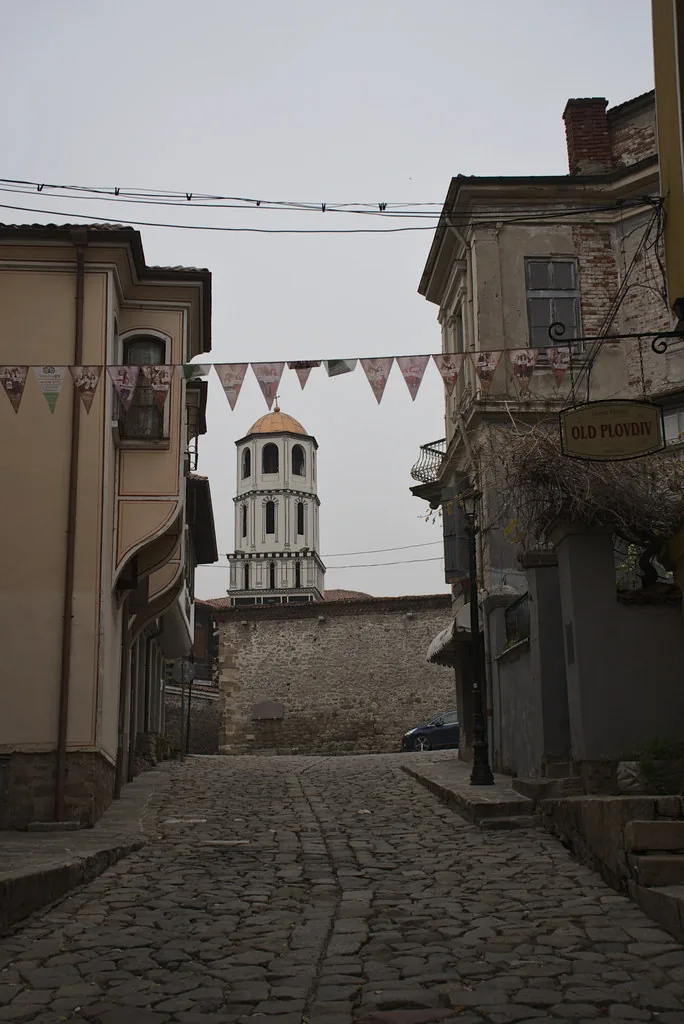
Walking up from the Dzhumaya Mosque Visitor Guide along Saborna Street brings you straight into the heart of the reserve. You pass curio shops, traditional inns, and Bulgarian Renaissance houses within the first hundred metres. The atmosphere changes quickly as the modern city falls away behind you. Ancient walls, pagan temple foundations, Roman baths, and medieval gates appear at regular intervals along the route.
The reserve contains over 200 buildings of cultural significance, ranging from private homes to churches and galleries. UNESCO placed the Old Town of Plovdiv on its Tentative World Heritage List, recognising the concentration of well-preserved Revival architecture here. In 2026 the city continues to invest in restoration work, so some houses may be covered by scaffolding during your visit — check the Ancient Plovdiv website for current status before you go.
Understanding the Bulgarian National Revival Architecture
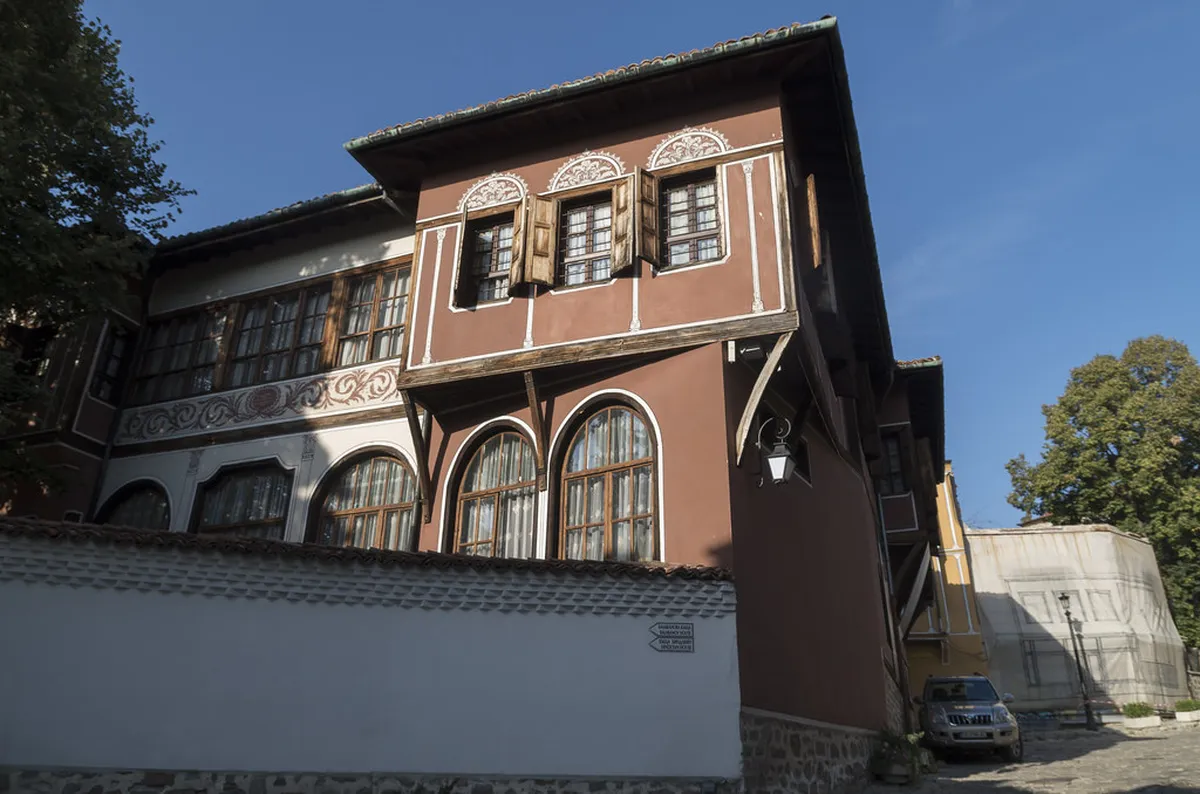
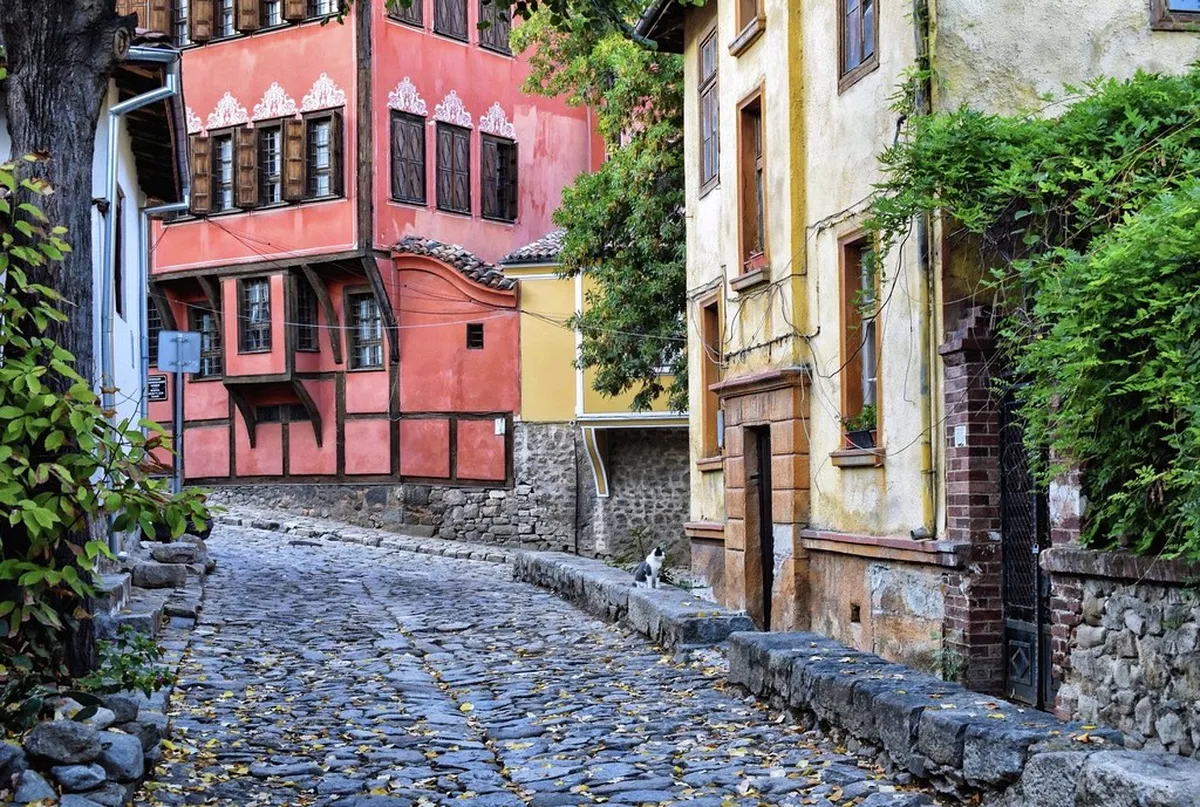
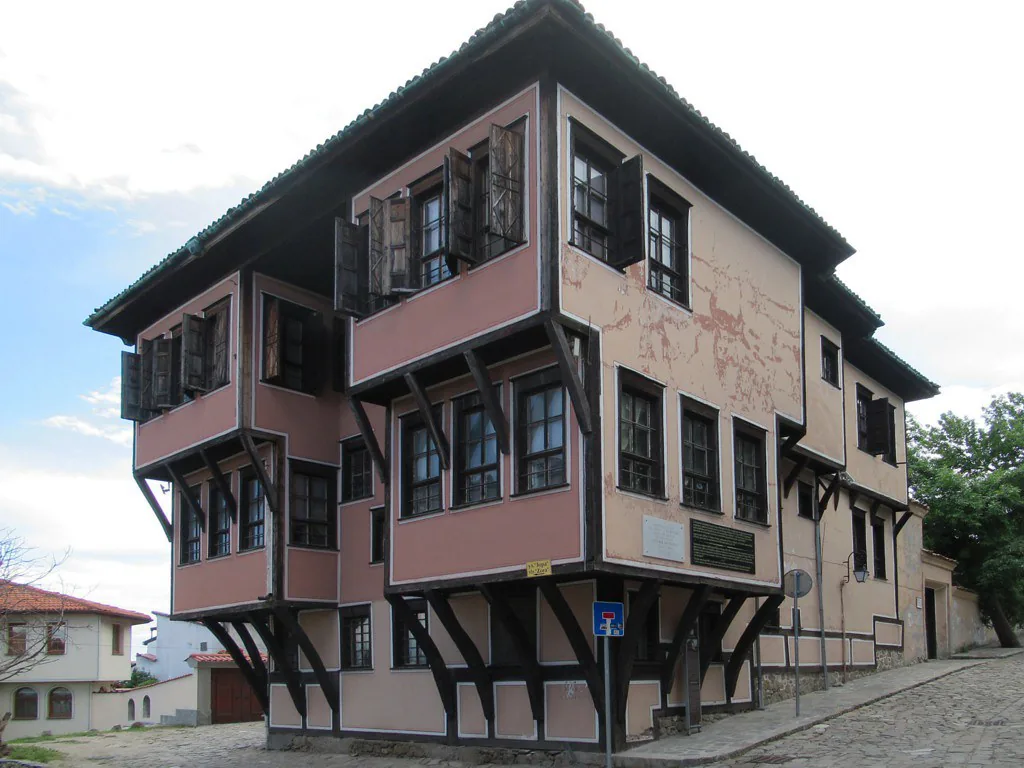
The Bulgarian National Revival architecture defines the unique look of the Old Town. These homes feature large bay windows and bright, painted exteriors that catch the sunlight. Master builders designed these structures to display the wealth of local merchants who grew rich through international trade during the 18th and 19th centuries. Many houses include intricate wood carvings and hand-painted murals inside.
Symmetry plays a vital role in the design of these historic buildings. Most facades feature a central axis with matching windows on either side. The characteristic second-floor overhang, wider than the ground floor, gives many houses a top-heavy appearance that is immediately recognisable. This practical design choice also kept the upper floors warmer in winter and shadier in summer.
The interiors are often as stunning as the colourful walls outside. Many rooms feature carved wooden ceilings and decorative niches called alafrangas. Wall murals frequently depict landscapes from cities the owners visited on trading journeys — Alexandria, Venice, and Constantinople appear repeatedly. The murals were a deliberate statement: the merchant had seen the world and could afford to prove it.
Must-Visit Historic Houses: Hindliyan, Balabanov, and More
Visiting the historic houses is the best way to experience the district's rich past. Each museum house offers a different glimpse into the lives of Plovdiv's former elite. All of the main houses are managed by the Ancient Plovdiv Municipal Institute and cluster within a short walk of each other, so combining several in one morning is straightforward.
The Hindliyan House Visitor Guide is perhaps the most impressive property in the reserve. Its striking blue facade opens into a series of rooms decorated with landscape murals showing European and Middle Eastern cities. A rare indoor marble fountain once circulated rose water through the house — a luxury that would have astonished most 19th-century visitors. The ground floor also preserves one of the few bathrooms in Plovdiv that had hot running water at the time.
The Ultimate Balabanov House Visitor Guide stands nearby and is immediately recognisable by its spectacular carved wooden ceilings. The owner was a timber merchant, and every surface in the main hall reflects his trade. Today the ground floor hosts temporary art exhibitions, while the upper rooms are furnished in period style. It serves as a venue for classical music concerts and is a key stop for anyone following a 10 Best Museums in Plovdiv during their trip.
Other houses worth your time include the Nedkovich House, where some original artefacts belonging to the family remain on display, and the Klianti House, which has an asymmetrical layout that stands out from its neighbours. The Plovdiv Regional Ethnographic Museum (Kuyumdzhioglu House) is the largest property and the best choice if you only have time for one stop: it covers traditional costumes by region, folk instruments, pottery, and ironwork, with English-language explanations throughout. The Stambolyan House functions as a fine art gallery where the architecture is as much the exhibit as the paintings.
Ancient Roman Heritage: The Theater and Stadium
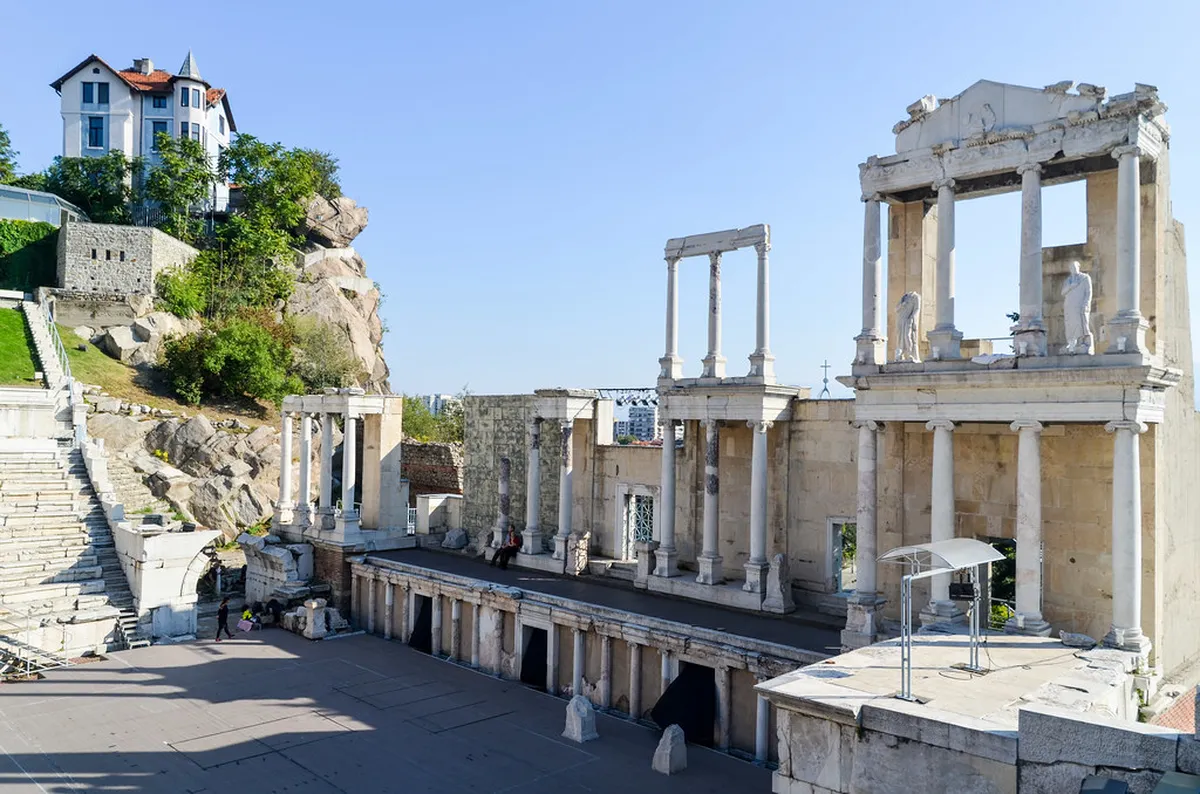
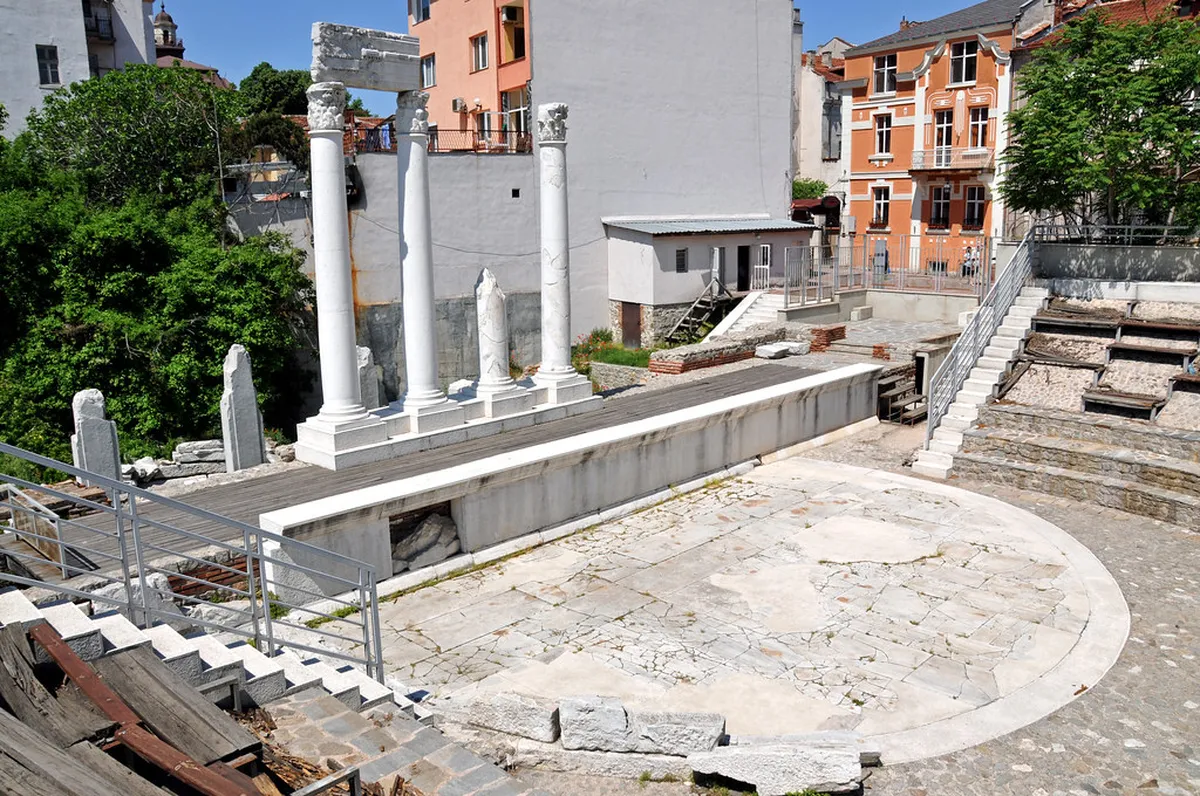
Plovdiv is famous for its remarkably well-preserved Roman heritage. The Plovdiv Roman Theater is the crown jewel of the Old Town. Built at the end of the 1st century AD during the reign of Emperor Domitian, it seated around 7,000 spectators and served both as an entertainment venue and as a meeting place for the city's governing councils. Watching an opera under the stars here during the summer season remains one of the most memorable experiences in Bulgaria.
A detail that most visitors miss: every family in ancient Philippopolis had their own dedicated rows and seats in the theater, and many of the names were carved directly into the stone. Several of these inscriptions are still legible today — you can run your fingers along the letters and connect with residents who sat in exactly that spot nearly 2,000 years ago. Take a slow walk through the upper seating rows and look at the individual seat edges before heading to the stage area.
It is important to distinguish the Theater from the Roman Stadium, which is located down the hill in the modern pedestrian zone. The Stadium is partially buried under the main street, Knyaz Alexander I, with a visible section accessible near the Dzhumaya Mosque. Both sites are essential stops for understanding the city's ancient roots, but they require separate visits. Check the Ancient Plovdiv website for the latest opening hours and any summer performance schedule. Most concerts take place June through September.
Exploring the Hills: Nebet Tepe, Hisar Kapia, and the Street of Crafts
Nebet Tepe is the highest and most significant of the three Old Town hills. Plovdiv's first Neolithic settlement was established on this summit around 6000 BC, and the foundations of Thracian, Roman, and medieval fortifications are still visible. It remains one of the most important archaeological sites in Bulgaria. The view from the top stretches over the city toward the Rhodope Mountains and across the other hills that ring Plovdiv.
Nebet Tepe is also where you want to be at sunset. The golden light catches the terracotta rooftops and the distant peaks simultaneously. There is no admission charge and no fence — you simply walk up and find a ledge. Locals bring wine and sit here on summer evenings, which tells you everything about the atmosphere. Arrive around 45 minutes before sunset to secure a good position.
Hisar Kapia, the medieval fortress gate, is the most photogenic entry point into the reserve. It was built over Roman foundations and served as a main entrance to the ancient city. Passing through it still feels ceremonial. Immediately beyond the gate, follow Strumna Street downhill to reach the Street of Crafts — a narrow cobblestoned alley where weavers, potters, and woodcarvers work in open workshops. You can watch them in action and buy directly from the maker. This is the best place in the Old Town for an honest souvenir, and most visitors walk straight past it.
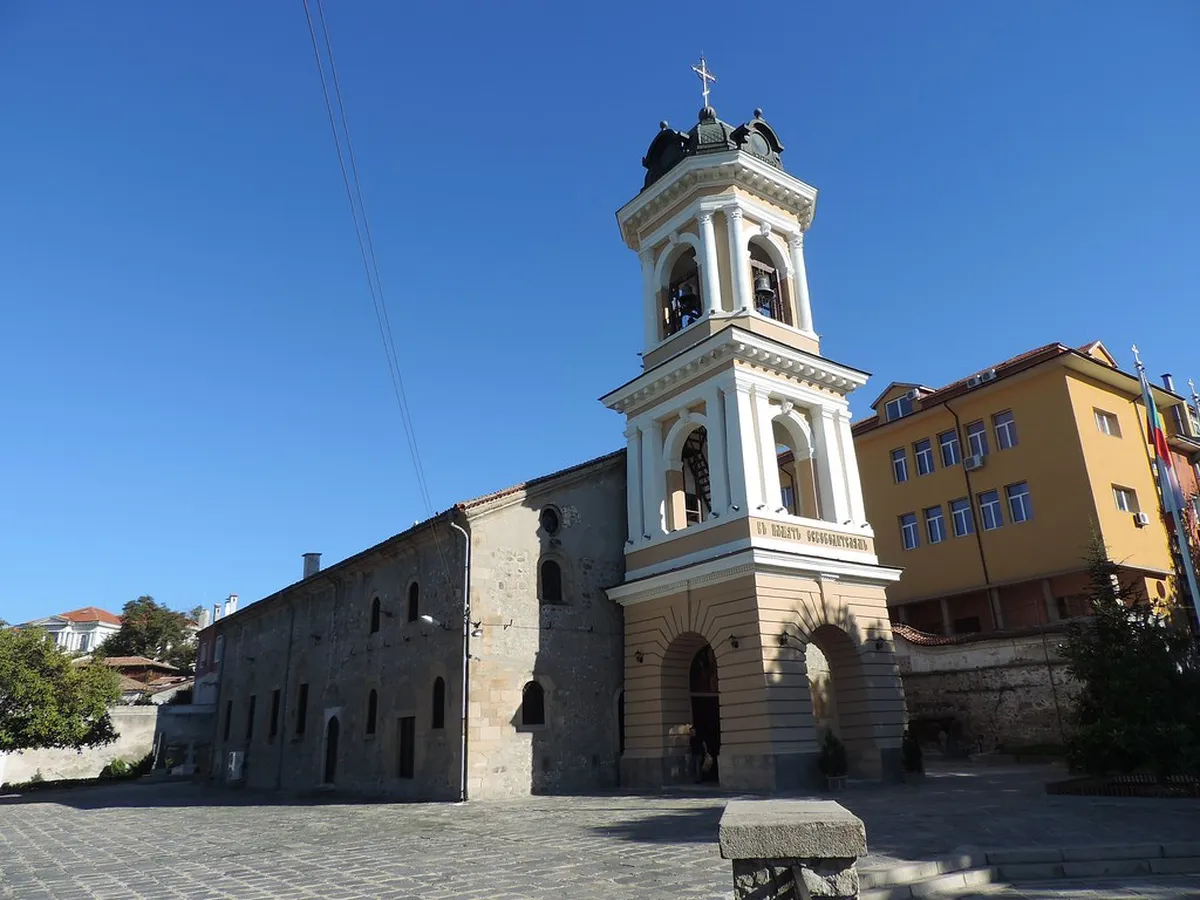
The Orthodox Church of St Constantine and Helena sits a short walk from Nebet Tepe. Built in 337 AD on the site of a pagan temple, it is one of the oldest churches in Plovdiv. High walls surround it — a legacy of Ottoman rule, when churches were prohibited from being visible from the street. The bell tower now rises above those walls after a recent restoration. The interior is richly painted in the traditional Orthodox style.
How to Get to the Old Town
The Old Town reserve sits directly above Plovdiv's pedestrian centre, so reaching it on foot is the only realistic option — vehicle access inside the reserve is restricted and the cobbled lanes are not built for cars. From the main square and the Dzhumaya Mosque, the classic approach is to walk up Saborna Street, which climbs straight into the heart of the architectural reserve within the first hundred metres. This is the most scenic entrance and passes the Roman Stadium remains near the mosque on the way up.
If you are arriving from outside the centre, Plovdiv's central railway station and the bus terminals are roughly a 15-to-20-minute walk from the foot of the Old Town, or a short taxi ride. Have the driver drop you near the main pedestrian street (Knyaz Alexander I) rather than trying to reach the reserve itself — the upper hills simply cannot be driven into. From there it is a gentle five-minute walk to the Saborna Street entrance.
For a more atmospheric arrival, enter through Hisar Kapia, the medieval fortress gate on the eastern side, and walk down through the reserve toward the centre. Doing the route in this direction means you climb less and finish in the Kapana quarter for a meal. Either way, wear flat shoes from the moment you set off — the cobblestones begin the instant you leave the modern pavement.
💡 Good to know: The reserve is noticeably quieter before 10:00 and after 16:00. Arriving early lets you photograph the painted Revival facades without the midday crowds, and still leaves you in position for sunset at Nebet Tepe — plan to be on the summit around 45 minutes before the sun drops.
Practical Information: Tickets, Hours, and Logistics
Most museums in the Old Town open at 09:00 and close at 18:00. Hours may shorten during winter (November through February), and some smaller houses close on Mondays. Always check the Ancient Plovdiv website for current schedules, as individual houses occasionally close for events or ongoing restoration.
The combined ticket is the smartest way to see the major sites. A 15 BGN pass grants entry to five historical attractions managed by the Ancient Plovdiv Municipal Institute, including museum houses and the Roman Theater. Individual house tickets cost around 5 BGN each (approximately €2.50), and the Ethnographic Museum costs 6 BGN separately. The combined pass pays for itself once you visit three or more sites, and you can buy it at the Tourist Information Center on the main square or at the Roman Theater entrance.
Accessibility requires serious planning. The streets are paved with large, uneven cobblestones that are steep in places. Wheeled luggage and strollers are extremely difficult to manage — use a baby carrier if you are travelling with young children, and avoid heeled footwear entirely. If you have limited mobility, the lower section of the reserve near Saborna Street is more navigable than the upper hills. Most museum houses have one or two steps at the entrance but are otherwise accessible once inside.
| Combined ticket (5 sites) | 15 BGN — best value once you visit three or more sites |
| Individual house | Around 5 BGN each (approximately €2.50) |
| Ethnographic Museum | 6 BGN (ticketed separately) |
| Nebet Tepe viewpoint | Free — no admission charge, open at all hours |
| Typical opening hours | 09:00–18:00 (shorter in winter, some houses closed Mondays) |
| Time needed | At least one full day; two to three for Kapana and dining |
Where to Stay and Eat in the Historic Center
Staying within the Old Town allows you to experience its quiet charm after dark, once the day-trippers have left. Several historic Revival houses have been converted into boutique hotels and guesthouses. The Guest House Old Plovdiv is a popular traditional option with carved wooden ceilings and period furnishings. At the higher end, Gallery 37 is a five-star property with views over the rooftops. For more modern options and a wider price range, the neighboring Kapana district is a ten-minute walk.
Dining in the Old Town centers on traditional taverns called mehanas. These restaurants serve hearty Bulgarian dishes including shopska salad, kavarma stew, and grilled meats. Rahat Tepe Beer House, on top of Nebet Tepe, is a firm local favourite: panoramic views, outdoor seating, and the largest beer selection in the area. For the city's widest restaurant choice — particularly for vegetarians and international cuisine — head down into the Kapana creative quarter, which sits immediately adjacent to the reserve.
💡 Good to know: Buy the 15 BGN combined ticket at the Tourist Information Center on the main square or at the Roman Theater entrance before you start climbing — it covers five sites including the Theater and the museum houses, and it pays for itself the moment you enter your third stop. Plan your route so you hit those five before circling back.
Check out a guide to the 15 Best Restaurants in Plovdiv for the full breakdown of where to eat across the city. For accommodation beyond the Old Town itself, see our guide on the Best Areas to Stay in Plovdiv 2026, which covers proximity to the reserve, transport links, and budget range.
Planning Your Visit: Free Tours and Day Trips
A guided walking tour provides context that is genuinely hard to replicate from a guidebook. Several free walking tours depart daily from the main square near the Municipality building and cover the Old Town alongside the Kapana quarter. These run on a tips basis and last approximately two hours. Local guides share the stories behind the merchant families, the Ottoman-era restrictions on church building, and the political controversies around the Soviet monument on the neighbouring hill — material that does not appear on most information boards.
The walking-tour footage above traces almost the same route described in this guide — up Saborna Street into the reserve, past the painted Revival houses, and through the Old Town's cobbled lanes — which is useful for orientation before you set off on foot.
For self-guided exploration, the GPSMyCity Plovdiv map provides a reliable offline walking route through the reserve. This is the better option if you want to linger at specific houses without keeping up with a group. Self-guided visits also let you schedule around the midday rush — the reserve is noticeably quieter before 10:00 and after 16:00.
Plovdiv also serves as a strong base for the surrounding region. You can easily arrange Day Trips from Plovdiv: Top 10 Escapes (2026 Guide) to Bachkovo Monastery (35 km south), Asen's Fortress, or the Rhodope wine villages. Half-day trips are practical if you pair them with a morning in the Old Town. Most organised tours depart from the city center by 09:00 and return by early afternoon.
Further Reading and Post Navigation
Plovdiv rewards more than a single day, and the Old Town is just one part of what the city offers. The Kapana creative district immediately to the west has street art, independent cafes, and a completely different atmosphere. The Roman Stadium in the pedestrian center and the hill-top Alyosha Monument Visitor Guide add further layers to any itinerary.
Use the guides below to plan your time based on how long you are staying and what interests you most.
- Plovdiv 1-Day Itinerary — covers the essential Old Town highlights plus Kapana in a single full day
- Plovdiv 2-Day Itinerary — adds the Roman Stadium, the Ethnographic Museum in depth, and a mehana dinner
- Plovdiv 3-Day Itinerary — includes a Rhodope day trip and the city's hill viewpoints
- Plovdiv 7-Day Itinerary — slow-travel pace with day trips to Bachkovo and nearby wine regions
- 10 Best Ways to Experience a Plovdiv Walking Tour — detailed self-guided route through the reserve with distance markers
- Budget-Friendly Tips for Plovdiv — free sites, the combined ticket strategy, and cheap eating
For the wider city context, see our complete Plovdiv guide.
For more Plovdiv reading, see our Kapana Plovdiv Guide: The Creative Heart of Bulgaria and Where To Stay In Plovdiv Old Town: 8 Best Stays & Tips guides.
Frequently Asked Questions
Why does the old town of Plovdiv have such flamboyant houses?
Wealthy merchants built these houses during the 19th-century Bulgarian National Revival. They used bright colors and ornate designs to display their success and international influence. These homes served as both functional residences and impressive social status symbols for the local elite.
How much does it cost to visit the houses in Plovdiv Old Town?
Individual house tickets usually cost around 5 BGN each. However, the best value is the 15 BGN combined ticket which grants entry to five major museum houses. You can find more details on current pricing via our 10 Best Museums in Plovdiv.
Is Plovdiv Old Town walkable for people with strollers?
No, the Old Town is very difficult to navigate with a stroller due to steep hills and uneven cobblestones. The large stones can be quite jarring and may even damage small wheels. We highly recommend using a baby carrier for a much safer and more comfortable experience.
What is the best time of day to visit the Roman Theater?
The late afternoon is the best time to visit for softer lighting and cooler temperatures. This timing also allows you to enjoy the views before heading to Nebet Tepe for sunset. If there is a performance scheduled, evening visits offer a magical atmosphere under the stage lights.
How many days do you need in Plovdiv Old Town?
You need at least one full day to explore the main houses and Roman ruins of the Old Town. However, spending two or three days allows you to visit the neighboring Kapana district and enjoy the local dining scene. This slower pace helps you truly soak in the historic atmosphere.
How do you get to Plovdiv Old Town?
The Old Town sits directly above Plovdiv's pedestrian centre and is reached on foot — vehicles cannot enter the reserve. From the main square and Dzhumaya Mosque, walk up Saborna Street into the heart of the district. If you arrive at the railway station or bus terminals, it is a 15-to-20-minute walk or a short taxi ride to the foot of the hills, then a five-minute climb to the entrance.
Plovdiv Old Town is a destination that rewards those who take the time to wander. From the ancient Roman stones to the colorful Revival mansions, every corner tells a story. Use the combined ticket strategy to see the most museum houses for the least cost, and make sure you save Nebet Tepe for the golden hour before sunset. Your visit to this historic district will likely be the highlight of your Bulgarian adventure.
Remember to wear comfortable, flat shoes and keep your camera ready for the stunning views. Whether you are a history buff, a photography enthusiast, or a first-time visitor to Eastern Europe, these three hills offer something genuinely special. We hope this plovdiv old town guide helps you create lasting memories in one of Europe's oldest cities. Enjoy your journey through the winding streets of Ancient Plovdiv.