10 Best Ways to Experience a Plovdiv Walking Tour
Plovdiv is one of the oldest continuously inhabited cities in Europe — 8,000 years of Thracian, Roman, Ottoman, and Bulgarian history stacked on top of each other across seven hills. Walking is the only way to truly read those layers. A well-planned plovdiv walking tour takes you from a Roman Stadium buried under a shopping street to Revival-era mansions perched on cobbled hillsides, all within a compact centre you can cover in half a day.
This guide covers every format available in 2026: the free daily tour, private guides, audio apps, and self-guided routes. It also tells you which Roman sites charge admission, where the best sunset spots are, and what to do if you have a Monday in your itinerary. Choose the format that matches your budget and pace, then follow the practical details below.
Free Tour vs. Audio Guide vs. Private Guide: Which to Choose
The three main formats suit different travellers. The free walking tour is ideal if you want an energetic overview and enjoy meeting other visitors — you pay only a tip. An audio guide suits solo travellers or couples who want commentary without committing to a group schedule. A private guide makes sense for history enthusiasts who want to access private courtyards and get detailed answers about specific periods.
In broad terms: free tour costs 10–20 BGN tip, lasts about 2 hours, and covers the highlights at a social pace. An audio app costs 10–15 EUR, lets you pause whenever you like, and works offline. A private guided tour runs 40–60 EUR for 1–4 people over 3–4 hours and can focus on archaeology, Revival architecture, or both. For first-timers, combining the free tour one morning with a solo audio walk the following afternoon covers the most ground at minimal cost.
| Format | Price & duration |
| Free walking tour | 10–20 BGN tip · ~2 hours · social pace |
| Audio guide app | 10–15 EUR · ~90 min · offline, self-paced |
| Small-group tour | 15–25 EUR per person · fixed schedule |
| Private guided tour | 40–60 EUR for 1–4 people · 3–4 hours |
The Free Plovdiv Walking Tour: Schedule and Tips
The Free Plovdiv Tour runs daily from the steps of City Hall on Knyaz Alexander pedestrian street. In summer (roughly April through October) tours depart at 11:00 and 18:00. During winter months there is one daily departure at 11:00. No booking is required — just arrive ten minutes early, look for the guide with a badge or sign near the central fountain, and join the group.
The tour is tip-based, so bring cash. Most visitors leave 10–20 BGN depending on how much they got out of the two-hour route. The evening departure at 18:00 has a real advantage in summer: the heat drops, the light turns golden over the Old Town, and the Ancient Theatre glows at the end of the route. If Plovdiv's July temperatures (regularly above 35°C) concern you, the evening slot is the smarter choice.
There are several pharmacies along Knyaz Alexander if you start the tour feeling the heat. Ask for Nurofen or ibuprofen — pharmacists understand these words even without shared language. Hydration salts are stocked at every pharmacy and cost under 2 BGN per sachet.
💡 Good to know: The free tour is tip-based and there is no card machine on the street, so carry small cash — most visitors leave 10–20 BGN per person. In summer, pick the 18:00 departure over 11:00: the heat drops, the light turns golden, and the route ends at the Ancient Theatre at its best.
Private and Small-Group Guided Tours
Booking a professional guide gives you depth that plaques and free tours cannot match. Private guides share local legends, can access locked Revival house courtyards, and tailor the route to your interests. Most guides operating in 2026 are fluent in English, German, and Russian. Expect to pay 40–60 EUR for a private tour of 1–4 people lasting 3–4 hours, with entry fees usually excluded.
Small group tours — typically 10–15 people — cost 15–25 EUR per person and run on fixed schedules. They are a good middle ground if you want professional narration without the private-tour price. When booking, confirm whether the Ancient Theatre entrance fee (3 BGN per adult) is included, as policies vary by operator. Look for tours that start before 10:00 in summer to beat the midday heat on the exposed Old Town hills.
Self-Guided Route: Old Town and the Three Hills
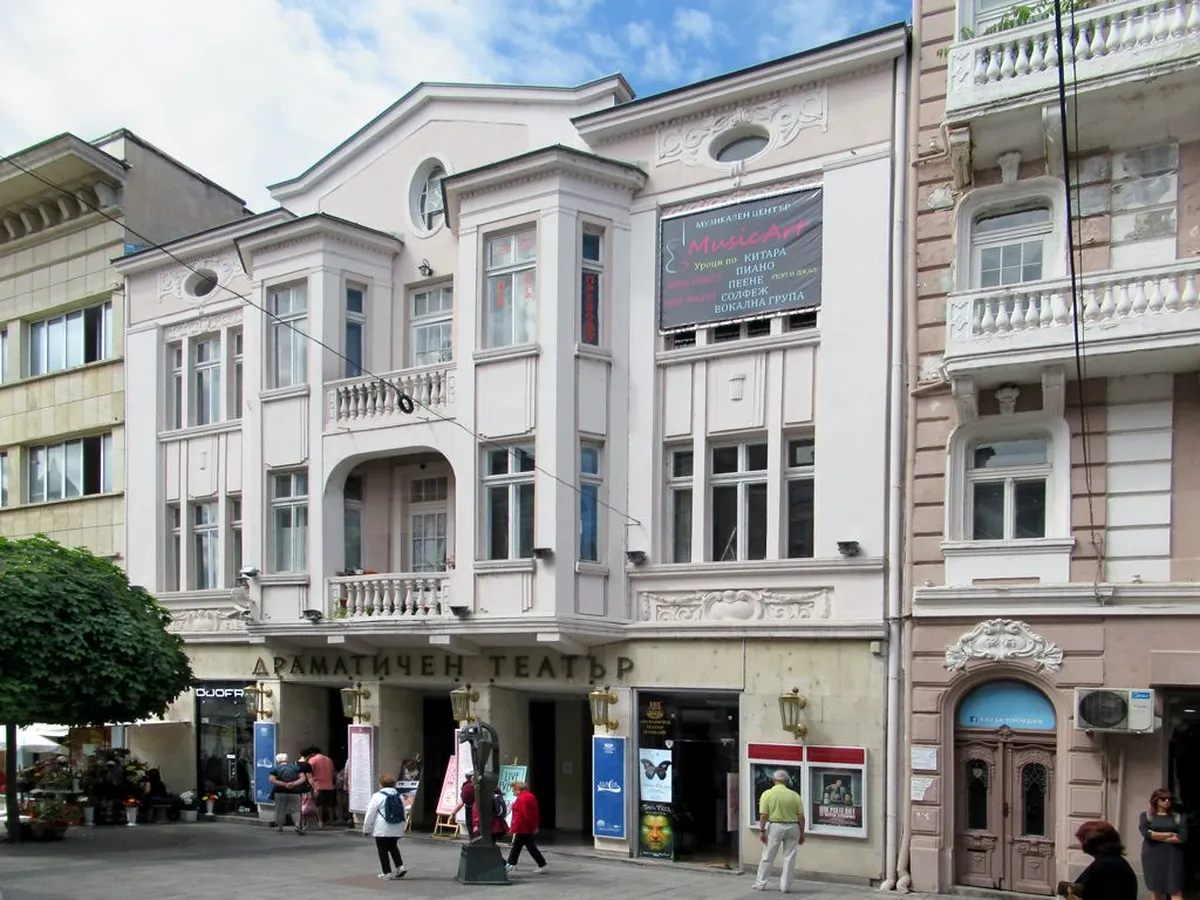
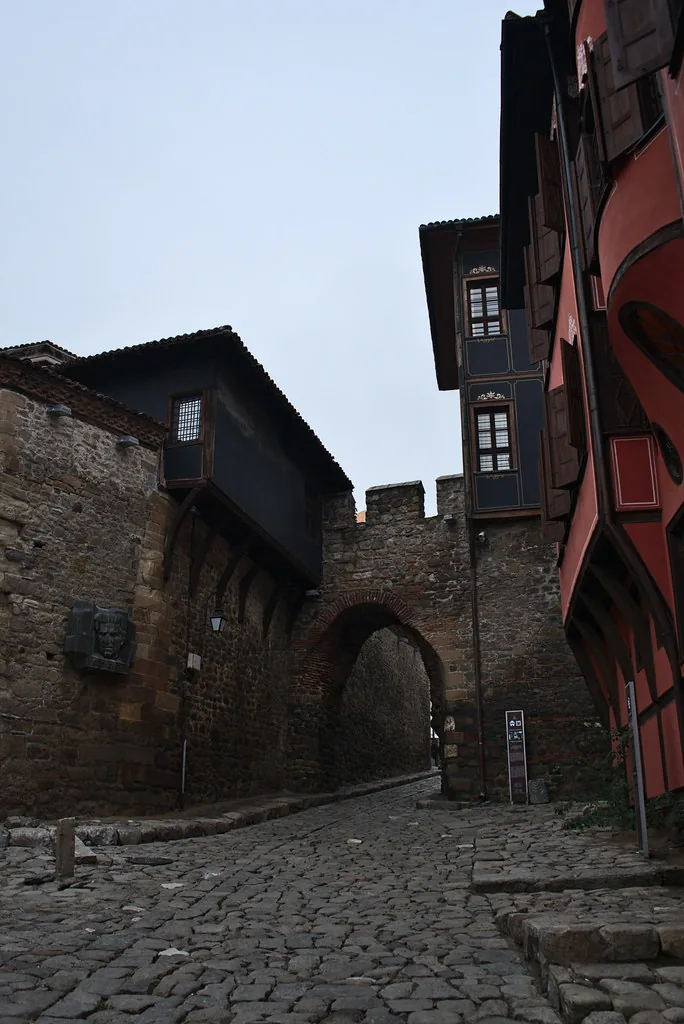
If you prefer your own pace, start at the Roman Stadium on Knyaz Alexander and walk uphill toward the Plovdiv Old Town. The Stadium itself is partially excavated beneath the pedestrian street — you can see the curved northern end for free from street level. The full underground section has a small museum entrance fee of 3 BGN. From there, climb past the Eastern Gate (Hisar Kapia) and follow the cobbled lanes upward.
Plan your Old Town walk around Monday closures. Most Revival house museums — the Hindliyan House Visitor Guide, the Ultimate Balabanov House Visitor Guide, the Ethnographic Museum — are shut on Mondays. The Ancient Theatre and the Roman Stadium site both close on Mondays too. Tuesday to Sunday is always the safer window. If you do end up there on a Monday, the exterior architecture and street views are still fully accessible; you just lose the interiors.
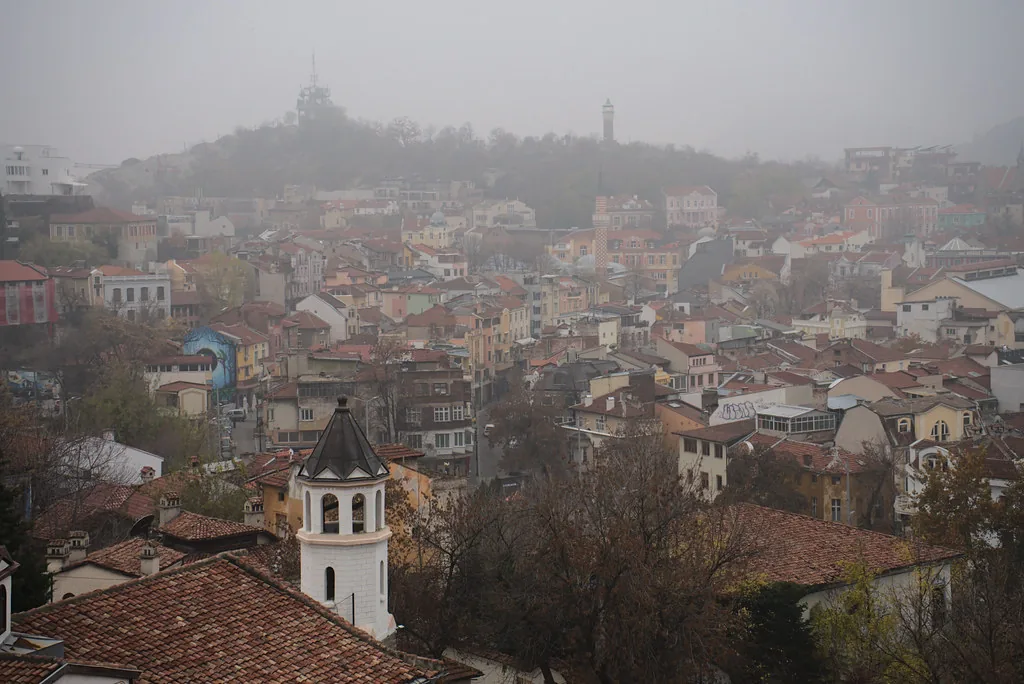
End the route at Nebet Tepe Visitor Guide, the highest of the remaining hills, where you get a 360-degree view over the city and the Rhodope Mountains to the south. Allow two to three hours for the full loop at a relaxed pace, adding time if you enter museums along the way.
💡 Good to know: Avoid Mondays for the self-guided museum loop — the Hindliyan House, Balabanov House, Ethnographic Museum, Ancient Theatre, and Roman Stadium site all close on Mondays. The exterior architecture and street views stay fully accessible, so a Monday is fine if you only want to walk the cobbled lanes and Nebet Tepe viewpoint.
What a Standard Plovdiv Walking Tour Covers
The classic two-hour route — whether you take the free tour, an audio app, or a private guide — threads together the city's main monuments in roughly the order below. Knowing the sequence in advance helps you decide where to linger and where a quick photo is enough.
- City Hall and Knyaz Alexander street — the meeting point and the pedestrian spine of the centre.
- Roman Stadium of Philippopolis — the excavated northern curve, free from street level, 3 BGN for the underground walkway.
- Dzhumaya Mosque Visitor Guide and Dzhumaya Square — the dome-less Ottoman mosque built on a Gothic church footprint.
- Kapana creative district — galleries, craft shops, and the Balkans' most concentrated bar quarter.
- Eastern Gate (Hisar Kapia) — the medieval gateway into the cobbled Old Town.
- Revival-era mansions — Hindliyan House, Balabanov House, and the Ethnographic Museum.
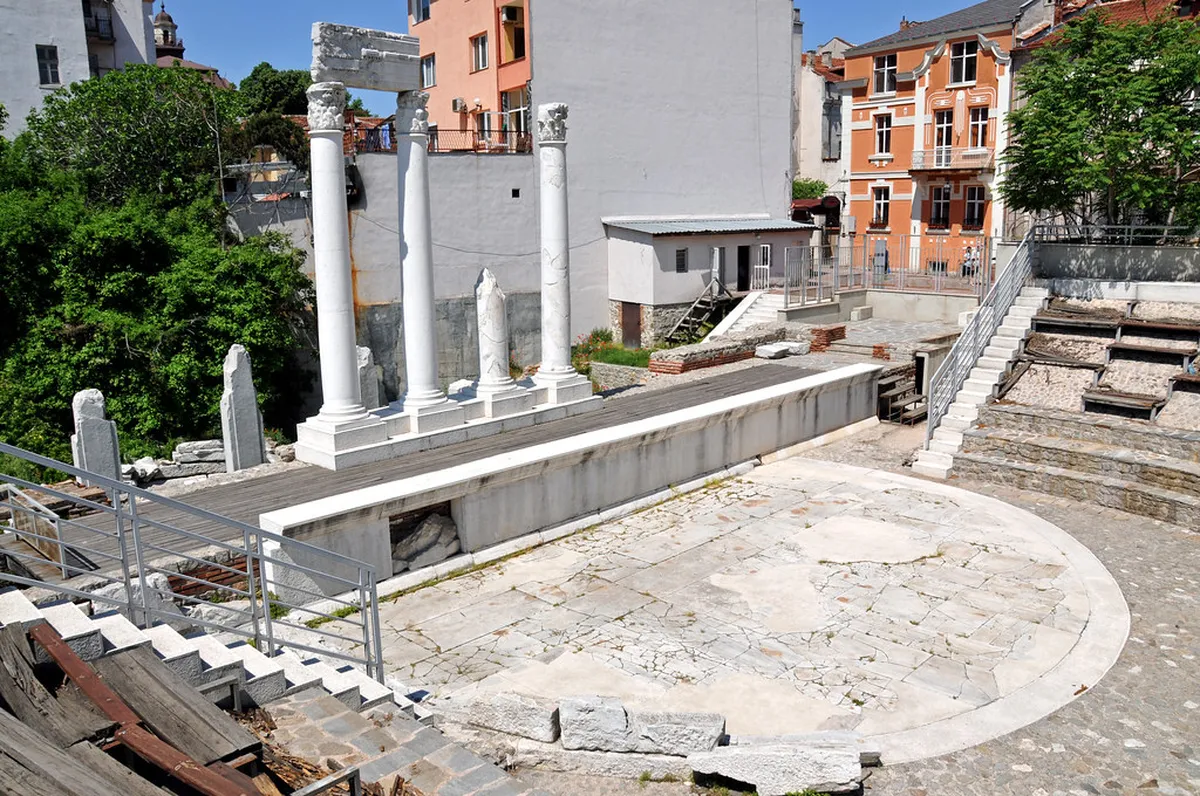
- Ancient Theatre of Philippopolis — the 2nd-century AD theatre with Rhodope Mountain views, 3 BGN entry.
- Nebet Tepe — the highest hill and the 360-degree panoramic finish.
That is more than 20 historical points across 8,000 years of habitation in a single compact loop. At a brisk guided pace you cover it in two hours; walking it yourself with museum stops, budget half a day.
Roman Heritage Sites: Theatre, Stadium, and Forum
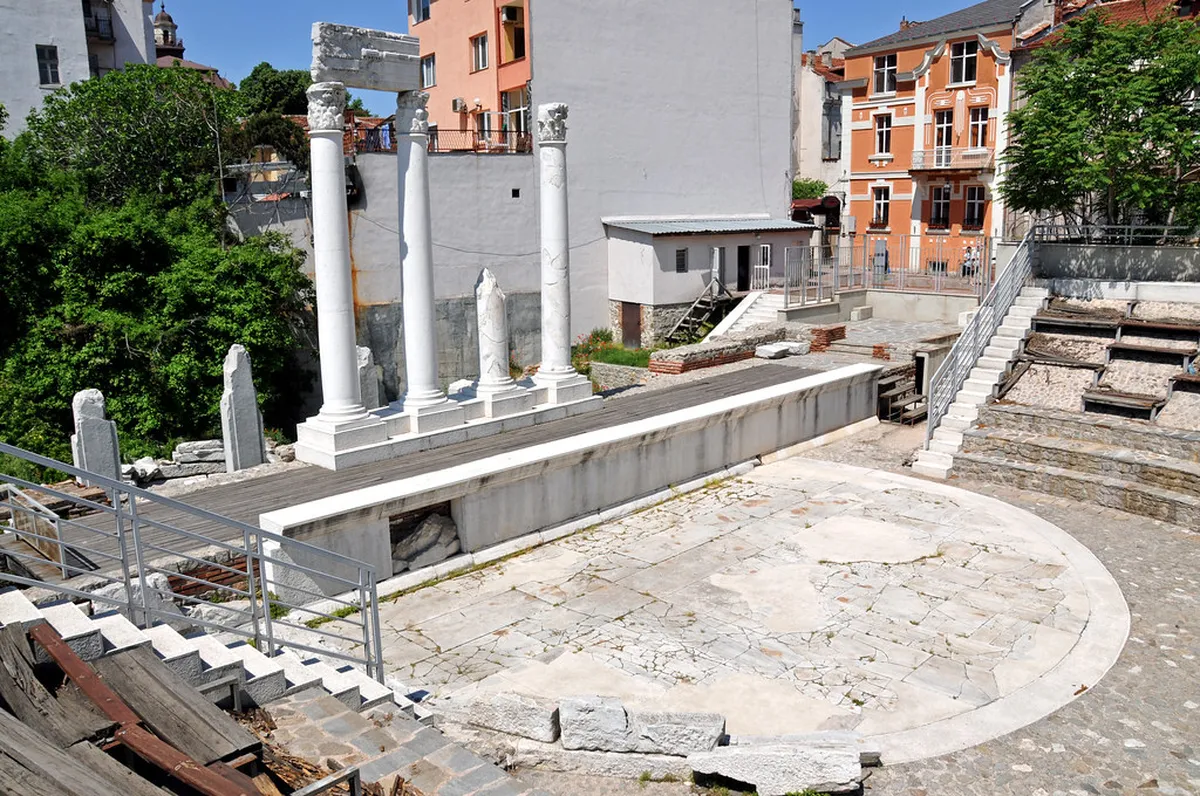
Plovdiv has three major Roman monuments within walking distance of each other. The Ancient Theatre of Philippopolis sits in the Old Town and was built in the 2nd century AD under Emperor Trajan. It holds around 7,000 spectators and still hosts opera and concert performances in summer. You can buy performance tickets via Eventim; the daytime sightseeing entrance costs 3 BGN. Views from the upper tiers take in the Rhodope Mountains — worth the climb even if no show is scheduled.
The Roman Stadium sits beneath the main pedestrian street. Only the northern curved end is excavated; the rest runs under the modern city. Street-level views are free. Paying the 3 BGN museum fee gets you access to the underground walkway around the excavated seating tiers. The Roman Forum fragments are scattered between the two — visible through ground-level glass panels set into the pedestrian paving, accessible at no charge.
A combined museum pass covering the Stadium, several Revival houses, and the Ethnographic Museum is available at the tourist information centre near the Old Town entrance for around 10 BGN. If you plan to enter three or more sites, the pass saves money. The tourist information centre is also where you can pick up a free printed walking map.
The Dzhumaya Mosque: An Architectural Detail Worth Knowing
The Dzhumaya Mosque sits at the corner of Knyaz Alexander and the entrance to Kapana, and it is unmissable on any walking route through the centre. Most visitors photograph it and move on. It is worth pausing to notice something unusual: unlike almost every Ottoman mosque in the Balkans, this one has no dome and is not round. The reason is that it was built directly on the foundations of a Gothic church that stood there before it. The original footprint dictated the rectangular floor plan, and the architect could not raise a dome over the existing structure.
The mosque is an active place of worship and entry is free. Visits are welcomed outside prayer times, which typically fall at dawn, midday, late afternoon, sunset, and night. A quick look inside takes five minutes and gives you a rare example of how Plovdiv's layered history is literally embedded in its buildings. Pair it with the adjacent Roman Stadium excavation and the Ottoman-era Dzhumaya Square and you have three civilisations within a hundred metres of each other.
Kapana: The Creative District
Kapana translates as "trap" — either because its tight, angled streets make it easy to get lost, or because once you settle into a bar there, leaving becomes genuinely difficult. During the communist era it was used as a car park. Since Plovdiv was named European Capital of Culture in 2019, it has been pedestrianised and transformed into a hub for galleries, craft shops, and some of the most concentrated nightlife in the Balkans. The Kapana creative quarter is worth a full hour even if you only plan to walk through it.
By day the district fills with coffee drinkers and lunch crowds. By night the bars take over. Recommended spots in 2026 include Local Beer Bar for Bulgarian craft beers, Kotka i Mishka (Cat and Mouse) for low-key craft beer vibes, and Baba Yaga for a mixed international crowd. The pedestrian lanes are also home to the neighbourhood cats — like Istanbul or Kotor, Kapana's resident cats have become part of the area's identity and appear on half the souvenirs sold in the Old Town.
Sunset Spots: Nebet Tepe vs. Danov Hill
Plovdiv is famously called the City of Seven Hills (one was quarried away for building materials, leaving six), and two of them offer competing sunset experiences. Nebet Tepe, the highest remaining hill, is the classic walking-tour endpoint — paved steps lead up from the Old Town, and the view takes in the full sweep of the Rhodope Mountains to the south and the Maritza River to the east. It gets busy at golden hour with tourists already finishing guided tours.
Danov Hill is the local's choice. It sits a short walk from the main pedestrian street, the climb is gentler, and on a summer evening you will find groups of Plovdiv residents with bottles of wine from the Billa supermarket nearby watching the sun drop over the city. There are no admission fees, no guided groups, and the atmosphere is noticeably more relaxed. For a first visit, Nebet Tepe gives better panoramic orientation. For a second evening, Danov Hill feels more like actually living in the city.
Audio Guide Options for Independent Exploration
Digital audio guides are a practical middle ground — professional narration without committing to a group schedule. Most apps work offline, which matters because roaming data costs in Bulgaria can surprise visitors from outside the EU. The guides available in 2026 typically cover the Old Town and Roman sites in around 90 minutes of narration, with English, German, French, and Russian as standard language options.
Cost is generally 10–15 EUR for a full route. The key advantage over the free tour is the ability to pause and double back. If the Hindliyan House interior grabs your attention for longer than planned, or if you want to spend an hour at the Ancient Theatre without a group moving on, the audio guide accommodates that. The tourist information centre near Hisar Kapia also rents physical audio devices for visitors who prefer not to use their own phones.
Essential Gear: Cobblestones, Heat, and Getting Around
The Old Town's cobblestones are large, uneven, and genuinely slippery — especially after rain. Sturdy walking shoes with grip are not optional. High heels or thin-soled sandals will make the uphill sections uncomfortable within the first hour. This applies to everyone, regardless of fitness level. The TripCanvas booking page flags this explicitly and so does every experienced guide in the city.
Heat is the other variable. Plovdiv sits inland at a lower elevation than Sofia and regularly hits 35–38°C in July and August. Carry a reusable water bottle and refill it at the fountains on Knyaz Alexander. The 18:00 free tour departure is specifically designed for summer visitors who find the midday heat prohibitive. If you are walking independently, plan the Old Town hills for the morning and save Kapana and the riverside for the afternoon.
Getting around the wider city is straightforward. Plovdiv is compact enough that the centre, Old Town, and Kapana are all walkable from each other. City buses cost 1 BGN per trip. Note that public buses stop around 21:00, so after an evening in Kapana your options are walking or a metered taxi. The Taxi.Me app works reliably for ordering a cab if you cannot flag one on the street. Follow the Plovdiv Safety Tips for Tourists for a trouble-free visit.
Where to Eat, Drink, and Refuel
The best lunch spots are scattered through Kapana rather than on the main pedestrian street. Pavaj serves a local Bulgarian menu at midrange prices in central the district. Supa Bar is a reliable budget option for hearty soup at lunch. Rahat Tepe, just above the Old Town, is slightly more tourist-facing but offers solid Bulgarian food with panoramic views — useful if you want to combine a meal with the scenery.
For coffee, Dwell Coffee House is consistently recommended by residents, run by a family and not a chain. The Family Coffee Roasters is a second reliable stop. Both are within easy reach of Kapana. The 12 Best Cafes in Plovdiv guide has a fuller breakdown if you want more options. For evening drinks, Local Beer Bar and Bar Petnoto (a wine bar) are the steadiest choices in the creative quarter.
Getting to Plovdiv from Sofia
The Sofia to Plovdiv connection runs frequently by both train and bus. The train from Sofia Central Station costs around 9 BGN and takes 2.5 hours, passing through Bulgarian countryside. Tickets are always the same price regardless of when you book — buy at the station window 15 minutes before departure. Some carriages on older rolling stock have compartment seating that makes the journey feel genuinely scenic.
The bus from Sofia's Central Bus Station is faster at around 2 hours and slightly cheaper. You can check timetables and buy tickets on Busbud. Both options drop you close to Tsar Simeon Garden, from which the Old Town is a 15-minute walk. Plovdiv also has a small regional airport with limited direct flights; a taxi from the airport to the centre costs around 35 BGN, or there is a shared shuttle for 10 BGN per person. Most visitors arrive from Sofia and find either transport option adequate for a day trip or an overnight stay.
For the wider city context, see our complete Plovdiv guide.
For more Plovdiv reading, see our Plovdiv 2 Day Itinerary: The Ultimate 48-Hour Travel Guide and Plovdiv Weekend Itinerary: 9 Key Sections for a 2-Day Trip guides.
Frequently Asked Questions
Where does the free Plovdiv walking tour start?
The free tour begins in front of the City Hall on the main pedestrian street. Look for the guides near the central fountain about ten minutes before the start time. You can find more Best Things to Do in Plovdiv after your tour ends.
Is Plovdiv walkable for people with mobility issues?
The Old Town can be challenging due to steep hills and very uneven cobblestones. The main pedestrian street is flat and much easier to navigate for those with mobility concerns. Consider using a taxi to reach the higher points of the city.
How long does a typical Plovdiv walking tour take?
Most guided tours last between two and three hours to cover the main historical sites. A self-guided walk might take longer if you choose to enter all the museums. Plan for at least half a day to see everything without rushing.
Are the Roman ruins in Plovdiv free to visit?
You can see the Roman Stadium and many ruins for free from the pedestrian level. However, entering the Ancient Theatre and some museum sites requires a paid ticket. Combined passes are available at the tourist information centers for better value.
How much does a Plovdiv walking tour cost in 2026?
The free walking tour is tip-based — most people leave 10–20 BGN. An audio guide app costs 10–15 EUR, a small-group tour runs 15–25 EUR per person, and a private guide is 40–60 EUR for 1–4 people over 3–4 hours. Entry fees such as the Ancient Theatre (3 BGN) are usually extra.
A plovdiv walking tour is the absolute best way to experience the rich history of this ancient city. Whether you choose a free group tour or a private guide, the stories you hear will stay with you forever. From the Roman ruins to the creative energy of Kapana, the city offers something for every type of traveller. Remember to wear comfortable shoes, stay hydrated, and check the day of the week before planning museum visits.
The combination of ancient heritage and modern culture makes Plovdiv a must-visit in Bulgaria. The free tour at 18:00 in summer is the single best starting point for any first-timer — two hours, no booking required, and you end the route at golden hour above the Old Town. Your journey through one of the oldest inhabited cities in Europe will be a highlight of any Balkan trip.