Plovdiv Roman Stadium
The Plovdiv Roman Stadium is not a remote ruin on the edge of town. It sits below the city's main pedestrian street, with its best-preserved northern end open at Dzhumaya Square beside the Dzhumaya Mosque Visitor Guide. That setting is the point: modern Plovdiv moves directly above one of ancient Philippopolis' largest public venues.
Built in the early 2nd century AD, the stadium once held athletic festivals, imperial celebrations, animal fights, and later gladiator contests. Only part of the structure is visible today, but the exposed marble seating, underground passages, and 3D cinema make it one of the easiest Roman sites in Bulgaria to understand quickly. It works well as a first stop before the Old Town or the Ancient Theatre.
This guide focuses on what visitors actually need in 2026: where to find the entrance, what survives, how the original stadium looked, what the games meant, and which hidden sections are easy to miss under modern shops.
For a walk-through view of the marble seating and vaulted passages, this video captures the stadium's Roman grandeur:
History of the Ancient Stadium of Philippopolis
The stadium was built at the beginning of the 2nd century AD, during the reign of Emperor Hadrian. Philippopolis was already an important Roman city in Thrace, positioned on major Balkan routes and wealthy enough to build temples, baths, a theatre, and a large sports arena. The stadium gave the city a public stage for athletics and imperial spectacle.
Its scale was ambitious. Most published descriptions give a length of about 240 meters and a width of around 50 meters, with capacity for roughly 30,000 spectators. That number matters because it shows the stadium was designed for regional gatherings, not just local entertainment.
The Roman city continued to change in the 2nd and 3rd centuries. A section of the fortified wall visible near the stadium is associated with the reign of Marcus Aurelius, and inscriptions and coins connect the arena with visits by emperors including Caracalla and Elagabalus. You can compare the broader timeline with the summary on History Hit.
After antiquity, the stadium disappeared under the growing medieval and modern city. The northern end was uncovered and restored in stages, while the longer straight sections remain beneath the main street and adjoining buildings. That is why the site feels unusual: you are seeing a public slice of a much larger buried structure.
Architectural Highlights: The Sphendone and Marble Seats
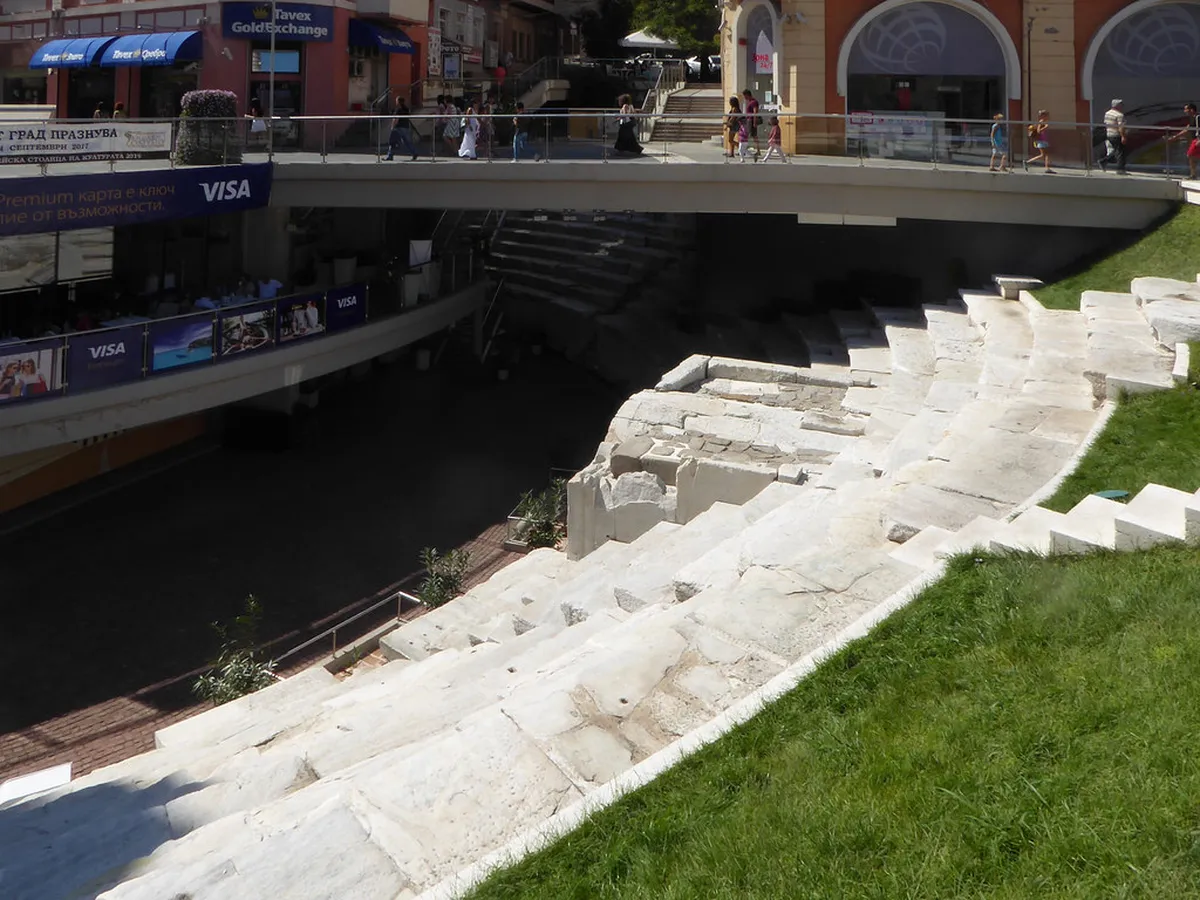
The most recognizable feature is the sphendone, the curved northern end where the track turned back on itself. At Dzhumaya Square you can look down at rows of marble seats, the remains of the track area, vaulted passages, and parts of the ancient street level. Some sources count 13 visible rows today, while older descriptions refer to 14 rows of monolithic marble seating.
The stadium followed the model of the Stadium at Delphi, a rare design link that sets Plovdiv apart from many Roman sites in the Balkans. Bulgarian tourism sources often note that only a small number of stadiums of this type are preserved worldwide. Check the Visit Bulgaria page for that architectural comparison.
Look for the details rather than only the big curve. The stonework shows how the seating was supported, how spectators moved through corridors, and how drainage channels helped protect the lower level. Remains connected with the central entrance have also produced evidence of decorative elements and a hydraulic clock.
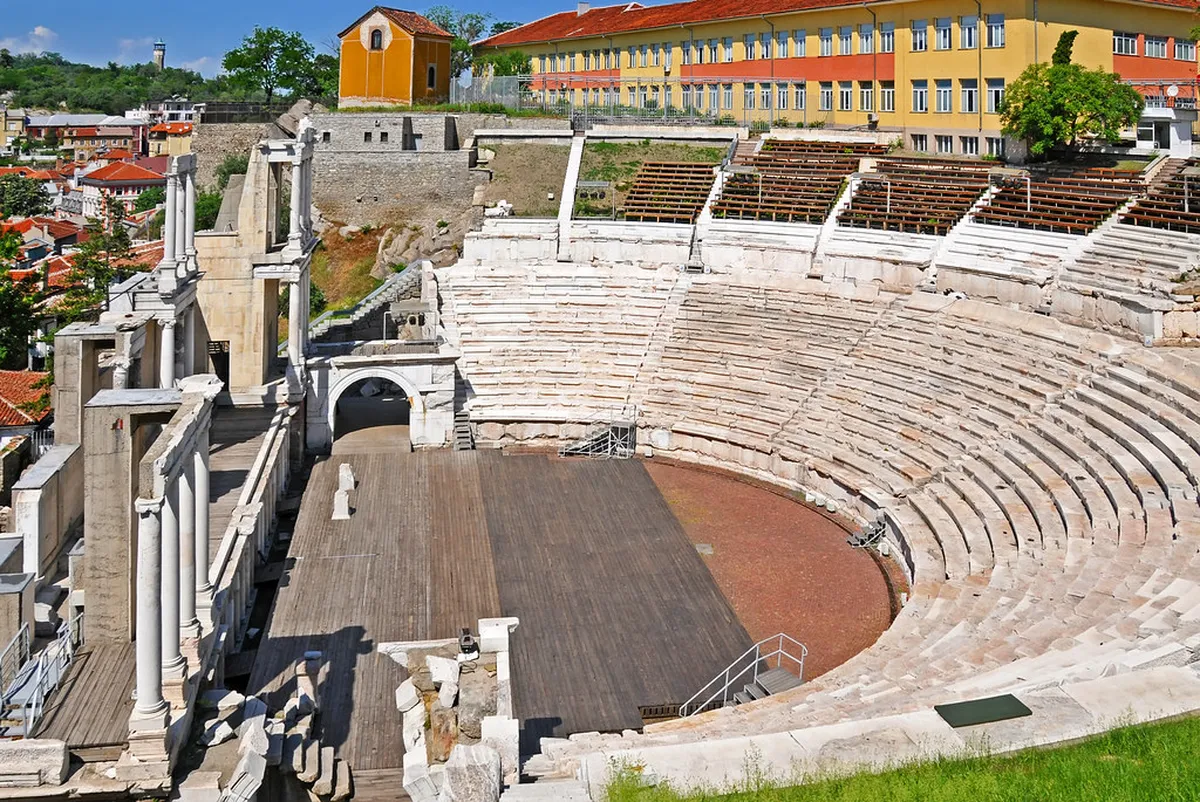
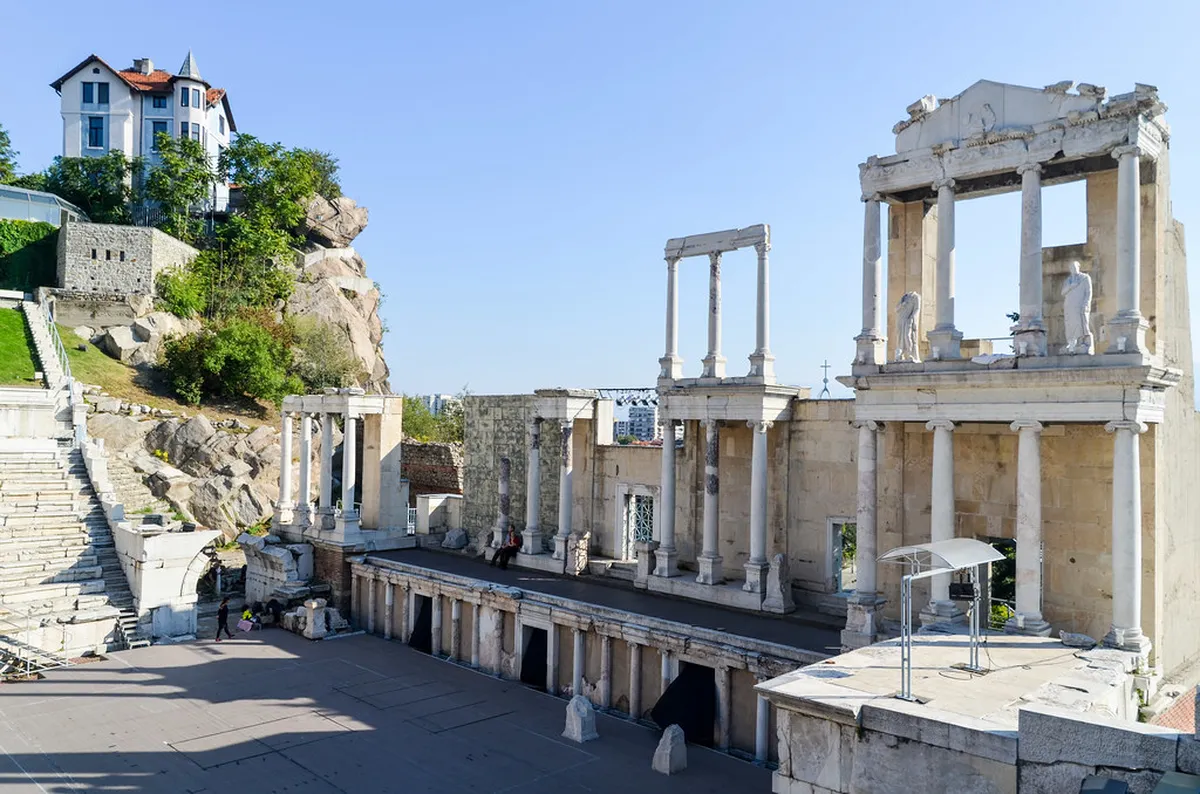
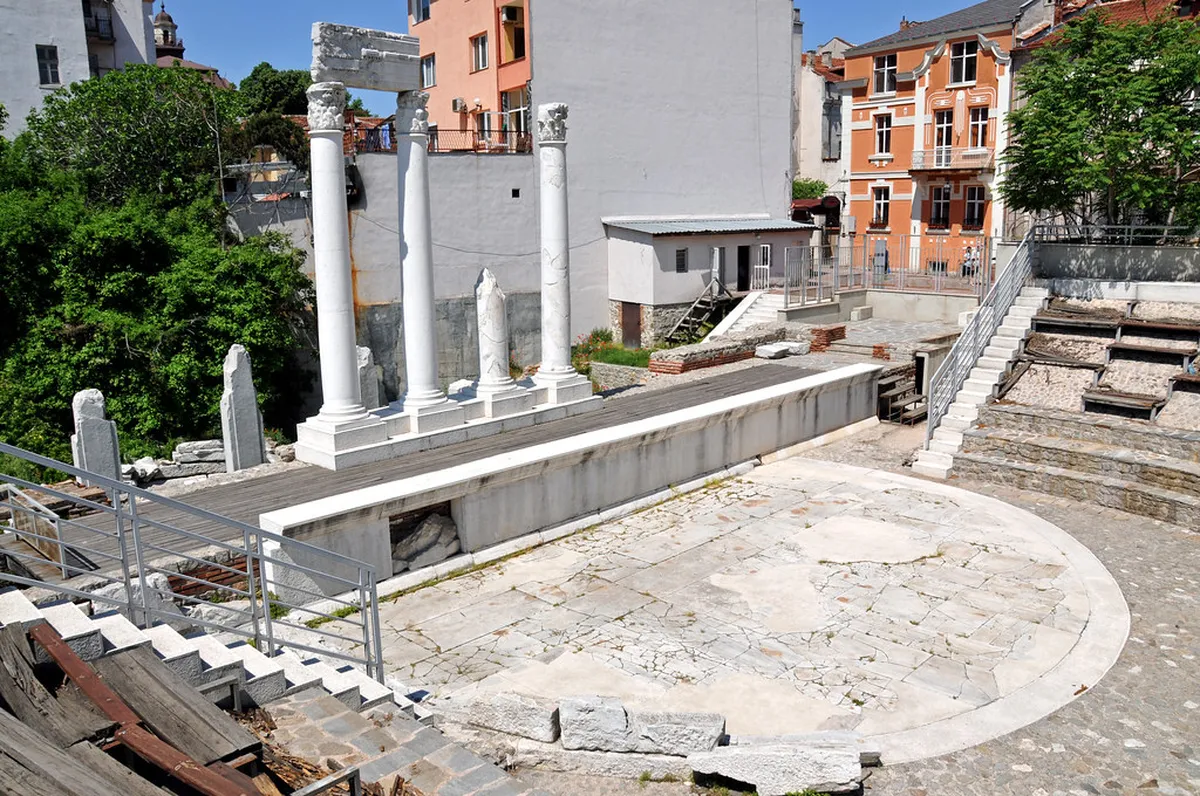
The architecture is easier to read if you pair the stadium with the Plovdiv Roman Theater. The theatre climbs a hillside and still functions as a performance venue, while the stadium runs under the flat center of the city. Together they show two very different types of public entertainment in Roman Philippopolis.
Ancient Games: From Athletics to Gladiator Fights
The stadium's main role was ceremonial and athletic. The Pythian Games held here were inspired by Greek traditions and included sports, music, and cultural competition. They were not casual weekend events; they were civic festivals that advertised Philippopolis' status inside the Roman world.
The Alexandrian Games were linked with Emperor Caracalla's visit in 214 AD, while the Kendrisian Games are associated with Emperor Elagabalus in 218 AD. Coins minted for these events help historians connect the stadium with imperial presence and organized provincial celebration. The competitions were overseen by officials known as agonothetes.
Visitors often ask whether gladiators fought here. Sources for the site mention gladiator fights and animal fights, especially as Roman public entertainment evolved. The stadium was still primarily a stadium, not an amphitheatre, but its large floor could host more than running contests.
| Event | What it meant in Philippopolis | What visitors should picture |
|---|---|---|
| Pythian Games | A Greek-inspired festival of athletics and culture. | Running events, contests, music, officials, and city pride. |
| Alexandrian Games | An imperial celebration connected with Caracalla's visit. | Large crowds, minted commemorative coins, and formal ceremonies. |
| Kendresian Games | A later named festival linked with Elagabalus. | Provincial spectacle with political and religious overtones. |
| Gladiator and animal fights | Roman mass entertainment added to the arena's public role. | A more violent use of the same monumental city space. |
The Stadium Today: Exploring Dzhumaya Square
Dzhumaya Square is the easiest place to understand the stadium today. From street level you look down into the excavated northern curve, with the mosque, cafes, and main pedestrian flow immediately around you. The contrast is sharp, but the ruin is not fenced off from city life.
Start at the railings above the sphendone, then descend to the lower level if the visitor area is open. From below, the rows of marble seating feel more substantial, and the curve of the stadium becomes clearer. This is also one of the strongest Top Photography Spots in Plovdiv, especially in the morning when the square is less crowded.
The stadium also anchors a useful walking route. From Dzhumaya Square you can continue toward the Old Town, the Ancient Theatre, Kapana, or the main shopping street without needing transport. It is a natural stop on a self-guided route or a guided route like the one outlined in our 10 Best Ways to Experience a Plovdiv Walking Tour.
The open-air view is free at any time, but the lower visitor areas, cinema, and special sectors follow site opening hours. If your schedule is tight, see the free view first and use the paid experience only if you want the reconstruction film or access to extra displays.
Then vs Now: What You Can Actually See
The original stadium was a 30,000-seat venue stretching beneath today's central pedestrian zone. What most visitors see in five minutes is only the northern curved end. That mismatch can be confusing unless you arrive expecting a buried urban site rather than a fully exposed arena.
In antiquity, spectators entered through monumental approaches and moved through corridors to marble seating. The track ran for one stadion, and the long sides extended far beyond the square. Today, the visible public section shows the curve, part of the track, seating rows, passages, and nearby remains of the Roman city wall and aqueduct foundations.
The best mental model is a stadium footprint hidden under the city. Dzhumaya Square shows the rounded end; shop basements and adjacent commercial buildings reveal separate fragments; the rest remains under streets and foundations. That is why the 3D cinema matters: it fills in the missing 200-plus meters that cannot be excavated without dismantling modern Plovdiv.
How to Find the Buried Sections
First-time visitors sometimes walk across Dzhumaya Square without realizing the stadium continues under their feet. The main entrance and viewing area are below the pedestrian street near Knyaz Alexander I Street and Rayko Daskalov Street. Look for the open excavated area beside the mosque rather than a standalone ticketed building.
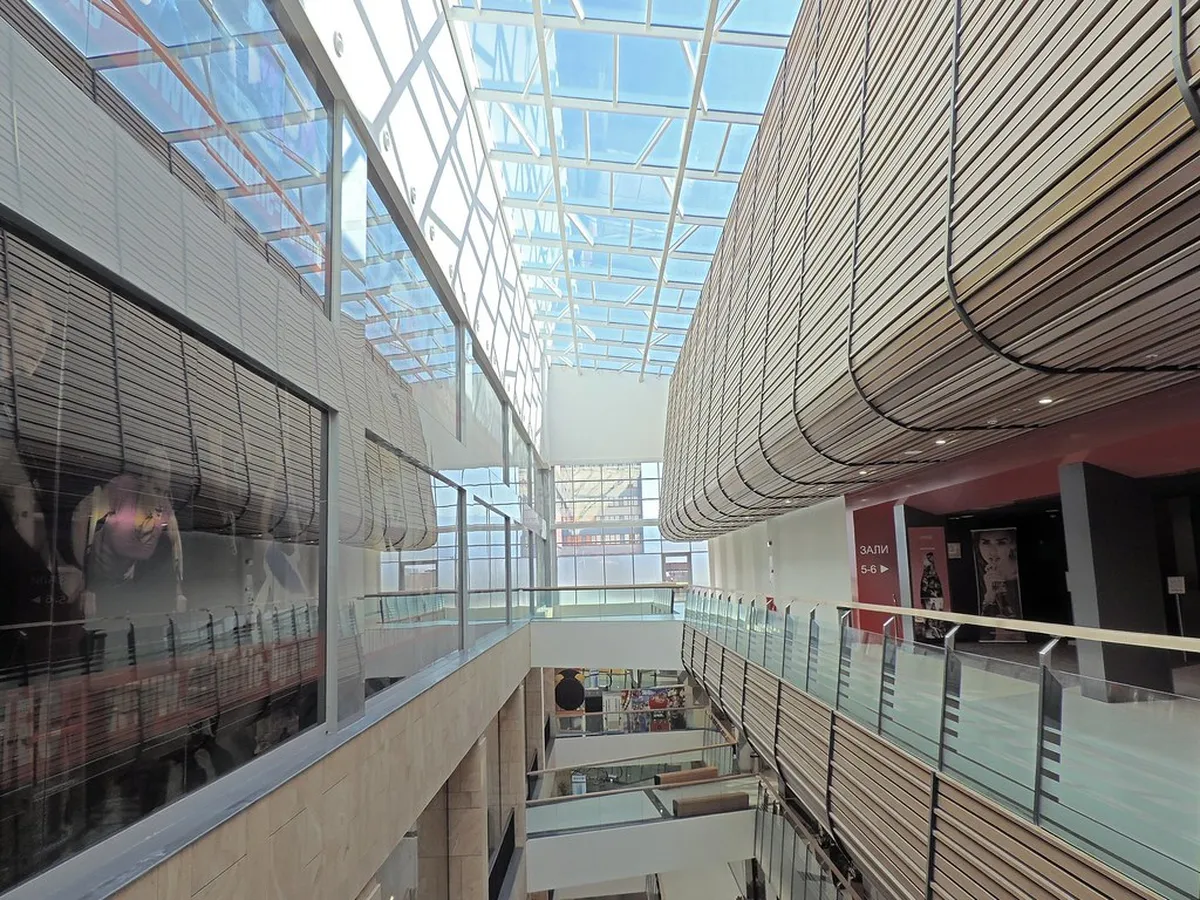
The most interesting hidden section is the Eastern Sector under the Star Gallery Shopping Center, better known to visitors as the H&M building on the main street. Since 2021, the archaeological finds there have been opened to visitors, with marble seating integrated into the modern commercial interior. Ask staff or look for the marked access rather than assuming the ruins are visible from the storefront.
Another exposed section is associated with the Excelsior shopping center area. Together with the Dzhumaya Square remains, these fragments help you trace the line of the stadium through the present-day city. This is the practical detail many quick guides skip: the site is not one viewpoint but a buried route.
If you are building a compact day, visit the Roman Stadium before climbing to the Old Town. That order saves backtracking and fits neatly with our Plovdiv 1-day itinerary.
Underground Access and the 3D Cinema Experience
The underground presentation area gives context that the open ruins cannot provide alone. The 3D cinema shows "Plovdiv in the 2nd Century AD," a short reconstruction that places the stadium back inside Roman Philippopolis. For children, first-time visitors, and anyone without a background in archaeology, it is often the quickest way to grasp the original scale.
Official visitor information has listed projections at regular intervals from 10:00 through 17:00, with a break around midday. In 2026, treat those times as a planning guide and confirm locally, especially in winter or around holidays. The screening is short enough to combine with the square, the hidden sectors, and coffee nearby.
The cinema is sometimes described as a "Watch and Listen" experience because it adds sound and movement to the static marble remains. The reconstruction shows the seating, crowd, and arena in use, which helps when you return outside and look at the partial excavation from above.
The lower level is also useful in hot weather or rain. Plovdiv's center can be exposed in summer, so the underground stop gives you a cool pause without leaving the sightseeing route. For a longer Roman-focused day, continue from here toward the Ancient Theatre and the archaeological displays covered in our 10 Best Museums in Plovdiv.
Practical Visitor Information: Hours, Tickets, and Location
The outdoor view from Dzhumaya Square is free. Paid access applies to the 3D cinema and some indoor archaeological sectors. Official Plovdiv information has listed the 3D cinema adult ticket at 7.20 BGN, about EUR3.70, with student tickets at 3.60 BGN and free entry for children under 7 and visitors with disability over 50 percent.
Opening hours vary by season and by section. The tourism information published for the Roman Stadium has commonly listed daily access around 09:30-18:00 in the warmer season and shorter winter hours, while projection schedules have run from 10:00 to 17:00. Check the Visit Plovdiv Official Site or the local desk at the square for same-day confirmation.
The location is simple: Dzhumaya Square, at the northern end of the main pedestrian street, next to Dzhumaya Mosque. The area is pedestrianized, so taxis drop nearby rather than at the railings. From Plovdiv Central Railway Station, allow about 25-30 minutes on foot through the center, or use city buses toward the main street area.
- Allow 20-30 minutes for the free viewpoint and plaques if you are moving quickly.
- Allow 45-60 minutes if you add the lower level, 3D film, and a look for the hidden shop sections.
- Visit in the morning for quieter photos or after dusk for atmospheric lighting around the square.
- Bring small cash in BGN for tickets, although card acceptance is increasingly common in central Plovdiv.
- Use the stadium as a starting point for central sightseeing; it links easily with the broader Best Things to Do in Plovdiv route.
Interactive Experiences: Scavenger Hunts and Virtual Tours
The stadium now supports several layers of interpretation. The official film is the most useful one, but private scavenger-hunt apps and guided walking games also use the site as a clue point. These can be worthwhile for families because the exposed ruins are compact and children may need a story to connect the fragments.
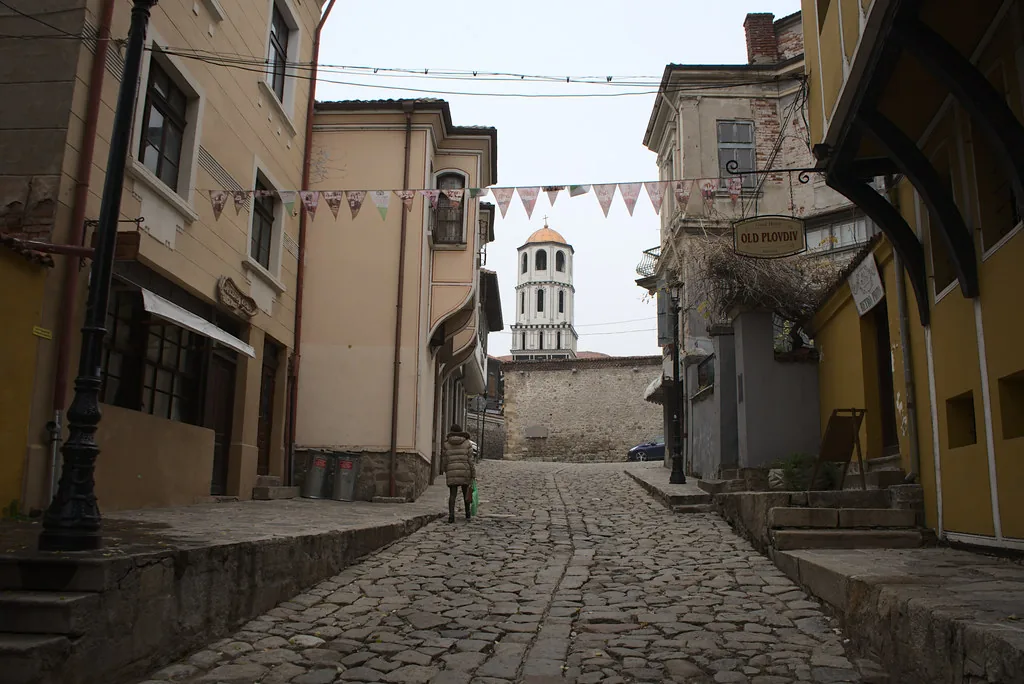
Guided walking tours usually explain the stadium better than a quick photo stop. A good guide will point out the direction of the buried long sides, the relationship with the city wall, and the reason Plovdiv's Roman landmarks sit at different levels. If you prefer independent travel, read the plaques first, then watch the 3D film, then look again from the railings.
The square also hosts cultural activity, street musicians, craft stalls, and seasonal events. That modern use is not separate from the site's meaning; Roman stadiums were public gathering places, and Dzhumaya Square still serves that function. Before you travel, check the Plovdiv Events 2026 calendar for festivals or performances nearby.
For related Plovdiv reading, see our Ancient Theatre of Plovdiv guide.
Continue planning: Use Best Things to Do in Plovdiv to connect this guide with the rest of your Bulgaria itinerary.
Frequently Asked Questions
Is the Plovdiv Roman Stadium free to visit?
Yes, viewing the outdoor ruins at Dzhumaya Square is completely free for all visitors. However, there is a small fee if you wish to watch the 3D movie in the visitor center. You can find more details in our 10 Best Museums in Plovdiv.
Where is the entrance to the Roman Stadium in Plovdiv?
The main entrance to the excavated section and the visitor center is located at Dzhumaya Square. It is situated at the northern end of the main pedestrian street. You can easily find it right next to the historic Dzhumaya Mosque.
How much of the stadium is actually visible today?
Only the northern curved end, or sphendone, is fully excavated and visible to the public. The rest of the 240-meter structure remains buried under the city's main shopping street. Some parts are also visible in the basements of nearby modern shops.
What kind of games were held at the Ancient Stadium of Philippopolis?
The stadium hosted major athletic events like the Pythian and Alexandrian games. These included running, wrestling, and jumping competitions. In the later Roman period, the arena was also used for gladiator fights and animal hunts to entertain the public.
The Plovdiv Roman Stadium is most rewarding when you treat it as a layered city site, not a single ruin. The visible sphendone, the underground cinema, and the shop-basement fragments each explain a different part of the original arena. Together they show how much of ancient Philippopolis still shapes the modern center.
Start at Dzhumaya Square, descend if the visitor area is open, and leave time to trace the buried footprint along the pedestrian street. Then continue into the Old Town or toward the Ancient Theatre while the scale of the stadium is still fresh in your mind. For most visitors, that route is the cleanest introduction to Roman Plovdiv.