8 Essential Things to Know About Burgas Lakes and Poda Protected Area
Burgas lakes and Poda protected area offer a rare chance to witness world-class wildlife minutes from a Black Sea city. This wetland complex anchors one of Europe's most important bird migration corridors and shelters hundreds of rare species across three distinct lakes. The area combines ecological significance with practical visitor access — a nature center, observation terraces, photo hides, and free public mud pools are all within a short drive of the city center. This guide covers every detail you need to plan a rewarding trip in 2026.
The Significance of the Burgas Lake Complex
The wetlands surrounding Burgas form one of the most ecologically dense zones on the entire Black Sea coast. The complex covers nearly 10,000 hectares and encompasses three lakes with fundamentally different water chemistry — from freshwater to hypersaline — creating a mosaic of habitats that supports an extraordinary range of species. International bodies have formally recognized this value: the site is listed under the Ramsar Convention as a wetland of international importance, and it falls within the Natura 2000 European protected areas network under the designation Mandra-Poda.
![Nessebar -St. Stephen Church [11th to 13th century] in Burgas, Bulgaria](/images/burgas-lakes-poda-protected-area-the-significance-of-the-burgas-lake.webp)
What makes the Burgas lake system unusual is the coexistence of industrial use and strict nature protection. Lake Atanasovsko has been harvested for salt for centuries and remains an active saltworks today. Yet that industrial activity has inadvertently created shallow brine pools ideal for flamingos and avocets. Understanding this balance between economic activity and conservation is central to appreciating the wetlands.
Travelers often find that Top 10 Outdoor & Nature Activities in Burgas offers a refreshing counterpoint to the busy city center and beach resorts further south. The lakes act as a natural air corridor, and the open water creates a sense of space and quiet that is hard to find anywhere else near the Black Sea coast. Each season presents a different palette of colors and a different roster of birds.
Poda Protected Area: Bulgaria's Premier Birding Site
Poda Protected Area Visitor Guide occupies roughly one square kilometer at the southeastern edge of Burgas, wedged between the Black Sea and Lake Mandra. Despite its small footprint, it holds records for ornithological density that few sites in Europe can match: 315 bird species have been recorded here, representing roughly a quarter of Europe's total bird diversity. That concentration in such a tiny area is the core reason Poda has attracted international recognition since 1989, when it was designated Bulgaria's first NGO-managed protected area — a model that preceded similar conservation structures across Eastern Europe by years.
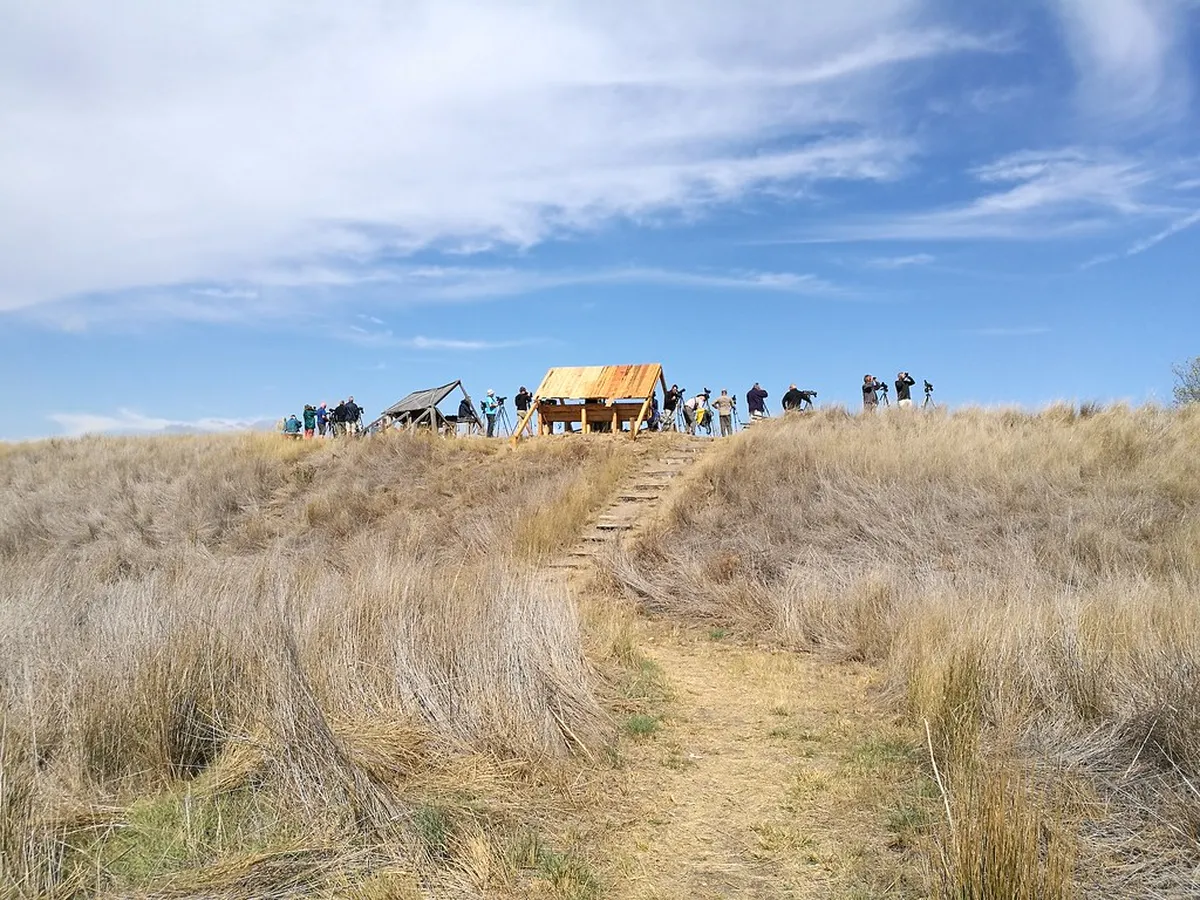
The Nature Protection Center PODA, operated by the Bulgarian Society for the Protection of Birds (BSPB), is the main visitor hub. A two-story observation terrace overlooks the marsh directly, and the center stocks high-quality binoculars and spotting scopes for visitor use. Staff members and volunteer ornithologists are present daily and can identify species on sight, often pointing out birds that a solo visitor would walk past unaware.
One detail no competitor mentions clearly: Poda is also a stamp site for the 100 National Tourism Sites collection book. If you are working through that list, you can get your booklet stamped at the reception desk during any regular opening hour. The center also maintains a small shop selling field guides, pin badges, and nature-themed souvenirs — worth browsing if you are buying gifts for naturalist friends.
The center hosts a permanent exhibition on the wetland ecosystem and mounts rotating temporary displays. Informational brochures are available free of charge in six languages, including English and German. For photographers, the center operates dedicated photo hides — covered shelters built close to nesting colonies — that require advance booking and whose pricing depends on the number of photographers and hours of use.
Lake Atanasovsko: The Pink Lake and Saltworks
Lake Atanasovsko is the most visually striking of the three Burgas lakes. High salinity encourages blooms of the microalgae Dunaliella salina and dense populations of brine shrimp, both of which produce the lake's famous pink-to-red coloration that peaks in summer when evaporation is highest. Narrow-gauge trains still carry harvested salt across the pans, passing directly alongside feeding flamingos and avocets — a juxtaposition of industry and wilderness that no other site in Bulgaria offers.
On the southern shore, the municipality maintains free public mud and lye pools open to all visitors. These shallow basins are filled with the mineral-rich brine that drains from the salt pans, and locals have used them for generations as a natural spa. The pools are free to enter, but you should plan for the experience: wear a dark swimsuit you do not mind staining, bring a 1.5-litre bottle of fresh water for rinsing, and leave valuables in a locked car since there are no changing facilities. The mud washes off easily but the mineral pigment in the lye can mark light fabric permanently.
Exploring the Top 15 Burgas Attractions near the saltworks gives you a sense of how human activity and wildlife have adapted to share the same shoreline. The best time to photograph the pink water is mid-morning in July or August, when the light is full and the algal color is most saturated. Flamingos are present from April through October in varying numbers; the largest flocks typically arrive in late summer.
💡 Good to know: Before you use the free mud and lye pools on Atanasovsko's southern shore, wear a dark swimsuit you don't mind staining and bring a 1.5-litre bottle of fresh water for rinsing. There are no changing facilities and no on-site water, so leave valuables in a locked car — the mineral pigment in the lye can permanently mark light fabric.
Lake Vaya: Bulgaria's Largest Natural Lake
Lake Vaya — also called Lake Burgas — is the largest natural lake in Bulgaria by surface area. This shallow freshwater body stretches along the western edge of the city and serves as critical feeding and nesting habitat for the globally endangered Dalmatian Pelican, as well as large colonies of cormorants, herons, and egrets. Its shallowness means that nutrient levels are high, sustaining rich fish stocks that in turn support the bird populations.
Fishing is popular on Lake Vaya but operates under strict seasonal and quota regulations aimed at protecting the pelican's food supply. In the early morning, the lake surface can host thousands of birds feeding simultaneously — a spectacle best observed from the access roads on the western outskirts of Burgas or from any of the informal viewpoints along the lake's eastern shore. No formal visitor infrastructure exists at Lake Vaya itself, so visiting means finding a roadside pull-off and watching patiently.
Future plans include eco-trails and observation platforms along the western shore to make Vaya more accessible. For now, the most practical approach is to incorporate a lakeside stop into a longer loop that takes in Atanasovsko to the north and Poda to the south. The contrast between Vaya's open freshwater expanse and the pink industrial pans of Atanasovsko makes the circuit rewarding even for non-birders.
Lake Mandrensko and the Poda Conservation Center
Lake Mandrensko was historically a brackish lagoon connected to the sea. Hydrological engineering in the mid-twentieth century transformed it into a large freshwater reservoir, which now serves as a municipal water source for Burgas. That transition dramatically changed the local ecology — the fresh water supports different aquatic vegetation, fish species, and wading birds than the original brackish environment would have. Today Mandra functions as a massive feeding ground for birds nesting at the adjacent Poda site.
The canal connecting Mandra to the Black Sea is the geographic anchor of the whole complex. The Poda Nature Conservation Centre sits directly at this canal crossing, which is why Poda's one-square-kilometer footprint hosts such an extraordinary concentration of species: it sits at the convergence point of freshwater, saltwater, and open sea. You can see ruins of ancient fortifications near the canal that once guarded this maritime entrance, adding a layer of historical texture to what might otherwise feel like a purely ecological site.
The observation tower at the Poda center gives a panoramic view of the entire system. From the upper deck you can simultaneously see the industrial port, the open Black Sea, the green marsh of Poda, the blue surface of Mandra, and on clear days the dunes and peninsulas that stretch south toward Sozopol. That view alone justifies the entrance fee for visitors who are not primarily interested in birds.
Birdwatching on the Via Pontica Migration Path
The Via Pontica is Europe's second largest bird migration flyway, running along the entire Black Sea coastline from Ukraine to Turkey. Every spring and autumn, millions of White Storks, Great White Pelicans, raptors, waders, and passerines funnel through Burgas on their intercontinental journeys. The city's position — where the coastline narrows and the lakes provide reliable food and rest — makes it one of the best migration watchpoints on the continent.
Knowing which month to visit makes a significant difference to what you will see. In winter (December–February), the focus shifts to the globally endangered Dalmatian Pelican, Pygmy Cormorant, Tundra Swan, White-headed Duck, and all three European swan species — all regular visitors to the ice-free Poda marsh. Spring (March–April) brings the first stork and pelican movement northward, plus arriving spoonbills and glossy ibises establishing the mixed colony. Summer (May–July) is nesting season: the mixed colony of Eurasian Spoonbill, Glossy Ibis, Pygmy Cormorant, Night Heron, Squacco Heron, and Little and Great Egret is active at Poda — the only such mixed colony on the Bulgarian Black Sea coast. Autumn (August–September) delivers the most dramatic spectacle: peak stork and raptor migration, with skies above the saltworks occasionally filled with tens of thousands of birds riding morning thermals before crossing the mountains south.
The BSPB center publishes a live "What can I see now?" update on its website, which is worth checking before your visit to set expectations. For photographers, the sweet spot is late August at first light — the migration volume is high, the low sun angles are favorable, and the thermals that lift soaring birds develop quickly over the warm salt pans.
Visitor Guide: Opening Hours, Fees, and Tours
The Nature Protection Center PODA is open every day of the year, including weekends and Bulgarian public holidays. Hours shift by season: 09:00–19:00 from April through September, and 09:00–17:00 from October through March. Most visitors spend two to three hours at the center and the adjacent trail; a full day is feasible if you plan to use a photo hide.
Adult entrance costs approximately 4 EUR (around 7.82 BGN at current exchange rates). Students and BSPB members pay approximately 2.50 EUR (4.89 BGN). Children under six accompanied by an adult enter free. The entrance fee includes access to the observation terrace, the permanent exhibition, and free informational brochures in six languages. It directly funds the conservation work of the BSPB, which receives no state subsidy and finances operations entirely from visitor fees, merchandise sales, and donations.
💡 Good to know: The center is open every day of the year, but its hours shift seasonally — 09:00–19:00 from April to September and 09:00–17:00 from October to March. If you are collecting stamps for the 100 National Tourism Sites booklet, ask at the reception desk: Poda is an official stamp site, and the staff will mark your book during any regular opening hour.
The "Talk 'n' Tour" guided experience is the most efficient way to learn the site in depth. An expert ornithologist leads a presentation on Poda's history and wildlife inside the center, followed by a terrace tour where they identify active species and explain their behavior. The cost is approximately 10.50 EUR (20.54 BGN) per group. Binoculars and spotting scopes are available for rent at the reception desk for visitors who do not carry their own equipment — a useful option if you are traveling light. Photo hides must be booked in advance; pricing varies by number of photographers and session length, so contact the center by email at poda@bspb.org before arriving.
- Opening hours (April–September): 09:00–19:00 daily
- Opening hours (October–March): 09:00–17:00 daily
- Adult entrance: ~4 EUR / 7.82 BGN
- Students and BSPB members: ~2.50 EUR / 4.89 BGN
- Children under 6: free with accompanying adult
- Talk 'n' Tour guided experience: ~10.50 EUR / 20.54 BGN per group
- Photo hide rental: price on request, advance booking required
- Contact: poda@bspb.org | +359 56 500560
What to Pack for the Burgas Wetlands
The wetland environment at Poda and around the saltworks presents specific conditions that differ from a beach or city visit. Mosquitoes are active from May through September, especially near the Poda marsh at dawn and dusk — a quality DEET-based repellent is not optional. Sun exposure is intense on the open salt pans, where there is no shade: bring high-SPF sunscreen, a wide-brim hat, and UV-blocking sunglasses. The terrain includes compacted gravel paths at Poda and softer mud around the public pools at Atanasovsko, so closed-toe shoes with grip are far more comfortable than sandals.
For birdwatching, binoculars with at least 8x magnification are useful, though the center loans scopes if you do not have your own. Photographers targeting the mixed colony should bring a lens of at least 400mm; the birds at the photo hides can be closer than 10 meters, so a 100–400mm zoom is more versatile than a fixed telephoto. A dark or earth-tone outer layer reduces disturbance to nesting birds. For the mud pools at Atanasovsko, bring a dark swimsuit, a towel you are prepared to discard, and 1.5 litres of fresh water for rinsing before getting back in your car.
Logistics: How to Reach Poda and the Lakes
The Poda Nature Conservation Centre sits four kilometres south of Burgas city center on the left side of the main road toward Sozopol and Istanbul. Driving from Burgas heading south, the sequence of landmarks is: pass the Lukoil petrol station on the right, cross the bridge over the canal, pass the Petrol petrol station, then take the exit signed for Malko Tarnovo / Kraymorie. Use the overpass to double back northward toward Burgas; after the bus stop, the parking lot is 160 metres ahead on your left. GPS coordinates for the parking area are 42.4428° N, 27.4696° E.
Public transport is reliable for those without a car. Regional buses departing from the South Bus Station in Burgas toward Sozopol pass the Poda stop; ask the driver to let you off near the center. Check the current timetable at the South Bus Station before you travel, as frequencies vary by season. There is also a dedicated bicycle path running the full distance from Poda to Burgas city center — a detail that competitors consistently overlook. The flat, paved route makes a morning bike ride to the center entirely practical for cyclists staying in the city, combining exercise with a nature visit before the midday heat sets in.
Parking at the Poda center costs a small fee and is accessible for standard vehicles and minibuses. For Lake Atanasovsko's mud pools, parking is available near the southern shore on the side of the main road — no charge, but space is limited in peak summer. Most of the lake sites form a natural loop: drive north to Atanasovsko, then south through the city to Poda, returning via the Sozopol road. The whole circuit, including stops, takes three to four hours comfortably.
Birdwatching by Season: What to See When in 2026
Timing your visit to the Burgas wetlands dramatically changes what you encounter. The four lakes collectively host species year-round, but each season delivers a distinct experience — planning around these windows will make any birding trip far more rewarding.
Spring (March–May) is peak wader and incoming-migrant season. From early March, thousands of White Storks, Eurasian Spoonbills, and Glossy Ibises begin arriving from their African wintering grounds, filling the Poda marsh and Atanasovsko brine pools. April sees the return of Black-winged Stilts, Avocets, and Collared Pratincoles, while late April and May mark the establishment of the mixed nesting colony at Poda — the only one of its kind on the Bulgarian Black Sea coast. Spring is widely regarded as the best overall window for species diversity. Check the BSPB "What can I see now?" live board before travelling to confirm active arrivals.
Summer (June–August) is nesting season at Poda and the peak period for flamingos at Atanasovsko. The shallow brine basins support large numbers of Greater Flamingos from April through to October, with the biggest congregations typically arriving in late July and August as water levels drop and brine shrimp densities peak. Waders are active on the salt pans — Black-winged Stilts, Kentish Plovers, Sandwich Terns, and Little Terns breed here. The photo hides at Poda are in highest demand in June and July when nesting birds are closest to the observation blinds; book several weeks in advance.
Autumn (August–September) delivers the most dramatic spectacle on the entire Via Pontica. The first two weeks of September are exceptional for waders staging on the mudflats; the second half of September and all of October are prime for raptors, with recorded counts of over 36 species of birds of prey funnelling overhead, including Imperial Eagle, Steppe Eagle, Red-footed Falcon, and thousands of Lesser Spotted Eagles riding the morning thermals above the Atanasovsko salt pans. White Stork totals frequently exceed 100,000 birds in a single September day during peak movement. For photographers, dawn on a calm September morning at the southern shore of Atanasovsko is the single best moment of the year.
Winter (December–February) is quieter on sheer species count but exceptional for rarity. Because the salt pans of Atanasovsko and the open water of Poda rarely freeze, they attract waterbirds that have been pushed off frozen inland wetlands across Eastern Europe. Regular winter visitors in 2026 include Dalmatian Pelican (up to 40 individuals), Red-breasted Goose, White-headed Duck, Bewick's Swan, Whooper Swan, Pygmy Cormorant, and Pallas's Gull. Dalmatian Pelicans are globally vulnerable and can be reliably approached at Poda in winter — a fact that draws specialist birders from across Europe specifically for winter visits. The Birdingplaces Poda Reserve profile documents the full winter species list with seasonal notes.
The Four Burgas Lakes Explained
The Burgas wetland system is sometimes described as a single entity, but it actually comprises four distinct water bodies with different characters, ecologies, and visitor experiences. Understanding each one helps you plan which to visit and in what order.
![Nessebar -St. Theodore Church [13th century] in Burgas, Bulgaria](/images/burgas-lakes-poda-protected-area-the-four-burgas-lakes-explained.webp)
| Lake (distance from centre) | Character |
| Atanasovsko (~2 km north) | Hypersaline saltworks; pink salt pans, flamingos, free mud pools |
| Vaya / Lake Burgas (~3–5 km west) | Bulgaria's largest natural lake; freshwater, Dalmatian Pelican feeding ground |
| Mandra / Mandrensko (~5–7 km southwest) | Freshwater reservoir; reedbeds, Purple Herons and Great Bittern |
| Poda Lagoon (~4 km south) | Brackish lagoon; nature center, observation tower, 315 recorded species |
Atanasovsko Lake lies north of Burgas city center, separated from the Black Sea by a narrow sand barrier. It is approximately 5 km long, heavily saline (up to 27.5%), and divided by a sand causeway into northern and southern basins. The active saltworks make this the most industrially distinctive of the four lakes — narrow-gauge trains crossing the pans alongside feeding flamingos are a scene found nowhere else in Bulgaria. Atanasovsko holds 314 confirmed bird species and is a Ramsar-protected site and Natura 2000 zone. The free public mud and lye pools on the southern shore make it the most visited lake for non-birders. Distance from Burgas center: approximately 2 km north. For the full range of things to see nearby, see our Burgas attractions guide.
Lake Vaya (Lake Burgas) sits west of the city and is the largest natural lake in Bulgaria at 27.6 km², up to 9.6 km long and 5 km wide, with a slight salinity of 4–11%. Three rivers feed it fresh water, making it predominantly a freshwater lake despite the coastal setting. Vaya is the primary feeding ground for the Dalmatian Pelican and supports large colonies of Great Cormorant, Grey Heron, and Great Egret along its reed-fringed shores. No formal visitor infrastructure exists at Vaya, but roadside pull-offs along its eastern shore provide good vantage points, especially at first light. Distance from Burgas center: approximately 3–5 km west.
Lake Mandra (Mandrensko) is the southernmost lake and the largest by total surface area at roughly 17 km². Originally a brackish coastal lagoon, it was converted into a freshwater reservoir in the mid-twentieth century and now supplies municipal water to Burgas. Mandra's extensive reedbed margins support nesting Purple Herons and Great Bittern. It forms the western boundary of Poda Protected Area — birds nesting at Poda routinely forage over Mandra's shallows. Distance from Burgas center: approximately 5–7 km southwest.
Poda Lagoon is not a lake in the conventional sense but a 1 km² brackish coastal lagoon tucked at the convergence of Mandra, the Black Sea, and the Sozopol canal. Its tiny footprint belies its record-breaking ornithological density: 315 confirmed species, a figure representing approximately one quarter of all European bird diversity. Managed entirely by the BSPB since 1989, Poda is the only lake in the complex with dedicated visitor infrastructure — a two-storey observation tower, photography hides, guided tours, and a nature center. It is also the most reliably productive site for year-round viewing. Distance from Burgas center: approximately 4 km south. Planning the full natural side of the city? Our outdoor nature in Burgas guide covers all wetland and green-space options in one place.
The four Burgas lakes together cover approximately 95 km² — the largest protected wetland complex on the Bulgarian Black Sea coast and one of the top ten birding destinations in Europe by recorded species density.
Atanasovsko Lake is 2 km from Burgas city center; Poda is 4 km south via the Sozopol road; Lake Vaya is 3–5 km west; Lake Mandra is 5–7 km southwest. The full circuit visiting all four takes 3–4 hours by car.
The Burgas wetland system recorded its 315th bird species at Poda in recent counts — roughly 25% of all European bird species documented in under 1 km².
For detailed photography planning across all four sites, our photography spots in Burgas guide covers the best angles, light windows, and hide-booking details. And if you are deciding how long to stay to fit in the full lakes circuit alongside other Burgas highlights, see our best time to visit Burgas guide for month-by-month conditions.
Pair this with our broader Burgas attractions guide for the full city overview. For related Burgas deep-dives, see our outdoor and nature in Burgas and Best Day Trips from Burgas guides. For deeper coverage of related Burgas spots, see our 10 Best Burgas Beaches and Coastal Planning Tips and Aquae Calidae guides.
Continue planning: Use Top 15 Burgas Attractions and 6 Things to Know Before Visiting Aquae Calidae Burgas to connect this guide with the rest of your Bulgaria itinerary.
Frequently Asked Questions
How do I get to Poda Protected Area from Burgas?
You can reach the Poda center by driving south towards Sozopol or by taking a regional bus from the South Bus Station. The center is located next to a large Lukoil gas station, which serves as a perfect landmark for travelers. This is one of many Best Family-Friendly Activities in 2026 available year-round.
What is the best time of year for birdwatching in Burgas?
The peak migration seasons in spring and autumn offer the highest diversity of species passing through the region. Late August and September are particularly impressive for seeing thousands of storks and pelicans. Winter also brings unique visitors like the Pygmy Cormorant to the ice-free lake waters.
Are there entrance fees for the Poda Nature Center?
Yes, the center charges a small entrance fee which supports the conservation work of the Bulgarian Society for the Protection of Birds. Adults typically pay 5 BGN, with discounts available for students, retirees, and organized groups. This fee includes access to the observation terraces and the permanent exhibition.
Can you swim in the pink lakes of Burgas?
While you cannot swim in the industrial salt pans, there are dedicated public pools for mud and lye baths at Lake Atanasovsko. These pools are shallow and safe for a relaxing soak in the mineral-rich waters. Always remember to rinse off with fresh water after using the natural mud pools.
What bird species can be seen at the Burgas Lakes?
Visitors can spot over 300 different species, including the rare Dalmatian Pelican, European Spoonbill, and Glossy Ibis. The lakes also host large numbers of flamingos, avocets, and various birds of prey during migration. Each season brings a different variety of birds to the diverse wetland habitats.
How many lakes make up the Burgas Lakes complex?
The Burgas Lakes complex comprises four distinct water bodies: Lake Atanasovsko (saline, north of the city), Lake Vaya/Lake Burgas (Bulgaria's largest natural lake, to the west), Lake Mandra/Mandrensko (freshwater reservoir, to the southwest), and Poda Lagoon (brackish, to the south). Together they cover approximately 95 km² and form one of Europe's most important wetland complexes, protected under the Ramsar Convention and Natura 2000.
When is the best time to see flamingos at Atanasovsko Lake?
Greater Flamingos are present at Lake Atanasovsko from April through October, with peak numbers in July and August when lower water levels concentrate brine shrimp — their main food source. The largest flocks gather on the southern brine pans, and early mornings offer the calmest viewing conditions before tourist activity increases on the shoreline paths.
Do I need to book a photo hide at Poda in advance?
Yes, photo hides at the Poda Nature Conservation Centre must be booked in advance as demand from wildlife photographers is high, especially from May to September. Contact the BSPB directly at poda@bspb.org or call +359 56 500560 to check availability and pricing. Hides place you within 10–15 metres of nesting Eurasian Spoonbills, Glossy Ibises, and egrets — a proximity impossible to achieve from the open observation terraces.
Is there a bicycle path to Poda Protected Area from Burgas?
Yes — a dedicated, flat, paved bicycle path connects Poda Protected Area to Burgas city center, covering the full 4 km distance. The route is one of the most practical ways to arrive during summer, combining exercise with a nature visit before the midday heat. Cyclists should allow 20–25 minutes from the center and lock bikes at the Poda parking area before entering the reserve.
Can I visit the Burgas Lakes on a day trip from Sofia?
Yes, the Burgas Lakes are accessible on a long day trip from Sofia, approximately 400 km away (around 4 hours by car or 3.5 hours by fast train). For a rewarding visit, plan to arrive by 09:00 to catch the morning bird activity at Poda and the salt pans, and allow 4–5 hours for the full lakes circuit. Visiting during migration season (March–April or September–October) makes the journey especially worthwhile. See our Things To Do Near Burgas in 2026 guide for combining the lakes with other regional highlights.
The Burgas lakes and Poda protected area offer an unparalleled look at the natural heritage of the Black Sea coast. Whether you are a professional birdwatcher or a casual tourist, these wetlands provide endless opportunities for discovery. Supporting these sites through your visit helps ensure that future generations can enjoy this unique ecological treasure.
Plan your trip today to experience the pink waters and incredible wildlife that make Burgas a top nature destination. Take the time to explore each lake and the dedicated conservation center for a complete understanding of the region. The memories of thousands of birds taking flight will stay with you long after your Bulgarian holiday ends.