Plovdiv Day Trip From Sofia: A Complete 1-Day Guide (2026)
I built this 2026 guide after my third visit to Bulgaria's cultural capital, and the goal is simple: get you on a 7:30 AM bus, through the Roman Theatre before the tour buses arrive, and back into Sofia in time for dinner. A plovdiv day trip from sofia is the most popular excursion in the country for a reason — two hours each way, 7,000 years of layered history at the other end, and a return ticket that costs less than a Sofia cocktail.
This guide covers what most blogs skip: the actual transport price spread between Karat bus and BDZ train, why the Plovdiv bus station's afternoon return window is tighter than people realize, and which museums to skip on Mondays. Plovdiv served as European Capital of Culture in 2019 and the Bishop's Basilica mosaics opened to the public in 2021 — the city is still adding sites worth detouring for. It is an essential addition to any Sofia 3-day itinerary.
Most travelers choose between a DIY trip on Karat or BDZ, an organized small-group bus, or a private car that bundles Bachkovo Monastery and Asen's Fortress. I prefer the DIY bus for flexibility and budget, but a private tour pays for itself the moment you want the monastery add-on. Whatever you pick, hit the Roman Theatre at 10:00 AM — the stone amphitheatre bakes after noon in July and August, and that is when the cruise-ship coaches roll in.
For a visual preview of Plovdiv's highlights before you visit, this walkthrough covers the Roman Theatre, Old Town atmosphere, and the city's best angles:
At a Glance: 1-Day Plovdiv Itinerary
This quick overview helps you visualize the day before diving into the logistics. Start early — the 7:30 AM Karat bus puts you in Plovdiv by 9:30 AM, which is exactly when the Old Town museums unlock their doors. The historic centre is compact and walkable, but the Old Town cobblestones are notoriously uneven, so wear shoes you would hike in.
The plan balances the Roman landmarks in the morning with the artsy Kapana district in the afternoon. You will spend the first half of the day among ancient stones and the second half inside colorful 19th-century revival mansions and craft beer courtyards. Ending at Nebet Tepe Visitor Guide at sunset gives you a free panoramic view across all three of Plovdiv's central hills before the evening Karat bus back to Sofia.
Plovdiv is consistently 3–5°C warmer than Sofia in summer because it sits in the Thracian Plain rather than at altitude. The city centre is largely pedestrianized and very safe. Carry 30–40 BGN cash for museum entries, public toilets, and the small kiosks in Kapana that still do not take cards. For a deeper dive once you arrive, our full Best Things to Do in Plovdiv guide covers all major attractions with opening hours and 2026 prices.
- Day 1: Ancient ruins and an artsy quarter
- Morning: Roman Stadium and Roman Theatre (9:30 AM – 12:30 PM)
- Afternoon: Old Town house museums (1:00 PM – 4:00 PM)
- Late afternoon: Kapana craft beer walk (4:00 PM – 6:00 PM)
- Evening: Nebet Tepe sunset, then Karat bus back to Sofia
Step 1: Choose Your Transport from Sofia to Plovdiv
Getting to Plovdiv is straightforward, but the choice between Karat bus, BDZ train, and an organized tour shapes your whole day. The Karat Bus Official Site publishes the most reliable hourly schedule from Sofia Central Bus Station (next door to the train station and Serdika metro). A one-way Karat ticket runs 14–16 BGN (≈ 7–8 EUR) and the trip takes about two hours on the Trakia Highway.
If you prefer rails, Bulgarian Railways (BDZ) offers a slower but scenic ride that takes 2 hours 30 minutes to 3 hours depending on whether you catch a "fast" service. BDZ trains depart Sofia Central Railway Station roughly 6 times daily; one-way tickets cost approximately 8–12 BGN (4–6 EUR) depending on service class. Trains are slightly cheaper than the bus but you cannot book online without registering for a BDZ account, and the carriages are older Soviet-era stock — fine for a one-off, less appealing in winter when heating is patchy.
Driving the Trakia Highway yourself takes about 90 minutes door to door, and a rental gives you the freedom to detour to Bachkovo Monastery or Asen's Fortress on the way back. Parking inside Plovdiv's centre is restricted to paid blue-zone bays. Many visitors skip the logistics entirely with a guided tour from Traventuria or a private car operator.
Sofia to Plovdiv transport at a glance (2026 prices)
- Karat bus — 14–16 BGN (7–8 EUR) one way, ~2 hours, hourly departures from Sofia Central Bus Station. Best for budget DIY travelers.
- BDZ train — 8–12 BGN (4–6 EUR) one way, 2.5–3 hours, ~6 daily departures from Sofia Central Railway Station. Best for rail fans and slow travel.
- Self-drive — 90 minutes via the A1 Trakia Highway, ~25 BGN (13 EUR) one way in fuel for a small car, plus toll vignette. Best for combining Plovdiv with Bachkovo Monastery and Asen's Fortress.
- Small-group day tour — 60–90 EUR per person, includes guided walking tour and Sofia hotel pickup. Best for first-time visitors who want context.
- Private day tour — 250–410 EUR per car (1–7 people), Sofia pickup, often bundles Bachkovo and Asen's Fortress. Best for families and groups of three or more.
One thing competitors gloss over: Karat's afternoon return bank is thinner than the morning. After roughly 19:00 the frequency drops sharply and the last reliable Karat bus to Sofia is around 20:00. The last BDZ evening train to Sofia typically departs Plovdiv around 20:30–21:00 (check bdz.bg the day before — timetables adjust seasonally). Buy your return ticket the moment you arrive at Plovdiv's central bus station — Friday and Sunday evenings sell out, and you do not want to discover that at 18:45 with a 90-minute taxi ride as your only fallback.
Step 2: Explore the Plovdiv Old Town and Revival Architecture
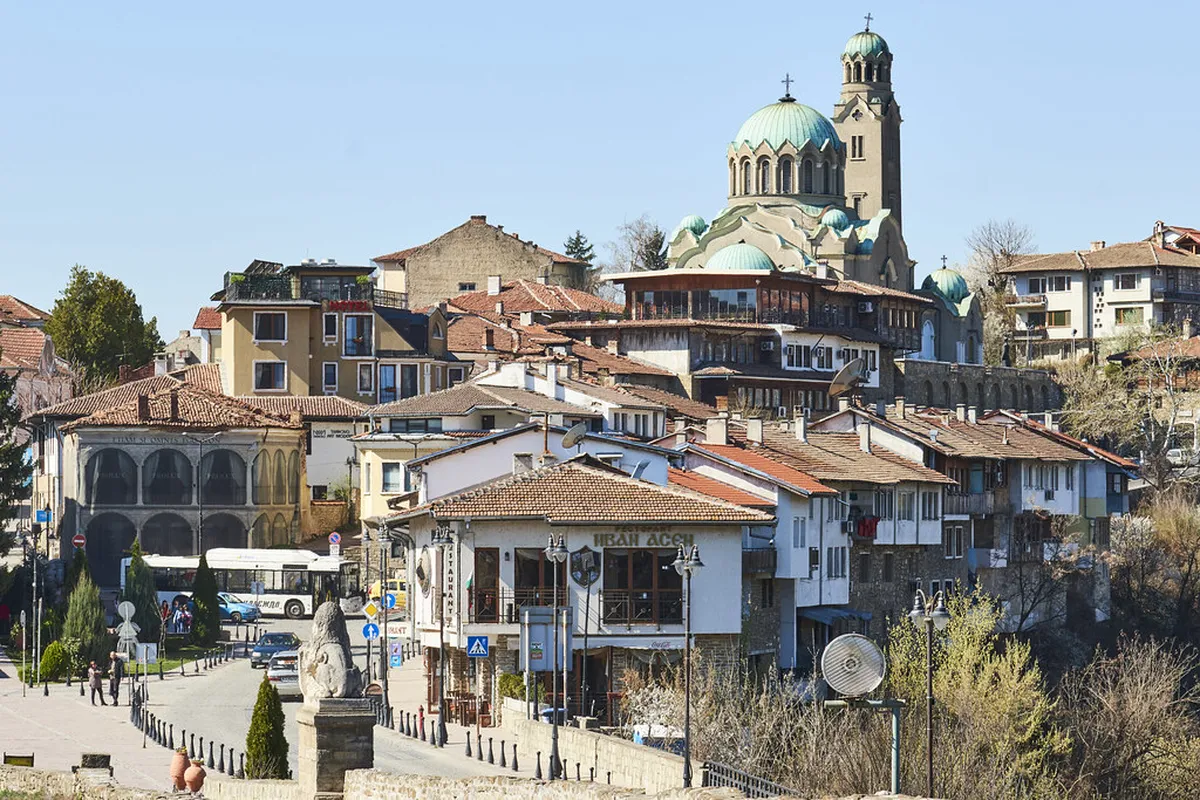
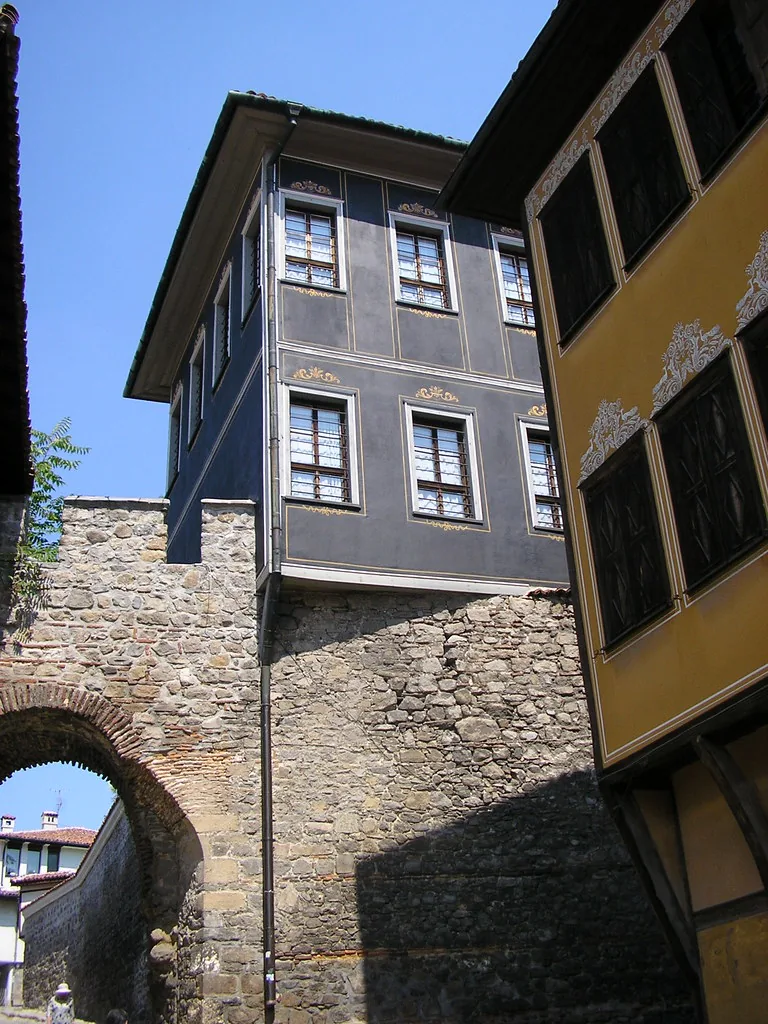
The Old Town is an architectural reserve protecting the Bulgarian National Revival style of the 1800s. The houses feature asymmetrical upper floors, bay windows that overhang the cobblestones, and exterior frescoes painted directly onto plaster. Start at the Hisar Kapia (Eastern Gate) and wind uphill toward the Ethnographic Museum, which sits inside the Kuyumdzhiev House — arguably the most photographed building in Bulgaria.
Most museum houses keep 9:00 AM to 5:30 PM hours and charge 5–7 BGN entry. The Hindliyan House Visitor Guide, Balabanov House, and Nedkovich House each show a different angle on Revival-era life: merchant family, art collector, mayor. If you only have time for one, make it Hindliyan — its preserved wall paintings, Damascus-tile bathroom, and Damascus-rose carpets are unmatched in Bulgaria.
You will pass small galleries, antique shops, and rose-oil sellers tucked into 19th-century doorways. Authentic Bulgarian souvenirs here are rose oil, Troyan ceramic pottery, and hand-stitched Plovdiv embroidery — skip the mass-produced fridge magnets sold near the Roman Theatre. The Old Town's atmosphere is dense and quiet on weekday mornings, then floods with Bulgarian school groups by 11:00 AM. For a focused walking route through all the key Revival landmarks, see our Plovdiv Old Town Guide: Architecture, History, and Travel Tips.
Step 3: Discover Plovdiv's Roman Past
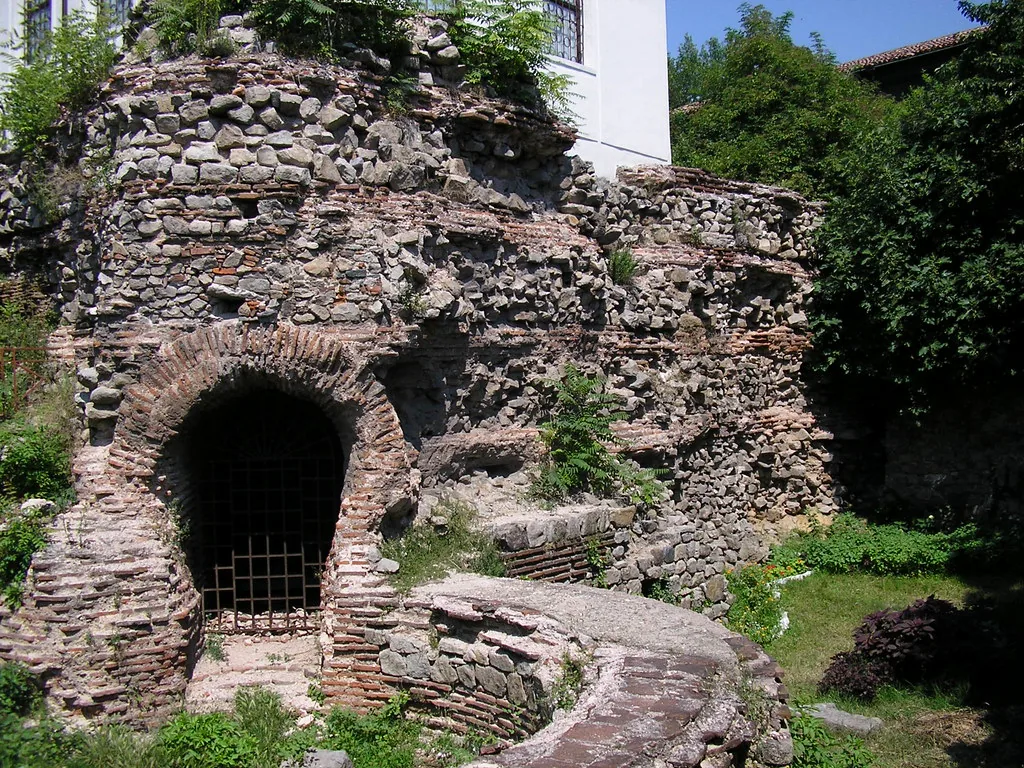
Plovdiv is one of the oldest continuously inhabited cities in the world, with documented Roman history from the 1st century AD when it was known as Philippopolis. The Ancient Theatre of Philippopolis is the standout — a 2nd-century stone amphitheatre carved into the Three Hills' saddle, still used for opera, concerts, and the September Opera Festival. Capacity is around 5,000, entry is 5 BGN, and it is open 9:00 AM to 6:00 PM (last entry 5:30 PM).
Down in the city centre, the Ancient Stadium of Philippopolis runs underneath the main pedestrian street. The northern curve is excavated near Dzhumaya Mosque Visitor Guide and you can walk down to track level for free. The 3D film at the visitor centre (3 BGN) reconstructs the original 240-metre stadium that hosted Pythian Games in the 3rd century. Combined with the Theatre, it is the easiest crash course in Roman provincial urbanism in the Balkans. For a dedicated walk covering both Roman sites plus the Bishop's Basilica, see our Plovdiv Roman Theatre guide.
The Bishop's Basilica, opened to the public in 2021 after a long restoration funded by the America for Bulgaria Foundation, is the city's newest Roman site and the one most first-time visitors miss. Its 2,000 square metres of 4th-century mosaics — including the famous bird mosaic — rival anything at Ravenna. Entry is 10 BGN and the timed-slot system fills up by mid-morning in summer; book online the night before.
Step 4: Experience Kapana District and Modern Street Art
Kapana translates as "The Trap," named for the dense grid of narrow craftsmen's streets that trapped shoppers in the Ottoman era. Today the streets are still named for the trades that once worked them — Abadzhiyska for cloak-makers, Zlatarska for goldsmiths — but the workshops are now galleries, third-wave coffee bars, and craft beer taprooms. It is a 7-minute walk from Dzhumaya Mosque, fully pedestrianized, and the heart of Plovdiv's young creative scene. Our Kapana creative quarter guide maps every gallery and bar worth visiting.
Walk the longest pedestrian street in Europe to get there. Glavnata, Plovdiv's main pedestrian artery, runs uninterrupted for roughly 1.75 km from Tsentralen Square to Sahat Tepe — locally claimed as Europe's longest, and few continental cities can credibly dispute it. Use the Roman Stadium excavation as your halfway marker, then duck right at Dzhumaya Square into Kapana to break out of the souvenir corridor.
For coffee, Monkey House on Hristo Dyukmedzhiev does Plovdiv's most reliable flat white, while Kotka i Mishka (Cat and Mouse) is the city's best craft beer bar — eight rotating Bulgarian taps, often featuring White Stork or Glarus. Skip Hemingway and Bavarian Beer House; they are tour-bus traps. Most Kapana shops open around 10:00 AM but the district only really lights up after 17:00 when locals come down for vermouth on the cobblestones.
Step 5: Follow Our 1-Day Plovdiv Day Trip From Sofia
This schedule is built for travelers who want the maximum out of one day on the ground. Catch the 7:30 AM Karat from Sofia Central Bus Station; you will roll into Plovdiv's bus terminal at 9:30 AM. Walk 12 minutes north along Hristo Botev Boulevard to Tsentralen Square, grab a banitsa and ayran for breakfast at any kiosk, and you are at the southern end of Glavnata by 10:00 AM.
Walk Glavnata north and stop at the Roman Stadium excavation at 10:15 AM (10 minutes). Continue to Dzhumaya Mosque, then climb into the Old Town. Hindliyan House at 10:45, Ethnographic Museum exterior at 11:30, Roman Theatre by 12:00 PM — exactly when the morning shadow still falls across the lower seats and the day's first cruise coaches have not yet arrived. Lunch in the Old Town (Hebros or Pavaj are both reliable) by 13:30.
Afternoon: Bishop's Basilica at 14:30 (book the timed slot the night before), then descend into Kapana by 16:00. Coffee at Monkey House, browse the galleries on Abadzhiyska, then the steep 8-minute climb up to Nebet Tepe for a free panoramic sunset. From the hilltop, the walk back down to the bus station is 25 minutes — comfortable for a 19:00 or 20:00 Karat bus that puts you back in Sofia by 22:00.
- Day 1: A journey through seven thousand years
- 07:30 — Karat bus from Sofia Central Bus Station
- 09:30 — Arrive Plovdiv, walk to centre
- 10:00–12:30 — Roman Stadium, Old Town, Roman Theatre
- 12:30–14:30 — Lunch in Old Town
- 14:30–16:00 — Bishop's Basilica
- 16:00–18:30 — Kapana coffee and street art
- 18:30–19:30 — Nebet Tepe sunset
- 20:00 — Karat bus back to Sofia (arrives 22:00)
If you prefer a structured hour-by-hour itinerary with map directions built in, our dedicated Plovdiv 1-day itinerary walks you through every transition point in detail.
Step 6: Note Essential Practical Tips for Travelers
Planning a plovdiv day trip from sofia rewards a little prep on weather, money, and museum days. July and August routinely push 35°C in the Thracian Plain, and the open Roman Theatre in direct afternoon sun is genuinely uncomfortable — schedule the climb for before noon or after 17:00 and carry water. Spring and late September are the sweet spots for walking weather and unrestricted museum opening.
Pay in Bulgarian Lev where you can. Restaurants and chains accept cards, but Old Town museum desks, Kapana kiosks, and most public toilets (about 1 BGN) are cash-only. ATMs at the bus station charge a 5–6 BGN fee — pull cash in Sofia before you leave. Bulgaria adopted the euro on 1 January 2026, so prices are increasingly dual-tagged in BGN and EUR; the fixed conversion is 1 EUR = 1.95583 BGN.
Tipping is 10 percent for good restaurant service, rounded up at cafes. Younger Plovdiv staff speak fluent English, particularly in Kapana; older Old Town museum guards may switch to Russian or German first. Download an offline map of the Old Town — the cobbled lanes confuse GPS. For getting around within the city once you arrive, our Plovdiv Transportation guide covers taxis, trams, and city bus routes.
What to Avoid on a Plovdiv Day Trip
A handful of avoidable mistakes turn a great day trip into a stressful one. The single biggest one is travelling on a Monday: the Ethnographic Museum, the Regional Archaeological Museum, several Old Town house museums, and the Bishop's Basilica all close on Mondays or operate reduced hours. Tuesday through Sunday is the safe window. If your only option is a Monday, build the day around the Roman Theatre, Roman Stadium, Kapana, and Nebet Tepe — all of which stay open or are free outdoor sites.
Avoid the midday Roman Theatre in July and August. The amphitheatre faces south, the stone seats radiate heat, and there is zero shade on the cavea by 13:00. The same goes for Nebet Tepe — it is a beautiful sunset spot, but a brutal climb in 35°C afternoon sun. Re-shuffle your schedule so the open-air Roman sites get the morning and the air-conditioned house museums get the post-lunch slot.
Skip the restaurants directly facing the Roman Theatre. They charge a 30–40 percent tourist premium for mediocre Bulgarian fare. Walk five minutes downhill to Hebros, Pavaj, or any Kapana kitchen for the same money's worth in food at honest local prices. And do not assume your card will work everywhere — see Step 6 for cash etiquette.
DIY vs. Tour: Budget Breakdown for One Day
The economics of a Plovdiv day trip favour DIY for solo travelers and couples, organised tours for groups of three or more, and private cars for anyone who wants Bachkovo and Asen's Fortress on the same day. Here is what each looks like in 2026 prices.
Full DIY (Karat bus + on-foot in Plovdiv): 30 BGN return Karat ticket (15 EUR), 20 BGN combined entries for Roman Theatre, Stadium 3D film, and one Old Town house museum (10 EUR), 10 BGN Bishop's Basilica (5 EUR), 25 BGN lunch and 10 BGN coffee (18 EUR), 5 BGN miscellaneous (3 EUR). Total: roughly 100 BGN or 51 EUR per person.
Small-group day tour from Sofia: 60–90 EUR per person all-inclusive of transport and a 2-hour guided walking tour, with most museum entries paid separately on the ground. Budget another 15–20 EUR per person for entries and lunch. Total: roughly 80–110 EUR per person.
Private car for two with the Bachkovo + Asen add-on: 290 EUR for the car (1–3 people), so 145 EUR per person for two travelers. Add 10 EUR for monastery and fortress entries combined, 20 EUR lunch. Total: roughly 175 EUR per person — but that is the only option that gets you all three sites in a single day.
Step 7: Compare Plovdiv with Other Sofia Day Trips
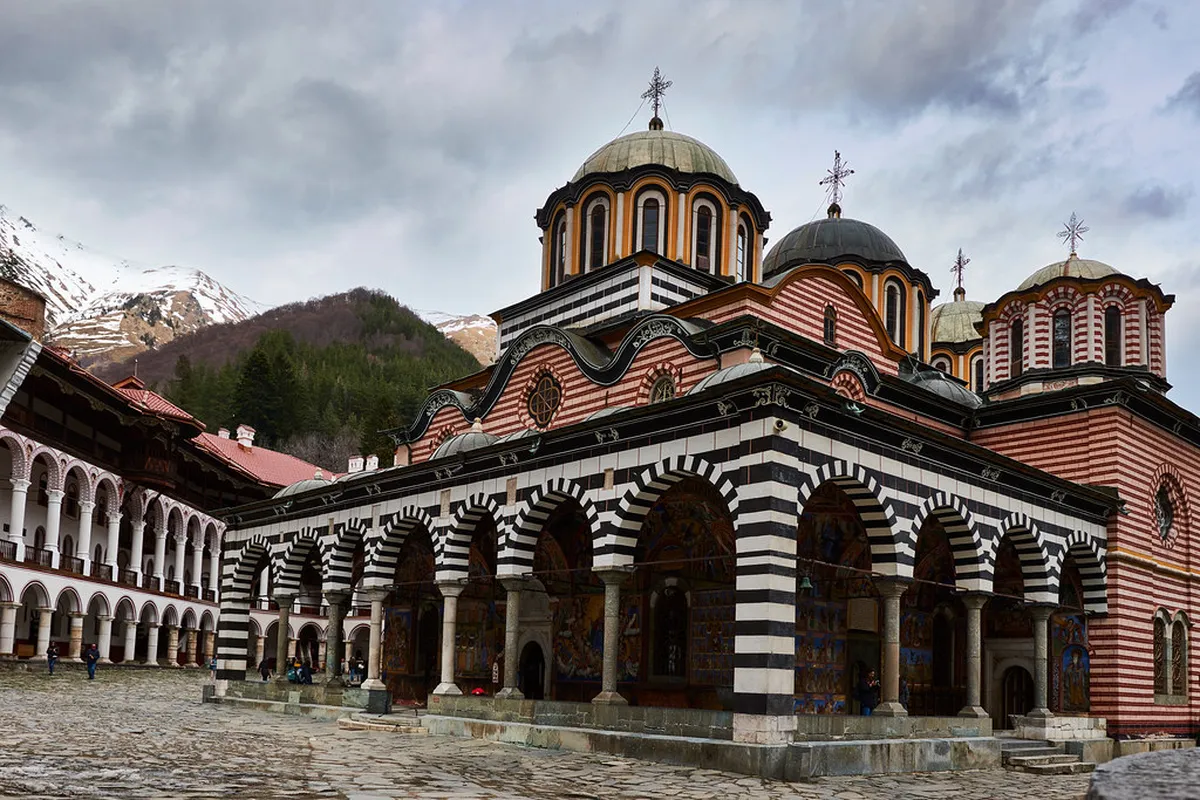
Plovdiv is the most popular day trip from the capital, but it is not the only option and not always the right one. A Rila Monastery day trip trades urban culture for spiritual landscape — UNESCO frescoes, alpine air, and a 2-hour mountain drive each way. Pick Rila over Plovdiv if your trip is short on nature and heavy on city days.
Koprivshtitsa is a smaller, quieter Revival town with the same architectural style as Plovdiv's Old Town but no Roman layer and almost no other tourists on weekdays. It is best for travelers who already know they like Bulgarian Revival houses and want a slow village atmosphere rather than a 7,000-year city. The Belogradchik day trip is the wildcard for landscape lovers — sandstone rock formations and a Roman fortress at the Serbian border, but it is a four-hour drive from Sofia and really wants to be an overnight.
If you only have time for one excursion from Sofia, Plovdiv is the highest-density option: Roman ruins, Revival architecture, modern street art, and the longest pedestrian street in Europe in a single 8-hour window. Public transport is reliable and the DIY budget is the lowest of the three. Plovdiv is also the only one that delivers the Bishop's Basilica mosaics, which are still flying under most international guidebooks' radar.
Book in Advance: Plovdiv Attraction Planning
Plovdiv is generally a turn-up-and-go city, but two things actually need pre-booking. The Bishop's Basilica uses timed entry slots and the morning slots from May to September sell out by the previous evening — book through the official site the night before. The Roman Theatre occasionally closes for opera or concert rehearsals, so check the municipal events calendar a few days ahead, particularly during the September opera festival.
Karat bus tickets sell out on Friday afternoons (Sofia → Plovdiv) and Sunday evenings (Plovdiv → Sofia) when domestic travelers move between cities. Buy your return ticket the moment you arrive in Plovdiv. Train tickets are easier — same-day purchase at the station almost always works, but the BDZ website lets you reserve seats once you make an account.
Booking cheat sheet: Bishop's Basilica timed slot — book 1 day ahead online. Roman Theatre — check events 1 week ahead. Guided walking tours — book 2 days before arrival. Karat bus — buy onward ticket on arrival; Friday and Sunday return slots gone by mid-afternoon. BDZ trains — buy at station 20 minutes before departure. Private car tour with Bachkovo + Asen — book 4–7 days ahead in summer.
Add an Extra Day: Plovdiv Day-Trip Extensions
If you decide to stay overnight, three sites just outside the city turn the day trip into a richer two-day loop. Bachkovo Monastery Visitor Guide is the second-largest in Bulgaria, 30 minutes south of Plovdiv by local bus from the Yug terminal. The monastery's 17th-century frescoes and miracle-working icon of the Virgin Mary draw pilgrims year-round, and the surrounding Rhodope forest has marked trails for a 1–2 hour afternoon hike.
Asen's Fortress sits on a cliff above the Asenitsa River, halfway between Plovdiv and Bachkovo. The medieval Church of the Holy Mother of God at the fortress is one of the most photogenic spots in southern Bulgaria, and the panoramic view from the bell tower stretches into the Rhodopes on a clear day. Combine both sites with Plovdiv on a private car tour for the most efficient two-day loop. Our Day Trips from Plovdiv: Top 10 Escapes (2026 Guide) guide lists all the best options in detail.
Wine lovers should detour into the Thracian Valley wineries scattered around Asenovgrad and Brestovitsa. The region is the heartland of the Mavrud grape, an indigenous Bulgarian red that pairs beautifully with grilled meat and produces the country's most age-worthy bottles. Villa Yustina, Todoroff, and Bratanov are all open for tasting if you contact them at least a day in advance; some require a 30 BGN minimum spend per visitor.
Plovdiv Food and Drink: What to Eat on a Day Trip
Plovdiv's food scene punches well above its size. A full lunch at a mid-range Bulgarian restaurant in the Old Town runs 20–30 BGN per person (10–15 EUR) for a two-course meal with a local beer. Kapana's kitchen bars are slightly cheaper and more varied — expect mezze-style sharing plates, Rhodope lamb, and Shopska salad as constants on every menu. For detailed restaurant reviews and culinary recommendations beyond this guide, see our guide to Plovdiv food and drink for neighborhood-specific dining tips.
For breakfast on arrival, every kiosk near Tsentralen Square sells banitsa (warm cheese pastry, ~2 BGN) and ayran (cold yogurt drink, ~1.5 BGN). This is how Plovdiv locals eat before work and it is both faster and far cheaper than any café. Refuel later at Kapana's third-wave coffee bars — Monkey House charges 4–5 BGN for a flat white, on par with Sofia prices.
If you want to try proper Bulgarian cuisine in a sit-down setting, Hebros and Pavaj are the two Old Town restaurants most cited by locals for quality-to-price consistency. Both serve seasonal Rhodope dishes (rabbit, trout, wild mushrooms in autumn), have English-language menus, and do not charge the Roman Theatre tourist tax. Book a table at Hebros for Friday or Saturday lunch — it fills quickly. For a full breakdown of where to eat and drink, our Plovdiv food and drinks guide has neighbourhood-by-neighbourhood recommendations with 2026 prices.
Is a Day Trip to Plovdiv From Sofia Worth It?
Four hours of total travel time for one day on the ground is a fair question to ask, and my answer in 2026 is yes — provided you start early. Plovdiv genuinely feels different from Sofia: warmer climate, slower pace, denser layering of Roman, Ottoman, and Revival architecture in a compact walkable centre. Sofia is a working capital; Plovdiv is a living museum.
The cost-to-experience ratio is among the best in Europe. A full DIY day costs roughly 51 EUR per person all-in, and you walk away having seen a 2nd-century Roman amphitheatre, a 4th-century basilica, 19th-century Revival houses, and a thriving 21st-century craft district. The same outlay in Western Europe would barely cover a guided walk in one neighborhood.
If you have three or more days in Bulgaria, Plovdiv is the easiest and highest-payoff day trip. If you have one week, consider an overnight to add Bachkovo and Asen's Fortress. If you only have 24 hours in the country, see Sofia, eat well, and save Plovdiv for next time — it deserves more than a hurried run-through. For most travelers though, this is the day trip you will remember from a Bulgaria visit.
Continue planning: Return to our Sofia travel hub to compare this excursion with the capital's landmarks, neighborhoods, and other day-trip options.
Frequently Asked Questions
How do I get from Sofia to Plovdiv by bus?
Karat buses depart Sofia Central Bus Station nearly every hour from around 6:00 AM to 20:00. The journey takes approximately 2 hours on the Trakia Highway and a one-way ticket costs 14–16 BGN (7–8 EUR) in 2026. Buy your return ticket the moment you arrive in Plovdiv — Friday and Sunday evening slots sell out.
How long does the train from Sofia to Plovdiv take?
BDZ trains take 2.5 to 3 hours depending on the service type. There are roughly 6 departures daily from Sofia Central Railway Station. A one-way ticket costs 8–12 BGN (4–6 EUR). Trains are slightly cheaper than the bus but slower and less frequent; buy your ticket at the station on the day of travel.
How much time do you need in Plovdiv?
One full day (8–10 hours on the ground) is enough to see the Roman Theatre, Old Town house museums, Bishop's Basilica, Kapana, and Nebet Tepe. If you want to add Bachkovo Monastery or Asen's Fortress, plan an overnight stay or book a private car tour that combines all three sites in one long day.
What is the last bus back from Plovdiv to Sofia?
The last reliable Karat bus from Plovdiv to Sofia departs around 20:00, arriving in Sofia around 22:00. After 19:00 the schedule thins out considerably. The last BDZ evening train typically leaves Plovdiv around 20:30–21:00 (verify on bdz.bg the day before). Always buy your return ticket on arrival — do not leave it to the last minute on weekends.
Can you visit Rila Monastery and Plovdiv in one day?
This is physically possible but very rushed and requires a private car. You would spend over six hours driving, leaving little time for sightseeing at either site. I recommend dedicating a separate day to each. Plovdiv rewards a full 8-hour stay; Rila Monastery Visitor Guide needs at least 3 hours on the ground to do it justice.
A plovdiv day trip from sofia is an essential experience for anyone visiting Bulgaria for the first time. The city's blend of ancient history and modern creativity provides a perfect snapshot of the nation's identity. I hope this 2026 guide helps you navigate the transport, museum schedule, and budget with confidence. Enjoy the cobblestones, the Roman views from Nebet Tepe, and the vermouth-and-vinyl evenings in Kapana. For more ideas on what to see once you arrive, our Best Things to Do in Plovdiv guide is the natural next read.
Continue planning
Start with our Sofia day-trip guide and compare the practical details with our Seven Rila Lakes route from Sofia.
For connected planning, compare Sofia day-trip guide with Seven Rila Lakes route from Sofia before finalizing your route.