Independent Bulgaria travel guide
Things To Do in Plovdiv This Weekend (2026 Guide)
Best things to do in Plovdiv this weekend in 2026. Friday–Sunday itinerary: Kapana, Old Town, Roman Theatre, Singing Fountains & Bachkovo. Prices, hours & insider tips.
On this page20 sections
Things To Do in Plovdiv This Weekend
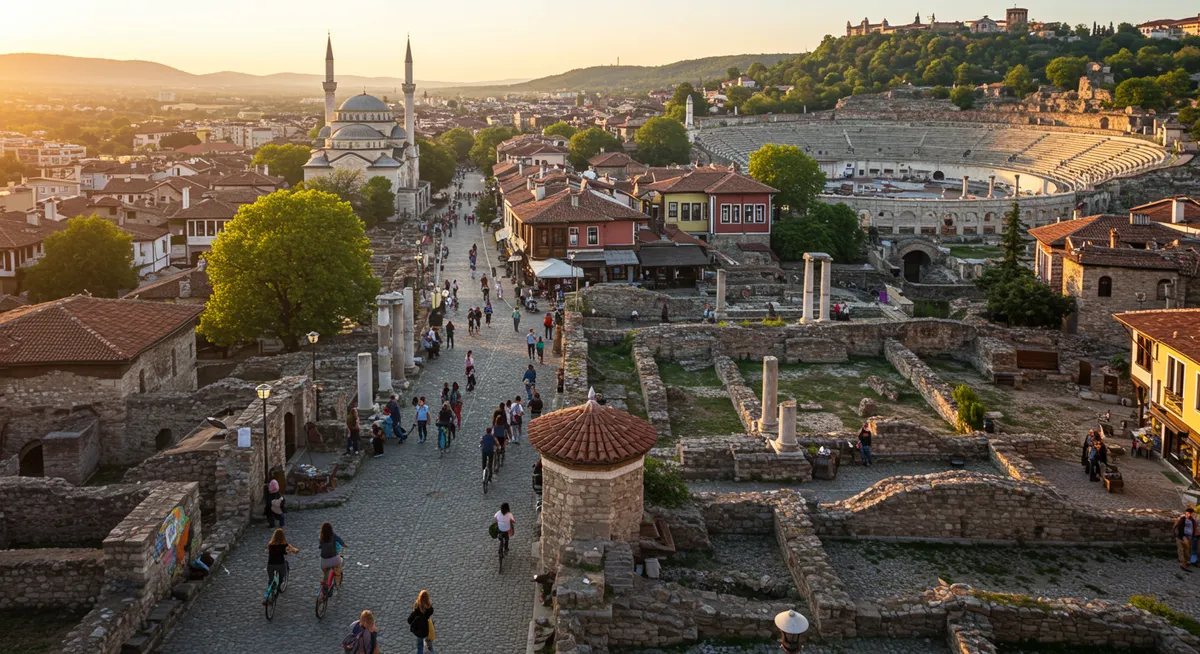
Planning a weekend in Plovdiv? Europe's oldest continuously inhabited city packs a remarkable amount into 48 hours: Roman ruins older than Rome itself, a cobblestone Old Town draped in National Revival mansions, the buzzing Kapana creative quarter, and a free Singing Fountains show on Saturday night. This 2026 guide maps out a Friday-to-Sunday itinerary — day-by-day, with 2026 prices, opening hours, and the weekend-only events that make Plovdiv worth the trip right now. For a broader view of the city's highlights, start with the complete guide to things to do in Plovdiv.
Plovdiv Weekend at a Glance
Here's how the Friday-to-Sunday plan breaks down, with the headline activity and budget benchmark for each day in 2026:
| Friday evening | Arrive & explore Kapana — dinner + drinks ≈200–300 BGN for two |
| Saturday morning | Old Town walk: Ethnographic Museum (6 BGN), house museums (5 BGN each), Nebet Tepe viewpoint (free) |
| Saturday afternoon | Roman Theatre (5 BGN) + Bishop's Basilica (8 BGN combined ticket) |
| Saturday evening | Singing Fountains show, Tsar Simeon Garden (free, Thu–Sun ~21:00 May–Sep) |
| Sunday morning | Bachkovo Monastery day trip (free entry, ~5 BGN bus each way) or Covered Market |
| Total site entry | ≈24 BGN for all recommended paid sites combined |
For a visual walkthrough of the city's top sights before you go, this short guide covers the highlights you'll cram into a weekend:
Friday Evening: Arrive & Dive into Kapana
Friday evening is the perfect entry point into Plovdiv. Drop your bags and head straight to Kapana (meaning "The Trap" — once you're in, you don't want to leave), the city's designated creative quarter wedged between the central pedestrian zone and the Old Town. By 19:00 the narrow lanes fill with locals, and the weekend energy is palpable.
Where to eat: Kapana is dense with independent restaurants. Standout picks in 2026 include Rahat Tepe for Bulgarian slow-cook lamb (mains 18–28 BGN / 9–14 EUR) and Pavaj for craft beer and Bulgarian tapas. Reservations are recommended on Friday nights — walk-ins can face a 30–45 minute wait.
After dinner: Stroll the Kapana grid. Street murals light up under the bar signs, and weekend nights often feature live acoustic sets spilling out of the smaller venues. Several bars stay open past midnight on Fridays. For a full overview of the quarter, our Kapana creative quarter guide covers every street and venue worth knowing. Those who want to keep going should check out Plovdiv Nightlife Guide 2026 for the late-night spots open until 03:00.
Weekend tip: The Kapana artisan market runs Saturday and Sunday 10:00–18:00. If you see anything you like on Friday evening, note the vendor — many reappear at the weekend stalls.
Saturday: Old Town Walk, Roman Theatre & Singing Fountains
Saturday is the centrepiece day. Give yourself a full day — the Old Town alone can absorb four to five hours if you linger.
Morning: Old Town Walk (09:00–13:00)
Start at Dzhumaya Square (Джумая) anchored by the 14th-century Dzhumaya Mosque and the partially excavated Ancient Stadium of Philippopolis below the pedestrian street. Free to view through the glass panels; a short underground section is open daily 08:00–20:00 at no charge.
Climb the Old Town cobblestones via Saborna Street. The Regional Ethnographic Museum Plovdiv (9 Lautarchik St) opens at 09:00 — entry is 6 BGN (≈3 EUR) adults in 2026. The collection of rose oil production equipment and 19th-century costumes is excellent and rarely crowded before 10:30. The museum building itself — a National Revival merchant's house with a cantilevered upper floor — is a photogenic stop even if you skip the interior.
Continue uphill to Nebet Tepe Visitor Guide, the oldest of Plovdiv's three hills, for a free panoramic view of the entire city. The ruins of the Thracian settlement are sparse but the viewpoint over the rooftops and the Rhodope Mountains on the southern horizon is one of Plovdiv's best. Sunrise and morning light are outstanding here. For more viewpoints, see our roundup of the best views in Plovdiv.
Wander back down through the Old Town via Georgi Benkovski Street — the colourful facades of Balabanov House and Hindliyan House are the most photographed residential buildings in Plovdiv. Both operate as house museums; entry to each is 5 BGN. Our dedicated Plovdiv Old Town Guide: Architecture, History, and Travel Tips maps every house-museum, courtyard, and hidden viewpoint on the three hills.
Afternoon: Roman Theatre & Bishop's Basilica (13:00–17:00)
Lunch in the Old Town — Hebros Restaurant (doubles as a boutique hotel) or any of the mehana-style taverns on Knyaz Tseritelev Street offer traditional Bulgarian fare for 15–25 BGN per person.
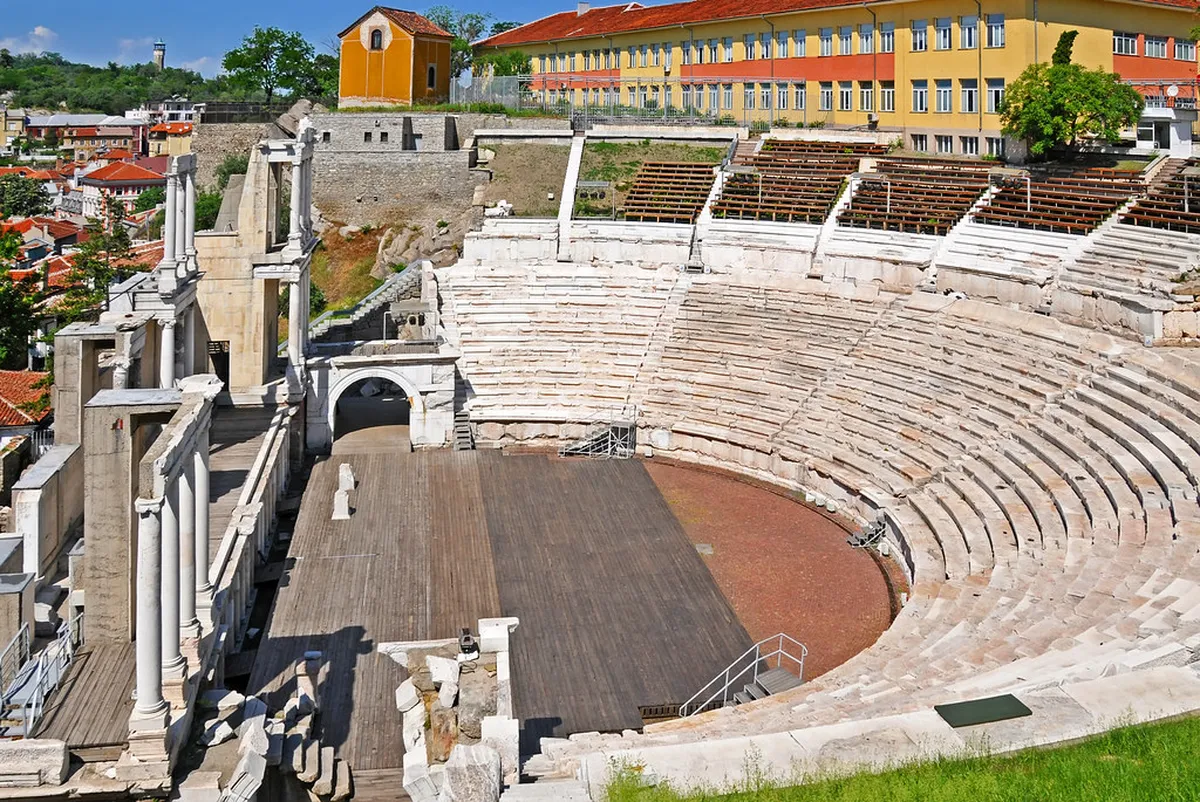
After lunch, the Ancient Roman Theatre is the signature stop. Built in the 1st century AD under Emperor Trajan, it seats 7,000 and remains the best-preserved ancient theatre in Bulgaria. Entry is 5 BGN (≈2.50 EUR), open daily 09:00–18:00 (April–October 2026). The marble seating rows and proscenium stage are fully intact; climb to the upper rows for an unobstructed view over the city.
Weekend bonus: Evening performances at the Roman Theatre are held on Friday and Saturday nights in summer (June–September). Concerts, opera, and theatre productions run 20:30–22:30; tickets 15–40 BGN depending on the show. Check posters at the entrance or the Plovdiv Live Events Facebook page for the current weekend programme.
A five-minute walk downhill brings you to the Bishop's Basilica of Philippopolis, home to some of the finest 4th–6th century AD mosaic floors in Southeast Europe. Entry is included in the combined ticket with the nearby Philippopolis archaeological zone (8 BGN / ≈4 EUR in 2026). Take your time with the mosaic birds and geometric borders — they are extraordinary. Combine this with the Plovdiv Roman Theater for detailed context on both monuments.
Evening: Tsar Simeon Garden & Singing Fountains (20:30–22:30)
Wind down with a stroll through the Tsar Simeon Garden Visitor Guide, Plovdiv's 19th-century botanical garden along the main pedestrian boulevard. The garden's rose beds and sculptures are best in evening light.
The headliner: the Singing Fountains. From May through September 2026, the multimedia water-and-light show runs Thursday–Sunday starting at approximately 21:00. Entry is free. Weekend performances draw big local crowds — arrive by 20:45 and stand along the central path for the best angle. The shows run 25–30 minutes and cycle through pop, folk, and classical music tracks synchronized to water jets and coloured lights.
Finish at one of the open-air café terraces along the boulevard or circle back to Kapana for a late drink.
Sunday: Bachkovo Monastery Morning Day Trip
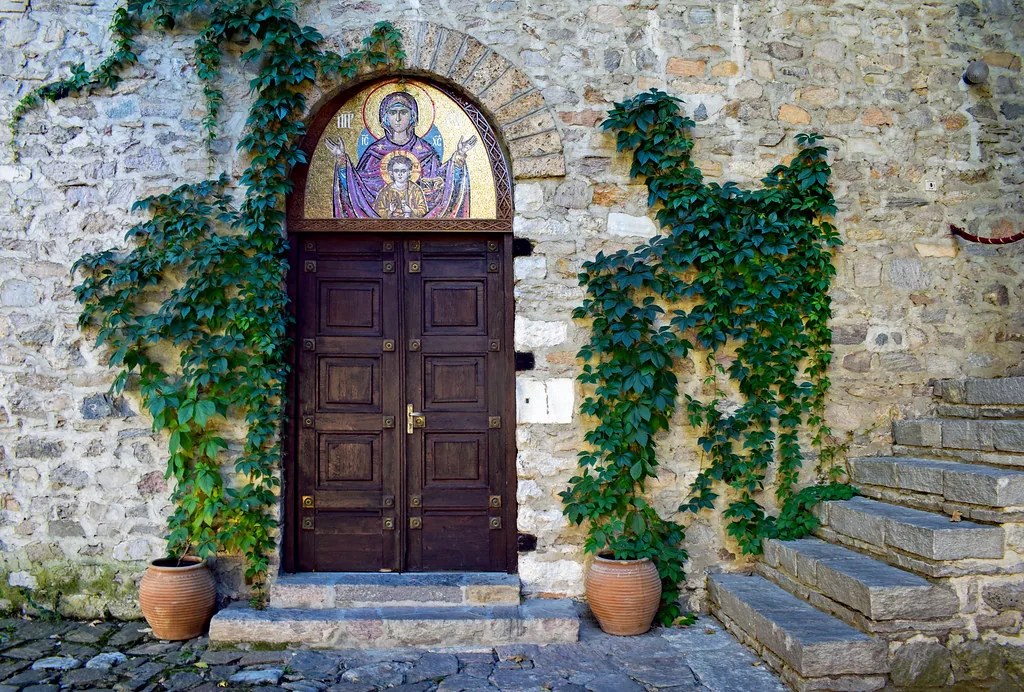
Sunday is ideal for a half-day excursion to Bachkovo Monastery Visitor Guide, 30 km south of Plovdiv in the Rhodope foothills. The monastery was founded in 1083 and is the second largest in Bulgaria after Rila. Entry to the complex is free; a small donation is customary. The ossuary and the 11th-century refectory frescoes — some of the oldest surviving monastic frescoes in Bulgaria — are the highlights.
Getting there (2026): Bus from Plovdiv's Yug (South) bus station, departures roughly every 30–60 minutes, journey ~50 minutes, fare 5 BGN each way. Taxis cost 35–45 BGN one way. Train connections via Bulgarian State Railways are also available for longer regional trips. By car: take Route 86 south through Asenovgrad — 35 minutes. The nearby Asen's Fortress (2 km before Bachkovo) is worth a 45-minute stop: medieval walls perched on a cliff above the Asenitsa River gorge, entry 4 BGN. More itinerary options combining these sites are in the Day Trips from Plovdiv: Top 10 Escapes (2026 Guide) guide.
💡 Good to know: Take an early bus from Yug (South) station — by mid-morning the Bachkovo Monastery courtyard fills with weekend pilgrims and coach groups. Catching the ~50-minute bus before 09:00 buys you a quiet hour with the ossuary and refectory frescoes, plus time for the Asen's Fortress stop, and still gets you back to Plovdiv for a late brunch. Dress modestly (covered shoulders and knees) for the monastery churches.
Back in Plovdiv by noon: Return to the city for a late Sunday brunch in Kapana — the artisan market is still running until 18:00, making for a relaxed close to the weekend. The Plovdiv food & drinks guide lists the best brunch spots by neighbourhood.
If a monastery excursion doesn't appeal, Sunday morning is also perfect for the Covered Market (Pokritiya Pazar) near the central square, liveliest from 08:00–12:00, for local produce, cheese, and honey.
Things to Do in Plovdiv at Night This Weekend
Plovdiv comes alive after dark, and the weekend is when its nightlife peaks. The action concentrates in two zones. Kapana is the social heart — terrace bars, craft-beer spots like Pavaj, and small live-music venues stay busy past midnight on Friday and Saturday, with several bars running until 03:00 on weekends. The central pedestrian boulevard and Tsar Simeon Garden offer a gentler evening: open-air café terraces stay open late on Saturdays, and the free Singing Fountains show (Thu–Sun, ~21:00 from May to September) is the city's signature after-dark experience.
For a cultured night out, time your visit to a Roman Theatre evening performance — concerts, opera, and theatre run Friday and Saturday nights, 20:30–22:30, June through September (tickets 15–40 BGN). Watching a show in a 1st-century AD amphitheatre is the single most atmospheric thing to do in Plovdiv after dark. For the full late-night picture — clubs, cocktail bars, and where to find live DJ sets — see our dedicated Plovdiv nightlife guide.
Unusual & Offbeat Weekend Picks
If you've already ticked off the headline sights, weekends are the best time to find Plovdiv's quieter, more unusual corners — many of which are only lively on Saturdays and Sundays:
- Saturday flea market on Dzhumaya Square — vintage books, old coins, vinyl, and communist-era memorabilia laid out on the cobbles (spring–autumn mornings). A genuinely local browse the tour groups never see.
- Bishop's Basilica mosaics before the crowds — world-class 4th–6th century floors that see a fraction of the Roman Theatre's visitors. Weekend mornings (10:00–12:00) are near-empty.
- Sunrise on Nebet Tepe — the founding hill of the city is almost deserted at 07:00–09:00 on weekends, with the best golden-hour light over the rooftops and the Rhodopes.
- Kapana's vinyl and retro-poster shops — open weekends for authentic Bulgarian pop-culture souvenirs you won't find in standard gift shops.
- Asen's Fortress detour — pair it with the Bachkovo day trip for a dramatic clifftop medieval ruin most weekend visitors skip entirely.
For the photographers among you, these offbeat spots also feature in our photography spots guide.
Weekend-Only Activities & Recurring Events
Some of Plovdiv's best experiences are weekend-exclusive or significantly better on Saturdays and Sundays:
- Kapana artisan market — Sat–Sun 10:00–18:00, free entry. Handmade ceramics, leather goods, jewellery, and street food vendors cluster in the quarter's central square.
- Singing Fountains — Thu–Sun evenings May–Sep, free. Weekends have extended shows and live warm-up acts on the adjacent stage.
- Flea market, Dzhumaya Square — Saturday mornings (spring–autumn), free. Vintage books, coins, and communist-era memorabilia.
- Roman Theatre evening performances — Fri–Sat nights, June–September. Box office opens 18:00 on event days.
- Sunday walking tours — The Plovdiv Guide Association runs free English-language walking tours departing from the Post Office building (Tzentralna Poshta) every Sunday at 11:00, Apr–Oct. Tips only. Covers Old Town + Kapana in 2 hours.
- Plovdiv Live weekends — Cultural events (gallery openings, outdoor cinema, food festivals) concentrate on weekends; check Plovdiv events calendar before you travel.
For more on Plovdiv's photography hotspots that look best on uncrowded weekend mornings, see the photography spots guide.
Practical Weekend Tips: Getting Around & Costs (2026)
Plovdiv's centre is compact. The Old Town, Kapana, Tsar Simeon Garden, and the main Roman monuments are all within a 20-minute walk of each other. You do not need a car for the Friday evening and Saturday programme.
- Public transport: Trams and trolleybuses cover the wider city; single fare 1.60 BGN (≈0.80 EUR) in 2026. The central zone is easily walkable.
- Taxis: Starting rate ~1.20 BGN/km from licensed firms (Yellow Taxi, OK Taxi). Ride-hailing apps (InDriver) operate in Plovdiv.
- Weekend budget estimate (mid-range, 2 nights): accommodation 80–150 BGN/night in Old Town guesthouses; meals 25–45 BGN/day; entry fees for all recommended sites combined ≈24 BGN total.
- Currency: Bulgaria uses the Bulgarian Lev (BGN). EUR is accepted informally at many tourist businesses; change is given in BGN. ATMs are plentiful downtown.
- Crowding note: Saturday afternoons (13:00–16:00) are the busiest time in the Old Town and at the Roman Theatre. Arrive early or post-16:00 for fewer crowds.
💡 Good to know: Carry some cash. Card payments work in most central restaurants and hotels, but the Roman Theatre, house museums, the Singing Fountains warm-up stalls, and the Bachkovo bus often take BGN cash only — and Sunday walking tours run on tips. Keep ~50–60 BGN in small notes for a weekend of site entries and transport. ATMs are plentiful downtown.
For neighbourhood-by-neighbourhood accommodation advice, see Best Areas to Stay in Plovdiv 2026. If you're planning a longer stay, the Plovdiv 3-day itinerary extends this weekend framework with additional museums and evening experiences.
1. Explore the Ancient Roman Theatre
What is it? The Ancient Roman Theatre in Plovdiv is one of the best-preserved ancient theaters in the world. Built in the 1st century AD during the reign of Emperor Trajan, it was designed to host theatrical performances, gladiatorial games, and public assemblies. Its stunning marble seating and intricate architectural details continue to impress visitors from around the globe.
Why go? The theatre is not only a historical monument but also a living cultural venue, hosting various performances and events throughout the year — particularly on weekend evenings in summer. Imagine sitting in the same seats where ancient Romans once watched plays and spectacles. For a deeper dive into the archaeology and architecture, our dedicated Plovdiv Roman Theater covers everything from construction history to current performance schedules.
Don't miss: The backstage museum showcases artifacts from excavations. Attending an evening performance in such a historic setting — available on Fridays and Saturdays in summer — is the single most memorable weekend experience Plovdiv offers.
Insider tip: Visit during sunset (around 20:00 in summer) for stunning photo opportunities and a magical atmosphere. Entry 5 BGN / ≈2.50 EUR (2026).
2. Wander Through the Old Town of Plovdiv
What is it? The Old Town of Plovdiv is a captivating historical reserve characterized by its cobblestone streets, colourful National Revival mansions, and layered Roman ruins. Nestled on three hills, it blends architectural styles across 2,600 years of continuous habitation.
Why go? The beautifully decorated merchant houses — some now serving as museums — the art galleries, craft shops, and panoramic hill viewpoints make the Old Town the single best half-day in Plovdiv. A full self-guided tour with all house museums takes 3–4 hours. For a structured route, follow the 10 Best Ways to Experience a Plovdiv Walking Tour.
Don't miss: The Ethnographic Museum and Balabanov House. Guided walking tours depart Sunday mornings at 11:00 (free, tips-based) from the central Post Office building.
Travel Tip: Wear comfortable shoes — the cobblestones are uneven. Artisan shops at the hilltop are open Sat–Sun 10:00–19:00.
3. Indulge in Bulgarian Cuisine
What is it? Bulgarian cuisine blends Balkan, Mediterranean, and Ottoman flavours with fresh locally-sourced ingredients. Plovdiv's food scene in 2026 spans traditional mehana taverns, modern Bulgarian gastro restaurants in Kapana, and excellent street food.
Why go? Food is inseparable from the Plovdiv weekend experience. The Plovdiv food & drinks guide covers the best restaurants by neighbourhood and cuisine type, including 2026 price benchmarks.
Don't miss: Shopska salata (tomato, cucumber, pepper with Bulgarian white cheese), banitsa (cheese-and-egg pastry), and kebapche (grilled minced-meat rolls). Saturday morning: visit the Covered Market for local cheeses, honey, and rose jam — the best edible souvenirs from Plovdiv.
Insider tip: Kapana restaurants are busiest Saturday 20:00–22:00. Book ahead or arrive before 19:00 to avoid waits.
4. Visit the Regional Ethnographic Museum
What is it? The Regional Ethnographic Museum in Plovdiv occupies a beautifully preserved 19th-century merchant's house. Its collection covers traditional costumes, agricultural tools, rose oil production, and religious practice across the Plovdiv region. Entry is 6 BGN (≈3 EUR) in 2026.
Why go? The museum provides essential cultural context for understanding the city. The rose oil production exhibit — Bulgaria is the world's largest producer of rose oil — is unique to this museum and takes less than 30 minutes. The building's cantilevered upper floor and painted ceilings are architectural highlights in their own right.
Don't miss: The traditional Bulgarian costumes exhibit on the upper floor, and the view from the museum courtyard over the Old Town rooftops. Open Tue–Sun 09:00–18:00 (2026); closed Mondays.
5. Day Trip to Bachkovo Monastery and Asen's Fortress
What is it? Bachkovo Monastery (founded 1083) is Bulgaria's second-largest monastery, set in the Rhodope foothills 30 km south of Plovdiv. Asen's Fortress, 2 km before the monastery, is a dramatic medieval ruin perched above a river gorge. Together they make the definitive Plovdiv Sunday excursion.
Why go? Escape the city and see a side of Bulgaria most weekend visitors miss. The monastery's 11th-century refectory frescoes and ossuary are outstanding; the fortress cliffside views are spectacular. The Day Trips from Plovdiv: Top 10 Escapes (2026 Guide) guide covers transport options, combined itineraries, and what to eat in Bachkovo village.
Don't miss: The main church icons and the ossuary chapel at Bachkovo; the Church of the Holy Mother of God inside the fortress at Asen. Bring water — the fortress involves a 20-minute uphill walk on loose stone. Entry: Asen's Fortress 4 BGN, Bachkovo Monastery free (donation).
6. Relax in the Tsar Simeon Garden & Watch the Singing Fountains
What is it? The Tsar Simeon Garden is Plovdiv's 19th-century botanical park along the main pedestrian boulevard. Beautiful flowerbeds, sculptures, and café terraces make it the city's favourite evening gathering point. The Singing Fountains — a free multimedia water-and-light show — run at the garden's northern end on Thursday–Sunday evenings from May through September.
Why go? The weekend Singing Fountains show is one of Plovdiv's most beloved free experiences. The 25–30 minute programme syncs coloured jets and cascades to music ranging from Bulgarian folk to pop classics. On weekend evenings there's often a live warm-up act on the adjacent stage. Free; no tickets required. Arrive by 20:45 for a good position.
Don't miss: The rose garden section in spring (May–June 2026); the fountain show schedule (Thu–Sun ~21:00, May–Sep); the café terraces that stay open past midnight on Saturdays.
7. Discover the Kapana Creative Quarter
What is it? Kapana (literally "The Trap") is Plovdiv's officially designated creative district, a compact grid of lanes between the pedestrian centre and the Old Town. Once a craftsmen's quarter, it has been revitalised into Plovdiv's most dynamic neighbourhood: independent restaurants, concept cafés, tattoo studios, vinyl shops, and street-art murals on every corner.
Why go? Kapana is at its best on weekend evenings when the terrace bars fill up and street performers appear. The Saturday–Sunday artisan market (10:00–18:00) brings 30–40 local makers to the central square, selling ceramics, textiles, and handmade food products. Our Kapana guide maps the quarter's best venues street by street.
Don't miss: The large street mural on Nektariev Street; the vinyl and retro-poster shops for authentic Bulgarian pop culture souvenirs; the weekend brunch menus that several Kapana cafés run exclusively on Saturdays and Sundays (09:00–13:00, 12–20 BGN).
Tip: Kapana is free to enter and explore. Budget 200–300 BGN for a Kapana Friday evening (dinner + drinks for two) at a mid-range restaurant with cocktails.
8. Explore the Ancient Stadium of Philippopolis
What is it? The Ancient Stadium of Philippopolis, one of the largest Roman-era stadia in the Balkans, is hidden beneath Plovdiv's main pedestrian street (Knyaz Alexander I). An excavated section with informational panels is visible at street level and in an underground viewing gallery. Originally seating up to 30,000 spectators, it hosted the Pythian Games — a pan-Hellenic athletic festival second only to the Olympics.
Why go? It's free, central, and takes only 20 minutes. The underground viewing gallery is open daily 08:00–20:00. The juxtaposition of 2nd-century Roman marble with the modern shopping boulevard above is uniquely Plovdiv.
Don't miss: Informational plaques detail the 2006–2010 excavation sequence. Visit early morning on Saturday before the pedestrian street gets busy — the light in the underground section is best before 10:00.
Insider tip: Visit during off-peak hours (before 10:00 or after 18:00) to fully appreciate the scale of the excavation without tour groups overhead.
9. See the Bishop's Basilica of Philippopolis
What is it? One of the largest early Christian basilicas discovered in Bulgaria, the Bishop's Basilica features extraordinary mosaic floors from the 4th–6th centuries AD. The geometric and figurative designs — birds, vines, faces — are among the best-preserved in Southeast Europe. Entry is included in the Philippopolis archaeological complex ticket: 8 BGN / ≈4 EUR (2026).
Why go? The mosaics are genuinely world-class and yet see relatively few visitors compared to the Roman Theatre. Weekend morning visits (10:00–12:00) are quiet. Open Tue–Sun 09:00–18:00 (summer 2026).
Don't miss: The detailed bird mosaic panels near the apse; the museum guide booklet (available in English for 3 BGN) that maps all the figurative panels.
Tip: The basilica is a 5-minute walk from the Roman Theatre — combine both in the same afternoon block for maximum efficiency.
10. Hike Nebet Tepe for Sunrise or Sunset Views
What is it? Nebet Tepe is the oldest of Plovdiv's ancient hills (Trimontium), where the city was founded by Thracians over 6,000 years ago. Today it is a free public viewpoint with 360-degree panoramas: Old Town rooftops, the Rhodope Mountains south, and the Plovdiv plain north and east.
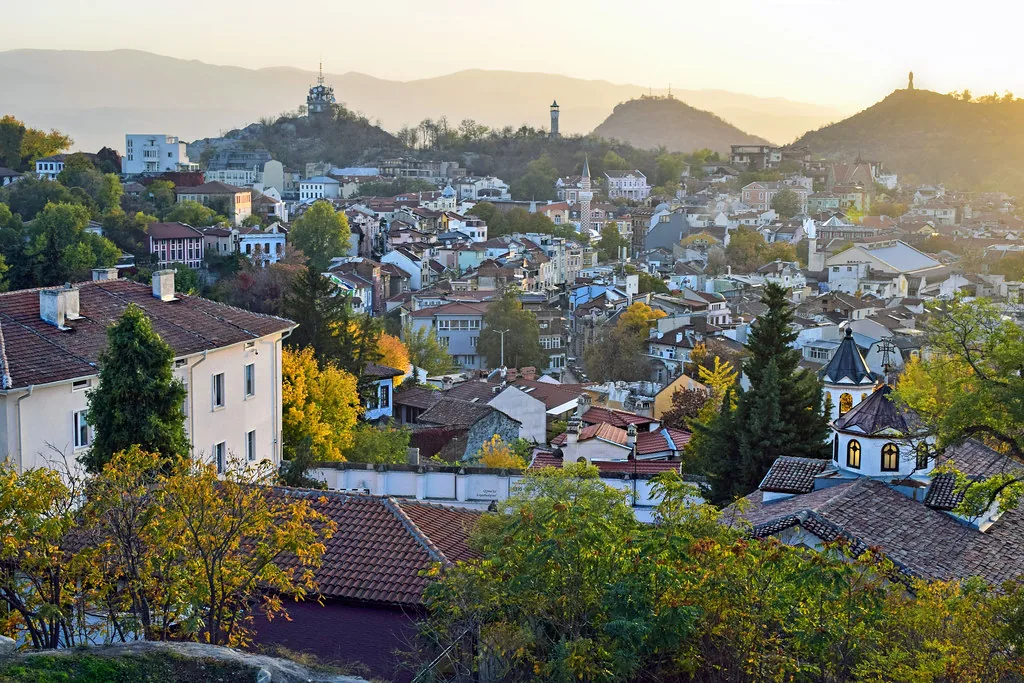
Why go? Weekend mornings (07:00–09:00) the hill is almost empty and the light is exceptional for photography. Sunset visits (19:00–20:30 in summer) draw small crowds of locals and offer the city's finest golden-hour shots. The climb from the Old Town base takes 10–15 minutes on an uneven path. Free, always open. For more of Plovdiv's best vantage points, see the best views in Plovdiv.
Don't miss: The sparse Thracian wall remnants near the summit; the view south towards the Bachkovo valley on a clear day. Bring a jacket — the hilltop is exposed and can be 5°C cooler than the city below in spring and autumn.
Plovdiv rewards the traveller who slows down. Two days — Friday evening through Sunday — is enough to absorb the city's remarkable layering of ancient, Ottoman, and modern Bulgarian culture. Start planning your weekend with the full Best Things to Do in Plovdiv overview, and if you want to extend your stay, the 3-day Plovdiv itinerary picks up exactly where this weekend guide leaves off.
Frequently Asked Questions
What is the best area to explore in Plovdiv on a weekend?
The Old Town (Staria Grad) and the Kapana Creative Quarter are the two must-visit areas on any Plovdiv weekend. The Old Town delivers 2,600 years of layered history and panoramic views from three hills; Kapana is the beating heart of weekend nightlife, street art, and independent cafés. Both are walkable from the city centre.
Is one weekend enough for Plovdiv?
A Friday-to-Sunday visit covers the major highlights comfortably: Old Town, Roman Theatre, Kapana, and either the Singing Fountains show or a Sunday day trip to Bachkovo Monastery (30 km south). Two full days plus a Friday evening is the sweet spot — longer stays reveal more, but the weekend framework hits all the headline experiences.
What are the weekend opening hours for the Roman Theatre in 2026?
The Ancient Roman Theatre is open daily 09:00–18:00 (April–October) and 09:00–17:00 (November–March 2026). Entry is 5 BGN (≈2.50 EUR) for adults. Evening performances are held on Friday and Saturday nights in summer (June–September) — check the box office on-site for the current weekend programme.
When do the Singing Fountains in Plovdiv operate?
The Singing Fountains in Tsar Simeon Garden run Thursday–Sunday from approximately 21:00, May–September 2026. Admission is free. Weekend evenings draw larger crowds; arrive by 20:45 for a good viewing spot along the central path. Shows last 25–30 minutes.
What weekend markets run in Plovdiv?
The Kapana artisan market runs Saturday and Sunday 10:00–18:00 — local makers selling ceramics, jewellery, textiles, and street food. The Covered Market near the centre is liveliest on Saturday mornings (08:00–12:00) for local produce, cheese, and honey. A Saturday flea market on Dzhumaya Square (spring–autumn) offers vintage books, coins, and communist-era collectibles.
Is Plovdiv worth visiting for a weekend?
Yes — Plovdiv is one of Bulgaria's most rewarding weekend breaks. As Europe's oldest continuously inhabited city, it packs Roman ruins older than Rome, a cobblestone Old Town of National Revival mansions, the buzzing Kapana creative quarter, and the free Singing Fountains show into a walkable centre. Most of the headline sights cost 5–8 BGN, total site entry for the whole weekend runs about 24 BGN, and everything sits within a 20-minute walk. A Friday-to-Sunday visit hits every major highlight comfortably.
What is there to do in Plovdiv at night?
Plovdiv's nightlife peaks at the weekend in two zones: the Kapana creative quarter, where terrace bars and live-music spots run past midnight (some until 03:00 on Fri–Sat), and the central boulevard with Tsar Simeon Garden, where café terraces stay open late and the free Singing Fountains show runs Thursday–Sunday from ~21:00 (May–September). For a cultured evening, catch a Roman Theatre performance on a Friday or Saturday night in summer (20:30–22:30, tickets 15–40 BGN).
Filed under
Continue your journey
Related Bulgaria guides
25 Jul 2026
Car Rental in Plovdiv, Bulgaria: 2026 Guide to Pickup, Parking, and Driving Rules
25 Jul 2026
Plovdiv Christmas Market Guide: Kapana Bazaar vs. Central Square (2026)
25 Jul 2026
Plovdiv Parking Guide 2026: Blue Zone, Green Zone, Fees, and Fines
25 Jul 2026
Plovdiv to Bansko Transport: Bus, Train, Transfer and Driving Guide (2026)
16 Jul 2026
7 Things to Know: Alyosha Monument Visitor Guide
16 Jul 2026