10 Plovdiv Museums for First-Time Visitors
Plovdiv is often called the oldest continuously inhabited city in Europe, and its museums make that claim tangible. In a single afternoon you can hold your gaze on 4th-century BC Thracian gold, step across late Roman floor mosaics, and then wander through a 19th-century merchant mansion whose ceilings are still scented with old cedar. No other city in Bulgaria packs this density of genuine heritage into such a walkable area.
This guide covers the 10 best museums in Plovdiv for a 2026 visit. Every entry includes the Bulgarian Cyrillic name to help you match street signs and Google Maps labels — a small detail that saves real time in the Old Town's labyrinthine alleys. Ticket prices are in BGN; at the current rate, 1 BGN is roughly 0.51 EUR.
One planning note before you go: the vast majority of state-run museums and historic houses close on Mondays. Schedule your museum day for Tuesday through Sunday, and read the practical route section at the end of this guide before you lace up your shoes.
Essential Must-See Museums in Plovdiv
Most of Plovdiv's top cultural institutions cluster in two zones: the Old Town district on the three central hills, and the flat pedestrian zone around Saedinenie Square at their base. This geography matters for planning, because moving between zones means a sustained uphill walk on ancient cobblestones. Grouping your visits by elevation saves real energy.
Entry fees across the city are genuinely affordable by European standards. Individual tickets range from 4 BGN to 10 BGN for adults, with discounts for students and seniors at most state-run institutions. Children under 7 enter free almost everywhere. The one major hack — the combined Old Town ticket — is explained in the practical tips section below.
- Regional Archaeological Museum (Регионален археологически музей) — 10 BGN, Tue–Sun 10:00–18:00
- Regional Ethnographic Museum Plovdiv (Регионален етнографски музей) — 6 BGN, Tue–Sun 09:00–18:00
- Regional Natural History Museum (Регионален природонаучен музей) — 10 BGN, daily 09:00–17:00
- Zlatyu Boyadzhiev Gallery (Галерия Златю Бояджиев) — 5 BGN, Tue–Sun 09:00–17:30
- Ultimate Balabanov House Visitor Guide (Балабанова къща) — 5 BGN or combined ticket, Mon–Sun 09:00–18:00
- Hindliyan House Visitor Guide (Къща Хиндлиян) — 5 BGN or combined ticket, daily 09:00–18:00
- Trakart Cultural Center (Културен център Тракарт) — 8 BGN, daily 10:00–18:00
- Guest House Georgi Bojilov - Slona (Къща Георги Божилов – Слона) — 5 BGN, Tue–Sat 09:00–17:30
- Philippopolis Art Center (Арт център Филипополис) — 5 BGN, daily until 19:00
- Museum of History - Unification (Музей на Съединението) — 4 BGN, Mon–Fri 09:00–17:00
Note that the Museum of History – Unification is one of the few institutions open on Mondays, though only on weekdays. Trakart and the Natural History Museum also operate seven days a week, making them useful fallbacks if you arrive in the city at the start of the week.
Regional Archaeological Museum: Home of Thracian Gold
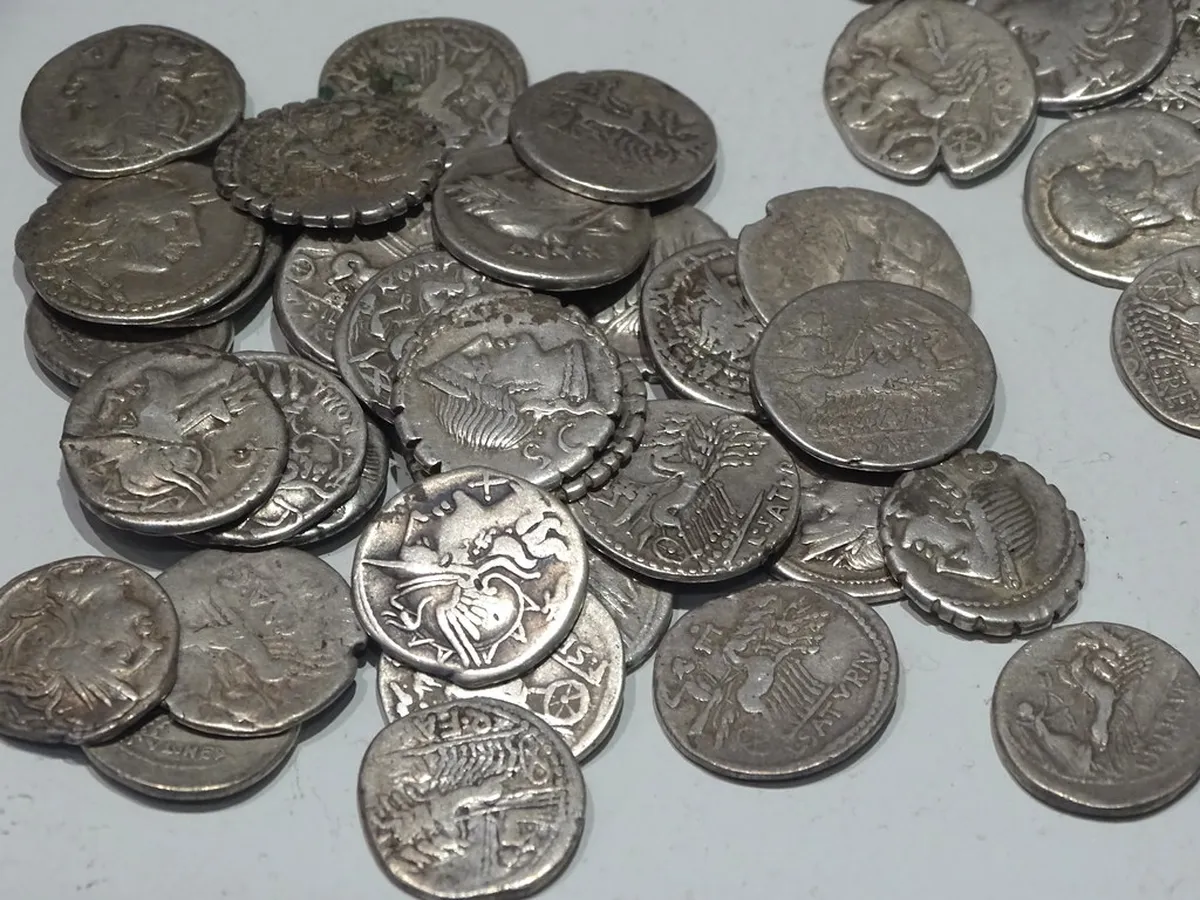
The Regional Archaeological Museum (Регионален археологически музей) is the essential first stop for any serious visitor. Its crown jewel is the Panagyurishte Treasure — nine solid gold vessels used for Thracian ceremonial rituals, dating to the late 4th century BC. According to the Official Archaeological Museum, the rhytons (drinking horns) are decorated with mythological scenes so finely detailed they remain among the finest examples of ancient goldsmithing ever found in the Balkans.
Beyond the gold room, the museum traces Plovdiv's full sequence of civilizations in chronological order. You move from prehistoric pottery and Thracian armor through Roman statues and a synagogue mosaic depicting a menorah, then onward to medieval coins and Ottoman-era artifacts. English labels are thorough enough that you do not need a private guide. The 1880s building itself was constructed to house the Regional Assembly of Eastern Rumelia — an era of political transition that the exhibits contextualize well.
Allow 90 minutes minimum, and visit early in the morning. Tour groups tend to arrive by 11:00, and the gold room becomes congested quickly. The museum sits on Saedinenie Square, directly adjacent to the Roman Stadium, making it a natural starting point for the terrain-efficient one-day route described below.
Regional Ethnographic Museum: Bulgarian Traditions
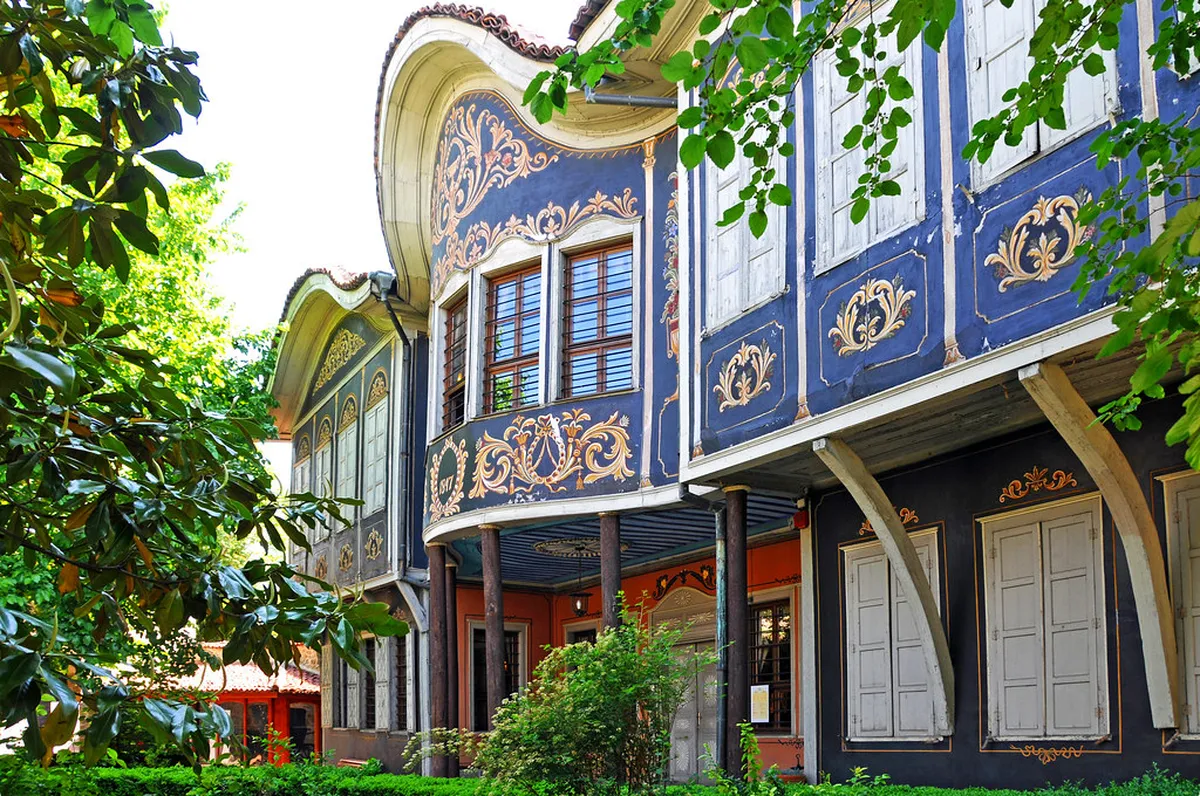
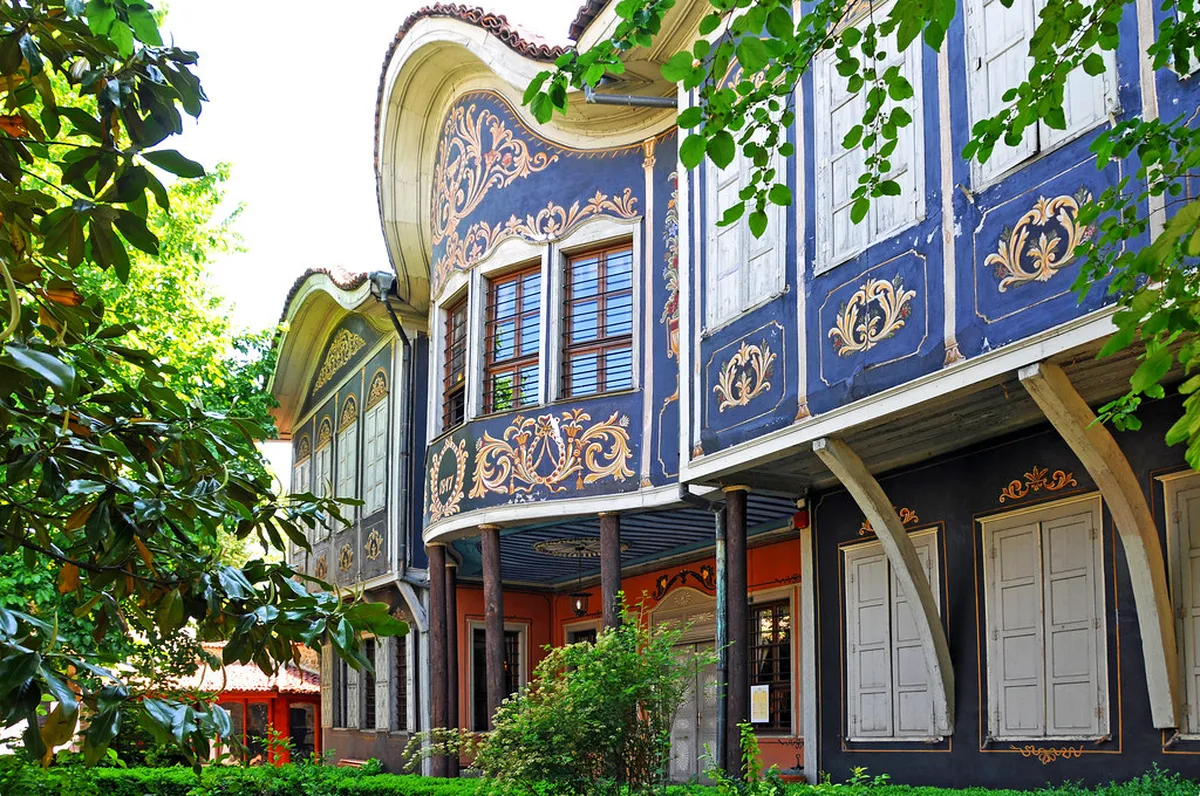
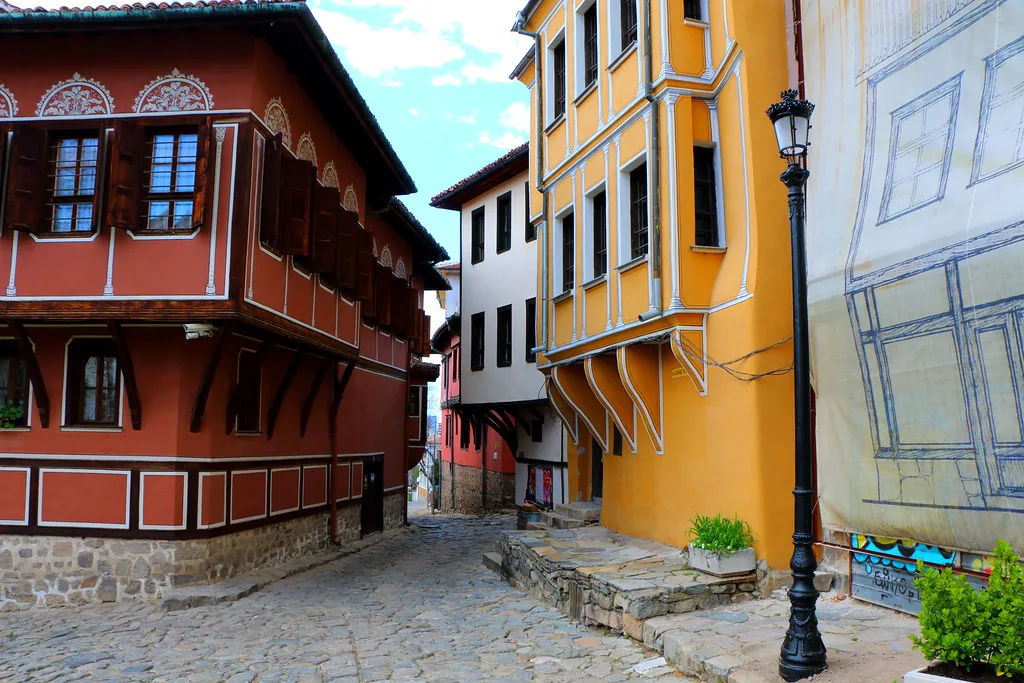
The Regional Ethnographic Museum (Регионален етнографски музей) occupies the Kuyumdzhioglu House, an 1847 mansion whose undulating white-and-yellow facade is one of the most photographed views in the Old Town. The building is a textbook example of Bulgarian Baroque Revival: symmetrical, richly ornamented, and engineered to announce the wealth of the merchant family that commissioned it. The carved wooden ceilings on the upper floor salons represent the peak of what local craftsmen could achieve in that era.
Inside, more than 20,000 objects cover the full range of 19th-century Plovdiv life — traditional woven textiles from across southern Bulgaria, copper smithing tools, agricultural implements, and complete room sets furnished as they would have been for a prosperous family. The folk costumes section is particularly detailed, showing how regional embroidery patterns changed across just a few dozen kilometers of the Rhodope foothills.
The museum garden hosts outdoor concerts and cultural events throughout the summer months. It sits a short walk from the Ancient Theatre, so it fits naturally into a late-morning Old Town loop after the Archaeological Museum. Budget about an hour for the interior, plus extra time if the garden is hosting an event.
Best Art Museums and Galleries in Plovdiv
Plovdiv has a deep tradition of figurative painting, and the Zlatyu Boyadzhiev Gallery (Галерия Златю Бояджиев) is the best single place to understand it. Boyadzhiev painted vivid village scenes and expressive portraits during the mid-20th century. In 1951 he suffered a severe stroke that left his right hand paralyzed, forcing him to relearn his craft with his left hand. The resulting work — looser, more emotionally raw — is on display alongside his earlier precise canvases, and the contrast is striking.
For a broader survey of classical Bulgarian painting, the Philippopolis Art Center (Арт център Филипополис) offers a curated selection housed in a beautifully restored mansion near Nebet Tepe Visitor Guide hill. It stays open until 19:00, later than most state-run venues, and has a terrace restaurant where you can decompress after a full day of museums. The City Art Gallery on the pedestrian street rounds out the picture with rotating contemporary exhibitions.
Many of these galleries are within easy walking distance of the Kapana Creative Quarter, where street murals by professional artists cover entire building facades. Kapana does not charge admission and functions as a living gallery of modern Bulgarian creativity — a useful free complement after a morning of ticketed venues.
Historic House-Museums of the Old Town
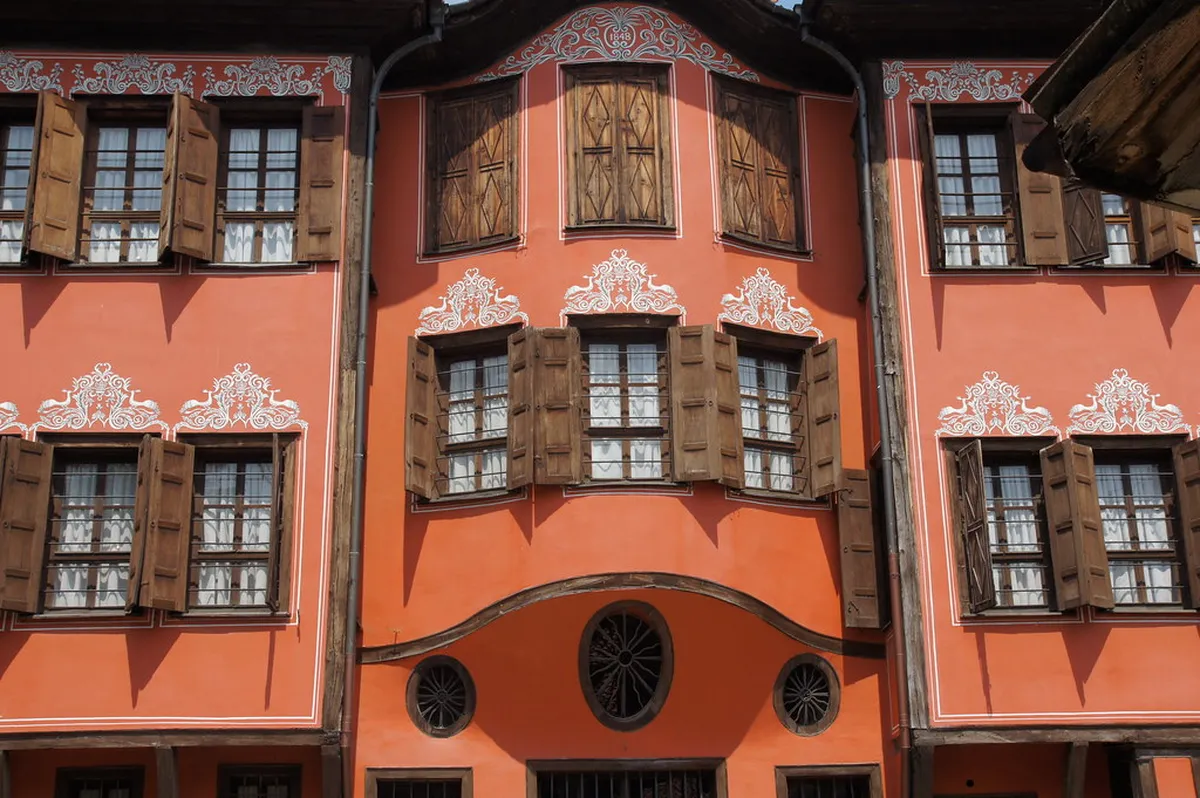
The Old Town's house-museums are the most intimate way to understand 19th-century Plovdiv. Balabanov House (Балабанова къща) and Hindliyan House (Къща Хиндлиян) are the two most prominent examples of the "Plovdiv House" style — buildings with ground-floor workshops, spacious central halls called hayats, and upper floors that dramatically overhang the narrow street below. They sit next to each other on the same lane, allowing you to compare architectural details directly.
Hindliyan House belonged to a wealthy Armenian merchant and is famous for its elaborate wall murals depicting cities the owner visited — Venice, Alexandria, Constantinople — painted by traveling artists in the early 1800s. The house also contains a functional marble indoor fountain and an alafranga (Ottoman-influenced European) salon whose colored glass windows cast a patterned light across the floor in the afternoon. Inside Balabanov House, do not miss the underground wine cellar, which gives a practical sense of how Old Town households managed supplies through long winters.
Most of these houses are managed by the Ancient Plovdiv municipal institute, which also administers the Nedkovich House and Georgi Bojilov's home. Purchasing the combined ticket at any of these entrances is the most cost-efficient way to visit — full details are in the practical tips section below. Each house takes 30 to 45 minutes to tour properly.
Museums Beyond the Old Town: Aviation, Early Christian Mosaics, and More
Most visitors never leave the central hills, but two of Plovdiv's most distinctive collections sit outside the Old Town core — and both rank among the city's top-reviewed museums on travel sites. They are worth a dedicated trip if your stay runs longer than a single day.
The Aviation Museum (Музей на авиацията), often listed online as "Air Museum Plovdiv," is at Krumovo Air Base about 12 km southeast of the city. It is the largest aviation collection in Bulgaria, with dozens of restored aircraft — MiG fighters, transport helicopters, and a passenger-cabin walkthrough — spread across an open-air apron and indoor hangars. It is a clear favourite with families and anyone travelling with aviation-minded teenagers, and it sits well off the standard Old Town circuit, so crowds are light. Getting there means a taxi or a short drive; confirm current opening days on the museum's own site before you set out.
Back in the city centre, the Small Basilica of Philippopolis (Малката базилика) is an early-Christian church from the 5th–6th century AD, conserved under a modern protective shelter. Its floors are paved with exceptionally well-preserved polychrome mosaics — birds, geometric medallions, and a baptistery with a cross-shaped font. It is a quiet, fast stop (20–30 minutes) that pairs naturally with the Roman-era sites and rarely appears on the rushed first-time itinerary, which is exactly why it stays uncrowded.
Plovdiv's expositions are also broader than the single "Museum of History – Unification" listing suggests. The wider Regional Historical Museum runs several themed branches across the city — the Bulgarian Revival exposition in the former Greek school, the Book Printing and Publishing exposition, and the Unification hall on Saedinenie Square. Each occupies a separate historic building, so check which exposition a given address corresponds to before you walk over. According to the Regional Historical Museum – Plovdiv, these expositions are administered as one institution even though they are physically scattered.
💡 Good to know: The Aviation Museum at Krumovo is outside the Old Town and is not reachable on foot — budget for a taxi or rental car, and treat it as a half-day excursion rather than a quick add-on between Old Town houses.
lesser-known place: Guest House Georgi Bojilov - Slona
Among all the city's cultural institutions, the Guest House Georgi Bojilov - Slona (Къща Георги Божилов – Слона) is the one most likely to surprise you. Georgi Bojilov was nicknamed "The Elephant" — Слона in Bulgarian — partly for his imposing build and partly for his legendary stubbornness as an artist. He was a central figure in the Plovdiv school of painting during the 1960s and 1970s, a period when the city's bohemian community produced work that quietly challenged socialist realism's conventions.
The museum preserves his home and studio largely as he left them — personal items, unfinished sketches, finished canvases, and the paraphernalia of a working artist's life scattered across cluttered wooden shelves. The atmosphere is far more relaxed than the state museums: no roped-off sections, no audio-guide pressure, just a quiet house that feels genuinely inhabited. The courtyard is a peaceful retreat and occasionally hosts small gatherings for the local art community.
The house is tucked in a quiet alley of the Old Town well off the main tourist flow. It is open Tuesday through Saturday from 09:00 to 17:30 and costs 5 BGN. It is also included in the combined Old Town ticket — one of the five sites covered. For anyone interested in 20th-century Bulgarian art rather than ancient history, this is the single most worthwhile stop in the city.
Plovdiv's Cultural Legacy: European Capital of Culture
Plovdiv's designation as the 2019 European Capital of Culture was the trigger for a sustained renovation of museum infrastructure across the city. Interactive displays, improved English-language signage, and expanded temporary exhibition spaces were introduced at most major institutions during the preparatory years. The investment is still visible in 2026: the quality of presentation at the Archaeological Museum and the Ethnographic Museum is substantially higher than in comparable Bulgarian cities.
The Kapana district, once a neglected craft quarter near the city center, was transformed during this period into a hub for contemporary art and design. Independent galleries, artisan workshops, and creative studios now operate in the same buildings where cobblers and metalworkers once plied their trade. The name Kapana translates to "The Trap" — fitting, because most visitors who wander in spend considerably more time there than they planned.
Beyond the permanent museums, the European Capital of Culture legacy produced an annual cultural calendar that runs from spring through autumn. Museum courtyards regularly host evening concerts, digital art installations, and theatrical performances. For the most current schedule, the Plovdiv Municipality cultural portal publishes a monthly events calendar that is reliably up to date.
Family-Friendly and Budget-Friendly Museum Options
Traveling with children in a city of ancient ruins and fragile merchant houses requires some planning. The Regional Natural History Museum is the obvious best choice for families: it houses a large aquarium, a live butterfly garden with timed entry slots, and a functioning planetarium. It stands apart from the Old Town institutions in terms of interactive content — exhibits here are designed to engage rather than simply display. It is located near Dondukov Garden, flat ground that avoids the hill-climbing required elsewhere.
For budget travelers, the key saving is the free-day policy at several state-run museums. The Regional Archaeological Museum operates a free entry day on the first Thursday of each month. Trakart Cultural Center occasionally runs similar promotions — check their Facebook page for current schedules, as these are not always listed on the main website. The Museum of History – Unification, at just 4 BGN, is also among the most affordable ticketed institutions in the city.
The most powerful budget tool remains the Plovdiv City Card, available from the tourist information center on the pedestrian street. The card covers free entry to the Ethnographic Museum, Trakart, and several other attractions, plus discounts at local restaurants and on walking tours. It pays for itself if you visit three or more sites in a single day. For a comprehensive breakdown of low-cost options, see our budget-friendly things to do in Plovdiv guide.
The Combined Ticket: What It Covers and Where to Buy It
The combined Old Town ticket (комбиниран билет) is the single most underused saving in Plovdiv's museum scene. For approximately 15 BGN — versus 5 BGN per house individually — it grants access to five of the house-museums managed by the Ancient Plovdiv municipal institute. The five sites covered are: Balabanov House, Hindliyan House, the Kuyumdzhioglu House (which is the Ethnographic Museum's building), Nedkovich House, and the Georgi Bojilov – Slona home. If you plan to visit even three of these five, the combined ticket saves money outright.
You can buy the ticket at the entrance to any of the five participating houses, or at the official Plovdiv Old Town ticket office. The oldplovdiv.bg ticketing page lists the current prices and operating hours. Note that the Ethnographic Museum is a state regional institution rather than a municipal one and may have a separate admission counter even though it occupies the Kuyumdzhioglu House — confirm at the door when you arrive.
One common mistake: visitors assume the Archaeological Museum and Trakart are included in the combined ticket. They are not. Both are managed by different institutions and require individual tickets. Budget for them separately when planning your day.
| Combined Old Town ticket price | ~15 BGN (vs 5 BGN per house) |
| Houses covered | 5 — Balabanov, Hindliyan, Kuyumdzhioglu (Ethnographic), Nedkovich, Georgi Bojilov – Slona |
| Break-even | Visit 3+ of the 5 houses |
| NOT included | Archaeological Museum, Trakart Cultural Center |
| Where to buy | Entrance of any participating house or the official Old Town ticket office |
One-Day Plovdiv Museum Route: Ordered by Terrain
The most common planning mistake in Plovdiv is tackling the Old Town museums in random order, which means you end up climbing and descending the steep cobblestone hills multiple times. The city's cultural sites are distributed across two distinct elevations — a flat central zone and the elevated Old Town — and sequencing your visits correctly cuts physical effort significantly.
Start at the flat zone. Begin at the Archaeological Museum on Saedinenie Square (opens 10:00), then walk 200 meters south to the Trakart Cultural Center in the pedestrian underpass. Both sites are at street level with no hill climbing involved. From Trakart, continue along the pedestrian street, passing the Ancient Stadium visible through the glass floor of Knyaz Alexander I Street. This flat section takes roughly two to two and a half hours.
Then ascend into the Old Town in a single sustained climb rather than zigzagging. Enter through the main gate and work upward: Balabanov House and Hindliyan House sit on the lower slope, the Ethnographic Museum (Kuyumdzhioglu House) is midway up, and the Georgi Bojilov – Slona house is near the upper alleys. Finish at the Nebet Tepe viewpoint, which is the highest point in the Old Town and a natural endpoint before descending to Kapana for the evening. This sequence means you ascend once, tour as you climb, and descend once — rather than the four or five separate hill trips that derail most first-time visitors.
Wear closed-toe shoes with grip. I give the Old Town cobblestones a terrain difficulty rating of 9 out of 10 — strollers and heeled shoes are genuinely impractical on the steeper lanes. For the wider context of the area, see our Plovdiv Roman Theater: History, Tickets, and Visiting Guide.
Plovdiv Museum Practical Tips for 2026
Monday closures affect nearly every state-run institution and historic house in Plovdiv. The exceptions — Trakart, the Natural History Museum, and the Museum of History – Unification (weekdays only) — are useful fallbacks but do not cover the main highlights. If you arrive on a Monday, save that day for Kapana's galleries, the Roman Forum ruins, and the Ancient Theatre, all of which remain open.
💡 Good to know: Visit the Regional Archaeological Museum right at its 10:00 opening — tour groups reliably arrive by 11:00 and the Panagyurishte gold room gets congested fast. And if your trip falls on the first Thursday of the month, the Archaeological Museum waives admission entirely.
Carrying the Bulgarian Cyrillic names for each museum makes navigation meaningfully easier. Google Maps is generally accurate in the Old Town, but some smaller houses are in alleys too narrow for Street View, and local residents will point you in the right direction faster if you can show them the name in Cyrillic. Screenshots work well: Регионален археологически музей (Archaeological Museum), Регионален етнографски музей (Ethnographic Museum), Балабанова къща (Balabanov House), Театър Филипополис (Ancient Theatre).
Most museums open between 09:00 and 10:00 and close by 17:30 or 18:00. The Philippopolis Art Center's later closing time of 19:00 makes it the natural final stop on a full day. Download an offline map before you leave your accommodation — mobile data drops inside some of the thicker-walled Revival houses.
For the wider city context, see our complete Plovdiv guide.
For more Plovdiv reading, see our Plovdiv Roman Theater: History, Tickets, and Visiting Guide and Plovdiv Old Town Guide: Architecture, History, and Travel Tips guides.
Frequently Asked Questions
Is there a combined ticket for Plovdiv museums?
Yes, a combined ticket is available for five major house-museums in the Old Town. You can purchase it at the Balabanov House or Tourist Information Centers for a discounted rate. This is the most cost-effective way to see the historic merchant homes.
Are museums in Plovdiv open on Mondays?
Most state-run and regional museums in Plovdiv are closed on Mondays. Private galleries and some archaeological sites like the Roman Stadium may remain open. Always check the official website of specific institutions before planning a Monday visit.
Which Plovdiv museum has the Thracian gold?
The famous Panagyurishte Gold Treasure is housed in the Regional Archaeological Museum on Saedinenie Square. This world-class collection features nine solid gold vessels from the 4th century BC. It is considered a worth seeing for history enthusiast visiting Bulgaria.
Which is the best museum in Plovdiv?
For first-time visitors, the Regional Archaeological Museum is the single best choice — it holds the Panagyurishte gold treasure and tells the city's full chronological story. For 19th-century architecture and folk culture, the Regional Ethnographic Museum in the Kuyumdzhioglu House is the top pick, while the Aviation Museum at Krumovo is the favourite for families and aviation enthusiasts.
How many museums are there in Plovdiv?
Plovdiv has roughly 15 to 20 museums, galleries, and historic house-museums open to the public, ranging from the Regional Archaeological, Ethnographic, and Natural History museums to the Old Town merchant houses and the Aviation Museum at Krumovo. This guide focuses on the 10 most worthwhile for a typical 2026 visit.
Plovdiv's museum scene offers a remarkable journey through thousands of years of human history in a very compact area. From the glittering Thracian gold to the colorful merchant houses, each stop provides a unique perspective on the city's identity. I hope this guide helps you navigate the cultural treasures of the city with ease and confidence during your 2026 trip.
Remember to wear comfortable shoes, check for Monday closures, and take advantage of the combined ticket hacks. Whether you are a solo traveler or visiting with family, these institutions are the heart of what makes Plovdiv so special. Enjoy your exploration of Bulgaria's most historic city and its incredible cultural heritage.