
Nessebar vs Sozopol: Which Black Sea Town to Visit in 2026
Nessebar or Sozopol? Compare Bulgaria's two most beautiful Black Sea heritage towns — vibe, beaches, history, crowds, and which suits your travel style in 2026.
On this page
Nessebar vs Sozopol: Which Black Sea Heritage Town Should You Visit?
Bulgaria's Black Sea coast hides two extraordinary old towns that punch well above their weight: Nessebar, a UNESCO-listed Byzantine jewel perched on a narrow peninsula, and Sozopol, an older, bohemian Greek-founded harbour that artists and writers have called home for generations. Both sit within an hour of Burgas, both reward curious travellers, and both are easy half-day trips — yet they offer dramatically different experiences.
The short answer: if you want a landmark UNESCO site and can go in the morning to beat the crowds, Nessebar delivers. If you want beaches, culture, a festival, and a town that feels genuinely alive rather than curated for tourism, Sozopol is hard to beat. Read on for the full breakdown.
History and UNESCO Status
Nessebar — ancient Messambria — began as a Thracian settlement before Dorian Greek colonists from Megara arrived in the late 6th century BC. The town accumulated layers of history under Roman, Byzantine, and Ottoman rule, and its old town today is an open-air museum of medieval Byzantine Christianity. Between the 12th and 15th centuries, dozens of churches rose across the peninsula; the ruins of many survive. Popularly called "the town of 40 churches," the accurate description is dozens of medieval church ruins in varying states of preservation. The entire old town peninsula was inscribed as a UNESCO World Heritage Site in 1983, recognised under criteria (iii) and (iv) as outstanding testimony of multilayered civilisations — Thracian, Greek, Roman, Byzantine, and Bulgarian.
Sozopol is actually the older settlement. Founded in 610 BC by Greek colonists from Miletus, it was originally called Apollonia Pontica — named after Apollo, the patron deity of Miletus — making it one of the oldest towns on the western Black Sea coast. The ancient philosopher Anaximander is cited as its founder by classical sources. It was later renamed Sozopolis ("city of salvation") in Late Antiquity. While Sozopol does not carry UNESCO designation, it holds national cultural monument status and is widely regarded as more authentically preserved than its more famous neighbour. Its Archaeological Museum, established in 1961 and listed among Bulgaria's 100 National Tourist Sites, holds the richest collection of ancient Greek vases (7th–3rd century BC) in Bulgaria. In 2010, excavations on the nearby island of Sveti Ivan uncovered an alabaster casket believed to contain relics of Saint John the Baptist — a discovery that drew international attention and remains one of the museum's most significant holdings.
Vibe: Touristy Landmark vs Bohemian Harbour
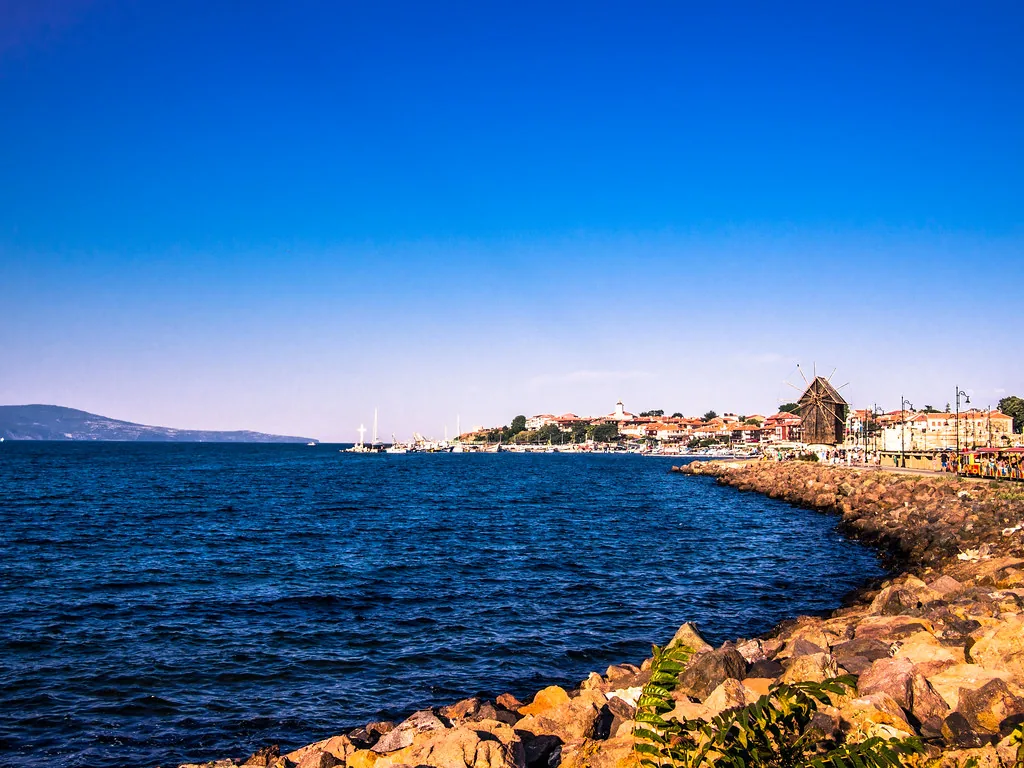
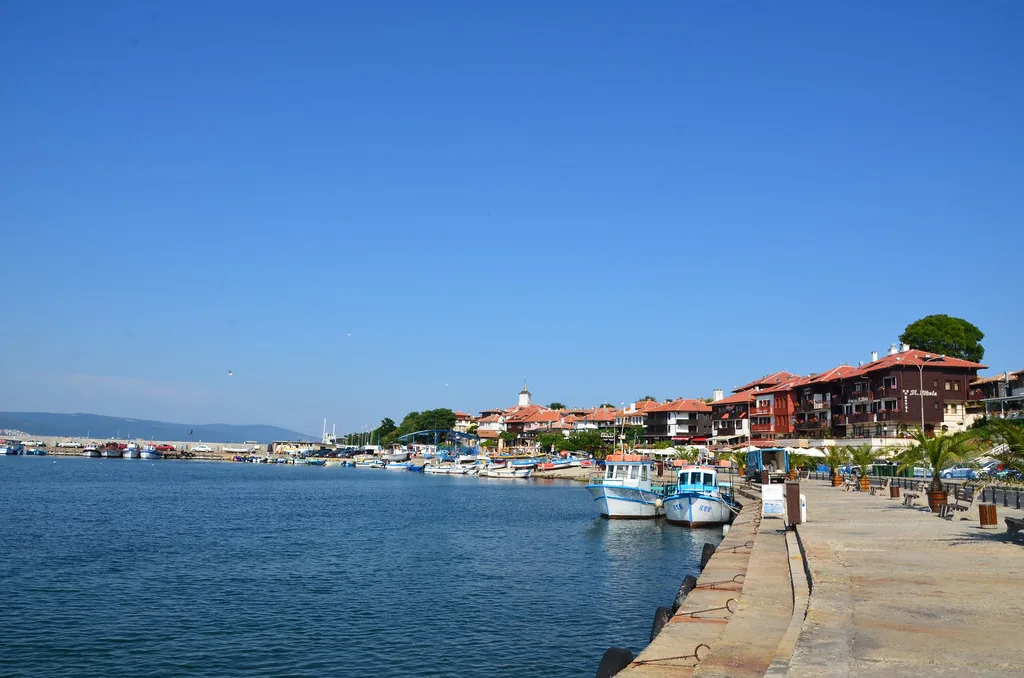
This is where the two towns diverge most sharply. Nessebar's proximity to Sunny Beach — Bulgaria's vast package-holiday megaresort just 5 km up the coast — defines its summer character. On any July or August afternoon, the narrow old-town streets flood with day-trippers bussed in from the resort strip. Ground-floor spaces are almost entirely given over to souvenir kiosks, repetitive stalls, and street barkers. The UNESCO heritage is real and genuinely impressive, but it competes hard with the commercial noise around it. The town works best as a morning visit — arrive before 10:00, walk the church ruins and the sea walls, and leave before the Sunny Beach crowds materialise.
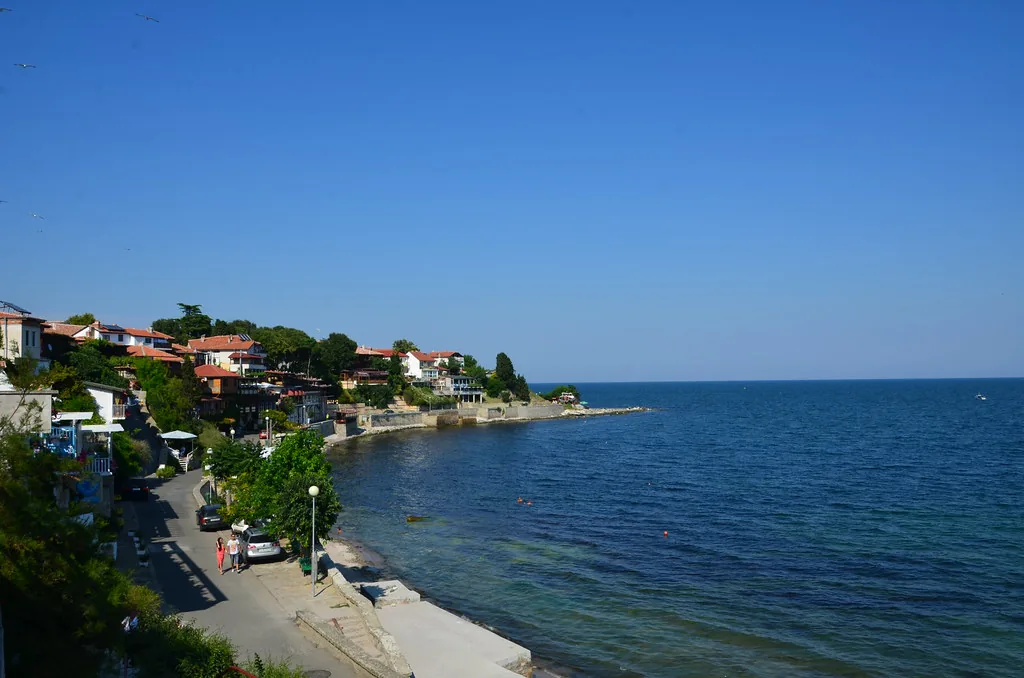
Sozopol has earned a different reputation over decades. It is the acknowledged cultural and bohemian capital of the Bulgarian coast — a long-time favourite of local artists, writers, and photographers. Multiple small art galleries operate in the old town's cobblestone lanes. Bulgarian Renaissance wooden houses with overhanging balconies line the streets of the rocky peninsula. The town attracts tourists, particularly in July and August, but retains a markedly quieter, more lived-in atmosphere. Multi-night stays make sense here in a way they rarely do in Nessebar.
Beaches: Variety vs Volume
Nessebar's old town peninsula itself has small, pebbly foreshore unsuitable for serious swimming. The main beaches — North Beach and South Beach — flank the causeway connecting the peninsula to the mainland. Both carry Blue Flag certification, offer golden sand and calm water, and benefit from proximity to Sunny Beach's enormous beach strip, one of the longest in Bulgaria. If sheer scale of beach infrastructure is what you want, the Nessebar–Sunny Beach corridor delivers it.
Sozopol offers a more interesting and varied beach menu. The compact Central Beach between the old and new town is lively but gets crowded in peak season. Harmanite Beach, south of the new town, is the largest at around 14,280 square metres, with a long sandy stretch, dunes, and water-sports facilities. The best beach in the Sozopol area, by most local accounts, is Kavatsite Beach (also called Smokinya): around 4 km south of the centre, backed by scenic rocky cliffs, with crystal-clear water and a calmer atmosphere. Heading further south toward the Ropotamo Nature Reserve, beaches become progressively wilder and less developed — a genuine draw for those who want to escape the crowds. See our guide to the best Black Sea beaches in Bulgaria for the full regional picture.
Getting There from Burgas
Both towns are easily reached from Burgas as day trips or on a journey to/from the Burgas attractions scene. Nessebar is approximately 35 km from Burgas by road; local buses run roughly 30 times daily and take around 50–75 minutes depending on the service. Sozopol is closer — about 21 km from Burgas — and buses run every 30 minutes or so, taking around 30 minutes. For budget travellers and independent explorers, Sozopol wins on convenience from Burgas.
Travelling between the two towns directly is less straightforward by land: the road route via Burgas is approximately 43 km and takes around an hour and 45 minutes by bus. The more elegant option in high season is the fast ferry operated by Bulgaria Fast Ferry (Seacat One hydrofoil catamaran), which connects Nessebar and Sozopol in roughly 40 minutes. In high season (16 June to 10 September), the service runs daily except Thursdays and Sundays, with three sailings per day. Shoulder season sailings (mid-May to mid-June and mid-September to early October) run Tuesday, Wednesday, Friday, and Saturday. Check current timetables and book at fastferry.bg — ferry prices change seasonally and should be verified directly with the operator before you travel.
If you are combining both towns in one day, take the early bus from Burgas to Nessebar (arrive before the crowds), explore the old town for 2–3 hours, then catch the fast ferry to Sozopol for the afternoon. This sequence works with the morning-first crowd logic and means you arrive in Sozopol with enough time for a beach swim and dinner in the old town.
Crowds and Prices
Nessebar's old town is free to enter and walk around. Individual church and museum entry runs approximately 5 BGN per site for adults and 3 BGN for children (as of 2025 — verify current prices at visitnesebar.org or on arrival, as these change seasonally). A combined ticket covering seven museums and churches costs around 35 BGN for adults. Overnight accommodation inside the old town is limited; most visitors stay in Sunny Beach and day-trip in, keeping Nessebar's in-town overnight market thin.
Sozopol carries a reputation as a more refined choice than the big resort towns, which is reflected in its accommodation market. The old town has a good range of guesthouses and small hotels in both the old and new town. In-season (July–August) it is not cheap by Bulgarian standards, but generally remains far more affordable than comparable coastal destinations in Greece or Croatia. Booking accommodation in advance for the last week of August is strongly advised if you plan to attend the Apollonia Arts Festival.
For families planning a broader Bulgarian beach holiday, our guide to the best family beaches in Bulgaria covers resorts and quieter spots across the coast.
Festivals and Cultural Calendar
Sozopol's standout annual event is the Apollonia Arts Festival, typically held in late August and running into early September (check sozopolis.bg/apollonia for confirmed 2026 dates). The festival brings 70 or more events to the old town — open-air concerts, jazz, theatre, chamber music, film screenings, and visual arts — and is a major draw for cultural travellers along the entire Bulgarian coast. It is the single biggest reason to choose Sozopol over Nessebar for an August visit.
Nessebar has no equivalent major festival draw. Its cultural life is woven into the heritage itself: the Church of St Stephen functions as both an active church and museum, the Church of Christ Pantocrator is a landmark ruin in the town centre, and the Archaeological Museum covers the town's Hellenistic and Byzantine layers including the remains of the Temple of Apollo and Agora. For pure heritage immersion, Nessebar remains the stronger argument. For a living, animated cultural scene, Sozopol wins.
Sozopol does NOT hold UNESCO World Heritage designation — that status belongs to Nessebar alone. Sozopol is a Bulgarian national cultural monument, which is a separate and less internationally recognised category. Do not let marketing materials or social media conflate the two.
Nessebar vs Sozopol: Side-by-Side Comparison
| Factor | Nessebar | Sozopol |
|---|---|---|
| Founded | Late 6th century BC (Dorian Greek) | 610 BC (Milesian Greek) — older |
| UNESCO status | Yes — inscribed 1983 | No (national monument only) |
| Old town style | Medieval Byzantine church ruins, stone lanes | Bulgarian Renaissance wooden houses, cobblestone lanes |
| Vibe | Heritage landmark / tourist circuit | Bohemian, artsy, local favourite |
| Crowds in July–Aug | Very high (Sunny Beach overspill) | Moderate-high — more manageable |
| Best beaches | North Beach & South Beach (Blue Flag); Sunny Beach nearby | Central, Harmanite (largest), Kavatsite (most scenic) |
| Distance from Burgas | ~35 km / 50–75 min bus | ~21 km / ~30 min bus |
| Overnight appeal | Low — mostly day-tripper destination | High — good range of accommodation |
| Festival highlight | None major | Apollonia Arts Festival (late Aug–early Sept) |
| Best for | Half-day history trip, Byzantine architecture | Multi-night stay, beach + culture combo |
| Best time to visit | Morning visit; avoid July–Aug afternoons | May–June, September; August for the festival |
The Verdict: Which Town Is Right for You?
History buffs and first-time visitors to the Bulgarian coast should not skip Nessebar. The UNESCO designation is earned — the concentration of Byzantine church ruins on a compact peninsula is genuinely unlike anything else in Bulgaria, and the Hellenistic and Roman layers add depth. Go in the morning, visit the Archaeological Museum and St Stephen's Church, walk the sea walls, and leave by noon.
Beach-goers wanting variety will prefer Sozopol. The combination of Central Beach, the large Harmanite Beach, and the scenic Kavatsite Beach to the south gives you options at different energy levels within a short ride of each other. Nessebar's beach offer is thinner.
Families will find Sozopol more manageable — the beaches are calmer, the town is less frenetically crowded, and the new town area has the practical infrastructure (supermarkets, playgrounds, water sports) that families need. The family beach guide covers additional options along the coast.
Couples and cultural travellers should choose Sozopol, especially in late August during the Apollonia Arts Festival. The combination of old-town atmosphere, art galleries, seafood restaurants, and live outdoor performances in a manageable-sized town makes for a memorable stay. If you are visiting in May, June, or September — outside peak season — Sozopol in the shoulder months is genuinely one of the most pleasant places on the Bulgarian coast.
The smartest move, if your itinerary allows, is to do both: Nessebar as a morning stop, Sozopol as your base for one or two nights. The fast ferry between them in high season makes combining the two easy and eliminates the need to backtrack through Burgas. Both towns together give you the full picture of what makes Bulgaria's Black Sea coastline distinct from anywhere else in Europe.
Frequently Asked Questions
Is Nessebar or Sozopol better for a day trip?
Nessebar is the easier half-day trip — compact, walkable, and directly connected to Sunny Beach. Arrive before 10:00 to avoid the worst crowds. Sozopol rewards a full day or overnight stay more than a rushed day trip, as its beaches and atmosphere take time to appreciate properly.
Can I visit both Nessebar and Sozopol in one day?
Yes, especially in high season. Take the early bus from Burgas to Nessebar, explore the old town for two to three hours, then catch the fast ferry to Sozopol (roughly 40 minutes). The ferry runs daily (except Thursdays and Sundays) from 16 June to 10 September — check the current timetable at fastferry.bg before travelling.
Does Sozopol have UNESCO World Heritage status like Nessebar?
No. Nessebar was inscribed as a UNESCO World Heritage Site in 1983. Sozopol holds Bulgarian national cultural monument status, which is a separate national designation. It is not a UNESCO site, though it is widely regarded as one of the most authentically preserved old towns on the Bulgarian coast.
Which town has better beaches?
Sozopol offers more variety: Central Beach, the large Harmanite Beach with dunes and water sports, and the scenic Kavatsite Beach with clear water and a cliff backdrop around 4 km south of town. Nessebar's North and South beaches are Blue Flag certified but the town's main draw is its heritage, not its beaches — Sunny Beach's enormous strip is just 5 km away if raw beach volume is the priority.
When is the best time to visit Sozopol?
May, June, and September are the sweet spots — warm enough to swim, without the peak summer crowds. August is worth considering if you want to experience the Apollonia Arts Festival (late August to early September), which brings concerts, jazz, theatre, and open-air events to the old town. Check sozopolis.bg/apollonia for the confirmed 2026 programme and dates.
Nessebar and Sozopol are complementary rather than competing. The UNESCO-listed Byzantine ensemble at Nessebar is a bucket-list heritage site — one of the most layered and historically significant old towns in southeastern Europe. Sozopol is the place you want to actually stay in: quieter, more beautiful on a human scale, with better beaches and a cultural life that feels organic rather than performed. Given that both are within an hour of Burgas and connectable by ferry in high season, the best approach is usually not to choose — visit Nessebar in the morning and let Sozopol be your base.
For more on the broader coast, see our guides to the best Black Sea beaches in Bulgaria and things to do in Burgas, which sits at the centre of the region and makes an excellent base for exploring both towns and the surrounding nature reserves.