
Things To Do in Sofia, Bulgaria (2026 Guide)
Complete 2026 guide to things to do in Sofia, Bulgaria: top attractions, prices in BGN and EUR, opening hours, day trips to Rila and Plovdiv, food, nightlife, and traveler FAQs.
On this page
Things To Do in Sofia, Bulgaria: The Complete 2026 Guide
TL;DR: Sofia is a 2,000-year-old capital where Roman ruins (free, 24/7 at the Serdica Complex) sit beside golden-domed Orthodox cathedrals, Soviet-era monuments, and the wooded Vitosha Mountain. Plan 2–3 days for the city itself, then add a day trip to the Rila Monastery (UNESCO, 120 km south) or to Plovdiv (2-hour bus, 14–16 BGN / €7–8). Most museums charge 5–18 BGN (€2.50–9), the metro is 1.60 BGN (€0.82) per ride, and a comfortable daily budget for 2026 runs 70–100 EUR per person.
Planning a trip to Sofia in 2026? Bulgaria’s capital is one of Europe’s most underrated city breaks: a place where you can stand on a 4th-century Roman street inside a metro station, climb a glacial cirque on the same afternoon, and finish the day with shopska salad and a glass of Mavrud wine for under 25 BGN. This guide consolidates everything we know about things to do in Sofia — from the iconic Alexander Nevsky Cathedral and the UNESCO-listed Boyana Church to lesser-known stops like the Red Flat communist apartment museum, the Earth and Man crystal collection, and the Pionerska chairlift up to the Seven Rila Lakes. We cover prices in both BGN and EUR for 2026, exact opening hours, transport from Sofia Airport, and the full cluster of supporting deep-dives so you can plan with confidence.
Whether you have one day, a long weekend, or a full week, treat this as the canonical hub. Each section links out to a focused guide — a 1-day itinerary, a 3-day itinerary, the museum-by-museum breakdown, the airport-to-city transport guide, and many more. Use the table of contents below to jump to what you need.
1. Top Landmarks: The Sofia Highlights You Cannot Skip
Alexander Nevsky Cathedral — the golden-domed icon
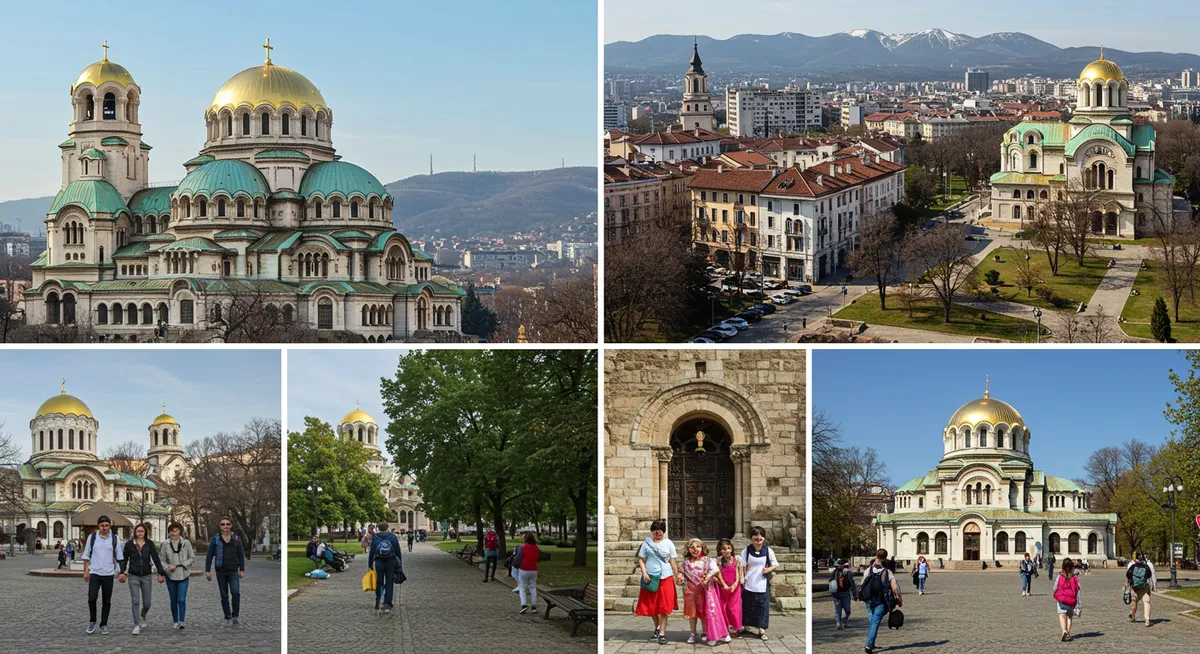
The Alexander Nevsky Cathedral is Sofia’s defining skyline image: a Neo-Byzantine basilica capped by gilded domes that hold up to 10,000 worshippers. Built between 1882 and 1912, it commemorates the roughly 200,000 Russian, Romanian, Bulgarian, and Finnish soldiers who died in the 1877–78 Russo-Turkish War that liberated Bulgaria from five centuries of Ottoman rule. Entry to the main nave is free; access to the crypt museum — one of Europe’s largest collections of Orthodox icons, with works dating back to the 9th century — costs 10 BGN (€5.10) and runs Tuesday–Sunday, 10:00–17:30. The crypt entrance is the small, easily-missed door on the cathedral’s left exterior.
Saint Sofia Church and the Serdica Necropolis
Just steps from Alexander Nevsky stands the 6th-century Saint Sofia Church — the building that gave the city its name. Below it sits one of the most atmospheric stops in town: glass walkways pass directly over 4th-century Roman tombs and a remarkable surviving floor mosaic. Underground entrance is 6 BGN (€3.10), open daily 10:00–17:30. The crypt stays noticeably cooler than street level, which makes it a welcome stop on the 35°C summer days that have become normal in Sofia.
The Ancient Serdica Complex — Rome under the metro
Discovered during 2010–2012 metro excavations, the Ancient Serdica Complex is an open-air archaeological zone integrated directly into Serdika Metro Station. You can walk on excavated 2nd-century Roman streets, see a residential domus, and view an early Christian basilica — all without paying admission, and the outdoor sections are accessible 24/7. This is one of the highest-value budget-friendly things to do in Sofia and a frequent first stop on the city’s free walking tour.
The Boyana Church — UNESCO frescoes from 1259
Tucked at the foot of Vitosha Mountain about 8 km southwest of the centre, the small Boyana Church holds frescoes from 1259 that art historians regard as a proto-Renaissance masterpiece — painted nearly 80 years before Giotto. Entry is 10 BGN (€5.10), and visits are limited to 10-minute slots in groups of eight to protect the pigments. Take bus 64 or 107, or pair it with the National Museum of History (12 BGN / €6.10) which sits in the same Boyana neighborhood.
Other essential landmarks
Round out your Sofia landmarks list with the Rotunda of Saint George — the city’s oldest preserved building, a 4th-century red-brick gem hidden inside the courtyard between the Presidency and the Sheraton Sofia. The interior holds three layers of medieval frescoes (10th, 11th, and 14th century) and is free to enter when religious services are not in progress; standard hours are 08:00–18:00. The Russian Church of Saint Nicholas the Miracle-Worker, built 1907–1914 in pure Muscovite style, is unmissable for its five gold-and-emerald onion domes — entry is free, and the small crypt below holds the relics of Archbishop Seraphim, a popular pilgrimage spot. The Monument to the Soviet Army (1954) sits in the park of the same name; the larger 1300 Years of Bulgaria monument was rebuilt in 2024 after the original’s controversial demolition. The Largo — the Stalinist ensemble of the former Party House (1953–55), Council of Ministers, and the old Royal Palace — frames Independence Square and is best photographed at sunset from the southern Vitosha Boulevard end.
Two more often-overlooked stops: Banya Bashi Mosque (1576), the only working mosque in central Sofia and one of the oldest in Europe, with a 15-metre dome and a single minaret — visitors are welcome outside prayer times if dressed modestly. And the Sveta Nedelya Cathedral, infamous for the 1925 communist bombing that killed 150 people during the funeral of General Konstantin Georgiev — the largest terrorist attack in Bulgarian history. For a deeper itinerary across all of these, see the best views in Sofia and photography spots in Sofia.
2. Sofia’s Best Museums — What to See and What to Skip
Sofia is a museum bargain. Most state-run institutions charge 5–18 BGN (€2.50–9.20) and many offer free entry on the last Sunday of each month. Note that the majority close Mondays. Our complete guide to the best museums in Sofia covers all 13 in detail.
The first-time visitor’s museum trio
- National Archaeological Museum — housed in a 15th-century Ottoman mosque, this is where you see the world’s oldest gold jewellery (the 6,500-year-old Varna hoard). 10 BGN (€5.10), open daily 10:00–18:00.
- National Museum of History — the dictator-era former residence in Boyana. Holds the Panagyurishte Thracian gold treasure (4th century BC). 12 BGN (€6.10), 09:30–18:00 daily. Take bus 63 or 107, or pay around 15 BGN (€7.65) for a taxi from the centre.
- The Red Flat — an immersive 1980s communist-era apartment near the Ivan Vazov Theatre where you sit on the sofa, browse family albums, and pick up the rotary phone to hear recorded life-under-socialism stories. 18 BGN (€9.20), 10:30–19:30 daily — one of the rare museums open Mondays.
Niche but unforgettable
The Earth and Man National Museum is famous for human-sized crystals (4 BGN / €2.05, Tue–Sat 10:00–18:00). The Museum of Socialist Art (6 BGN / €3.10) features the giant Lenin statue that once stood in central Sofia, plus a small cinema screening communist-era propaganda films — essential context before you walk the statue garden. National Gallery Kvadrat 500 is the “Bulgarian Louvre,” with 40,000+ works (10 BGN / €5.10, closed Mondays). For families, MUZEIKO is the largest children’s science centre in the Balkans (15 BGN / €7.65) — a perfect rainy-day option, covered in our family-friendly activities in Sofia guide.
3. Day Trips From Sofia — Where Locals Take Visitors
Rila Monastery (120 km, the unmissable UNESCO day trip)
Founded in the 10th century by the hermit Ivan of Rila, the Rila Monastery is Bulgaria’s spiritual heart and the country’s most-visited site. The black-and-white striped main church, the colourful 19th-century frescoes by Zahari Zograf, and the museum’s collection — including the famous wooden Rafail’s Cross with 140 micro-carved biblical scenes — reward at least three hours on site. Most guided tours pair the monastery with the nearby St. Ivan Cave, where the founder lived as a hermit. Tour prices start around 30–45 EUR per person; a private car or rental is roughly 40–60 EUR for the day. Full breakdown in our Rila Monastery day trip guide.
Plovdiv (2 hours, oldest continuously inhabited city in Europe)
Karat-S buses leave Sofia’s Central Bus Station nearly every hour, take about two hours, and cost 14–16 BGN (€7–8) one way. Plovdiv’s 2nd-century Roman Theatre still hosts opera and concerts and seats 5,000; entry is 5 BGN (€2.55), open 09:00–18:00. The Old Town’s Bulgarian National Revival houses (about 5 BGN / €2.55 each) feature the carved-ceiling Hindliyan House and the Ethnographic Museum in the Kuyumdzhiev House. Finish in the Kapana creative district for dinner before the last bus back (around 20:00). Our Plovdiv day trip guide includes a full hour-by-hour schedule.
Seven Rila Lakes (a glacial-cirque hike, summer only)
The Seven Rila Lakes — named The Tear, The Eye, The Kidney, The Twin, The Trefoil, Fish Lake, and Lower Lake — sit at 2,100–2,500 m. The Pionerska chairlift saves you a brutal 2-hour climb and reaches the New Rila Lakes Hut in about 20 minutes; a return ticket is 25–30 BGN (€12.80–15.30) in 2026. Operating hours run 08:30–18:30 in peak summer; the lift typically closes for maintenance Monday mornings until noon. July and August are the only safe months for unprepared visitors — snow patches linger into June. See our Seven Rila Lakes hike guide for trail times and wind-closure rules.
Vitosha Mountain (you can take public transport)
Vitosha rises directly over Sofia — you can be on its trails 35 minutes after leaving Vitosha Boulevard. Cherni Vrah (Black Peak, 2,290 m) is the highest point and offers a panoramic city view. In winter the Aleko ski centre runs lifts and is part of the active things to do in Sofia in winter. Take bus 66 or 122 from Hladilnika, or for the easiest summer ascent ride the Simeonovo gondola. Full route guidance is in our Vitosha Mountain day trip guide and the broader day hikes near Sofia roundup.
Belogradchik Rocks (a 4-hour drive, fortress in red sandstone)
Sandstone formations sculpted over 200 million years cradle a Roman-medieval fortress. It’s a longer trip — budget the full day — but spectacular. See our Belogradchik day trip guide.
Cross-border options
Day tours run to Skopje (North Macedonia, 4 hours) and Niš (Serbia, 3 hours). Bring your passport — Bulgaria joined Schengen for air travel in March 2024 but land borders with Serbia and North Macedonia are still standard external borders. Don’t miss the broader day trips from Sofia roundup for all 12 options ranked by effort.
4. Sofia’s Communist Past: A Walking Tour Through 45 Years
Bulgaria was a People’s Republic from 1946 to 1990, and you can read that 45-year period in the city’s stones. The Largo — the monumental ensemble of the former Party House, the Council of Ministers, and the old Royal Palace — was built between 1953 and 1956 in pure Stalinist Empire style; it was the largest construction project in Bulgaria’s 20th century and required demolishing two entire neighborhoods around the bombed-out wartime centre. The red star that once topped the Party House was removed in 1990 and now sits in the Museum of Socialist Art statue garden alongside the giant Lenin (8.5 m tall) that stood on Independence Square until 1990. Other key stops on the communist trail: the Monument to the Soviet Army (1954, now a contested space repeatedly covered in graffiti by activists), the giant 1300 Years of Bulgaria monument near NDK, the National Palace of Culture (NDK) itself — a brutalist concrete fortress completed in 1981 for the country’s 1300th-anniversary celebrations — and the discreet former Mausoleum site on Battenberg Square, where the embalmed body of communist leader Georgi Dimitrov was displayed from 1949 to 1990 (the building was demolished in 1999 after four attempts).
The free walking tour by Free Sofia Tour leaves daily at 11:00 and 18:00 from the Palace of Justice (the building with the two stone lions at the start of Vitosha Boulevard) and runs about two hours. Expect to tip 10–20 BGN per person — standard guidance from our tipping culture in Sofia guide. Tours continue in light rain (guides shelter under the Largo arches or in the Serdica metro ruins); cancellations are rare. The walk is also offered in Spanish on Tuesdays and Saturdays, and in French on weekends. Specialised communist-history walks — including a separate Communist Tour and a 90-minute Red Flat tour package — run 25–35 EUR per person and include access to interior sites the free tour cannot enter, plus a guide who lived through the regime. Full details in our free walking tour guide.
5. Food & Drink: What to Eat in Sofia in 2026
The dishes you actually need to try
Bulgarian food deserves more credit than it gets — it sits at the crossroads of Greek, Turkish, and Slavic traditions, with strong Ottoman and Persian influences carried down through the country’s 500 years inside the empire. The starter you’ll see on every menu is shopska salad — tomato, cucumber, raw onion, roasted pepper, and a snowy mountain of grated sirene cheese (4–7 BGN / €2–3.60). It was invented in the 1950s by the Balkanturist state tourism agency and the colours intentionally mirror the Bulgarian flag. Other essentials include kebapche and kyufte (grilled spiced minced meat — longer or rounder), kavarma (slow-cooked clay-pot stew with pork, peppers, and onions), sach (sizzling cast-iron platter with mixed grilled meats), banitsa (filo pastry with sirene, eaten for breakfast with the slightly fermented millet drink boza), tarator (cold cucumber-and-yogurt soup, summer only), lyutenitsa (the smoky red pepper-tomato spread you’ll see on every breakfast table), and the indulgent mish-mash (eggs scrambled with pepper, tomato, and sirene). Vegetarian travellers do well in Sofia: most traditional dishes have meatless versions, and the city has the densest concentration of vegan restaurants in the Balkans (Loving Hut, SunMoon, and Edgy are the standouts). Expect a sit-down dinner with starter, main, and a glass of wine to land at 25–40 BGN (€12.80–20.40). Our traditional Bulgarian dishes guide walks through 18 must-try plates with photos and pricing.
Bulgarian wine and rakia
Bulgaria has been making wine since 4,000 BC. The grapes you cannot taste anywhere else: Mavrud (deep, peppery red from Plovdiv), Melnik (a Pinot-like red from the south-west, grown only in the area around Melnik town), and Rubin (a 1944 Bulgarian crossing). Rakia — the national fruit brandy, usually 40–50% ABV — is the drink of welcome and farewell; the Bulgarian rakia guide covers the styles, the right way to drink it, and where to buy good bottles. Wine-and-cheese tastings in central Sofia run 35–55 BGN (€18–28) per person. For a hands-on experience, book a Bulgarian food tour in Sofia — small-group walks with 6–8 tasting stops, typically 75–95 EUR per person.
Coffee and cafe culture
Sofia has quietly become one of Eastern Europe’s strongest specialty coffee scenes. Our specialty cafes in Sofia guide covers the dozen roasters and third-wave shops worth a flat white. A pour-over runs 5–7 BGN (€2.55–3.60) — about half the Vienna price. For an overview of the broader scene, see Sofia food and drinks.
6. Sofia After Dark: Bars, Clubs, and Live Music
Sofia’s nightlife is concentrated in three zones. The streets around Vitosha Boulevard and Slaveykov Square host the densest cluster of cocktail bars and craft-beer spots — details in the best bars in Sofia. Studentski Grad, the university quarter east of the centre, owns the loud, late, cheap club scene popular with locals under 25; pre-pandemic this was the EU’s densest concentration of clubs by area. The third zone is the bohemian streets around the Sveti Sedmochislenitsi Church, where you’ll find live-music bars, jazz cellars, and craft-beer pubs at saner volumes. Cover charges run 0–15 BGN (€0–7.65); a beer is 4–6 BGN (€2.05–3.10) and a craft cocktail rarely tops 18 BGN (€9.20). Our deep-dive into the club scene is in the best clubs in Sofia; broader after-dark planning sits in Sofia nightlife and things to do in Sofia at night.
7. Where to Stay and How to Get Around
The neighborhoods worth knowing
For a first visit, base yourself in the Centre — the area between Serdika Metro and the National Palace of Culture — so you can walk to most landmarks. Oborishte is quieter and leafy, popular with returning visitors. Lozenets is more residential with the trendiest cafes. Studentski Grad is for younger, party-leaning travellers. Detailed pros, cons, and price ranges in best areas to stay in Sofia and best neighborhoods in Sofia.
From Sofia Airport to the city
The Metro Line M4 from Terminal 2 reaches Serdika Station in 25 minutes for 1.60 BGN (€0.82) — tap your contactless card directly on the turnstile. Trains run every 15 minutes from 05:30 to roughly midnight. After the metro closes, use the TaxiMe or Yellow Taxi app for a fixed-price ride; expect 25–30 BGN (€12.80–15.30) to the centre. Avoid the unofficial taxis loitering in the arrivals hall — they often charge 3– the legitimate fare. From Terminal 1 (where most low-cost airlines land), take the free 10-minute shuttle to Terminal 2 for the metro, or board buses 84 / 184 (1.60 BGN, 45 minutes). Full breakdown with timing tables in Sofia airport to city center.
Getting around the city
Sofia is intensely walkable — almost every site listed above sits inside a 30-minute radius of Serdika. The metro’s four lines cover the rest cleanly at 1.60 BGN (€0.82) per ride or 4 BGN (€2.05) for a 24-hour pass. Trams and buses use the same fare. For a typical sightseeing day expect to spend 5–10 BGN (€2.50–5.10) on transit total.
8. Outdoors and Wellness Within Sofia
Sofia’s green-space-per-capita is the highest of any EU capital after Stockholm. Borisova Gradina (Boris’s Garden), opened in 1884 and named after Tsar Boris III, covers 3 km² and contains the 43,000-seat Vasil Levski National Stadium, the smaller Yunak Stadium, the Ariana Lake (you can rent rowboats April–October for around 8 BGN / €4 per hour), the Bulgaria Hall concert venue, and the iconic Eagles’ Bridge that marks the park’s northern entrance. South Park (Yuzhen Park) is more residential and popular with joggers and dog-walkers; the Doctor’s Garden, dating from 1884, contains a memorial to the medics who died in the Russo-Turkish War and is one of the prettiest small green squares in central Sofia.
Sofia is one of just three European capitals built directly on a mineral-water deposit (the others are Reykjavik and Budapest). The city has 41 active hot springs reaching the surface, with the Central Mineral Baths building — the yellow-and-red Vienna Secession masterpiece that houses the Regional History Museum — sitting on the most prolific. The free public mineral-water taps at the front of the building have flowed continuously since 1908; you’ll see locals filling 5-litre jugs every morning. The water emerges at 46°C, is naturally alkaline (pH 9.6), and tastes faintly of sulphur. For a proper soak, the wellness spas in Sofia guide covers the modern thermal complexes (Sofia Spa Hotel, Hilton, and Grand Hotel Sofia all have hammams open to non-guests for 35–65 BGN / €18–33). Bankya, an outer suburb 17 km west, has been a thermal-bath spa town since Roman times — reachable by tram 5 in 45 minutes. Outdoor lovers should also browse hidden gems in Sofia and street art & creative spaces in Sofia.
9. Sofia by Season — When to Go
Sofia is a true four-season city. Spring (April–May) brings cherry blossom along Vitosha Boulevard and 18–22°C days — arguably the best time for a city break. See things to do in Sofia in spring. Summer (June–August) is hot (30–36°C) and the only safe window for the Seven Rila Lakes — things to do in Sofia in summer. Autumn (September–October) is golden, mild, and the start of the cultural calendar; things to do in Sofia in fall. Winter (December–February) means skiing on Vitosha and Christmas markets — full guide at things to do in Sofia in winter. Coming for a holiday weekend or a festival? Check events in Sofia this month before you book.
10. Sofia for Every Type of Traveller
Travelling solo? Our solo traveler guide to Sofia covers neighborhoods, scams to avoid, and the best hostels with real common rooms. Solo female travellers should also read Sofia for solo female travelers — Bulgaria ranks among the safer EU capitals but there are night-time and taxi nuances worth knowing. Couples will find ideas in romantic things to do in Sofia; families should start with family-friendly activities in Sofia. Budget travellers: see budget-friendly things to do in Sofia. For a focused central walk, use downtown Sofia things to do. And for safety basics — pickpocket zones, taxi tricks, and emergency numbers — consult safety tips for tourists in Sofia.
11. Suggested Itineraries
One day on a layover? The 1-day itinerary packs Alexander Nevsky, the Serdica ruins, the Saint Sofia crypt, and dinner on Vitosha Boulevard. Long weekend? The 3-day itinerary adds the Boyana Church, the National History Museum, and a half-day on Vitosha Mountain. A full week? The 7-day itinerary brings Plovdiv, Rila Monastery + Seven Rila Lakes, and Belogradchik into the rotation. Pick the cadence that matches your trip; each itinerary is independently sequenced for opening-hour quirks.
12. Shopping and Souvenirs
Forget magnets — Sofia’s souvenirs that survive the suitcase: rose oil and rosewater from the Valley of Roses (10–30 BGN / €5–15 a bottle, look for the “Lavena” or “Refan” labels), hand-painted ceramic Troyan pottery, traditional martenitsa bracelets (red-and-white friendship bands tied on March 1), and a bottle of decent rakia (15–40 BGN / €7.65–20.40 from a deli rather than the airport). Vitosha Boulevard, the Ladies’ Market, and Pirotska Street cover most needs. Detailed map in our shopping in Sofia guide.
13. Book Your Sofia Tours With Tours Bulgaria
Most visitors come to Sofia for two reasons: the city itself and the day trips it unlocks. We run small-group (max 14 travellers) and private tours to the Rila Monastery, Plovdiv, the Seven Rila Lakes, Belogradchik, and the cross-border options to Skopje and Niš, plus thematic walking tours of communist-era Sofia and a guided Bulgarian food-and-rakia scene. Most full-day tours run 09:00–19:00 with hotel pickup included; small-group prices for 2026 start at 55 EUR per person for Rila Monastery, 45 EUR for Plovdiv, and 65 EUR for the Seven Rila Lakes (chairlift ticket included). Private guides are available in English, German, French, Spanish, Italian, and Russian. Browse our full catalogue at toursbulgaria.com — book at least 48 hours ahead in shoulder season and 1–2 weeks ahead for the July–September peak.
Frequently Asked Questions
What are the top things to do in Sofia?
The five essentials are the Alexander Nevsky Cathedral, the Ancient Serdica Roman ruins inside Serdika Metro, the Boyana Church UNESCO frescoes, a day trip to the Rila Monastery, and a hike or cable-car ride on Vitosha Mountain. Add the Saint Sofia Church necropolis, the Red Flat communist apartment museum, and a Bulgarian food-and-rakia tasting if you have a third day in town.
Is Sofia worth visiting in 2026?
Yes. Sofia delivers Roman ruins, UNESCO frescoes, alpine hikes, and one of Europe’s strongest specialty-coffee scenes for less than half the cost of Vienna or Prague. Bulgaria joined Schengen for air travel in March 2024, which streamlines arrivals from the EU. A comfortable daily budget for 2026 runs 70–100 EUR including a mid-range hotel, three meals, and museum entries — making it one of Europe’s best value capitals.
How many days do you need in Sofia?
Two days covers the city centre and one museum cluster. Three days is the sweet spot — you can fit Boyana, the National History Museum, and either Rila Monastery or Vitosha. A full week lets you add Plovdiv (overnight), the Seven Rila Lakes, and Belogradchik without rushing. Layover travellers can see Alexander Nevsky, the Serdica ruins, and have dinner on Vitosha Boulevard in 6 hours.
What is the best time to visit Sofia?
Late April to mid-June and September to mid-October offer the best balance of mild weather (16–25°C), low rainfall, and lighter crowds. July and August are hot (30–36°C) but the only safe window for the Seven Rila Lakes hike. December to February brings reliable Vitosha skiing and Christmas markets but short daylight hours. Avoid the rainy weeks of mid-March and early November.
Is Sofia safe for tourists?
Yes — Sofia ranks among the safer EU capitals, with a homicide rate roughly half the EU average and very low rates of violent street crime against tourists. The main risks are pickpocketing on crowded trams (route 4 in particular), unofficial airport taxis, and ATM-skimming devices — use bank-branch ATMs only. Solo female travellers report Sofia as comfortable; standard precautions apply after midnight in Studentski Grad.
How much does a trip to Sofia cost per day?
Budget travellers can do Sofia comfortably on 35–45 EUR per day (hostel dorm, public transit, two cheap meals, one paid museum). Mid-range runs 70–100 EUR (3-star hotel, restaurant meals, taxis, two attractions). Luxury starts at 180 EUR (4–5-star hotel, private guides, fine dining). A meal at a sit-down restaurant averages 18–30 BGN (€9.20–15.30); a coffee is 2.50 BGN (€1.30); a beer is 4 BGN (€2.05).
What is Sofia famous for?
Sofia is famous for its golden-domed Alexander Nevsky Cathedral, for sitting at the foot of a 2,290 m mountain you can ski before lunch, and for being one of the oldest continuously inhabited cities in Europe — founded as Serdica around the 7th century BC and home to layered Thracian, Roman, Byzantine, Bulgarian, Ottoman, and Soviet remains. It is also the only EU capital where you can stand on a 4th-century Roman street inside an active metro station.
Can you do Sofia in a day?
Yes — if you focus. A workable 8-hour route: Alexander Nevsky Cathedral (45 min) → Saint Sofia Church necropolis (30 min) → Russian Church (10 min) → Ancient Serdica Complex (45 min) → lunch on Vitosha Boulevard (1 hr) → Banya Bashi Mosque and Central Mineral Baths exterior (30 min) → National Archaeological Museum (1.5 hr) → sunset drink at the rooftop of the Sense Hotel. Skip Boyana and Rila — both need their own day.
Is Sofia walkable?
Sofia is one of the most walkable EU capitals. The historic centre fits inside a 1.5 km radius around Serdika Metro, the streets are mostly flat, and pedestrian Vitosha Boulevard cuts the city in half. Comfortable shoes matter — the Old Town has uneven cobblestones and the Roman ruins around Serdica involve glass walkways and steps.
What food should you try in Sofia?
Start with a shopska salad (tomato, cucumber, onion, pepper, grated sirene), a portion of kebapche or kyufte (grilled minced-meat patties), and a glass of rakia. For mains, order kavarma (clay-pot stew) or sach (sizzling cast-iron platter). For breakfast, banitsa with sirene paired with boza or ayran is the local move. Don’t leave without trying Mavrud or Melnik wine and a slice of fresh Bulgarian yogurt — the original culture for which the country is internationally credited.
Plan Your Sofia Trip
Sofia is a city that rewards travellers who plan a little and then improvise. Bookmark this guide as your jump-off point: every section above links to a focused article with deeper detail, current 2026 prices, and step-by-step transport instructions. When you are ready to book day trips to the Rila Monastery, Plovdiv, or the Seven Rila Lakes, head to toursbulgaria.com for small-group tours led by Sofia-based guides. Still deciding whether Sofia is worth visiting? — we built a whole article to answer that question. We think you already know the answer.