Independent Bulgaria travel guide
Downtown Sofia: Walkable Things to Do in the City Center (2026)
Downtown Sofia 2026 walking guide: Alexander Nevsky, Sveta Sofia, the Largo, Triangle of Tolerance, Roman Serdika ruins and Vitosha Boulevard — distances, free vs paid, opening hours.
On this page14 sections
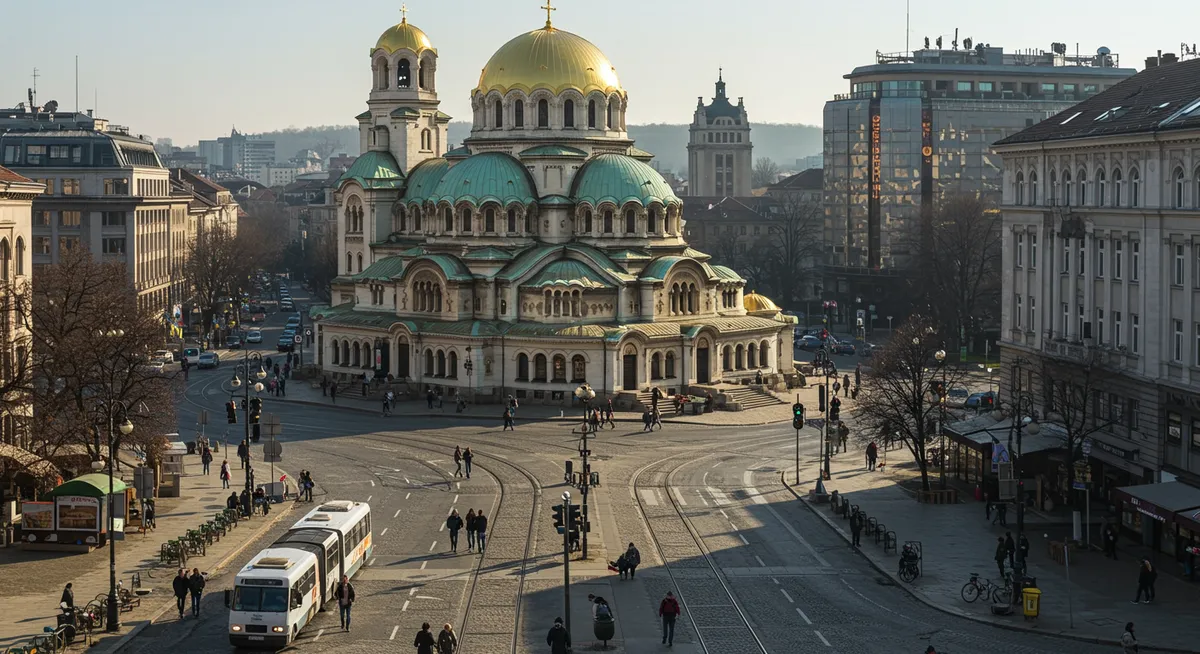
Downtown Sofia is small, flat and almost entirely walkable. The historic core sits inside a roughly 1.2 km square between the Largo on the west, Alexander Nevsky on the east, Slaveykov Square on the south and the Sofia Synagogue on the north. In 2026 you can see the headline sights — Roman Serdika, Sveta Sofia, Alexander Nevsky, the Largo, the Triangle of Tolerance and Vitosha Boulevard Visitor Guide — on foot in a single day, with most of the cultural landmarks free to enter.
This guide is tightly geographic: it covers what you can reach on foot from Serdika metro. For broader options including parks, day trips and Boyana, see the pillar Things To Do in Sofia, Bulgaria. For lookout points use Sofia's Best Views in 2026, and for boutiques and Vitosha Blvd shopping see Shopping in Sofia 2026.
Downtown Sofia at a glance (2026)
Downtown Sofia, in this guide, means the area within an easy 15-minute walk of Serdika metro station. The full headline loop — Largo → Sveta Nedelya → Vitosha Blvd → NDK → Saint Sofia Church → Alexander Nevsky → Sofia Synagogue → back to the Largo — totals about 3.2 km and takes 3–4 hours at a sightseeing pace. Almost every major sight is free; the only paid stops on the standard route are Alexander Nevsky's crypt museum (6 BGN / about EUR 3) and the Boyana Church Visitor Guide (10 BGN, but Boyana is outside downtown).
| Walking loop length | About 3.2 km (3–4 hours with stops) |
| Sights that are free | Largo, Roman Serdika, Rotunda, Triangle of Tolerance, Sveta Sofia nave, Alexander Nevsky nave, Slaveykov book market |
| Paid extras | Sveta Sofia necropolis & Nevsky crypt museum (6 BGN each); Nevsky photography (10 BGN) |
| Best start point | Serdika metro station (line M2) |
| Single metro ride | 1.60 BGN (2026) |
| Downtown taxi/Bolt hop | 4–7 BGN |
💡 Good to know: Almost the entire downtown loop is free to enter — only the Sveta Sofia necropolis and the Alexander Nevsky crypt museum (6 BGN each) need a ticket. Carry a few small BGN coins for the synagogue donation and Nevsky photography fee; most churches don't take cards.
For a sense of the walk before you arrive, this 4K evening tour follows almost the exact downtown spine of this guide — from Serdika station down Vitosha Boulevard to the NDK plaza:
1. The Largo and Serdika Roman ruins
The Largo — the trio of monumental Stalinist buildings (the former Party House, the Council of Ministers and the Presidency) — is the geographic heart of downtown Sofia and your usual starting point. Sofia's Roman past sits literally underneath it: the Serdika Archaeological Complex displays the excavated 2nd–4th century streets of ancient Serdica directly inside Serdika metro station and in the open-air pit beside the Presidency. Entry is free and the site is open 24 hours because it doubles as a metro passage.
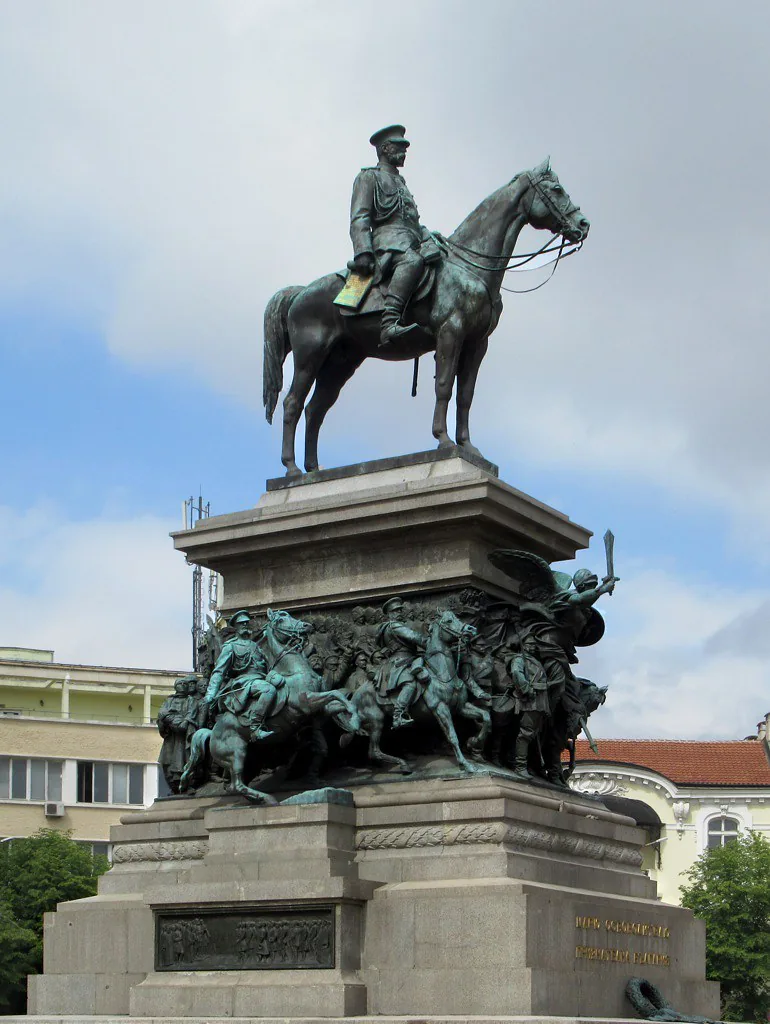
Pause at the Presidency for the changing of the guard, on the hour, every hour, in front of the soldiers in white-feather hats. From here it is a 90-second walk to the Sveta Petka Church, half-buried at street level, and another two minutes to the Saint George Rotunda.
2. Saint George Rotunda — Sofia's oldest building
Tucked inside the courtyard of the Presidency, the Rotunda of Saint George is a 4th-century red-brick church and the oldest standing building in Sofia. Entry is free; opening hours are roughly 08:00–18:00 daily. The interior holds three layers of frescoes from the 10th, 11th and 14th centuries, partially uncovered. It is a five-minute self-guided visit and a must-see if you are interested in late Roman architecture.
3. The Triangle of Tolerance — Sofia's interfaith corner
One of Europe's most striking urban images sits two blocks north of the Largo: the Triangle of Tolerance, where an Orthodox cathedral (Sveta Nedelya), a working Ottoman mosque (Banya Bashi), the Sofia Synagogue and a Catholic cathedral all stand within 300 metres of each other. The cluster reflects centuries of coexistence between Bulgarian, Ottoman, Sephardic Jewish and Catholic communities.
Banya Bashi Mosque (1576) is open to non-Muslim visitors outside prayer times; women should cover their hair. The Sofia Synagogue, the largest in southeastern Europe, charges a small donation (around 5 BGN) and houses a Jewish History Museum upstairs. Sveta Nedelya Cathedral is free and central. Walking the triangle takes about 20 minutes including brief interior visits.
4. Saint Sofia Church and the Eternal Flame
A four-minute walk east from the Largo brings you to Sveta Sofia, the 6th-century basilica that gave the city its name. The interior is austere brick — entry is free — but the real attraction is the underground necropolis, a partially excavated early-Christian burial site beneath the church (admission 6 BGN; open Tuesday to Sunday 09:00–18:00 in 2026). Outside the church burns the Eternal Flame and the tomb of the Unknown Soldier; behind it lies the grave of Bulgarian writer Ivan Vazov.
5. Alexander Nevsky Cathedral
Sofia's signature building stands directly across the square. The neo-Byzantine Alexander Nevsky Cathedral Visitor Guide was completed in 1912 to commemorate the 200,000 Russian, Bulgarian, Ukrainian, Finnish and Romanian soldiers who died in the 1877–78 Russo-Turkish War that liberated Bulgaria from Ottoman rule. Entry to the main nave is free. Photography inside the cathedral itself costs 10 BGN as of 2026; the crypt museum, with one of the largest icon collections in the Orthodox world, costs 6 BGN and is open 10:00–18:00.
The cathedral square hosts a small antiques and Soviet-memorabilia market every weekend — useful if you want non-touristy souvenirs. The walk from Sveta Sofia to here is 90 seconds.
6. The Russian Church of St. Nicholas the Wonderworker
Walking south from Alexander Nevsky along Tsar Osvoboditel Boulevard, you pass one of the most photographed buildings in central Sofia: the gold-domed Russian Church of St. Nicholas the Wonderworker, built in 1914 for the Russian embassy congregation. Its five gilded onion domes and green-and-gold majolica tiles make it the brightest church on the route. Entry is free; opening hours are roughly 08:00–18:30 daily. Downstairs is the crypt-tomb of Archbishop Seraphim, where visitors still leave handwritten notes asking for his intercession. It is a two-minute stop, but a striking one, and it sits directly on the natural Nevsky-to-Slaveykov walking line.
7. Slaveykov Square and Sofia's open-air book market
Heading south from Alexander Nevsky, a six-minute walk via Tsar Osvoboditel Boulevard reaches Slaveykov Square. Two bronze statues of the Slaveykov writers sit on a bench in the middle of the square; around them runs Sofia's permanent open-air book market. Stalls sell second-hand Bulgarian and Russian books, vintage maps, communist-era posters and English-language paperbacks. It runs daily, weather permitting, roughly 09:00–19:00.
8. Vitosha Boulevard — the main pedestrian street
From Slaveykov Square it is a 200-metre walk to the northern end of Vitosha Boulevard, Sofia's pedestrianised main street. The boulevard runs about 1 km south to NDK (the National Palace of Culture), lined with cafes, mid-range fashion, Bulgarian rose-cosmetics shops and rooftop bars. The southern half offers the famous straight-line view of Vitosha Mountain on a clear day — one of Europe's few capital-city views that frames a 2,290-metre peak at the end of a shopping street. For a deeper retail breakdown see Shopping in Sofia 2026.
9. NDK and the southern end of downtown
Vitosha Boulevard ends at the vast plaza in front of NDK (Natsionalen Dvorets na Kulturata), the largest cultural and conference centre in southeastern Europe. The plaza was renovated in 2019 and is the city's main rally and event space. Walk up the wide stairs to the upper terrace for a free, head-on view of Vitosha Mountain — one of the easiest-to-reach lookouts in central Sofia.
10. Ivan Vazov National Theatre and the City Garden
Backtrack one block east of Vitosha Boulevard to find the City Garden — Sofia's oldest park (1872) — and the neo-classical Ivan Vazov National Theatre Visitor Guide at its northern edge. The theatre's facade and fountain pool are the second-most photographed spot in the city after Alexander Nevsky. Performances run in Bulgarian only, but the building tour (Tuesdays and Thursdays, 11:00, 5 BGN) is worth booking if you are an architecture fan. Otherwise, a 10-minute coffee stop on the garden's chess-player benches is the natural way to close a downtown loop.
Suggested Downtown Sofia walking route (3.2 km, half-day)
Start at Serdika metro (Largo / Roman ruins), walk 250 m north to the Sofia Synagogue, then loop east via Banya Bashi Mosque (300 m), Saint Sofia Church (450 m) and Alexander Nevsky Cathedral (200 m). Continue south on Tsar Osvoboditel to Slaveykov Square (550 m), turn right onto Vitosha Boulevard for shopping (1 km to NDK), then return north via the City Garden and Ivan Vazov Theatre (700 m). Total: about 3.2 km, three to four hours including stops.
Getting around downtown Sofia (2026)
The whole core is flat and pedestrianised between the Largo and NDK. Sofia metro line M2 runs directly underneath via Serdika and NDK stations; a single ride costs 1.60 BGN in 2026. Trams 12 and 22 also cross the area. Taxis and Bolt rides between any two downtown points cost 4–7 BGN. If you are choosing where to stay near the central sights, see Best Areas to Stay in Sofia in 2026.
💡 Good to know: Downtown Sofia is one of Europe's safer capital cores to walk, but use the Bolt app rather than flagging a street taxi — a handful of unmetered cabs near the Largo and Vitosha Boulevard overcharge tourists. A genuine downtown ride almost never exceeds 7 BGN.
Frequently Asked Questions
Is Alexander Nevsky Cathedral free to enter?
Yes. Entry to the main nave of Alexander Nevsky Cathedral is free in 2026. Photography inside the cathedral itself costs 10 BGN. The icon-museum crypt beneath the cathedral is a separate ticket, currently 6 BGN, open 10:00–18:00 (closed Mondays).
Can you walk Downtown Sofia in one day?
Yes. The entire downtown loop — the Largo, Triangle of Tolerance, Saint Sofia, Alexander Nevsky, Slaveykov Square, Vitosha Boulevard and NDK — totals about 3.2 km and can be covered in three to four hours including interior visits. It is flat and pedestrianised, with metro line M2 underneath if you need to cut a leg short.
What is the Triangle of Tolerance in Sofia?
The Triangle of Tolerance is the cluster of four religious buildings — Sveta Nedelya Orthodox Cathedral, Banya Bashi Mosque, Sofia Synagogue and Saint Joseph Catholic Cathedral — that all stand within 300 metres of each other a few blocks north of the Largo. It is one of the most concentrated displays of religious coexistence in Europe.
Are the Roman ruins under Sofia free to visit?
Yes. The Serdika Archaeological Complex, which displays the excavated streets of 2nd–4th century Serdica, is free and accessible 24 hours because it doubles as a passage inside Serdika metro station. The open-air section beside the Presidency is also free.
How long is Vitosha Boulevard and what is at each end?
Vitosha Boulevard is roughly 1 km long. The northern end starts near Sveta Nedelya Cathedral and Slaveykov Square; the southern end opens onto the NDK plaza. Most cafes and shops are concentrated in the middle 600 metres. The southern half frames a dramatic view of Vitosha Mountain on clear days.
Is Boyana Church part of Downtown Sofia?
No. Boyana Church is a UNESCO-listed medieval church on the southern outskirts of Sofia, about 9 km from the Largo. It is a worthwhile half-day trip but it is not part of the walkable downtown core covered in this guide. See the broader Things To Do in Sofia, Bulgaria pillar for full directions.
Is Sofia a walkable city?
Yes — downtown Sofia is one of the most walkable capital cores in Europe. The historic centre is flat and largely pedestrianised, and the entire headline loop from the Largo to NDK is only about 3.2 km, coverable in three to four hours on foot. Metro line M2 runs directly underneath via Serdika and NDK stations if you want to shorten a leg.
What are the best free things to do in downtown Sofia?
Most of downtown is free. You can see the Roman Serdika ruins (free, open 24 hours inside the metro), the 4th-century Saint George Rotunda, the Triangle of Tolerance churches and mosque, the naves of Sveta Sofia and Alexander Nevsky, the Slaveykov open-air book market, the Russian Church and the Eternal Flame — all without a ticket. Only the Sveta Sofia necropolis and the Alexander Nevsky crypt museum (6 BGN each) are paid.
What should I be careful of in downtown Sofia?
Downtown Sofia is safe to walk day and night, but two small things catch visitors out: unmetered street taxis near the Largo and Vitosha Boulevard that overcharge tourists (use the Bolt app instead — a downtown ride is rarely over 7 BGN), and modest dress rules at religious sites (women should cover their hair to enter Banya Bashi Mosque). Carry small BGN coins for church donations and photography fees, as most don't accept cards.
Downtown Sofia rewards slow walking more than ticking off a list. The area is small enough that you will pass the same square several times in a day, but each pass reveals something new — a Roman wall behind a glass panel, a hidden church courtyard, the smell of fresh banitsa from a cellar bakery. Plan a half-day for the loop and you will have seen more of Bulgaria's capital than most tour buses manage in two.
Filed under
Continue your journey
Related Bulgaria guides
5 Jun 2026
10 Best Rooftop Bars in Sofia (2026)
3 May 2026
12 Best Specialty Coffee Shops in Sofia (2026)
22 Jul 2026
Communist Tour Sofia: Best Walking Tours & History Guide
22 Jul 2026
Sofia 2 Day Itinerary: A 48-Hour Route for 2026
22 Jul 2026
Sofia Christmas Market Guide: Dates, Locations & Local Tips
22 Jul 2026