Free Walking Tour Sofia: 10 Essential Tips and Landmarks
Sofia is one of the oldest continuously inhabited capitals in Europe, layered with Roman ruins, Ottoman mosques, Soviet boulevards, and Orthodox cathedrals on the same block. The free walking tour Sofia is the fastest way to read those layers in two hours, with a local guide doing the connective tissue a guidebook cannot. This 2026 guide covers the meeting point, the ten landmarks the route actually hits, what to tip in BGN and EUR, and what to do if it rains.
Most travelers planning their Things To Do in Sofia, Bulgaria use the free tour as their first activity on day one. It anchors the city in your head before you wander on your own. Two operators run the daily English tour from the Palace of Justice — Free Sofia Tour (the original) and the SANDEMANs partner network — both starting at the same lions and covering broadly the same route.
Meeting Point: The Lions at the Palace of Justice
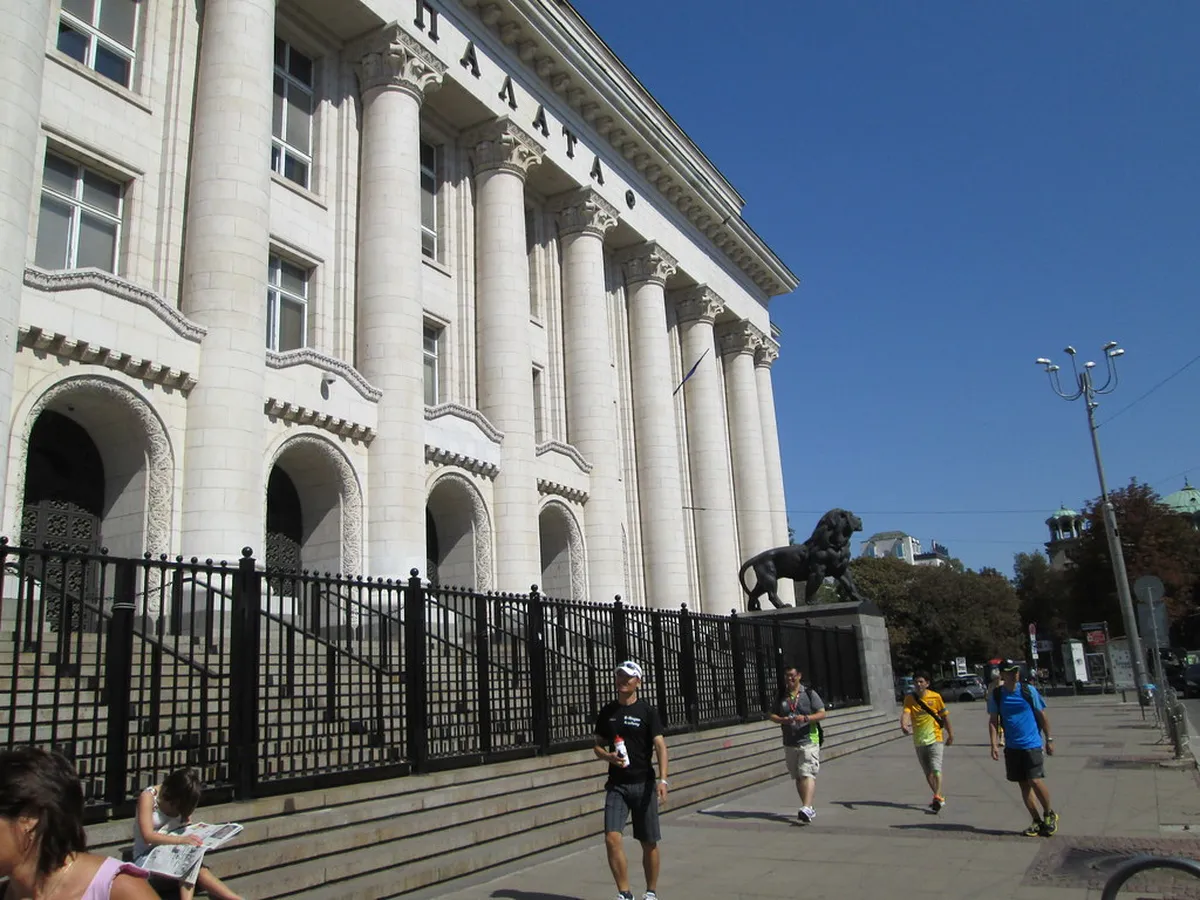
The free walking tour Sofia starts at the Palace of Justice on Vitosha Boulevard Visitor Guide, opposite the Serdika metro station. Look for the two large stone lions flanking the steps and the guides holding red Free Sofia Tour boards or yellow SANDEMANs umbrellas. Tours run daily at 11:00 and 14:00 in 2026, with a third 18:00 slot added between June and September. Arrive 10 minutes early; in summer the 11:00 group can exceed 60 people.
Watch the lions before the tour starts. One sculptor modelled the left lion crossing its paws — anatomically wrong for any feline — and the locals have never quite forgiven him. The right-hand lion has the correct posture. Bulgaria has no native lions, so both were copied from textbooks, which is how the mistake slipped past inspection. It is the kind of detail a guidebook will not tell you and a local guide opens with.
Reaching the meeting point is straightforward via Sofia's Sofia Transportation network — Serdika is line M1 and M2, two minutes on foot. A single metro ticket costs 1.60 BGN (around 0.82 EUR). If you are walking from the Alexander Nevsky end of the centre, allow 12 minutes down Knyaginya Maria Luiza and Vitosha Boulevard.
A Brief History of Bulgaria in Ten Minutes
Most guides open with a compressed history at the lions before walking anywhere. Sofia is roughly 6,000 years old. The Thracians were here first, then the Romans built Serdica in the 1st century AD, leaving the ruins now visible under the metro station. The Bulgars arrived in the 7th century, followed by Byzantine rule, the First and Second Bulgarian Empires, and five centuries of Ottoman rule from 1396 to 1878.
Independence in 1878 made Sofia the capital of a new monarchy. Communism took over in 1944 and held until the Berlin Wall fell in 1989. Bulgaria joined the EU in 2007 and adopted the euro in January 2025, which is why prices are now quoted in both BGN and EUR throughout the city. Knowing this rough timeline turns every later stop into a chapter — Roman, Ottoman, royal, communist, post-communist — instead of a random building.
The "Moses technique" usually appears here too. If the group is over 25 people, one guide splits the crowd in half by walking through the middle with arms out, like parting the Red Sea, and a second guide takes one half. Smaller groups make for better stories at every stop. If you arrive and see a group of 80, wait — a second guide is almost always coming out within five minutes.
💡 Good to know: If the 11:00 group looks like 80 people at the lions, do not bail and do not crowd the first guide — hang back for five minutes and let a second guide come out, then join that half. You will get the same route in a group of 30 instead of 60, which means more questions answered and far better stories at every stop.
Serdika Roman Ruins: The Underground City
Sofia has no surface old town. Everything Roman is below grade, exposed when the second metro line was excavated between 2008 and 2012. The dig surfaced a 4th-century street, public baths, an early Christian basilica, and house foundations. The construction added a decade to the metro project but produced one of the most accessible Roman complexes in Europe.
You can walk through the ruins for free at any time — the site is open-air and integrated directly into the Serdika metro station mezzanine. The tour pauses here for 10 to 15 minutes, with the guide pointing out the original drainage, the bath floor heating system (hypocaust), and the bricks marked with Roman legion stamps. Bring a layer in summer; the underground passages stay around 18°C even when the boulevard above is at 35°C.
Adjacent to the ruins is the St. George Rotunda, a 4th-century red-brick church and the oldest building in Sofia. It is tucked inside the courtyard of the Presidency, surrounded by 1950s socialist-classical wings. The walls are 1.4 metres thick. Frescoes inside date from the 10th to 14th centuries, layered over each other. Photography inside is restricted but the exterior shot — Roman brick framed by communist columns — is the visual definition of Sofia.
Presidents Palace and the Changing of the Guard
The Presidents Palace sits on the same block as the St. George Rotunda. The ceremonial entrance has two guards in 19th-century National Guard uniforms — red sash, white plume, bayonet — who hold position for one hour before being relieved. The Changing of the Guard happens on the hour, every hour, and lasts about three minutes. Most free tours time their arrival to catch either the noon or 13:00 ceremony.
Stand behind the painted line on the cobbles; the guards will not break composure but a security officer will ask you to step back. On the first Wednesday of each month an extended ceremony with a brass band runs at 12:00 and lasts 25 minutes. It is worth circling back for if your tour misses it. Locals call the guards "the lions of the Presidency" — a nicer compliment than the actual lions on Vitosha got.
The Palace itself is closed to the public, but the inner courtyard with the Rotunda is open daily from 08:00 to 19:00. Guides usually wash their hands at the small mineral fountain outside the Banya Bashi mosque before this stop — a Bulgarian habit that signals the end of the "Roman block" and the start of the Ottoman one.
The Square of Tolerance: Four Faiths in 300 Metres
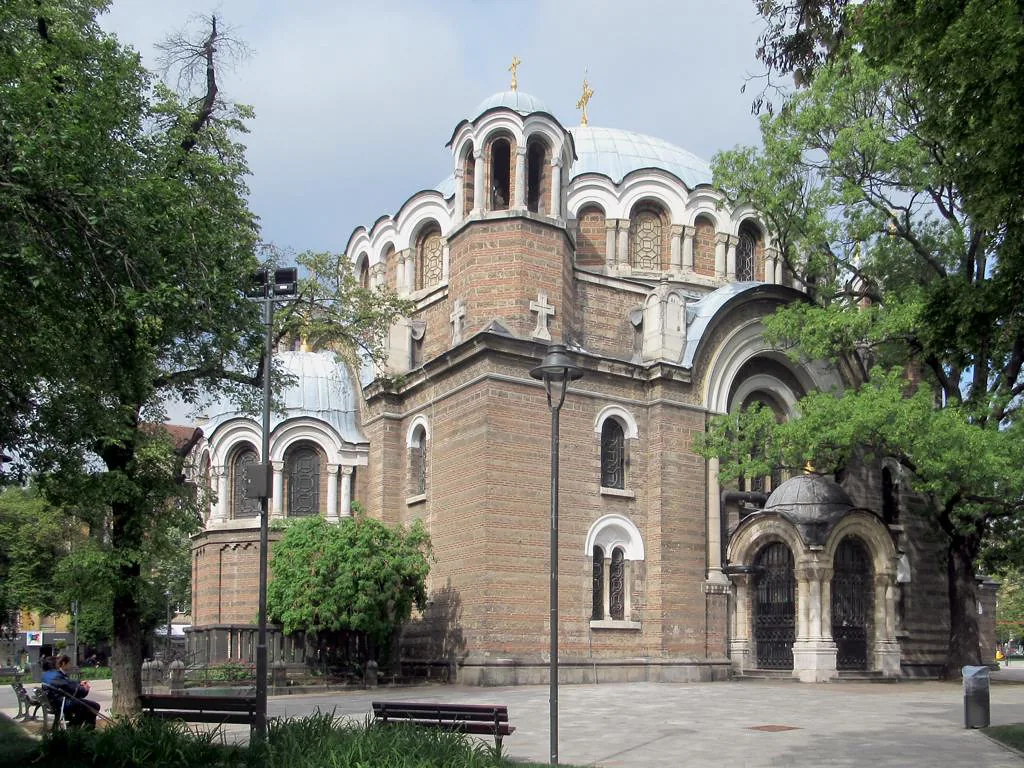
Within a 300-metre walk you pass the Banya Bashi Mosque (Ottoman, 1576, designed by Mimar Sinan), the Sofia Synagogue (Sephardic, 1909, the largest in southeastern Europe), the Sveta Nedelya Orthodox Church (Bulgarian Orthodox), and the St. Joseph Catholic Cathedral. The locals call this "the Square of Tolerance," and it is one of the few places on the continent where four functioning religious buildings are stacked this close.
Dress modestly if you plan to enter any of them. Shoulders covered, no shorts above the knee, and women should bring a light scarf for the synagogue and the mosque. The mosque is closed to non-Muslim visitors during the five daily prayer times — your guide will know whether the next call is in 10 minutes or two hours. Entry is free at all four; the synagogue asks for a 5 BGN donation (about 2.55 EUR) to fund the small museum upstairs.
The Jewish story here is the proudest moment in modern Bulgarian history. During World War II Bulgaria was an Axis ally, but the Tsar, the Orthodox Church, and parts of parliament refused to deport the country's roughly 48,000 Jews. They stalled, hid lists, and ran out the clock — saving every Bulgarian Jew, the only such case in occupied Europe. Most guides spend five minutes on this in front of the synagogue. It is the section visitors remember a year later.
Alexander Nevsky Cathedral: The Finale
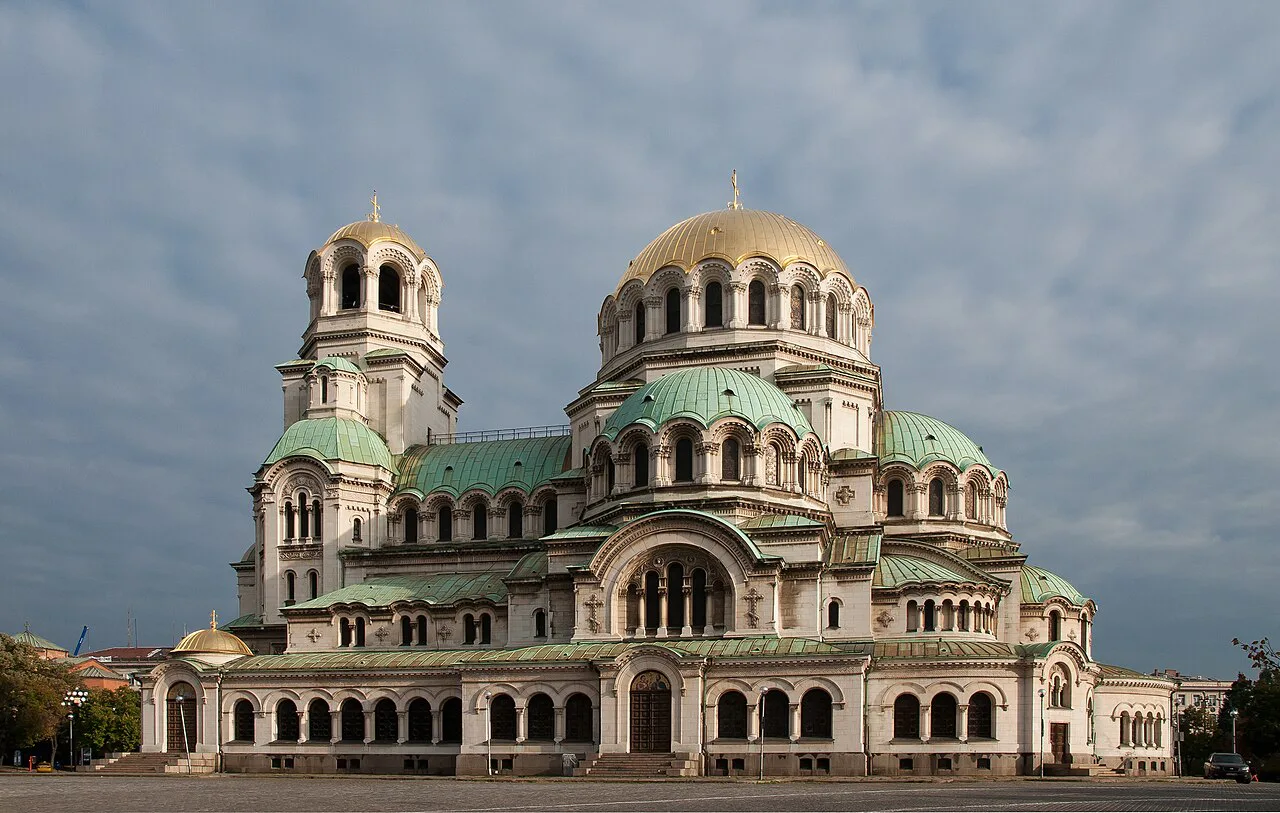
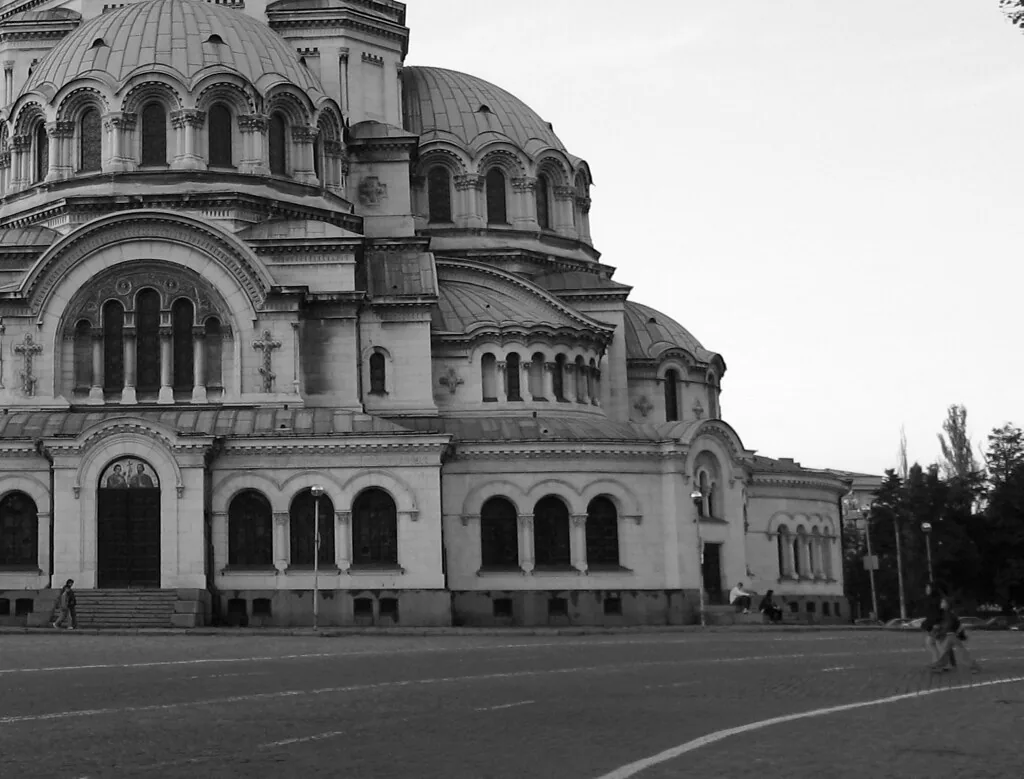
The tour ends at Alexander Nevsky Cathedral, a Neo-Byzantine gold-domed monster that holds 10,000 worshippers and is one of the largest Orthodox cathedrals on earth. It was built between 1882 and 1912 to honour the 200,000 Russian soldiers who died liberating Bulgaria from the Ottomans in 1877–78. The main bronze doors weigh 1.5 tonnes each.
Entry to the nave is free; photography inside costs 10 BGN (about 5.10 EUR), payable at a small kiosk near the south entrance. The crypt museum below holds one of the world's best collections of Bulgarian Orthodox icons spanning the 9th to 19th centuries — entry is 6 BGN (3.05 EUR) and worth it if you have an hour. Look up at the mosaic of Christ Pantocrator inside the central dome; the gold leaf was donated by Russian patrons and is original to 1912.
Despite its size, Alexander Nevsky is not Sofia's most important Orthodox church. That title belongs to Sveta Sofia Basilica directly opposite, which is older (6th century) and gave the city its name. Most tours mention this in the closing minutes; very few visitors bother to walk the 80 metres across to see it.
Tipping, Vouchers, and How "Free" Actually Works
The tour is genuinely free to join — no booking deposit, no hidden fee. Guides earn entirely from tips, paid in cash at the end. The standard ranges in 2026 are 10 BGN (about 5.10 EUR) for a tight budget, 15–20 BGN (7.65–10.20 EUR) for a satisfied tip, and 25–30 BGN (12.75–15.30 EUR) for an exceptional guide. EUR notes are accepted everywhere; smaller denominations work better than a 50.
The SANDEMANs branding you see on yellow umbrellas is a partner network — SANDEMANs does not run the Sofia tour itself but rebadges Free Sofia Tour as a local partner. Tipping logic is identical regardless of which logo your guide carries: cash to the individual at the end, no envelope, no card terminal. ATMs near the meeting point dispense BGN; the closest reliable one is inside the TSUM department store at the Serdika exit.
At the end of the tour, guides offer discount vouchers for the paid follow-up tours run by the same operators — usually 10 to 15 percent off the Communist Tour, Food Tour, or Crawl Tour. The vouchers are physical paper, no email signup, and valid the same week. If you plan to stay three days in Sofia, taking one paid follow-up tour is the most efficient way to extend the storytelling once the free tour ends.
| Meeting point | Palace of Justice, Vitosha Boulevard (the stone lions), opposite Serdika metro |
| Daily times (2026) | 11:00 and 14:00 year-round, plus an 18:00 slot June–September |
| Duration / stops | About 2 hours, 10 landmarks, central core only |
| Cost to join | Free — no deposit, no booking fee |
| Suggested tip | 10 BGN (5.10 EUR) budget · 15–20 BGN (7.65–10.20 EUR) standard · 25–30 BGN exceptional |
| Ends at | Alexander Nevsky Cathedral, around 13:00 or 16:00 |
Choosing Between the Classic, Graffiti, and Communist Tours
The Classic free walking tour Sofia is the right starting point for a first visit — two hours, ten major landmarks, central core only. Once you have done it, three niche tours cover the gaps. The Sofia Graffiti Tour (paid, around 25 BGN / 12.75 EUR) walks the Knyaz Boris and Sveti Sedmochislenitsi neighbourhoods and is the only way to read the post-1989 street art scene. The Communist Tour (paid, around 30 BGN / 15.30 EUR) goes inside the Largo, the former Party House, and the Soviet Army Monument with proper political history.
The Food Tour (paid, around 60 BGN / 30.60 EUR) covers the Bulgarian food tour in Sofia stops — banitsa bakeries, the Central Market Hall, a rakia tasting, and Shopska salad with proper sirene cheese. It is the single best activity for an evening once you have a daytime overview.
If you have only one half-day in Sofia, take the Classic free tour. If you have two days, add the Communist Tour. If you have three days and are 25 to 40 years old, add the Graffiti Tour. Avoid stacking two tours in the same day — your feet and your attention will both quit after the first three hours.
- Tour Comparison
- Classic Free Tour: 2 hours, 10 stops, daily 11:00/14:00 (and 18:00 in summer), tip-based
- Communist Tour: 2.5 hours, 7 stops, daily 11:00, around 30 BGN / 15.30 EUR
- Graffiti Tour: 2 hours, 6 neighbourhoods, Tue/Thu/Sat 11:00, around 25 BGN / 12.75 EUR
- Food Tour: 3 hours, 5 stops, Wed–Sun 17:00, around 60 BGN / 30.60 EUR
Free Walking Tour Sofia – When the Rain Comes Down
The tours run in rain. They cancel only for thunderstorms with lightning or heavy snow, and even then the operators usually reschedule rather than refund (since there is nothing to refund). Sofia summers bring sudden afternoon thunderstorms that last 20 to 40 minutes — the guides know this and route around them.
If you forgot an umbrella, the Vietnamese-run shops along the lower end of Vitosha Boulevard sell sturdy ones for 8 to 12 BGN (4.10–6.10 EUR). Avoid the souvenir kiosks near the cathedral, which charge double. The natural rain shelters on the route are the Largo arcades on Knyaginya Maria Luiza, the Serdika underground passages, the St. Sofia basement, and the Alexander Nevsky portico. A good guide will lengthen the indoor stops and shorten the outdoor ones without telling you.
Rainy-day tours have one upside: groups shrink to 8 to 15 people, the storytelling gets more intimate, and the Roman ruins look genuinely Roman with water on the stone. If you have flexibility, picking the day after a forecasted storm gives you a clear washed sky and dry cobbles by the 14:00 slot.
Self-Guided Option: Walking the Route Without a Guide
If you would rather set your own pace, the same loop works perfectly as a self-guided walk — and it is the single most-searched alternative to the guided tour. Start at the lions of the Palace of Justice, then thread the stops in order: Serdika Roman ruins and the St. George Rotunda, the Presidents Palace, the Square of Tolerance (Banya Bashi Mosque, Sofia Synagogue, Sveta Nedelya, St. Joseph), and finish at Alexander Nevsky Cathedral with Sveta Sofia Basilica opposite. The whole route is barely 2 kilometres and almost entirely flat.
To build a free walking tour Sofia map on your phone, drop pins on those seven anchors in Google Maps and follow them on foot — there is no ticket, gate, or schedule for the public spaces, so you can walk it at any hour. The trade-off is the storytelling: you lose the lion anecdote, the "Moses technique," the 48,000-Jews story at the synagogue, and the Roman legion stamps a guide points out in the ruins. A self-guided loop is ideal for a second pass once you have done the narrated version, or for travelers arriving outside the 11:00 and 14:00 slots.
Time it around the Changing of the Guard at the Presidents Palace — on the hour, every hour, about three minutes — so your self-guided walk still catches the one piece of live ceremony on the route. Allow 90 minutes at a relaxed pace, or two-plus hours if you go inside the cathedral crypt and the basilica.
Booking, Reviews, and Year-Round Availability
You do not need a credit card or a deposit to join the free walking tour Sofia — the genuinely free model is to simply turn up at the lions a few minutes before 11:00 or 14:00. Some travelers prefer to reserve a spot online through a booking platform so they have a confirmation, and several do offer free Sofia tour slots without any card details; reservation mainly helps the operator size the group and guarantees a guide for parties of ten or more. Solo travelers and couples almost never need to book ahead.
💡 Good to know: The free tour runs 365 days a year, not just in summer. The 11:00 and 14:00 slots operate through winter — only the third 18:00 slot is seasonal (June–September). Winter tours run smaller (8–15 people), so December and January are quietly the best months for the most personal version of the walk, weather permitting.
On reviews: the Classic tour consistently rates near the top of Sofia activities precisely because it is guide-led and free, so the only real variable is which guide you draw. Group size is the single biggest predictor of quality — a 60-person 11:00 summer slot will always feel more rushed than a 14:00 or a winter walk. If you can choose, take the 14:00 over the 11:00 in peak season; it skews smaller and the afternoon light on the cathedral domes is better.
How Sofia Compares to Plovdiv, Bucharest, and Belgrade
Sofia is the cheapest Balkan capital in 2026 and the one most travellers under-rate. A coffee runs 2.50 to 3.50 BGN (1.30–1.80 EUR), a domestic beer 4.00 BGN (2.05 EUR), a sit-down lunch 12 to 18 BGN (6.10–9.20 EUR). Compared to Plovdiv (15 percent more expensive in 2026), Bucharest (20 percent more), and Belgrade (35 percent more), Sofia is the budget winner of southeastern Europe.
Plovdiv is the better-preserved old town and the right day trip if you want Roman amphitheatres above ground rather than below. Bucharest has the bigger nightlife and grander communist-era architecture. Belgrade has the most pronounced edge — riverside, brutalist, late-night — and is the only Balkan capital where the food tradition rivals Bulgaria's. Sofia loses on charm but wins on price, on layered history per square kilometre, and on the proximity of Vitosha Mountain (a 30-minute bus from the centre to a 2,290-metre summit).
For accommodation that puts you within walking distance of every tour stop, consult our breakdown of the Best Areas to Stay in Sofia in 2026 — the Centre, Oborishte, and Lozenets neighbourhoods are the three to consider for a short trip.
- Daily Cost Snapshot (Sofia, 2026)
- Coffee at a specialty café: 2.50 to 3.50 BGN (1.30–1.80 EUR)
- Domestic beer (0.5 L): 4.00 BGN (2.05 EUR)
- Sit-down lunch with mains and a drink: 15 BGN (7.65 EUR)
- Single metro / tram ticket: 1.60 BGN (0.82 EUR)
- Tip on a free walking tour: 10 to 20 BGN (5.10–10.20 EUR)
After the Tour: Where to Go Next
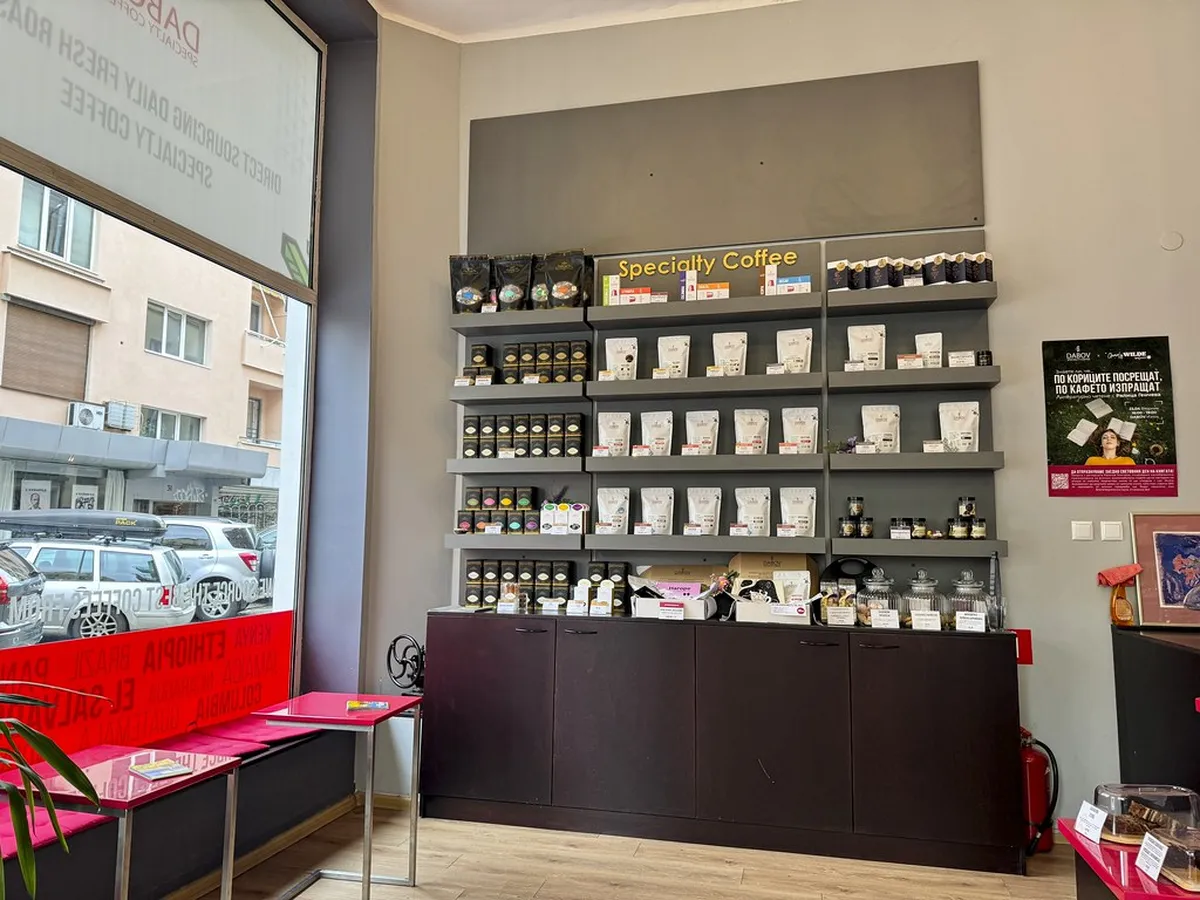
The free walking tour ends at Alexander Nevsky around 13:00 or 16:00 depending on which slot you took. The cluster of 12 Best Specialty Coffee Shops in Sofia a few blocks behind the cathedral is the natural decompression spot — flat whites at Coffeestand, single-origin pour-overs at Dabov, both 4 to 6 BGN (2.05–3.05 EUR). They are also where most guides go off-shift for their own coffee.
If you have the energy, Vitosha Boulevard for window-shopping back towards the meeting point takes 25 minutes. The City Garden in front of the Ivan Vazov National Theater is the right park for a 30-minute pause — chess players in the afternoon, a working fountain, and benches with a clear view of the theatre's red-and-gold facade. Travelers fitting Sofia into a tighter window can fold this whole route into our Sofia 1-day itinerary.
For your second day, the Boyana Church Visitor Guide (UNESCO frescoes from 1259) and a Vitosha Mountain Visitor Guide hike combine into one half-day trip, reachable by tram 5 from Hladilnika. After that, the country gets interesting — the Rila Monastery to the south and Plovdiv to the east are both feasible day trips from Sofia.
Frequently Asked Questions
Where does the free walking tour in Sofia start?
Most tours begin at the Palace of Justice, which is easily identified by two large lion statues at the entrance. It is located at the start of Vitosha Boulevard. You can reach it quickly via the Serdika metro station.
How much should I tip for a free tour in Bulgaria?
While the tour is free, tipping is expected to support the guides. A common tip is 10 BGN for a budget experience or 20 BGN if the guide was exceptional. Learn more about Tipping in Sofia Bulgaria to plan your budget.
Is the Sofia free walking tour available in Spanish?
Yes, several companies offer tours in Spanish alongside the standard English sessions. You should check the schedule online to see specific times for non-English tours. Booking in advance is recommended for these specialized language groups.
What happens if it rains during the walking tour?
Tours typically continue in the rain, as guides use covered areas like the Largo or underground ruins for shelter. It is wise to bring an umbrella or a waterproof jacket. You can buy cheap rain gear at shops near the meeting point.
Do I need to book the Sofia free tour in advance?
Individual travelers can usually just show up at the meeting point a few minutes early. However, groups of ten or more people should definitely book ahead to ensure a guide is available. Reservations also help companies manage group sizes for a better experience.
Can I do the Sofia walking tour without a guide?
Yes. The whole route runs through free public spaces, so you can walk it self-guided in any order. Drop pins on the Palace of Justice lions, the Serdika Roman ruins, the Presidents Palace, the Square of Tolerance, and Alexander Nevsky Cathedral, then follow your own map — it is about 2 km and almost entirely flat. You lose the guide's storytelling, so it works best as a second pass or if you arrive outside the 11:00 and 14:00 slots.
Pair this with our broader Sofia things to do guide for the full city overview.
A free walking tour Sofia is the highest-value two hours you will spend in the Bulgarian capital in 2026. You walk through Roman ruins, an Ottoman mosque, a Sephardic synagogue, an Orthodox cathedral, and a working presidency in a single loop, with a local who can explain why they all sit on the same block. Tip your guide 10 to 20 BGN and ask which paid follow-up they recommend.
Use the route as the backbone for the rest of your trip — Vitosha Mountain on day two, Boyana Church or Plovdiv on day three. Whether the highlight is the Roman wall under the metro or the gold dome of Alexander Nevsky, the city rewards travelers who walk it slowly and ask questions.