Independent Bulgaria travel guide
Ruse: Discover lesser-known places
Uncover Ruse's lesser-known places in 2026! Explore the best kept secrets of this Bulgarian city. A complete guide featuring must-see attractions. Start planning!
On this page14 sections
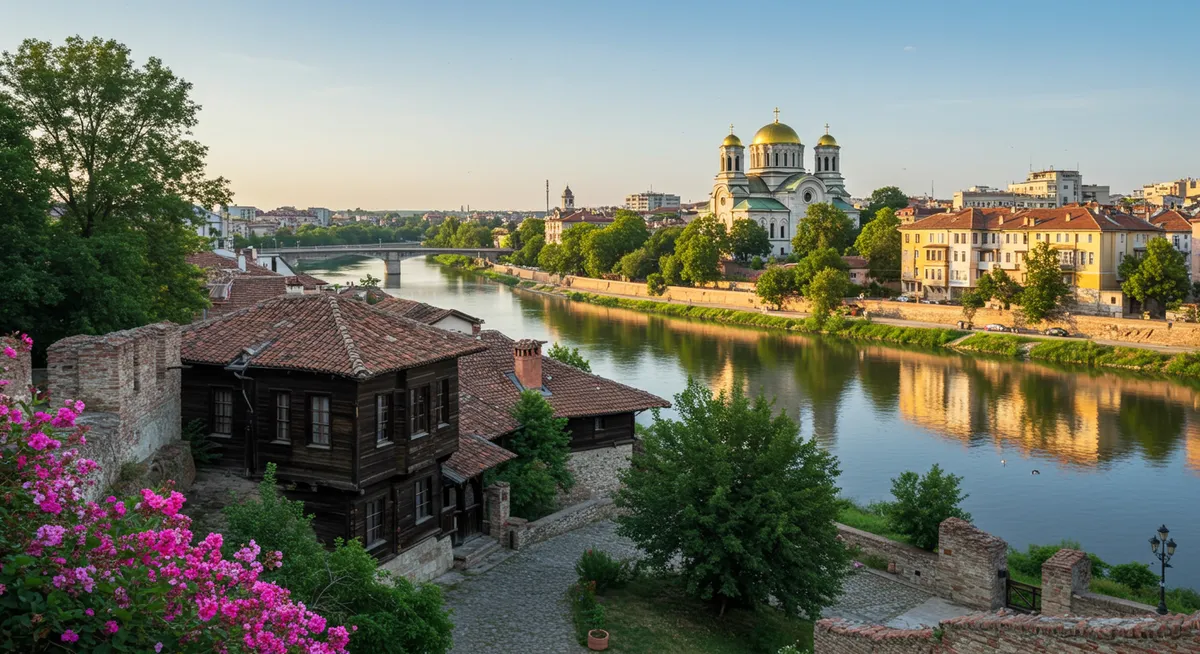
Ruse sits on the Danube directly across from Giurgiu, Romania, and it has spent the last century being overlooked by travellers heading to Sofia or Veliko Tarnovo. That neglect is exactly why the city still feels uncrowded in 2026, even after Bulgaria adopted the euro on 1 January and prices started appearing alongside the old leva. Locals still call it "Little Vienna" for its neo-Baroque facades, but the real rewards are the small museums, riverbank pockets, and rock-cut sanctuaries that almost nobody flags in standard guides. This article skips the obvious squares and walks you through twelve lesser-visited stops, with addresses, hours, and 2026 ticket prices so you can plan around them. Pair it with our broader 20 Best Things To Do in Ruse 2026 (Bulgaria's Little Vienna) overview, or branch into themed lists for romantic things to do, family-friendly activities, or budget-friendly options. Solo travellers can use our Solo Traveler Guide, and outdoor people will want the Outdoor & Nature in Ruse piece for green-route ideas.
1. Rock-Hewn Churches of Ivanovo
Twenty kilometres south of Ruse, the medieval monks of the Tarnovo school carved a network of churches and cells directly into the limestone cliffs above the Rusenski Lom River. The Holy Mother of God church, the only one regularly open to visitors, holds frescoes from the 1230s–1340s that earned the complex UNESCO status in 1979. Expect a 400-metre uphill path from the parking area; the climb takes about 15 minutes and is not stroller-friendly.
The site is open Wednesday to Sunday, 09:00–18:00 in summer (1 April–31 October) and 09:00–17:00 in winter, closed Monday and Tuesday. Adult tickets are 5 EUR (10 BGN), students 1 EUR. There is no public bus, so you will need a taxi (around 25 EUR each way from central Ruse) or a rental car. Combine it with Cherven Fortress on the same day to make the trip worthwhile.
💡 Good to know: Because there is no bus to Ivanovo and the same is true for Cherven Fortress, the cheapest way to see both is to share one taxi or rental car and string Ivanovo, Cherven, and Basarbovo Monastery into a single south-of-Ruse loop — you halve the per-site transport cost and turn three separate "no public transport" problems into one easy day.
2. Pantheon of the National Revival Heroes
Tucked inside the city park behind the old church of All Saints, this gold-domed mausoleum holds the remains of 39 figures from Bulgaria's 19th-century independence movement, including Lyuben Karavelov and Stefan Karadzha. It is one of the few sites in Bulgaria where the architecture, the eternal flame, and the underground crypt all sit on a single ticket — and yet most visitors walk past it on their way to Liberty Square without noticing.
Open Tuesday to Sunday 09:30–17:30. Entry is 3 EUR (6 BGN), with a small camera fee if you want to photograph the crypt frescoes. Allocate 45 minutes. The park around it is the best free shaded spot in central Ruse during August heat waves, when temperatures regularly hit 35 °C.
3. Baba Tonka and Kaliopa House Museums
Two of Ruse's most atmospheric small museums sit within a five-minute walk of each other on the streets between Liberty Square and the river. The Baba Tonka House Museum (ulitsa Baba Tonka 39) preserves the home of the matriarch who hid revolutionary couriers in her cellar during the 1860s and 1870s; the original wooden floors still creak in the right places. Kaliopa House (Museum of Urban Lifestyle) Visitor Guide (ulitsa Tsar Ferdinand 1), once a 19th-century merchant residence, recreates the interiors of Ruse's Austro-Hungarian-era bourgeoisie down to the Viennese porcelain.
Both are run by the Regional Historical Museum, share opening hours (Tuesday–Sunday, 09:30–18:00), and cost 3 EUR each. A combined ticket covering five museum branches in town costs 8 EUR and is worth it if you have a full day.
4. Roman Fortress of Sexaginta Prista
Sexaginta Prista — Latin for "the port of sixty ships" — was a Danubian outpost on the empire's northern frontier, founded under Vespasian in the late 1st century. The exposed foundations, watchtower outline, and a small on-site museum sit on a low bluff at the western edge of central Ruse, fifteen minutes' walk along the river from the city centre. Almost no tour groups stop here, so you can usually have the ruins to yourself even in July.
The site is open Tuesday to Saturday, 09:30–17:30, and entry is 2 EUR. The covered exhibit hall has English-language signage installed in 2024 and a useful 3D reconstruction model. Bring water; there is no café on site, but the riverside promenade five minutes east has several.
5. Across the Danube on the Friendship Bridge
This is the Ruse experience that no guidebook lists: walk across the Danube Friendship Bridge into Romania. The bridge, opened in 1954, has a narrow pedestrian lane on its eastern side, and a return walk from the Bulgarian customs building takes about 90 minutes. Bring your passport — EU and most Western nationals get waved through both controls without a stamp, but you must show ID.
From mid-bridge you get the only ground-level view of the full Ruse waterfront, with the Pantheon dome visible above the tree line. There is no fee for pedestrians. Avoid the walk in winter (the metal grating ices over) and on weekday afternoons when truck traffic is loudest. Locals occasionally make the round trip just for a coffee in Giurgiu's old town, ten minutes' walk past the Romanian customs gate.
💡 Good to know: Carry your passport for the bridge walk even though EU and most Western nationals are waved through without a stamp — you cross between two countries and must show ID at both the Bulgarian and Romanian control points. Time it for a weekday morning to dodge the loud afternoon truck traffic, and skip it entirely on icy winter days.
6. Rusenski Lom Nature Park
The 32-square-kilometre nature park follows the meandering canyon of the Rusenski Lom River and contains the Ivanovo churches, Cherven Fortress, and a network of marked hiking trails between them. The most rewarding short hike is the 4-kilometre loop from the Pisanetz village trailhead to the Orlova Chuka cave overlook — about two hours with stops, almost flat, and you will likely see Egyptian vultures circling the cliffs from April through September.
The park is free to enter; only the cave (when guided tours operate) and the monument sites charge admission. Maps are available at the visitor centre in Ivanovo village (open weekends only outside July–August). For couples planning a quieter day, this combines naturally with the Romantic Things to Do in Ruse guide shortlist.
7. Cherven Fortress Day Trip
Thirty-five kilometres south of the city, the medieval town of Cherven was a major bishopric and military centre of the Second Bulgarian Empire (1185–1396), abandoned after the Ottoman conquest and never resettled. What remains today is a substantial archaeological site of stone walls, the foundations of fourteen churches, and a fully reconstructed defence tower you can climb for a sweeping canyon view.
Cherven is open daily 09:00–18:00 from April to October, weekends only in winter. Adult entry is 4 EUR; the tower viewing platform is included. There is no bus service — plan on driving (45 minutes from Ruse) or arranging a half-day taxi (around 60 EUR round trip with one hour of waiting time). Wear sturdy shoes; the walking surfaces are loose stone.
8. Basarbovo Rock Monastery
Often skipped in favour of its UNESCO-listed neighbour at Ivanovo, the Basarbovo Rock Monastery of St Dimitar Basarbovski is the only rock-hewn monastery in Bulgaria still active and inhabited by monks. It is cut into a cliff face in the Rusenski Lom valley a short drive south of Ruse, and a steep flight of stone steps climbs to chapels and cells carved straight into the rock, with a spring at the base whose water locals consider healing. Because it sits roughly between the city and Ivanovo, it slots neatly into the same southern day trip as the rock churches and Cherven Fortress.
The monastery is free to enter and welcomes visitors most daylight hours; as with any working religious site, dress modestly (covered shoulders and knees) and keep voices low if a service is underway. There is no public bus, so reach it by car or taxi on the way to or from Ivanovo. It is one of the most photogenic and least-crowded stops in the whole Ruse area, especially in soft morning light.
9. Orlova Chuka Cave
Mentioned above only as a clifftop overlook, Orlova Chuka ("Eagle's Peak") is in fact the second-longest cave in Bulgaria, with several kilometres of mapped galleries near the village of Pepelina in the Rusenski Lom area. Prehistoric flint tools and animal bones found inside show it sheltered people in the Stone Age, and the cave is an important roost for several bat species — which is exactly why guided visits run only seasonally and why parts of the system stay closed to protect the colonies.
Plan to arrive by car, as there is no bus to the trailhead, and check locally before setting out because tours operate on a limited seasonal schedule rather than daily. Bring a light jacket — the cave holds a steady, cool temperature year-round even when the canyon above is at 35 °C — and sturdy shoes for the uneven, sometimes slippery floor. Pair it with the 4-kilometre Pisanetz–Orlova Chuka loop described in the Rusenski Lom section above for a half-day of canyon scenery.
10. Lipnik Park and the Forgotten Lake
Twelve kilometres east of Ruse, Lipnik Forest Park is where local families spend Sunday afternoons. Most foreign visitors never hear of it. The park has a small artificial lake stocked with carp, shaded picnic clearings, a Soviet-era summer pavilion that hosts open-air concerts in July and August, and a 6-kilometre cycling loop on hard-packed gravel.
Entry is free. A taxi from central Ruse runs about 12 EUR; the city bus 19 from the central station goes to nearby Nikolovo and from there it is a 25-minute walk. Skip Lipnik on the second weekend in August if you want quiet — that is when the regional folklore festival fills every clearing.
11. Riverside Mehanas off Aleksandrovska
Ruse's pedestrianised Aleksandrovska street is lined with cafés that cater mostly to tourists. The local crowd eats one street back, in family-run mehanas (traditional taverns) tucked into the courtyards between Aleksandrovska and the river. Mehana Chiflika, near the corner with Tsar Osvoboditel, serves Danube carp and roasted lamb in clay pots; expect to pay 12–18 EUR per person with wine. Leventa, perched on a hill above the city in a converted Ottoman fort, costs slightly more (20–25 EUR) but has the best terrace view in town.
Lunch service generally runs 12:00–15:00 and dinner from 18:00; many kitchens close between sittings. Card payment is now standard everywhere following the euro changeover, but some smaller spots still appreciate cash for tips. For a fuller breakdown of where to eat and drink, see our Ruse Food & Drinks guide.
12. Holy Trinity Cathedral, Half-Underground
The Holy Trinity Cathedral is the second-oldest church in Ruse and the strangest: built between 1632 and 1764, when Ottoman law forbade Christian buildings from rising taller than a mounted soldier, its nave sits two metres below street level. From the road it looks small; once you descend the stone steps the interior opens into three high naves with original 18th-century iconostasis carving, candle-blackened frescoes, and a wooden bishop's throne that still smells of incense.
The cathedral is open daily 08:00–18:00 with no entry fee, though a 1–2 EUR donation in the wooden box near the entrance is customary. Photography without flash is allowed except during liturgy. It is in the courtyard at ulitsa Tsarkovna Nezavisimost 17, less than five minutes from Liberty Square but completely hidden behind a row of trees.
Practical Planning: Getting In, When to Visit, How Many Days
For a quick visual walk through the city's lesser-known corners before you map out your own route, this short guide captures the "Little Vienna" atmosphere and several of the stops above.

| Best months to visit | Late May–mid-June and September (lower humidity, outdoor seating) |
| Days needed | 2 days for in-city sights; add a 3rd for Ivanovo, Cherven & Rusenski Lom |
| Easiest arrival | Bucharest (90 min via the Friendship Bridge), Henri Coandă airport |
| Currency | Euro only (ATMs still show BGN equivalents through 2026) |
| Free lesser-known places | Friendship Bridge walk, Rusenski Lom Park, Lipnik Park, Holy Trinity Cathedral, Basarbovo Monastery |
| Needs a car or taxi | Ivanovo, Cherven, Basarbovo, Orlova Chuka (no public bus) |
Most travellers reach Ruse from Bucharest (90 minutes by bus or car across the Friendship Bridge — the Bucharest Henri Coandă airport is easier than Sofia) or from Veliko Tarnovo (90 minutes south by minibus). Sofia is a four-hour drive or train ride away. The central bus station and train station are both a fifteen-minute walk from Liberty Square; taxis from either cost 3–4 EUR.
The best months are late May to mid-June and September, when the Danube humidity drops and outdoor seating returns. July and August are hot (regularly 33–37 °C) but bring the Ruse Summer Music Festival, which uses the Dohodno Zdanie theatre and several outdoor stages. Two full days are enough for the in-city sights; add a third for Ivanovo, Cherven, and Rusenski Lom together. The euro is now the only legal tender, but ATMs still display BGN equivalents through 2026 to help long-term residents adjust — useful if you want a sense of historical pricing. Card acceptance is universal in cafés and museums; small village stalls near Cherven and Pisanetz still need a few coins.
Frequently Asked Questions
Is Ruse worth visiting?
Yes — and precisely because it is overlooked. While crowds head to Sofia and Veliko Tarnovo, Ruse stays uncrowded even in 2026, with neo-Baroque "Little Vienna" architecture, UNESCO rock-hewn churches at Ivanovo, an active rock monastery at Basarbovo, Roman ruins, and the unique chance to walk across the Danube into Romania. Two unhurried days, or three if you add the southern day trips, reward travellers who slow down far more than a rushed afternoon visit.
How do you get to Ruse from Bucharest?
It is about 90 minutes from Bucharest by bus or car across the Danube Friendship Bridge, and Bucharest's Henri Coandă airport is generally easier to reach Ruse from than Sofia. Veliko Tarnovo is 90 minutes south by minibus, and Sofia is roughly a four-hour drive or train ride. Ruse's central bus and train stations are both a fifteen-minute walk from Liberty Square.
How many days do you need in Ruse?
Two full days are enough for the in-city sights — the Pantheon, the small house museums, Sexaginta Prista, the half-underground Holy Trinity Cathedral, and the bridge walk. Add a third day to combine Ivanovo, Basarbovo, Cherven Fortress, and Rusenski Lom Nature Park, all of which sit south of the city and need a car or shared taxi.
What are the best lesser-known places in Ruse for free?
Several of Ruse's most memorable spots cost nothing: the pedestrian walk across the Friendship Bridge, Rusenski Lom Nature Park, Lipnik Forest Park, the half-underground Holy Trinity Cathedral (a small donation is customary), and the cliff-cut Basarbovo Rock Monastery.
When is the best time to visit Ruse?
Late May to mid-June and September are ideal, when Danube humidity drops and outdoor seating returns. July and August are hot (regularly 33–37 °C) but bring the Ruse Summer Music Festival at the Dohodno Zdanie Visitor Guide theatre and open-air stages.
Ruse rewards travellers who slow down. Skip the rush to tick off every name, pick four or five of the stops above, and you will leave with a far better sense of the city than the bus-tour day-trippers crossing the bridge for an afternoon. Pair this with our Best Photo Spots list to plan your morning light, or check Shopping in Ruse 2026 for souvenir ideas before you leave.
Filed under
Continue your journey
Related Bulgaria guides
6 Jun 2026
Nikopol Bulgaria Day Trip From Ruse Travel Guide
30 Jul 2026
Ruse Christmas Market: 2026 Guide to Dates, Zones and Tips
30 Jul 2026
Ruse Danube Cruise Guide: Port Logistics, Excursions & Itineraries
30 Jul 2026
Ruse Parking Guide 2026: Blue Zone Rates, Garages & Free Lots
20 Jul 2026
Best Time to Visit Ruse in 2026: Weather, Events and Crowds
17 Jul 2026