Independent Bulgaria travel guide
Ruse: Solo Traveler’s Guide
Your ultimate guide to Ruse for solo travelers in 2025! Discover the best attractions, activities, and tips for an unforgettable trip. Start planning now!
On this page13 sections
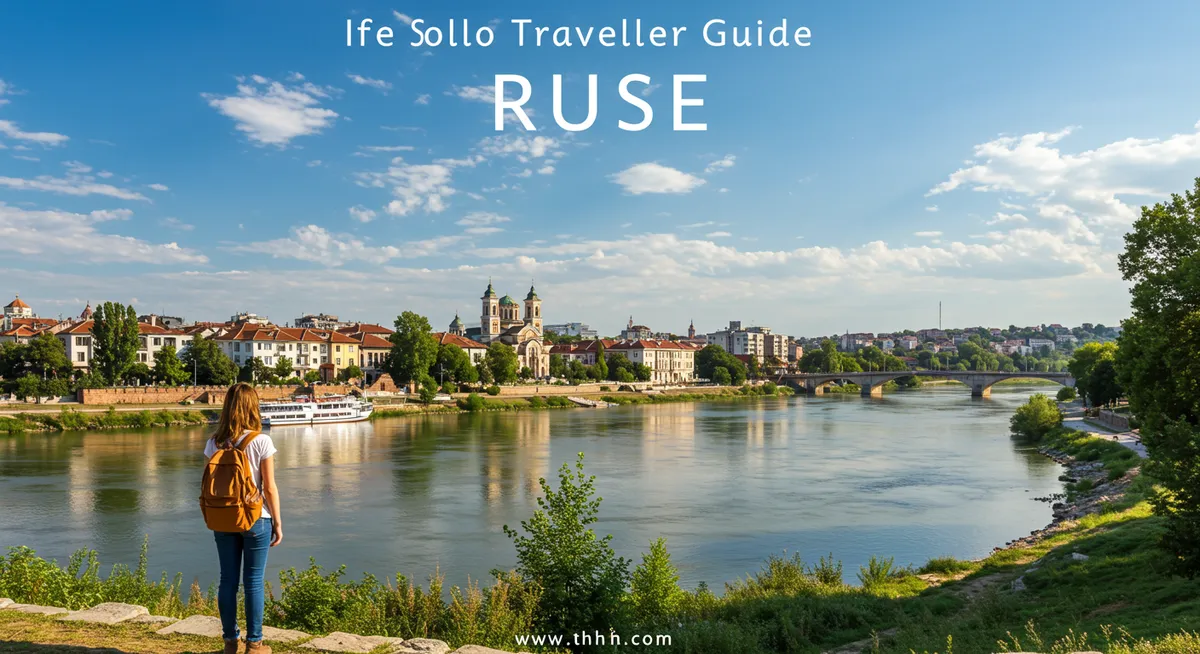
Ruse is the easiest Bulgarian city to land in alone. It is small enough to cross on foot in 25 minutes, safe enough that locals leave bikes unlocked at cafes, and connected enough that you can fly into Bucharest at lunchtime and be eating Danube fish on Alexandrovska Street by dinner. For solo travelers in 2026, that combination — walkable scale, low prices, and a built-in escape route to Romania — makes Ruse one of the best soft-launch destinations in the Balkans.
This guide focuses on what actually matters when you are travelling alone: where to sleep without paying double-occupancy markups, where to eat without feeling like the only person at a table for one, how to get around on Ruse’s near-flat grid, and how to meet other travelers in a city that does not have a hostel scene the size of Sofia’s. It also covers the things most blog posts skip — the Bucharest connection, real safety notes for solo women, and what a realistic daily budget looks like in euros.
For broader context on the city, pair this with our overview of 20 Best Things To Do in Ruse 2026 (Bulgaria's Little Vienna), the budget-friendly things to do in Ruse roundup, and the Discover lesser-known places guide for off-grid spots.
Continue planning: Use 20 Best Things To Do in Ruse 2026 (Bulgaria's Little Vienna) and Basarbovo Rock Monastery 2026: Visitor Guide & Transport Tips to connect this guide with the rest of your Bulgaria itinerary.
Why Ruse Works for Solo Travelers
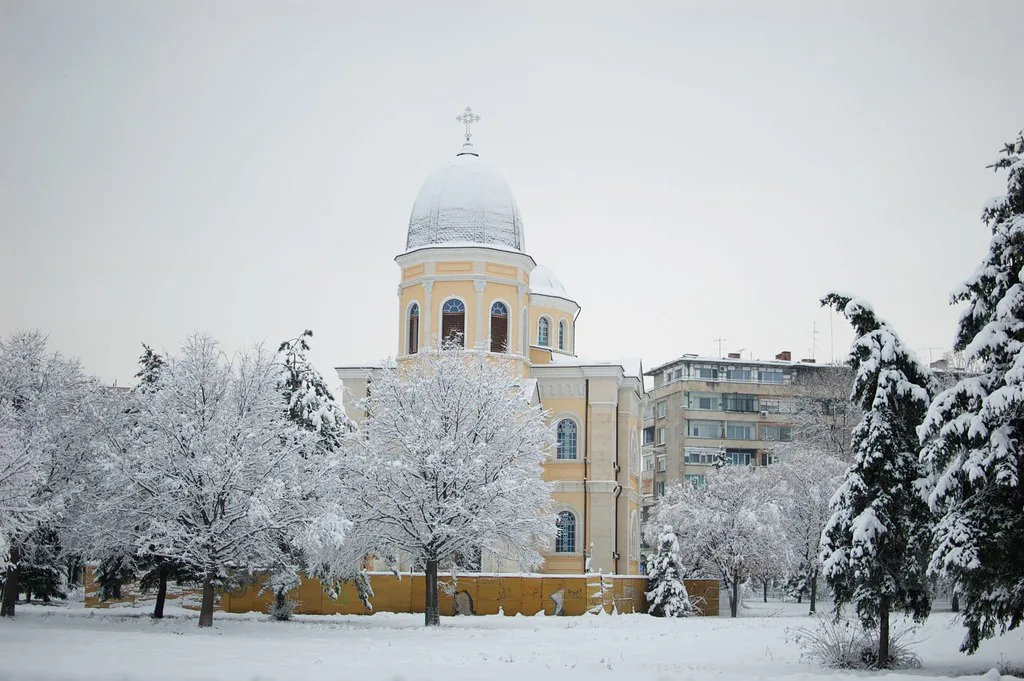
Ruse is Bulgaria’s fifth-largest city but feels like a town. The historic core sits in a tight grid bounded by the Danube to the north and the train station to the south, which means you almost never need a taxi and you cannot really get lost. For a solo traveler that single fact removes most of the daily friction — no metro maps to learn, no late-night ride-share negotiations, no language barrier with a bus driver.
It is also a low-stakes place to learn Bulgaria. Locals in Ruse are used to Romanian day-trippers and German river-cruise passengers, so menus appear in English, contactless payment is universal, and people switch to English without the slight defensiveness you sometimes get in smaller Balkan cities. Crime against tourists is rare; the most common solo-traveler complaint is over-pour at dinner, not pickpocketing.
Set realistic expectations on the social side. Ruse is not a backpacker hub like Plovdiv or Veliko Tarnovo. You will see other independent travelers, but the rhythm here is slower — long coffees, evening promenades along Alexandrovska, and short day trips. Treat it as a recharge stop with culture, not a party leg of a trip.
What Is Ruse Known For? Bulgaria’s “Little Vienna”
If you have not been, the one thing to know is that Ruse is the most architecturally elegant city in Bulgaria. Because it grew rich on Danube river trade in the late 19th century, its merchants imported Central European architects, and the result is a compact core of neo-Baroque and Secession facades that earned the city the nickname “Little Vienna.” The centrepiece is the Profit-Yielding Building (Dohodno Zdanie) and the Monument of Liberty on Svoboda Square — the image that fronts almost every Ruse travel guide. For a solo traveler this matters in a practical way: the sights that justify the trip are concentrated, photogenic, and free to wander, so you are not paying for a string of paid attractions to fill a day.
Beyond the architecture, Ruse is known as Bulgaria’s main Danube port and its gateway to Romania via the Friendship Bridge, the birthplace of Nobel laureate Elias Canetti, and the host of the March Music Days classical festival. It is a culture-and-strolling city rather than a beach or party city — which is exactly why it suits travelling alone.
💡 Good to know: Almost every headline sight in Ruse — the “Little Vienna” facades on Alexandrovska, Svoboda Square, the Danube quay, the Sexaginta Prista Roman ruins — sits within a flat 1.2 km walk along the pedestrian spine. You can see the city’s core on foot in a single afternoon without spending more than a few euros on entry tickets.
Getting to Ruse Solo (Including the Bucharest Hack)
The most underrated solo route into Ruse is from Bucharest, not Sofia. Bucharest’s Otopeni Airport (OTP) has far more cheap flights from Western Europe than Sofia, and Ruse sits just 75 km south across the Danube. Direct minibuses run from Bucharest’s Autogara Militari several times a day for around 12–15 EUR and take 90–120 minutes including the Friendship Bridge border check. You will need your passport in your hand, not in your bag, when you cross.
From Sofia, the train is the slow but scenic option (about 7 hours, around 14 EUR in second class), and the bus is faster (5–6 hours, 18–22 EUR with Union Ivkoni or Etap). Both terminate within walking distance of the centre — Ruse’s train and central bus stations sit side by side at the south end of Borisova Street, a flat 15-minute walk to the main square. Avoid arriving after 22:00 if you can; there are taxis but the surrounding blocks are quiet.
Solo travelers driving in from Romania should know that Ruse charges no city congestion fee but parking inside the pedestrian core is metered until 18:00. Most guesthouses include a free off-street spot if you ask in advance. There is no Bolt or Uber in Ruse as of 2026 — local taxis use meters and a 5 km ride costs 4–6 BGN (roughly 2–3 EUR).
Where to Stay Alone Without Paying a Double Premium
Ruse does not have a true backpacker hostel district, but it has three categories that work well for solo budgets. Cheapest are the small guesthouses around English Square (Anglyiski Ploshtad) and the Pantheon, where a private single room with shared bathroom runs 25–35 EUR. Mid-range boutique hotels in the restored 19th-century buildings on Borisova and Alexandrovska sit in the 45–65 EUR range and almost all offer single-occupancy pricing rather than charging the full double rate — a rarity in the Balkans.
For the hostel-style experience, look at Hostel Tangra and a handful of newer apart-hotels listed on Booking and Hostelworld. Dorm beds, when available, are 12–15 EUR but supply is thin, so reserve at least a week ahead between June and September. Couchsurfing has a small but active Ruse community of around 300 verified hosts; it is one of the better Bulgarian cities for it because hosts often speak good English and are used to Romanian crossings.
Stay inside the rectangle bounded by Battenberg Square, the river, the Pantheon and the train station. Anywhere in that zone puts you within a 10-minute walk of every cafe, restaurant and museum mentioned below, which matters at night when you are coming home alone.
Walking Ruse: The Pedestrian Spine
Alexandrovska Street is the spine of solo Ruse. The pedestrianised stretch runs roughly 1.2 km from Battenberg Square through the Monument of Liberty (Svoboda Square) and on to the train station, and it is closed to traffic for most of its length. Every important landmark — the Dohodno Zdanie opera house, the Profit-Yielding Building, the Court House, the main square fountains — sits on or one block off this axis.
The promenade comes alive between 18:00 and 22:00, when families, students and couples do the traditional evening walk known locally as the shetnya. As a solo traveler this is the easiest social hour of the day; you can sit at any cafe with a book and not feel out of place. The grid is flat, the surface is smooth enough for rolling luggage, and the LED street lighting installed in 2024 means the whole spine stays well-lit until at least midnight.
Two short detours are worth your time. North from Svoboda Square the road drops to the Danube quay and the Sexaginta Prista Roman ruins — about 8 minutes downhill but a steeper 12 back up. East of Battenberg Square sits the Profit-Yielding Building (Dohodno Zdanie) and a cluster of restored merchant houses with quiet courtyards that make good photo spots in early morning.
Solo-Friendly Eating: Tables Where You Won’t Feel Watched
Eating alone is the test of any small city, and Ruse passes. The places that work best for one have bar seating, fast service, and menus that do not require committing to sharing plates. Mehana Chiflika near the river serves the full Bulgarian repertoire — Shopska salad, Kavarma, Danube catfish — and has a long wooden bar where solo diners can eat without claiming a four-top. Happy Bar & Grill on Alexandrovska is the chain everyone defaults to for predictable English-menu service and free Wi-Fi; not memorable food, but useful when you arrive tired.
For breakfast and lunch, Strelbishte and Cafe Sofra near the Pantheon both do strong solo turn-around — espresso, banitsa pastry, and a salad — for under 8 EUR. The Central Market (Tsentralen Pazar) two blocks south of Svoboda Square has counter-style stalls where you can build a picnic of local cheese, tomatoes and bread for 4–5 EUR; this is the cheapest decent meal in town and a good move if you are heading to Lipnik Park or Ivanovo.
Dinner is where solo travelers should be slightly tactical. Bulgarian restaurants pour generously and assume sharing, so go early (18:30–19:30) when service is attentive, ask for a half-portion (polovin portsiya), and pair one main with a salad rather than a full mezze spread. A typical solo dinner with a glass of local Mavrud wine runs 14–20 EUR.
Meeting Other Travelers and Locals
Ruse does not have a nightly pub crawl scene, so meeting people takes slightly more intent than in Sofia or Plovdiv. Three reliable options exist. The free walking tour run by volunteers from the Ruse Tourism Information Center (departures 11:00 most days from May to October, 90 minutes, tip-based) is the single best way to meet other independent travelers — it is small, often 4–8 people, and almost everyone goes for coffee afterward. Sign up at the office on Battenberg Square.
Second, the language-exchange evenings hosted irregularly at Cocheto Wine Bar and at the Elias Canetti House cultural centre attract a mix of expats, Erasmus students from Ruse University, and visiting Romanians. Check the Ruse Expats and Ruse Couchsurfing Facebook groups the day you arrive — events are not always on the official calendar. Third, joining a small-group day trip to Ivanovo or the Rusenski Lom Nature Park Visitor Guide (35–55 EUR through any city centre tour office) bundles a guide, transport, and a built-in cohort for the day.
If you want to socialise with locals rather than other travelers, the river-front bars between Cafe Apollo and the Yacht Club are the most relaxed evening venues. People will often start a conversation if you are clearly alone with a book; the gentle assumption is that you are a Romanian crossing for cheaper drinks, and that opens the door to a friendly correction.
Safety, Especially for Solo Women
Ruse is one of the safer mid-size cities in the Balkans for solo female travel. Violent crime is rare, the historic core is well-lit and policed, and the cultural register around women travelling alone is closer to Vienna than to a Black Sea resort town. That said, three practical notes are worth knowing in 2026.
First, the area immediately south of the train station gets quiet after 21:00 and is the one neighbourhood where solo female travelers report mild catcalling — stay north of Borisova Street after dark or take a metered taxi the short distance. Second, river-front bars sometimes attract day-trippers from Romania who drink heavily; the bars themselves are safe but pace yourself if you are matching rounds. Third, Bulgarian taxi drivers occasionally try to skip the meter for foreigners; insist firmly with the words na taksimetara (on the meter) and the issue disappears.
Pharmacies (apteka) are abundant and most pharmacists speak basic English. Tap water is safe to drink. The general emergency number is 112 with English-speaking operators. Carry a paper photocopy of your passport rather than the original when out at night.
Day Trips That Make Sense Solo
Three day trips work well from Ruse without a car. The Rock-Hewn Churches of Ivanovo are 22 km southwest and reachable by the local bus toward Ivanovo village (around 5 BGN, 35 minutes) plus a 30-minute walk to the cliffs; bring water and good shoes, and time the return bus before 17:00 in shoulder season. The complex is a UNESCO site with 13th- and 14th-century frescoes and the kind of quiet that rewards solo visiting.
Veliko Tarnovo, Bulgaria’s old capital, sits 110 km south and is doable as a long day (2.5 hours each way by bus, around 16 EUR return) but is much better as an overnight extension. Bucharest is the surprise option: a morning bus puts you in the Romanian capital by lunch for sightseeing and back in Ruse by 22:00, with the only logistical wrinkle being the border crossing where you need your passport ready twice.
For a half-day, Lipnik Park 12 km outside the city is a forested lake reachable by city bus 14 from the train station (around 2 BGN, 25 minutes). It is where Ruse locals go to swim, picnic and rent a paddle boat for 6 EUR an hour — a low-key way to spend an afternoon if you have been doing back-to-back museums.
Daily Budget and Practical Numbers in 2026
A realistic solo daily budget in Ruse for 2026 is 45–65 EUR for budget travel (guesthouse single, market lunch, restaurant dinner, one museum, public transit) and 75–110 EUR for mid-range comfort (boutique hotel single, two restaurant meals, a day-trip tour, a couple of drinks). Ruse is roughly 25 percent cheaper than Sofia and 40 percent cheaper than Bucharest for equivalent quality.
| Best months for solo travel | Mid-May to mid-June or early September to mid-October |
| Recommended length of stay | At least two full nights (one to walk the centre, one for a day trip) |
| Budget daily cost | 45–65 EUR (guesthouse single, market lunch, restaurant dinner, one museum) |
| Mid-range daily cost | 75–110 EUR (boutique single, two meals, a day-trip tour, drinks) |
| Fastest way in | Minibus from Bucharest (75 km, 90–120 min, 12–15 EUR) |
| Getting around | On foot — the historic core crosses in about 25 minutes |
Bulgaria adopts the euro on 1 January 2026, so prices that previously appeared in BGN now display in EUR alongside the lev during a transition year. Both currencies remain accepted in Ruse through 2026; ATMs from major banks (UniCredit Bulbank, DSK, Postbank) dispense both and use mid-market exchange rates with a flat 2–3 EUR fee. Avoid the orange Euronet ATMs near the main square — they apply markups of up to 12 percent.
💡 Good to know: Because 2026 is Bulgaria’s euro transition year, you may still be handed change in lev. Always withdraw from a major-bank ATM (UniCredit Bulbank, DSK or Postbank) rather than the orange Euronet machines near Svoboda Square, and decline any “convert to your home currency” prompt — paying in euros at the mid-market rate is consistently cheaper than dynamic currency conversion.
For connectivity, a Vivacom or A1 prepaid SIM with 30 GB data costs around 10 EUR at any phone shop on Alexandrovska; bring your passport. EU roaming applies if you arrive on a European carrier. Free Wi-Fi covers Battenberg Square and most cafes. Museums sit in the 4–8 EUR range and most are closed Mondays — plan day trips for Monday and city sightseeing the rest of the week.
Top Solo Experiences in Ruse
If you only have 48 hours, anchor your visit around these high-return solo activities. Each one works well alone and most cluster within walking distance of Alexandrovska Street.
- Walk the full length of Alexandrovska Street at 19:00 to see the city’s evening promenade in motion.
- Visit the Profit-Yielding Building (Dohodno Zdanie) and stay for an opera or theatre performance — solo single tickets start at 8 EUR.
- Spend an hour at the Roman ruins of Sexaginta Prista on the Danube quay; entry is around 4 EUR and crowds are minimal.
- Take the free walking tour from Battenberg Square at 11:00 and meet other travelers for lunch afterwards.
- Eat dinner at the bar of Mehana Chiflika and order Danube catfish with a glass of Mavrud.
- Day-trip to the Rock-Hewn Churches of Ivanovo by local bus and walk back through the Rusenski Lom gorge.
- Browse the Central Market for cheese, honey and rose-petal jam to take home as gifts.
- Watch sunset from the Danube quay near the Yacht Club, with Romania visible across the water.
For more inspiration once you have ticked these off, see our guides to outdoor & nature in Ruse, Ruse food & drinks, and Best Photo Spots.
If you want a visual sense of how these sights cluster together before you go, this short walkthrough runs through the city’s top attractions.
Best Time to Visit Ruse Solo
The sweet spot for solo travel to Ruse is mid-May to mid-June or early September to mid-October. Daytime temperatures sit at 20–26°C, the Danube is calm enough for boat trips, and accommodation rates are roughly 20 percent below July–August peak. The annual March Music Days festival (mid-March to early April) is the cultural highlight of the year and brings classical performers from across Europe to the Dohodno Zdanie — book accommodation a month ahead if you target these dates.
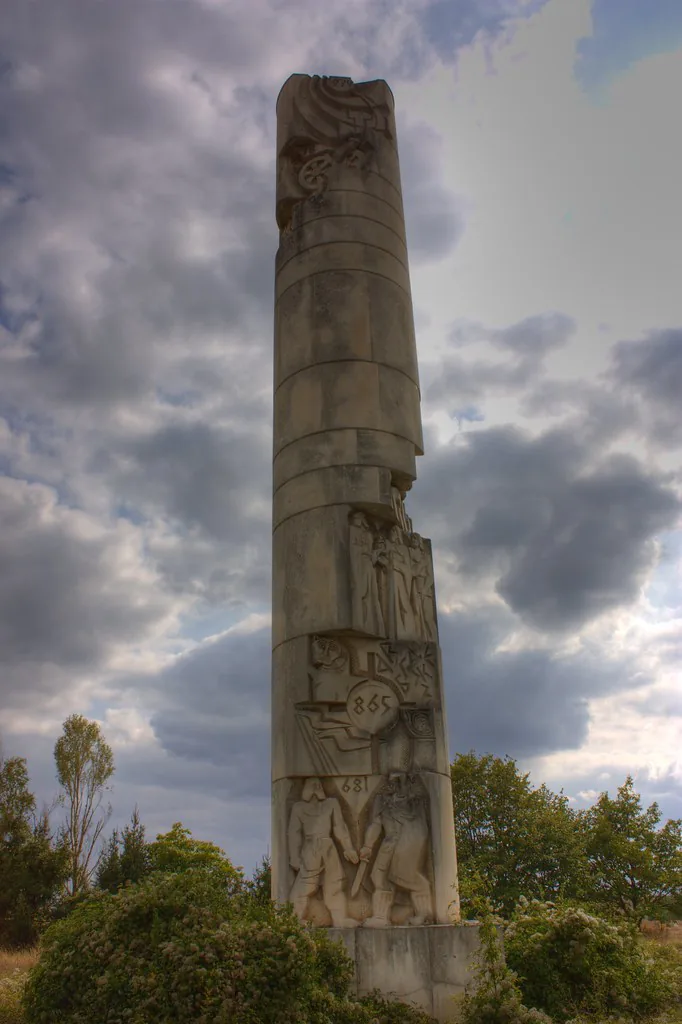
Avoid late July and August if you dislike heat; Ruse sits in the Danubian plain and regularly hits 35°C with little shade outside the parks. Winter (December–February) is quiet, atmospheric and very cheap, but several restaurants close and day trips become weather-dependent. The city Christmas market on Svoboda Square in December is small but charming and one of the easier solo-friendly evening activities of the year.
Whatever month you pick, give Ruse at least two full nights. One is enough to walk the centre; two lets you fit a day trip and a slow second morning, which is what makes the city feel like a real destination rather than a transit stop on the way somewhere else.
Solo Travel in Ruse: Frequently Asked Questions
How many days do you need in Ruse?
Two full nights is the sweet spot for a solo trip. One day covers the walkable historic core — Alexandrovska Street, Svoboda Square, the Danube quay and the Sexaginta Prista ruins — and the second lets you add a day trip to the Rock-Hewn Churches of Ivanovo, Lipnik Park or even Bucharest. A single night works only if Ruse is a transit stop between Bulgaria and Romania.
Is Ruse, Bulgaria worth visiting as a solo traveler?
Yes. Ruse is walkable, safe, inexpensive (about 25 percent cheaper than Sofia), and its compact “Little Vienna” core means the headline sights are free to wander and clustered within a 1.2 km stretch. It is a culture-and-strolling recharge stop rather than a backpacker party hub, which is exactly what makes eating, sightseeing and getting around alone low-friction.
What is Ruse known for?
Ruse is known for its neo-Baroque and Secession architecture — the “Little Vienna” nickname — anchored by the Profit-Yielding Building (Dohodno Zdanie) and the Monument of Liberty on Svoboda Square. It is also Bulgaria’s main Danube port and gateway to Romania, the birthplace of Nobel laureate Elias Canetti, and the host of the March Music Days classical festival.
Is Ruse safe for solo female travelers?
Ruse is one of the safer mid-size cities in the Balkans for solo women — violent crime is rare and the historic core is well-lit and policed. The main practical notes are to stay north of Borisova Street after dark (the area just south of the train station gets quiet after 21:00), pace yourself at the river-front bars, and insist taxi drivers use the meter.
Where should solo travelers stay in Ruse?
Stay inside the rectangle bounded by Battenberg Square, the river, the Pantheon and the train station. Budget guesthouses near English Square run 25–35 EUR for a single, boutique hotels on Borisova and Alexandrovska sit at 45–65 EUR and offer real single-occupancy pricing, and dorm beds (where available) are 12–15 EUR — reserve a week ahead in summer.
Filed under