Independent Bulgaria travel guide
Best Family Activities in Ruse
Discover the best family-friendly activities in Ruse. A complete guide featuring top attractions and lesser-known places for families in 2026. Start planning now!
On this page14 sections
Ruse rewards families who plan around two things: the Danube riverfront and the wide pedestrian centre. Most attractions a child will actually enjoy sit within a 25-minute walk of Svoboda Square, and the rest are short bus or taxi rides into the green belt south of the city. This 2026 guide focuses on what genuinely works with kids — from toddlers in strollers to teenagers — rather than every monument on the tourist map.
You will find indoor backups for hot or rainy days, locals' picks that English-language guides usually skip, honest notes on cobblestones and admission fees in BGN and EUR, and a practical itinerary order that minimises backtracking. For broader context, scan our wider 20 Best Things To Do in Ruse 2026 (Bulgaria's Little Vienna) guide; for evening planning, see our notes on family-suitable picks within Ruse Experiences.
Is Ruse worth visiting with kids, and what is it known for?
Yes — for families, Ruse is one of the easier Bulgarian cities to enjoy. It is best known as "Little Vienna," a nickname earned by the Austro-Hungarian and neo-Baroque facades that line Alexandrovska Street and Svoboda (Freedom) Square, the grand pedestrian heart of the city. That architecture gives parents a walkable, traffic-free centre where kids can roam between playgrounds, riverside benches, and pancake cafes without constant road-crossing stress.
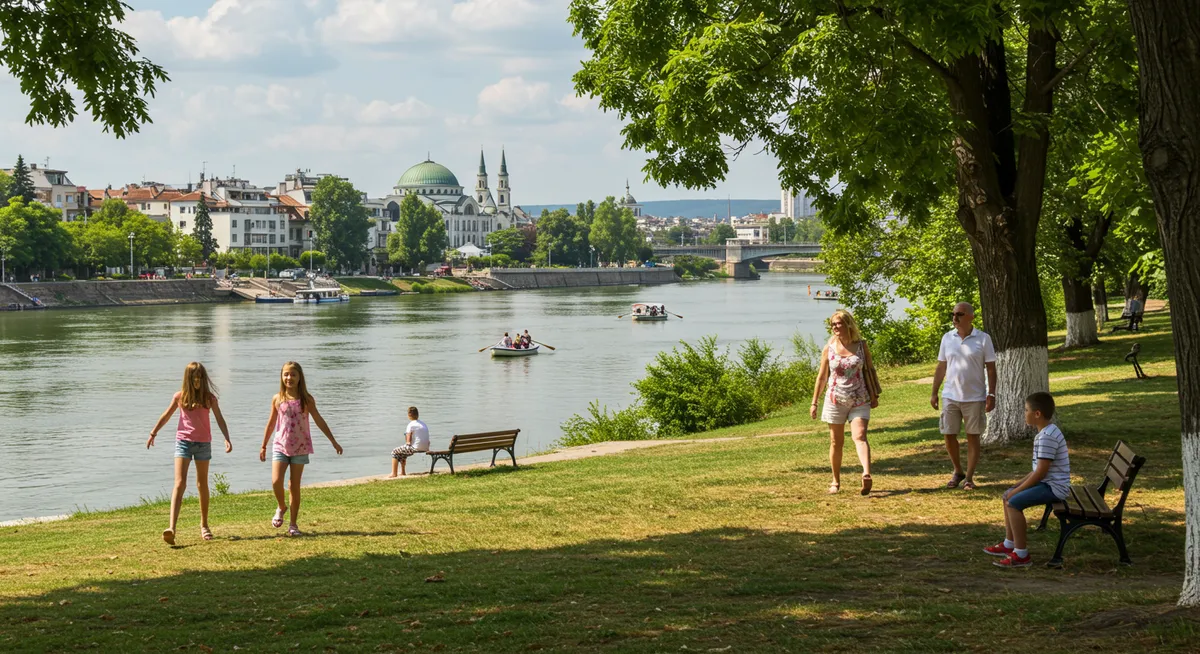
The other half of Ruse's draw is the Danube. The city sits on Bulgaria's busiest stretch of the river, facing Romania across the Friendship Bridge, and much of what works with children — the parks, the boat trips, the riverside promenade — clusters along that waterfront. Combine the compact "Little Vienna" centre with the green belt to the south, and you have a destination that suits toddlers and teenagers alike across a long weekend.
Park na Mladezhta: where Ruse families actually spend the weekend
Forget the formal Ruse City Park for a moment. The bigger draw for local families is Park na Mladezhta (Youth Park), a sprawling green stretch along the Danube about 2 km west of the centre. It has a small artificial lake with pedal boats (around 8–10 BGN / 4–5 EUR for 30 minutes), a children's railway that runs in summer, an open-air planetarium, and several seasonal cafes with shaded terraces.
The Lunapark inside the park is delightfully old-school: a small Ferris wheel, bumper cars, a carousel, and a few kiddie rides priced at 2–4 BGN per attraction. It is rarely crowded on weekday mornings. Bring sunscreen — shade is patchy near the lake — and budget two hours minimum once kids spot the boats.
💡 Good to know: Most rides and boats inside Park na Mladezhta are pay-per-use in cash BGN, and small kiosks rarely take cards. Bring a handful of small notes and coins — 20–30 BGN covers a morning of pedal boats, bumper cars, and an ice cream for two children.
Sexaginta Prista Roman fortress and the riverside walk
The Ancient Roman Fortress of Sexaginta Prista sits on the Danube bluff just north of the centre and works well as a 45-minute stop, not a half-day. The compact site has English signage, raised walkways over the excavated foundations, and a small indoor museum that doubles as a heat refuge in July and August. Admission runs about 6 BGN (3 EUR) for adults and 2 BGN for children, with under-7s free.
Combine it with the riverside promenade that begins behind the fortress. Strollers cope fine on the asphalt path, and the views of the Danube and the Friendship Bridge to Romania keep older kids engaged. Pair this stop with the Pantheon (next section) for a coherent morning loop. For a deeper dive on the city's Roman past, our Ruse landmarks rundown covers context the on-site signage skips.
Pantheon of National Revival Heroes and the central park
The Pantheon of National Revival Heroes Visitor Guide — the gold-domed building anchoring the eastern end of the central park — is more child-friendly than it sounds. The crypt holds the remains of 19th-century Bulgarian revolutionaries, but kids respond to the cool marble interior, the eternal flame, and the dramatic dome painted with a starlit sky. Entry is around 4 BGN (2 EUR), and the visit takes 20 minutes.
Right outside, the surrounding park has a long playground strip with climbing frames, swings, and a shaded sandpit. Free public toilets are available near the southern gate. This is the easiest place in central Ruse to let small children burn energy while parents take turns visiting nearby museums.
Regional Historical Museum and the Eco Museum and Aquarium
The Regional Historical Museum on Battenberg Square is the most kid-friendly history museum in the city: it includes a Thracian gold treasure room (the famous Borovo silver set replicas) and several touchscreens that work in English. Allow 60–90 minutes. Adult entry is 6 BGN (3 EUR), school-age children 2 BGN, and there is no buggy access on the upper floors.
For younger kids, the smaller Eco Museum and Aquarium on Pridunavski Boulevard is the better pick. It holds Danube fish species, a few reptiles, river-ecology displays, and live feeding sessions on weekend mornings. Tickets are around 4 BGN for adults, 2 BGN for children. Combined with a short walk on the riverbank, it fills an easy two-hour slot — and crucially, it is fully indoors when the weather turns.
Danube boat trips and the Pristanishte riverfront
Sightseeing boats depart from Pristanishte (the small passenger pier at the foot of Pridunavski Boulevard) between May and October. The standard one-hour cruise covers both the Bulgarian and Romanian banks and runs around 25–35 BGN (13–18 EUR) for adults, half price for children under 12. Sunset departures usually leave at 19:00 in summer; book the same morning at the kiosk to confirm — schedules slip when the river is low or windy.
For toddlers prone to seasickness or boat boredom, skip the cruise and walk the promenade to the cargo port lookout. Watching working barges and the Friendship Bridge from a stationary bench is often a bigger hit than a boat ride, and it costs nothing.
Free things to do in Ruse with kids
Ruse rewards families on a budget, because several of its best moments cost nothing. The Danube promenade behind the Sexaginta Prista fortress is free to walk, and the cargo-port lookout — where children watch working barges and the Friendship Bridge from a stationary bench — is often a bigger hit than a paid boat ride. Holy Trinity Cathedral has no admission fee (only an optional small donation), and the half-underground interior fascinates older kids.
The standout free option is the playground strip beside the Pantheon in the central park: climbing frames, swings, a shaded sandpit, and free public toilets near the southern gate. At Lipnik Forest Park the deer and pheasant enclosure is also free to visit, even if the paddle boats and pony rides are paid. String these together — a riverside walk, the central-park playground, and a cathedral peek — and you have a no-cost half-day in the centre.
Ruse Aqua Park and summer cool-downs
Ruse Aqua Park, located on the city's southern edge, opens roughly from mid-June to early September. Day passes in 2026 sit around 25 BGN (13 EUR) for adults, 15 BGN for children, with after-15:00 discounts. It includes three slides, a wave pool, a toddler splash zone, sun loungers, and a basic snack bar — pack your own food if you are staying past lunch, as queues are long on hot weekends.
If the aqua park is closed or overcrowded, the indoor pool at Sport Hotel Riga has a small children's section open year-round, and the Danube riverside has cooled, shaded pockets near the Sexaginta Prista bluff. For fuller adventure options beyond pools, browse Ruse adventures.
Lipnik Forest Park: the locals' weekend escape
Twelve kilometres south of Ruse, Lipnik Forest Park is the city's best-kept family secret and almost never appears in English-language guides. It wraps a small lake with paddle boats (around 10 BGN / 5 EUR per half hour), has a free deer and pheasant enclosure, marked picnic areas with built-in BBQs, a horseback riding stable for children's lessons (around 30 BGN / 15 EUR per 30-minute session), and a basic restaurant serving traditional Bulgarian grills.
Get there by taxi (12–15 BGN / 6–8 EUR one way) or rental car — public transport is sparse and not worth the headache with kids in tow. Go on a Saturday morning to catch the local atmosphere; weekdays in shoulder season feel almost deserted, which is also pleasant.
Rock-Hewn Churches of Ivanovo and Rusenski Lom Nature Park
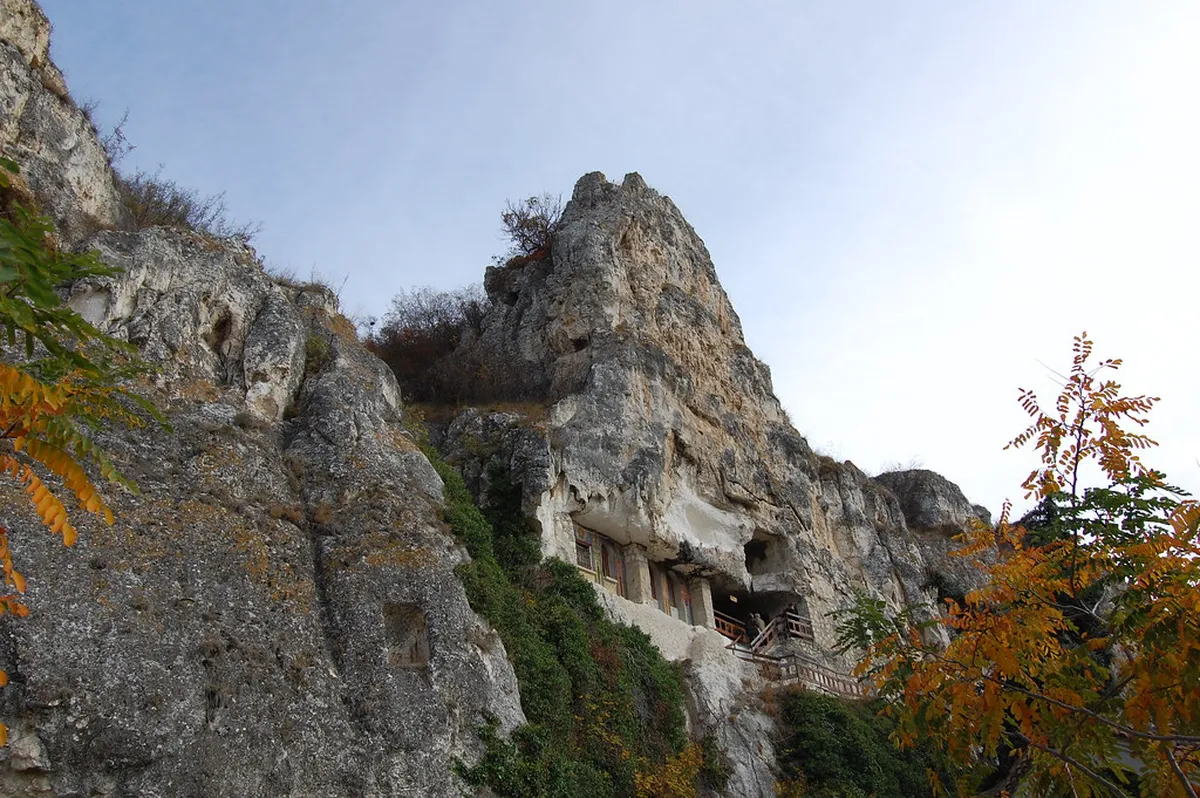
The Rock-Hewn Churches of Ivanovo, a UNESCO World Heritage site about 20 km southwest of Ruse, work for kids aged seven and up but are challenging for toddlers. Reaching the main painted church involves a 20-minute uphill walk on uneven steps with a sheer drop on one side; strollers are impossible. Admission is 6 BGN (3 EUR) for adults, free for children under seven, and the site is open Tuesday to Sunday from 09:00 to 17:00 in summer.
Pair the visit with a short drive into Rusenski Lom Nature Park Visitor Guide — the dramatic limestone canyon below has easy trails near the village of Cherven, plus the impressive Cherven Fortress ruins. Pack water and snacks; there are no shops between Ivanovo village and the fortress.
Orlova Chuka Cave: an underground adventure for older kids
About 40 minutes' drive south of Ruse, near the village of Pepelina inside the Rusenski Lom area, Orlova Chuka ("Eagle's Peak") is one of Bulgaria's longest caves and a memorable day trip for children aged roughly six and up. Guided walks lead past large echoing chambers and bat colonies; the temperature stays cool year-round, so it makes a good escape from a midsummer heatwave. Wear closed shoes with grip — the floor is uneven and can be slick — and bring a light layer even in August. There is no public transport, so plan it as a rental-car or taxi outing, ideally bundled with the Ivanovo churches or Cherven Fortress to make the drive worthwhile.
Holy Trinity Cathedral and a stroll down Alexandrovska
The Holy Trinity Cathedral is unusual in being built half-underground, a workaround for Ottoman-era rules limiting church height. Interiors are dim and atmospheric, which younger kids find either fascinating or unsettling — keep the visit short, around 15 minutes, and remind children to whisper. There is no admission fee, but a small donation is appreciated.
Afterwards, walk north up Alexandrovska Street, the long pedestrian artery. It is flat, stroller-friendly, lined with cafes selling palachinki (Bulgarian pancakes), and ends at Svoboda Square in front of the Monument of Liberty. Family-friendly lunch picks along the route include Happy Bar & Grill (familiar menu, kids' portions, fast service) and Mehana Chiflika for traditional Bulgarian dishes in a courtyard setting.
To picture the scale of the centre before you arrive, this on-the-ground walk through Ruse shows the pedestrian streets and riverside you will be strolling with the kids.
Museum of Transport and other rainy-day backups
The Museum of Transport occupies Bulgaria's first railway station building (1866) and is one of only a handful in Europe with a royal carriage you can walk through. Children love climbing aboard the steam locomotive on the platform and spinning the brass valves. Admission is around 6 BGN (3 EUR) for adults, 2 BGN for children, with a small extra fee for the photo ticket. Allow 60–90 minutes.
Other indoor fallbacks for bad weather: Mall Ruse on Lipnik Boulevard has a children's play zone and a small cinema with English-language family screenings; the Stoyan Mihaylovski Puppet Theatre runs Saturday morning shows in Bulgarian that even non-speakers enjoy (tickets 5–8 BGN); and the State Opera occasionally programmes children's matinees — check the schedule via the broader Ruse culture calendar.
Practical notes: cobblestones, transport, and one-day planning
Two practicalities matter more in Ruse than first-time visitors expect. First, the older central streets between Sveta Troitsa Square and Battenberg Square are paved with original 19th-century cobblestones — beautiful, but punishing for narrow stroller wheels. Bring a buggy with at least 18 cm wheels or a soft carrier for under-twos. Second, public transport with kids is awkward: buses run frequently but are crowded and lack stroller space. Taxis are cheap (typically 5–10 BGN / 2.50–5 EUR for any cross-town hop) and almost always faster.
For a clean one-day family itinerary, we suggest: morning at Sexaginta Prista plus the riverside walk; lunch on Alexandrovska; early afternoon at the Regional Historical Museum or Eco Museum; late afternoon recovery time at the Pantheon park playground; dinner near Svoboda Square. Save Lipnik or Ivanovo for a separate day. Detailed timing options are mapped out in our Ruse Itinerary guide.
Ruse family attractions at a glance
| Sexaginta Prista fortress | ~6 BGN / 3 EUR adult, 2 BGN child, under-7s free; ~45 min |
| Regional Historical Museum | 6 BGN / 3 EUR adult, 2 BGN school-age; 60–90 min, no buggy access upstairs |
| Eco Museum & Aquarium | ~4 BGN adult, 2 BGN child; fully indoors, ~2 hours |
| Danube boat cruise | 25–35 BGN / 13–18 EUR adult, half price under-12; May–October, ~1 hour |
| Ruse Aqua Park | ~25 BGN / 13 EUR adult, 15 BGN child; mid-June to early September |
| Lipnik Forest Park | Free entry; paddle boats ~10 BGN, pony rides ~30 BGN; 12 km south |
Frequently asked questions about visiting Ruse with kids
Is Ruse worth visiting with children?
For families, yes. The traffic-free centre around Svoboda Square and Alexandrovska Street is genuinely walkable with strollers, the riverside parks give kids space to run, and there are enough indoor backups — museums, the aquarium, the transport museum, the mall cinema — to rescue a rainy or scorching day. A long weekend suits most families.
What free things can families do in Ruse?
The Danube promenade and cargo-port lookout, the central-park playground beside the Pantheon, the deer and pheasant enclosure at Lipnik Forest Park, and a visit to the half-underground Holy Trinity Cathedral are all free. Stringing the riverside walk, the playground, and the cathedral together makes an easy no-cost half-day.
What is the best time of year to visit Ruse with kids?
Late spring (May–June) and early autumn (September) are ideal — the Danube boat cruises run, the parks are green, and the heat is manageable. Mid-summer brings the aqua park and the children's railway but also punishing afternoon heat, so plan indoor stops like the Eco Museum and Aquarium for the hottest hours.
How do you get around Ruse with young children?
Walk the compact centre and take taxis for anything further — they are cheap (typically 5–10 BGN cross-town) and far easier than the crowded buses, which lack stroller space. For day trips to Lipnik, Ivanovo, Orlova Chuka, or Cherven, a rental car or taxi is essential, as public transport is sparse.
Ruse genuinely earns its "Little Vienna" nickname for families who lean into the riverside, the parks, and the indoor backups rather than chasing every checklist landmark. Plan around the heat in summer and the cobblestones in any season, and the city becomes one of the easiest places in Bulgaria to travel with children in 2026.
Filed under
Continue your journey
Related Bulgaria guides
6 Jun 2026
Nikopol Bulgaria Day Trip From Ruse Travel Guide
30 Jul 2026
Ruse Christmas Market: 2026 Guide to Dates, Zones and Tips
30 Jul 2026
Ruse Danube Cruise Guide: Port Logistics, Excursions & Itineraries
30 Jul 2026
Ruse Parking Guide 2026: Blue Zone Rates, Garages & Free Lots
20 Jul 2026
Best Time to Visit Ruse in 2026: Weather, Events and Crowds
17 Jul 2026