
Sofia Food & Drinks Hub: What to Eat & Drink in 2026
Sofia food & drinks hub for 2026: what to eat (banitsa, kebapche, shopska), where to drink (rakia, wine, specialty coffee), markets, food tours, and BGN prices.
On this page
Sofia Food & Drinks: What to Eat & Drink in 2026
Sofia is one of Europe’s most affordable food capitals in 2026, with mehana mains at 12–20 BGN, banitsa from 1–2 BGN, and rakia shots at 4–8 BGN. This hub guide answers the core questions visitors ask—what to eat, what to drink, where locals shop, and how much it costs—then points you to deeper guides on dishes, drinks, tours, and venues. Pair this with our pillar guide on things to do in Sofia to plan a balanced trip.
What to Eat in Sofia: The Core Bulgarian Menu
Bulgarian cuisine in Sofia centres on grilled meats, fresh dairy, and pastry-based snacks. The five dishes you will see on nearly every mehana menu are shopska salata (tomato, cucumber, onion, peppers topped with grated sirene white cheese), kebapche (grilled minced-meat rolls), banitsa (filo cheese pastry), kavarma (pork or chicken stew with peppers and onions), and tarator (cold yogurt-cucumber soup served in summer). Expect a typical mehana main to land between 12 and 20 BGN, with starters at 6–10 BGN.
For a full breakdown of dishes, ordering tips, and where to try each one, see our deep-dive guide to traditional Bulgarian dishes in Sofia.
Where to Eat: Mehanas, Modern Bistros, and Street Food
Sofia’s eating scene splits into three tiers. Mehanas (traditional taverns) are rustic, often candle-lit rooms serving regional classics with live folk music; expect 35–55 BGN per person with one drink. Modern bistros around Vitosha Boulevard and Oborishte district reinterpret Bulgarian ingredients with European technique; budget 60–110 BGN per person. Street food is the cheapest entry point—banitsa stands, princessa open-faced toasts, and bakery windows along Pirotska Street keep you fed for under 8 BGN.
For the most curated way to sample all three in one afternoon, book a guided Bulgarian food tour in Sofia—tours typically run around 80 BGN and include 6–8 tastings.
What to Drink: Rakia, Wine, Beer, and Coffee
Rakia is Bulgaria’s national spirit—a fruit brandy (grape, plum, or apricot) served chilled at the start of a meal alongside a salad. Bar pours run 4–8 BGN per 50ml; premium aged rakia at specialty bars climbs to 12–18 BGN. Bulgarian wine is the country’s under-rated export: look for Mavrud from Thrace, Melnik 55 from the southwest, and crisp Dimyat whites; a glass at a wine bar costs 7–14 BGN.
For the spirit, see our Bulgarian rakia guide for Sofia. For nightlife venues including wine bars and craft-beer rooms, see best bars in Sofia. For third-wave cafes, latte art, and laptop-friendly spots, jump to our specialty cafes in Sofia guide—a flat white runs 4–6 BGN at most roasters.
Markets, Bakeries, and Self-Catering
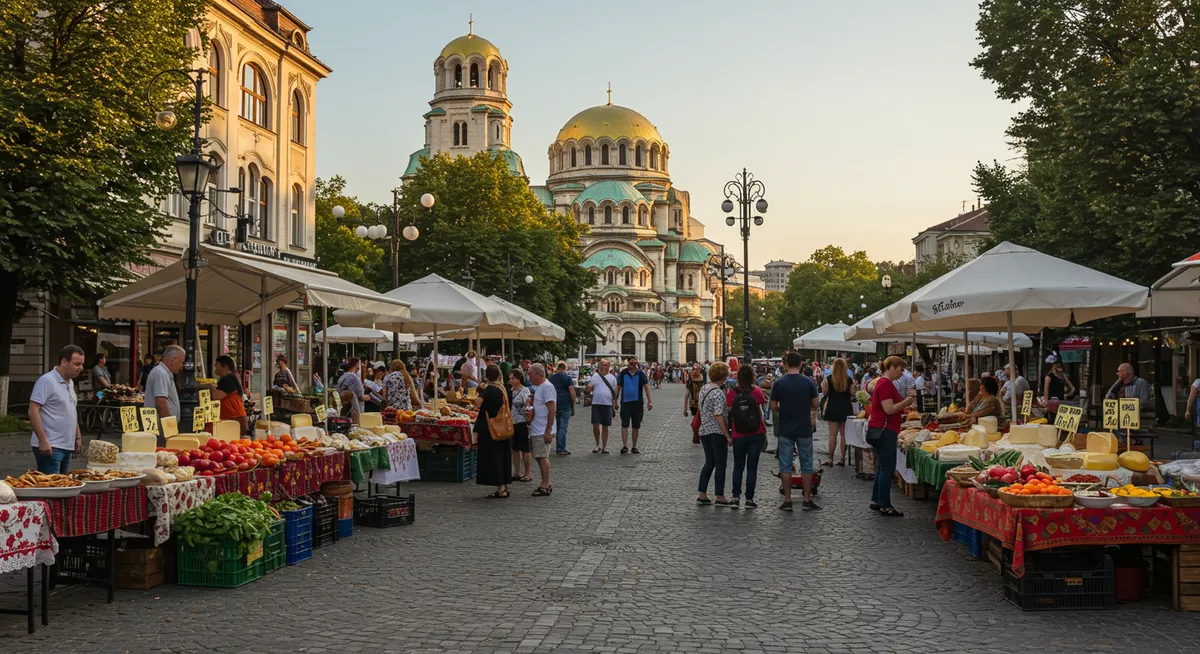
The Central Market Hall (Tsentralni Hali) on Maria Luiza Boulevard is the easiest market entry point: two floors of cheese counters, butchers, bakeries, and a basement food court, open daily 7:00–22:00. The Zhenski Pazar (Women’s Market) on Stefan Stambolov Boulevard is grittier and cheaper—best for produce, spices, and pickled vegetables. Pick up kashkaval (yellow cheese), lukanka (flat cured sausage), fresh banitsa, and a bottle of Mavrud and you have an apartment dinner for 25–35 BGN for two. Both halls double as souvenir stops—see our full shopping in Sofia guide for rose oil, ceramics, and Tax-Free tips.
Eat Cheap vs. Splurge: Daily Budgets
Backpacker (60–90 BGN/day): bakery breakfast, banitsa or street pizza for lunch, mehana mains for dinner, one rakia or beer. Mid-range (130–180 BGN/day): specialty cafe breakfast, sit-down lunch, modern bistro dinner with wine, two drinks. Splurge (250+ BGN/day): fine-dining tasting menu, premium wines, private food tour, cocktail bars. Sofia stays roughly 40–50% cheaper than Western European capitals across all three tiers in 2026.
Dietary Considerations: Vegetarian, Vegan, Halal, Gluten-Free
Sofia handles dietary restrictions better than most Balkan capitals. Vegetarians have shopska salata (skip the cheese for vegan), chushki burek (stuffed peppers), mish-mash (egg-pepper-tomato scramble), and grilled vegetable plates on every mehana menu. Vegan diners will find dedicated spots in the city centre—Soul Kitchen and Edgy Veggy are reliable. Halal options exist near the Banya Bashi Mosque and along Pirotska Street, with several Turkish and Middle Eastern grills. Gluten-free is harder; banitsa and most pastries are off-limits, but grilled meats, salads, and dairy plates work fine—ask servers to confirm flour-thickened sauces.
Food Tours and Cooking Classes
If you have one food day in Sofia, a guided tasting tour is the highest-value option. Group walking food tours run roughly 80 BGN per person, last 3–4 hours, and cover 6–8 stops including a market, a bakery, a mehana tasting, and a rakia or wine pour. Private cooking classes—making banitsa, kebapche, and shopska from scratch—run 110–160 BGN per person and usually start with a market shop.
Book the right format from our food tour guide, and pair the experience with a wider Sofia itinerary.
Frequently Asked Questions
What is the most famous food in Sofia?
Banitsa—a flaky filo pastry filled with white cheese and eggs—is the dish most associated with Sofia and Bulgaria broadly. It is sold at every bakery for 1–2 BGN and traditionally eaten for breakfast with ayran or boza.
How much does a meal cost in Sofia in 2026?
A traditional mehana main course costs 12–20 BGN (about 6–10 EUR). Two people can have a full mehana dinner with starters, mains, and a half-litre of wine for 70–100 BGN. Modern bistros run 60–110 BGN per person.
Is rakia stronger than vodka?
Standard Bulgarian rakia is bottled at 40% ABV, similar to vodka. Homemade rakia (domashna) and aged premium rakias often run 45–50% ABV. It is sipped slowly with food, not shot.
What is the best Bulgarian wine to try in Sofia?
For reds, ask for Mavrud (full-bodied, from Thrace) or Melnik 55 (lighter, from the southwest). For whites, try Dimyat or a Bulgarian Sauvignon Blanc. Most wine bars stock all four; expect 7–14 BGN per glass.
Is Sofia good for vegetarian and vegan travellers?
Yes. Bulgarian cuisine has strong meat-free traditions during Orthodox fasting periods, so most mehanas have several vegetarian dishes by default. Sofia also has a growing number of fully vegan restaurants in the city centre.
Where do locals actually eat in Sofia?
Outside the tourist core: neighbourhood mehanas in Oborishte and Lozenets, the Zhenski Pazar food stalls for lunch, and family bakeries on residential streets. A guided food tour is the fastest way to find these spots without local contacts.
Plan Your Sofia Food Trip
Use this hub as your starting point, then drill into the deep-dive guides above for dishes, drinks, and venues. For the rest of the city, our pillar guide on things to do in Sofia covers neighbourhoods, day trips, and seasonal events. Sofia rewards eaters who go beyond Vitosha Boulevard—cross the boulevard to Oborishte, ride the metro to Lozenets, or join a guided tour, and you will eat far better than guidebook tables suggest.