
Plovdiv Transportation: A 2026 Guide
Complete 2026 guide to transportation in Plovdiv: bus fares (1.60 BGN), TaxiMe app, bike rental, walking Old Town, and intercity connections from Sofia.
On this page
Your Complete Guide to Transportation in Plovdiv (2026)
Planning a trip to Plovdiv and wondering how to get around? This 2026 transportation guide covers everything — local buses and trolleybuses, the TaxiMe app, walking the car-free Old Town, Mobi e-bike rentals, and day-trip car rental. We also explain how to get to Plovdiv from Sofia by intercity bus, train, or on the A1 motorway. Whether you're following a Plovdiv 1-Day Itinerary, spending a long weekend on a Plovdiv 3-Day Itinerary, or doing a full week with a Plovdiv 7-Day Itinerary, knowing how to move around makes a huge difference.
Where you stay also shapes your daily commute — check our guide to the best areas to stay in Plovdiv before you book. For a broader introduction to the city, see our main things to do in Plovdiv guide. Always keep safety tips for tourists in Plovdiv in mind as you explore.
1. Getting to Plovdiv — From Sofia and Beyond
Most international visitors arrive in Bulgaria via Sofia Airport (SOF), not Plovdiv Airport (PDV). Plovdiv's own airport handles a small number of seasonal charter routes but has very few year-round scheduled international connections in 2026. Plan your onward journey from Sofia using one of the three options below.
Intercity Bus (Recommended for Budget Travelers)
Buses between Sofia Central Bus Station (Централна автогара) and Plovdiv Yug Bus Terminal run roughly every 30–60 minutes throughout the day. The journey takes 1.5–2 hours depending on traffic on the A1. Fares in 2026 are 12–14 BGN (€6–7) one-way, paid at the counter or onboard. Carriers including Union Ivkoni and several regional operators compete on this corridor, keeping prices competitive. The bus drops you near Plovdiv's main transit hub, a short walk from the city center.
Train from Sofia
Direct trains on the Sofia–Plovdiv line depart from Sofia Central Station roughly every 1–2 hours. The trip takes 2–2.5 hours and costs 8–12 BGN (€4–6) in 2026, making it the cheapest intercity option. Express trains (бърз влак) are faster than slow/stopping services — check the BDZ timetable before you travel. Plovdiv train station is central and within a 15-minute walk of the Old Town.
Car on the A1 Trakia Motorway
If you're renting a car from Sofia Airport, the A1 Trakia motorway runs 150 km directly to Plovdiv. In light traffic the drive takes about 1.5 hours. A vignette (road tax sticker) is required for Bulgarian motorways — buy a digital e-vignette before you depart (annual or weekly options available). Driving gives you the flexibility for day trips to the Rhodope Mountains, Bachkovo Monastery, or the Valley of Roses — all within an hour of Plovdiv.
2. Getting Around Plovdiv by Public Bus & Trolleybus
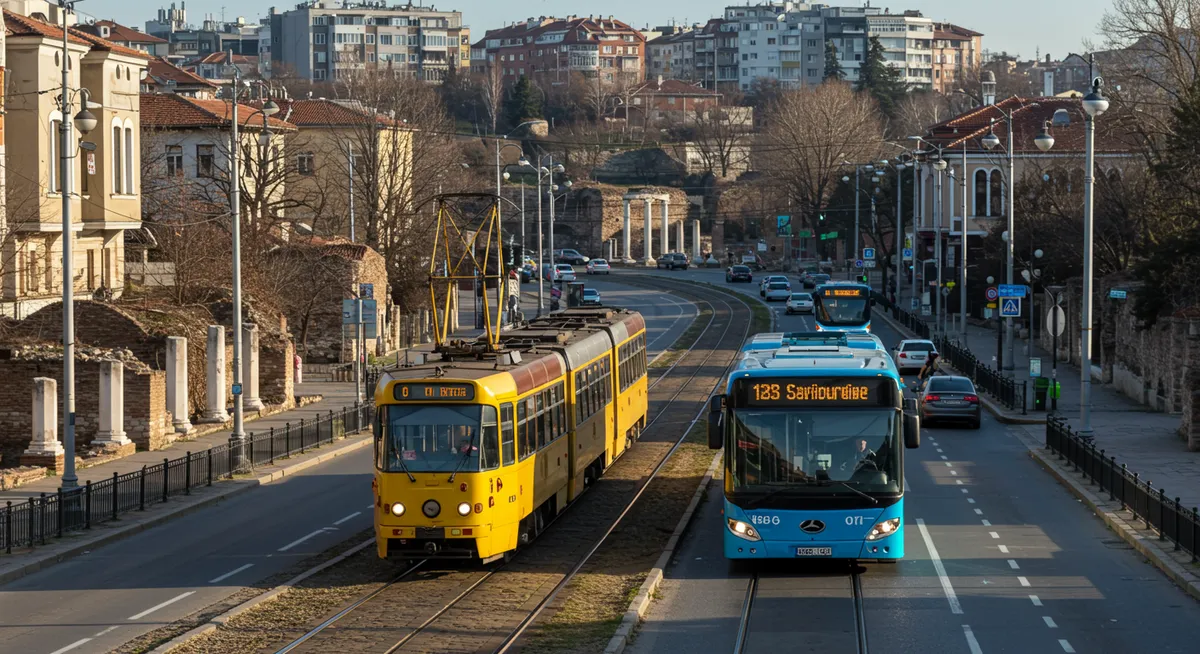
Plovdiv has a well-developed urban bus network alongside a trolleybus (electric bus) system that covers the main east–west corridor through the city. Together they reach most residential districts and suburban areas that tourists rarely need, but they're genuinely useful for reaching the bus or train stations, the fairgrounds, or the districts east of center.
- Single ride fare (2026): 1.60 BGN (≈ €0.80) — paid to the driver in cash; small denominations preferred
- Day pass: 4 BGN (≈ €2) — worth buying if you plan three or more trips in a day
- Buses run roughly 05:30–23:00; late-night routes are limited
- Route maps are posted at major stops; Google Maps covers most Plovdiv bus routes in real time
- Card/contactless payment is not yet standard on most buses — carry BGN coins and small notes
Key routes for tourists: Bus 2 and Bus 13 link the train station to the main pedestrian street (Knyaz Alexander I). The trolleybus line runs along Maritsa Boulevard, useful for reaching the river park. For most central sightseeing, however, walking or cycling is more convenient than waiting for a bus.
3. Taxis and the TaxiMe App
Taxis are plentiful in Plovdiv, but the quality varies. Street-hailing unmarked cabs near tourist areas is a known tourist trap — always use a reputable company or a ride-hailing app.
TaxiMe — The Safest Option in 2026
TaxiMe is the dominant ride-hailing app in Plovdiv in 2026 and the one most locals use. It works like Uber: you see the fare estimate before you confirm, track the driver on a map, and pay by app or cash at the end. Typical fares within the city center run 5–8 BGN (€2.50–4). The app is available on iOS and Android and works on a Bulgarian SIM or over Wi-Fi.
For those without a local SIM, reputable radio-taxi companies with English dispatch include OK Supertrans and Plovdiv Taxi — ask your hotel for their number. Starting fare is around 1.50 BGN with a per-km rate of 1.20–1.50 BGN for licensed meters.
Taxis are most useful at night, during rain, with heavy luggage, or for journeys to Plovdiv Airport. Keep safety tips for tourists in Plovdiv in mind and always confirm the fare or meter before setting off.
4. Exploring Old Town Plovdiv on Foot
For the historic core of Plovdiv, your feet are the only real option — and that's a feature, not a bug. The Old Town (Стария Град / Staria Grad) is almost entirely pedestrian-only, with vehicle access restricted to residents and service vehicles. The cobblestone lanes winding past National Revival-era houses, the Ancient Roman Theatre, the Ethnographic Museum, and Dzhumaya Square are off-limits to through traffic.
Key walking distances from Dzhumaya Square in the center:
- Ancient Roman Theatre (Античен театър): 10-minute uphill walk
- Kapana Creative Quarter: 5 minutes west of the pedestrian street
- Nebet Tepe hill viewpoint: 15 minutes from the Old Town gate
- Plovdiv train station: 20-minute flat walk south along Hristo Botev Blvd
Practical walking tip: wear flat, rubber-soled shoes on the uneven cobblestones, especially after rain. The main pedestrian boulevard (Knyaz Alexander I) is flat and smooth — it's the side streets up to the hilltop Old Town where grip matters. For guided route ideas, see our Plovdiv walking tour guide and Plovdiv Old Town guide.
5. Cycling Plovdiv — Mobi E-Bikes and Rental Shops
Cycling has grown significantly in Plovdiv over the past few years. The riverside parks along the Maritsa offer flat, dedicated cycling paths, and the city has been expanding its bike lane network toward the Kapana district and the fairgrounds.
Mobi E-Bike Sharing (2026)
Mobi is Plovdiv's main bike-sharing scheme. Docking stations are clustered near the pedestrian main street, Kapana, and the riverfront park. To use Mobi, download the app, register with a card, and unlock a bike at any station. Rates in 2026 start at around 2–3 BGN per hour. E-bikes are ideal for the slight inclines toward the hilltop Old Town, though note that the steepest cobblestone lanes are too narrow for cycling anyway.
Private Bike Rentals
Several small rental shops near the Old Town offer standard city bikes (around 10–15 BGN/day) and mountain bikes for Rhodope foothills trails (around 20–30 BGN/day). Ask your accommodation to recommend a trusted shop. Guided bike tours that combine city highlights with the riverside parks typically run 35–50 BGN per person including the bike.
Cyclists should be aware that the main pedestrian boulevard is closed to bikes during peak hours — use parallel side streets instead. For routes and hidden corners to discover on two wheels, see our hidden gems in Plovdiv guide.
6. Car Rental for Day Trips from Plovdiv
For the city itself, a car is unnecessary — parking is limited and expensive near the center, and the Old Town is inaccessible by car. But if you plan day trips from Plovdiv to the Rhodope Mountains, Bachkovo Monastery, Plovdiv's Roman villa Armira, or the Valley of Roses, renting a car unlocks a significant amount of additional territory.
Major rental companies (Europcar, Hertz, Budget, local Bulgarian agencies) have offices at Plovdiv Airport and at several city-center locations. Daily rates in 2026 start at around 50–80 BGN (€25–40) for a compact car including basic insurance. Book online in advance for the best prices, especially in summer. Remember to purchase the Bulgarian motorway e-vignette (bgtoll.bg) if you plan to use the A1.
Driving regulations to know: speed limits are 50 km/h in towns, 90 km/h on non-motorway roads, and 130 km/h on motorways. Blood-alcohol limit is a strict 0.05%. Headlights must be on at all times, even during daylight hours.
7. Getting to Plovdiv Airport and Intercity Connections
If your itinerary includes a flight out of Plovdiv Airport (PDV), it is located about 12 km east of the city center. There is no direct bus service to the airport — the standard option is a taxi or TaxiMe (around 20–25 BGN / €10–12, 20-minute drive). Some hotels offer airport transfers; confirm in advance.
For onward travel beyond Plovdiv, the Plovdiv Yug Bus Terminal serves destinations across southern Bulgaria including Pamporovo, Smolyan, Kardzhali, and the Black Sea coast (in season). Buses to Sofia depart from the same terminal. The train station handles services to Burgas on the Black Sea, Stara Zagora, and connections to the rest of the national rail network. Both terminals are about a 20-minute walk south of the pedestrian center — or a short taxi ride.
Frequently Asked Questions About Transportation in Plovdiv
How much does a bus ticket cost in Plovdiv in 2026?
A single ride on Plovdiv's public buses or trolleybuses costs 1.60 BGN (about €0.80) when paid to the driver onboard. A day pass is 4 BGN (around €2). Tickets are cash-only on most routes, so carry small coins and notes.
What is the best taxi app to use in Plovdiv?
TaxiMe is the most widely used ride-hailing app in Plovdiv in 2026. It shows upfront fare estimates, lets you track your driver, and eliminates the risk of overcharging. The starting fare is around 1.50 BGN with a per-km rate of roughly 1.20–1.50 BGN — most city-center trips cost 5–8 BGN total.
Can I walk everywhere in Plovdiv Old Town?
Yes — Plovdiv's Old Town is largely pedestrian-only and very walkable. Most key sights (Roman Theatre, Ethnographic Museum, Kapana, Dzhumaya Square) are within a 15–20-minute walk of each other on flat or gently sloping paths. Wear flat, grippy shoes for the cobblestone lanes on the hilltops.
How do I get from Sofia to Plovdiv?
Three practical options in 2026: intercity bus (12–14 BGN, 1.5–2 hours from Sofia Central Bus Station), train (8–12 BGN, 2–2.5 hours from Sofia Central Station), or driving on the A1 Trakia motorway (around 1.5 hours, 150 km, e-vignette required). The bus is most convenient for solo travelers; driving wins if you plan to continue to the Rhodope Mountains.
Does Plovdiv have an airport with international flights?
Plovdiv Airport (PDV) exists but handles only limited seasonal and charter routes in 2026. Most international visitors fly into Sofia Airport (SOF) and travel to Plovdiv by bus, train, or car — a journey of under 2 hours. Check PDV's schedule directly if you're flying from a specific regional European city, as some low-cost carriers operate seasonal summer routes.
Are there bike rentals in Plovdiv?
Mobi is the main e-bike sharing scheme in Plovdiv (app-based, docking stations near Kapana and the river, from 2–3 BGN/hour in 2026). Private rental shops near the Old Town offer city and mountain bikes from 10–15 BGN/day. Bikes are excellent for the riverfront paths and outer neighborhoods, though the steepest Old Town lanes are better explored on foot.
Plovdiv is one of the most navigable mid-sized cities in the Balkans. For most visitors, a combination of walking the historic core and using TaxiMe for longer hops covers everything. Public buses are worth learning for budget travel, and renting a car opens up the stunning day-trip circuit through the Rhodope foothills. Start planning your trip with our full things to do in Plovdiv guide, or browse our day trips from Plovdiv guide for excursions beyond the city.