
Ruse 1-Day Itinerary 2026: Hour-by-Hour Walking Guide
The ultimate Ruse 1-day itinerary for 2026: an hour-by-hour walking plan with 2026 prices, opening hours, restaurant picks and Danube sunset spots in Bulgaria's 'Little Vienna'.
On this page
Ruse 1-Day Itinerary 2026: An Hour-by-Hour Walking Guide
Planning one perfect day in Ruse? In 2026, Bulgaria's "Little Vienna" on the Danube is more walkable, more affordable, and more underrated than ever — and 24 hours is genuinely enough to see the highlights if you plan tight. This itinerary gives you a tested hour-by-hour route, exact 2026 prices in Bulgarian leva (BGN), opening hours for every stop, restaurant picks for each time block, and the best Danube sunset spot to wrap the day.
TL;DR — Ruse in One Day (2026)
- Total walking distance: ~6.5 km, all flat, all in the historic core
- Budget: 60–95 BGN (€31–48) per person including museum tickets, lunch and dinner
- Start: 09:00 at Svoboda Square (Liberty Monument)
- End: 21:00 sunset on the Danube riverfront promenade
- Don't miss: Dohodno Zdanie facade, Regional History Museum (Battenberg Palace), Sexaginta Prista Roman fortress, Pantheon of National Revival Heroes, riverfront sunset
- Best months: late April–June, September–early October (15–24 °C, no crowds)
If one day leaves you wanting more — and it usually does — extend with our Ruse 3-day itinerary for museums and day trips, or the Ruse 7-day itinerary for a deep dive into the wider region. For where to base yourself, see Best Areas to Stay in Ruse, and for arrival logistics check Transportation in Ruse, Bulgaria: Complete 2026 Travel Guide.
Is one day in Ruse enough?
Yes — one day is enough to see Ruse's main highlights, but only if you stay inside the compact historic core. The entire itinerary below covers about 6.5 km of flat walking between Svoboda Square, Aleksandrovska Street, the Battenberg Palace museum, the Pantheon, the Sexaginta Prista Roman ruins and the Danube promenade. Every stop is within 20 minutes' walk of the next, so you waste no time on transit. What you will miss in a single day are the surrounding nature parks (Rusenski Lom, the UNESCO Ivanovo Rock-Hewn Churches) and out-of-town day trips — for those, see our Best Ruse Day Trips guide.
Quick logistics: getting to Ruse and getting around
Ruse sits on the Danube in northern Bulgaria, directly opposite the Romanian city of Giurgiu. The closest international airport is Bucharest Henri Coandă (OTP), about 70 km north — direct buses to Ruse take roughly 2 hours and cost 25–35 BGN (≈€13–18) one-way in 2026. From within Bulgaria, direct trains and buses link Ruse with Sofia (5–6 h), Varna (4 h) and Veliko Tarnovo (1.5 h). Drivers cross the Friendship Bridge from Romania on the E70.
Once in town, walking is the only sensible way for this itinerary — the entire historic centre is pedestrianised or low-traffic, and a taxi from the train station to Svoboda Square is just 5–7 BGN (€2.50–3.50). Public buses run frequently if you need to reach the long-distance bus terminal (single ticket 1.20 BGN). Full arrival options live on our Transportation in Ruse, Bulgaria: Complete 2026 Travel Guide page.
09:00 – 09:30 · Coffee and Svoboda Square
Start at Svoboda Square (Ploshtad Svoboda), the heart of Ruse and the obvious orientation point for any walking day. Grab a strong Bulgarian espresso (2.50–3.50 BGN, about €1.30–1.80) at one of the cafés ringing the square — Chocolate Room on the south side opens at 08:00 and serves a proper cortado plus warm banitsa (cheese pastry) for under 6 BGN. Sit outside if the weather plays along, because you're directly facing two of Ruse's signature sights: the soaring Monument of Liberty (1909, by Italian sculptor Arnoldo Zocchi) and the Neo-Baroque Dohodno Zdanie.
The Monument of Liberty is the symbol of the city — a winged figure of Liberty crowning a 16-metre column, built to commemorate the 1878 liberation from Ottoman rule. You don't need to do anything here, just take it in for ten minutes while you finish your coffee.
09:30 – 10:30 · Dohodno Zdanie and Aleksandrovska Street walk
Walk 50 metres east to the Dohodno Zdanie (literally "the Profit Building"), arguably the most photographed facade in Ruse. Built in 1898–1902, it has hosted the Ruse State Opera and the Sava Ognyanov Drama Theatre for over 120 years. The facade is the show — three storeys of Neo-Baroque sculpture, an allegorical figure of Mercury crowning the central pediment, and a small public sculpture garden behind it. Free to admire from the outside; the interior opens only for ticketed performances (15–35 BGN).
From here, head south down Aleksandrovska Street, the city's main pedestrian artery. The next 700 metres is essentially an open-air museum of late 19th-century Central European architecture — wrought-iron balconies, decorative caryatids, painted facades in pastel ochre and pale blue. Why does Ruse look like this? Because after liberation in 1878 the city's wealthy merchants hired architects trained in Vienna and Budapest, and the result is the densest concentration of Austro-Hungarian Secession architecture in Bulgaria. Walk slowly. Look up. Notice the Eagles' Bridge-style ironwork on numbers 14, 27 and 41.
Photo stop: the corner of Aleksandrovska and Sveta Troitsa Street has the best symmetrical view of the cathedral spires framed by 19th-century rooflines.
10:30 – 12:00 · Regional History Museum (Battenberg Palace)
Cut west two blocks to Battenberg Square for the Ruse Regional History Museum, housed in the former summer palace of Prince Alexander Battenberg, Bulgaria's first monarch after liberation. It's a stunning Neo-Renaissance building in its own right, but the real reason to come is the collection: prehistoric finds from the Rusenski Lom valley, Roman artefacts pulled from the nearby Sexaginta Prista fortress, a remarkable Thracian gold treasure from Borovo, and a National Revival ethnographic floor.
- Address: Pl. Battenberg 3, Ruse
- Opening hours (2026): Tuesday–Sunday 09:00–18:00; closed Mondays
- Adult ticket: 10 BGN (≈€5); seniors and students 5 BGN; under-7 free
- Time needed: 60–90 minutes — the Borovo Treasure room alone deserves 20
If museums aren't your thing, swap this stop for a leisurely walk through Park na Vazrazhdaneto (Revival Park) directly behind the palace, where the locals jog and the magnolias bloom in late April.
12:00 – 13:30 · Lunch in a traditional mehana
Walk five minutes back toward Aleksandrovska for a proper Bulgarian lunch. Two reliable options:
- Mehana Chiflika (ul. Otets Paisiy) — old-school tavern with rakia barrels, live folk music on weekends, and an excellent kavarma (slow-cooked pork stew) for 14–18 BGN. Mains 12–22 BGN, expect to spend 25–35 BGN per person with a drink.
- Restaurant Strannopriemnitsa (Aleksandrovska 19) — slightly more refined, vaulted brick interior, famous for grilled skara: try the mixed grill platter for two (45 BGN) and a Shopska salad to start (8 BGN).
Order a Shopska salad to begin (always — fresh tomato, cucumber, raw onion and grated white sheep cheese, 7–9 BGN), follow with grilled kebapche or kyufte (5 BGN per piece), and finish with a small rakia (3–4 BGN for a 50 ml shot). For more food picks across the city, see Ruse food and drinks.
13:30 – 14:15 · Walk to the Danube and Pantheon
Time to drift north toward the river. From Aleksandrovska, walk straight up Borisova Street for about 600 metres (8–10 minutes) until the road opens out onto the high bluff above the Danube. On your left you'll see the Park na Vazrazhdaneto and, at its centre, the Pantheon of National Revival Heroes — a striking gold-domed mausoleum honouring 39 figures from Bulgaria's struggle for independence, including Baba Tonka Obretenova.
- Opening hours (2026): Tuesday–Sunday 09:00–18:00; closed Mondays
- Adult ticket: 4 BGN (≈€2)
- Time needed: 20–30 minutes — the gilded interior dome is worth the entry alone
The Pantheon was completed in 1978, and the architecture is unmistakably late-Communist monumentalism — but inside, the eternal flame and the murmur of the dome create a surprisingly contemplative space. Step out the back for an unbeatable panorama over the Danube.
14:15 – 15:30 · Sexaginta Prista Roman fortress
From the Pantheon, walk 700 metres west along the bluff edge (or drop down and follow the riverside) to Sexaginta Prista — Latin for "sixty ships," the Roman naval fortress that gave Ruse its first identity in the 1st century AD. The site was active from the reign of Vespasian until the 6th century and is now an open archaeological park with a small but well-curated museum building.
- Address: ul. Tsar Kaloyan 2, Ruse
- Opening hours (2026): Tuesday–Saturday 09:00–12:00 and 12:30–17:30; closed Sunday and Monday
- Adult ticket: 6 BGN (≈€3); combined ticket with the Regional History Museum 14 BGN
- Time needed: 45–60 minutes
You can walk among the original foundation walls, see the reconstructed gate, and inside the museum building check out the milestone inscriptions and military equipment pulled from the site. Information panels are bilingual (Bulgarian and English). If you only have energy for one museum today, swap this for the Regional History Museum — they cover overlapping ground but Battenberg's Borovo Treasure is the bigger wow.
15:30 – 16:30 · Coffee and the riverfront promenade
Now you slow down. Drop down to the Danube riverfront promenade via the steps next to Sexaginta Prista. The promenade runs about 2 km east-west; the most pleasant 1 km stretch is between the Quay and the Friendship Bridge view. Grab an iced coffee at Brigantina Café (right on the water, 4–6 BGN for an iced latte) or a craft beer at Kraft House Ruse (8–10 BGN for a half-litre).
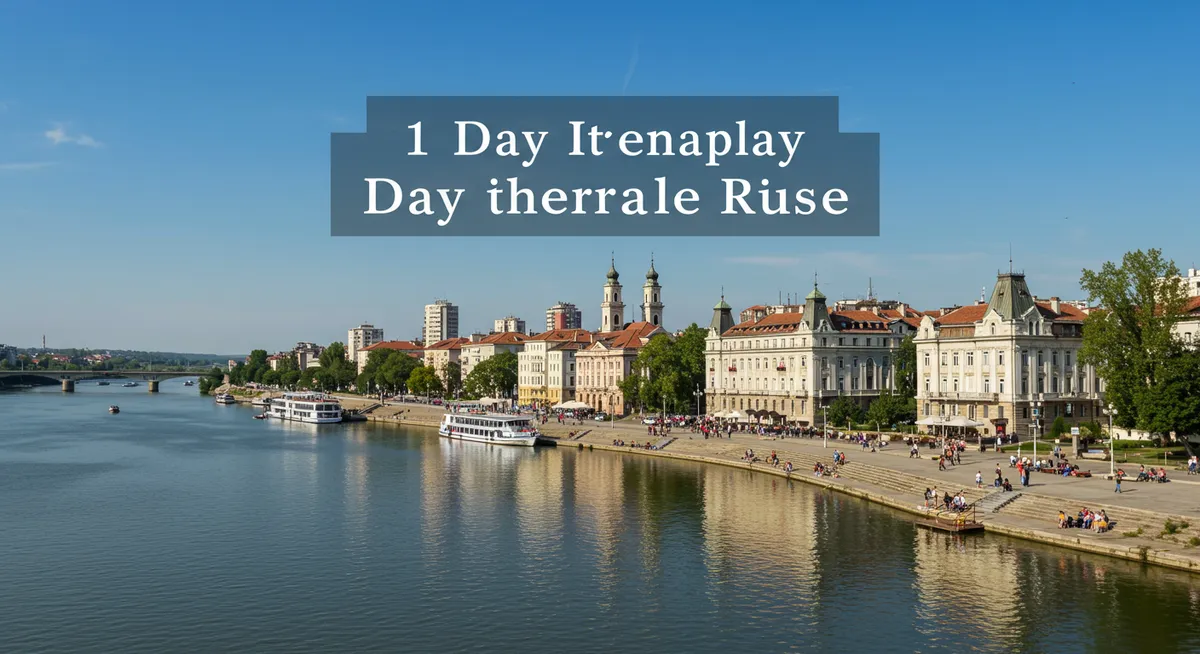
What you're looking at across the water is Romania — specifically the city of Giurgiu and the Friendship Bridge, which opened in 1954 and was for decades the only road and rail bridge across the lower Danube. Cargo barges trundle past every 15–20 minutes; cormorants and herons fish the shallows. Bench, drink, no agenda. This is the moment to mentally file the day's history into context — the same river that carried Roman warships brought 19th-century Viennese architects, then Soviet trade, and now (slowly) river-cruise tourism.
16:30 – 18:00 · Aleksandrovska shops and Ruse Opera House
Climb back up to the centre and spend the late afternoon walking the southern half of Aleksandrovska Street — the part you skipped this morning, between Svoboda Square and the train-station end. This is where locals shop: independent bookshops, the Kaufland-adjacent food market for take-home rose oil and Bulgarian honey (5–15 BGN per jar), and a clutch of small galleries.
Detour two blocks east to the Ruse State Opera House (technically inside the Dohodno Zdanie complex you saw this morning, but with its own ornate side entrance on ul. Sveta Troitsa). Even if you're not catching a show, the box office windows are open until 18:00 and you can usually peek into the foyer for free. Check the program — Ruse Opera punches well above its weight, and a same-day balcony ticket runs 15–25 BGN.
Other afternoon options if opera isn't calling: the small City Art Gallery (Borisova 39, free, closes 18:00), or simply more Best Views in Ruse: 8 Panoramic Viewpoints for 2026 from the Levente Fortress lookout (a 15-minute taxi south of centre, 8 BGN return).
18:00 – 19:30 · Dinner with a Danube view
For dinner, head back to the riverfront. Two strong picks:
- Restaurant Leventa — perched on the bluff above the city in a converted 19th-century powder magazine, panoramic terrace, modern Bulgarian menu, mains 18–35 BGN. Book a sunset table 24 h ahead.
- Mehana Pri Lobchev — riverside, no view but excellent sarmi (cabbage rolls) and grilled river fish (Danube zander, 22 BGN). Cosy, loud, local.
Either way, expect to spend 30–45 BGN per person with wine. Bulgarian whites from the Russe-region Levent winery pair perfectly with grilled fish (carafe 12–18 BGN). For more dinner ideas across price brackets see Ruse food and drinks.
19:30 – 21:00 · Sunset on the Danube
End your day where Ruse always ends — back on the riverfront promenade for sunset. In May–August the sun drops behind the Friendship Bridge between 20:30 and 21:15; in shoulder season aim for arrival around 18:30–19:00. The best vantage point is the small belvedere at the eastern end of the promenade, just below the Pantheon, where a bench, a low wall and an unobstructed western view come together. Bring a small bottle of local rakia or a takeaway beer (legal in public open spaces here, unlike many EU cities). Stay until the bridge lights come on. Then walk the 15 minutes back to Svoboda Square in the cool dusk and call it a perfect day.
What to pack for one day in Ruse
- Comfortable walking shoes — you'll cover 6–7 km on cobbles and pavement
- Cash — 50–80 BGN in small notes; cards work in restaurants and museums but small cafés and the Pantheon ticket booth are cash-only
- Sun hat and water bottle in summer (Ruse hits 32–36 °C in July–August)
- Light layer spring/autumn — Danube breeze drops the evening temperature 5–8 °C
- Phone with offline Google Maps — most attractions are signed in Cyrillic only
Sample budgets for one day in Ruse (2026)
- Backpacker (60 BGN / €31): coffee 3 BGN, two museum tickets 16 BGN, mehana lunch 18 BGN, supermarket dinner picnic 10 BGN, sunset beer 5 BGN, taxis 0 BGN
- Mid-range (95 BGN / €48): coffee + pastry 6 BGN, two museums 16 BGN, sit-down lunch 30 BGN, dinner with wine 35 BGN, sunset drink 8 BGN
- Comfortable (160 BGN / €82): add a guided 2 h walking tour (40 BGN), better wine at dinner, taxi to Leventa (15 BGN)
Frequently asked questions
Is Ruse worth visiting for just one day?
Yes — Ruse is one of the most rewarding one-day stops in Bulgaria, especially if you're already in Bucharest (just 70 km north). The historic core is small enough to cover on foot in a single day and packs Bulgaria's densest concentration of late-19th-century Austro-Hungarian architecture, plus a Roman fortress, a major regional museum, and a Danube riverfront for sunset. The catch: nearby attractions like the UNESCO-listed Ivanovo Rock-Hewn Churches and Rusenski Lom Nature Park need a second day.
How much does one day in Ruse cost in 2026?
Budget 60–95 BGN (€31–48) per person for a comfortable day including two museum tickets (16 BGN total), a mehana lunch (25–30 BGN), a sit-down dinner with wine (30–35 BGN), and coffee plus a sunset drink (10–15 BGN). Backpackers can do it for 60 BGN by picnicking; a mid-range traveller spends about 95 BGN.
What is the best time of year to spend a day in Ruse?
Late April to mid-June and mid-September to early October offer the best balance — daytime temperatures of 18–26 °C, low humidity, no crowds, and the Danube riverfront cafés open late. July and August are hot (32–36 °C) but bring summer concerts on Svoboda Square. Winter (November–March) is cold (0–8 °C) and many open-air sites have reduced hours, but Christmas markets in early December are charming.
How do I get from Bucharest to Ruse for a day trip?
Direct buses from Bucharest's Autogara Filaret to Ruse Central Bus Station leave every 2–3 hours, take roughly 2 hours, and cost 25–35 BGN one-way (≈€13–18). Trains take longer (3.5 hours via Giurgiu) but are scenic. By car the E70 via the Friendship Bridge is 75 minutes plus border control. Several day-tour operators run organised excursions from Bucharest with hotel pickup for €60–90.
Can I see Ruse without a car?
Easily — and you should. The entire one-day itinerary above is walkable, and the historic centre is pedestrianised. A car is actively annoying in central Ruse because parking is restricted and many streets are one-way. Save car rental for day two if you plan to explore Rusenski Lom Nature Park or the Ivanovo Rock-Hewn Churches.
Are Ruse's museums open on Mondays?
No — both the Regional History Museum (Battenberg Palace) and Sexaginta Prista are closed on Mondays in 2026, and Sexaginta Prista is also closed on Sundays. If you're visiting on a Monday, swap the museums for a longer riverfront walk, the Pantheon (open Tuesday–Sunday), and a guided architecture tour of Aleksandrovska Street instead.
What is the dress code for Ruse churches and museums?
Smart casual. Shoulders and knees covered for Orthodox churches (Sveta Troitsa Cathedral and the small chapels along Aleksandrovska); museums have no dress code. Restaurants in central Ruse are relaxed — even Restaurant Leventa accepts neat jeans.
Is Ruse safe for solo travellers?
Yes — Ruse is one of the safest mid-sized cities in Bulgaria, with very low petty-crime rates and a well-lit, busy historic centre into the late evening. Solo female travellers report no issues walking the riverfront promenade after dark, though common-sense precautions apply away from the lit central streets after 23:00.
Where to next?
If one day in Ruse left you wanting more, you have great options. Stay a second day and add Rusenski Lom Nature Park plus the UNESCO-listed Ivanovo Rock-Hewn Churches — both are covered in our Ruse 3-day itinerary. Going deeper still? The Ruse 7-day itinerary works the wider Danube valley, Veliko Tarnovo and a cross-border excursion to Bucharest into a full week. And for orientation across everything Ruse offers, our pillar guide to Top 20 Things To Do in Ruse is the place to start.
Whichever way you slice it, Ruse rewards travellers who slow down and look up. One day shows you the headlines; the city tells the rest of the story when you give it more time.