
Shopping in Sofia 2026: Best Streets, Markets & Souvenirs Guide
Complete 2026 guide to shopping in Sofia: luxury on Vitosha Blvd, mid-range on Graf Ignatiev, malls (Paradise, Ring, Serdika), Ladies' Market, plus rose oil, ceramics, wine souvenirs, VAT 20% & Tax-Free Shopping.
On this page
Shopping in Sofia 2026: Streets, Malls, Markets & Souvenirs
Sofia in 2026 is one of Europe's most underrated shopping capitals, blending Vitosha Boulevard's luxury boutiques, Graf Ignatiev's mid-range high-street brands, and lively open-air markets like Zhenski Pazar. Whether you're hunting for authentic Bulgarian rose oil, hand-painted Troyan ceramics, traditional embroidered linens, or international fashion at one of the city's six major shopping malls, this guide covers every neighborhood, price point, and souvenir worth your luggage space. Below you'll find direct answers on where to shop by area, what to buy, opening hours, payment norms, and how non-EU travelers can claim VAT (20%) back via Tax-Free Shopping.
Quick Answer: Where Should You Shop in Sofia?
For luxury and international brands, walk Vitosha Boulevard between NDK and Sveta Nedelya Square. For mid-range high-street fashion and local boutiques, head to Graf Ignatiev Street and the side streets around Slaveykov Square. For modern mall shopping, choose Paradise Center (largest, southern Sofia), Sofia Ring Mall (premium outlets, IKEA nearby), or Serdika Center (most central, near Sofia Metro Station). For authentic souvenirs and food, visit the Central Market Hall (Tsentralni Hali) and Zhenski Pazar (Ladies' Market). Most stores open 10:00–22:00 daily, including Sundays, and accept major cards; markets prefer cash in Bulgarian Lev (BGN).
Shopping in Sofia by Area: Vitosha vs Graf Ignatiev vs Centrum
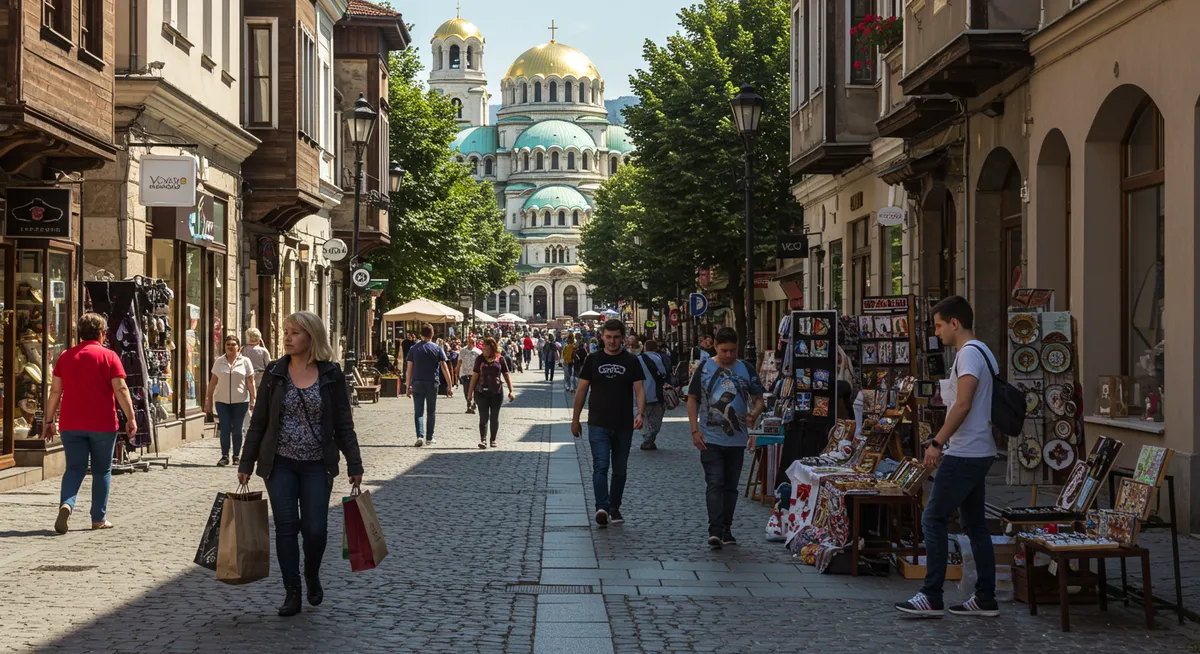
Sofia's retail map breaks into three distinct character zones. Vitosha Boulevard, the pedestrianised spine running from NDK to Sveta Nedelya Cathedral, hosts luxury houses, watch boutiques, and flagship stores; expect price tags on par with Vienna or Milan. Graf Ignatiev Street, anchored by Slaveykov Square's open-air book market, leans mid-range — Bulgarian high-street chains, indie designers, and bookshops with prices roughly 30–40% lower than Vitosha. The wider Centrum (city centre) area, including TZUM Department Store, the Central Market Hall, and Saborna Street, mixes everything: traditional crafts, gourmet food, and souvenirs aimed at visitors near Alexander Nevsky Cathedral.
1. Vitosha Boulevard — High-End Fashion and Flagship Stores
Vitosha Boulevard is Sofia's premier luxury shopping street and the obvious starting point for any retail-focused itinerary. The pedestrianised stretch hosts international flagships including Hugo Boss, Tommy Hilfiger, Massimo Dutti, and watch boutiques carrying Longines and TAG Heuer. Expect typical luxury-segment prices: a quality leather handbag runs 400–900 BGN, and designer footwear typically falls between 250 and 600 BGN. Cafés and restaurants line both sides, making it a natural promenade rather than a quick errand. For evening visits, the boulevard glows under historic streetlamps with Vitosha Mountain framing the skyline at the southern end. Pair shopping here with a coffee break and people-watching — the street draws Sofia's most fashion-forward locals year-round.
2. Graf Ignatiev Street — Mid-Range Boutiques and Bulgarian Designers
Graf Ignatiev Street offers a more wallet-friendly counterpart to Vitosha, with mid-range Bulgarian high-street brands, independent designer studios, and Slaveykov Square's beloved open-air book market at its northern end. Expect dresses from Bulgarian designers in the 80–250 BGN range and locally produced leather accessories around 60–180 BGN. The street's small footprint and tree-lined sidewalks make it easy to browse on foot, and side streets like Tsar Shishman hide ceramic studios and vintage shops worth detouring for. This is where Sofia residents actually shop, so you'll find more authentic style and fewer tourist-priced items than around Alexander Nevsky.
3. Central Sofia Market Hall (Tsentralni Hali) — Food and Local Delicacies
The Central Sofia Market Hall, known locally as Tsentralni Hali, is the city's most beautifully restored 1911 commercial building and the best stop for edible souvenirs. Inside you'll find stalls selling Bulgarian sheep-milk yogurt, lukanka (cured sausage, around 25–40 BGN per stick), kashkaval cheese, banitsa pastries, and dozens of varieties of Bulgarian honey and rose jam. The basement level houses a small archaeological exhibit displaying Roman-era artifacts uncovered during renovations. For curated Sofia Food & Drinks, this is unbeatable — and far less touristy than equivalent halls in Budapest or Lisbon.
4. Zhenski Pazar (Ladies' Market) — Open-Air Local Crafts and Produce
Zhenski Pazar, the Ladies' Market, sprawls along Stefan Stambolov Boulevard and is Sofia's oldest and largest open-air market, operating since the late 19th century. Stalls sell hand-thrown Troyan ceramics (pieces from 15 BGN), embroidered linens, copper coffee pots, fresh seasonal produce, spices, and the famed Shopska salad ingredients. Bargaining is mild but accepted, especially for craft items. Bring small Lev notes — most vendors don't accept cards. Visit early on a weekday morning for the most authentic atmosphere; weekends can feel overwhelming. Combine with a stop at one of the nearby Hidden Gems in Sofia for a fuller local experience.
5. Paradise Center — Sofia's Largest Mall
Paradise Center, in southern Sofia near the Vitosha Metro Station, is the city's largest shopping mall with over 230 stores spread across four floors. Anchor tenants include H&M, Zara, Mango, Lefties, and a flagship Technopolis electronics store. The food court has 25+ outlets, a 12-screen Cinema City multiplex, and an indoor playground for kids. Free parking is generous (over 2,500 spaces) and the M2 metro line connects directly to the city centre in 15 minutes. Standard hours are 10:00–22:00 every day, including holidays.
6. Sofia Ring Mall — Premium Brands and IKEA
Sofia Ring Mall, on the southern ring road, attracts a more premium crowd with stores like Massimo Dutti, COS, Sephora, and Bulgaria's largest IKEA (immediately adjacent). It's the go-to mall for furnishings and homeware shopping. Free shuttle buses run from Paradise Center and central Sofia on weekends. The cinema, food court, and Carrefour hypermarket make it an easy half-day stop, especially if you're picking up bulkier souvenirs that wouldn't fit a Vitosha boutique bag.
7. Serdika Center — Most Central Mall
Serdika Center sits directly above Sofia Metro Station 9 (Serdika), making it the most accessible mall for tourists staying in central hotels. The mix is heavily international — H&M, Bershka, New Yorker, Springfield — but a basement Billa supermarket and several Bulgarian souvenir kiosks add local flavor. The roof terrace has open views toward Vitosha Mountain and a handful of restaurants worth a sunset visit. Hours mirror other malls: 10:00–22:00 daily.
8. TZUM Department Store — Traditional Bulgarian Products
TZUM (Central Universal Department Store) is a 1956 landmark next to the former Communist Party headquarters and the National Assembly. Recent refurbishments transformed its lower floors into a curated showcase for traditional Bulgarian rose oil cosmetics (Refan, Bulgarian Rose Karlovo — small bottles 20–50 BGN), embroidered tablecloths, hand-painted icons, and rakia from boutique distilleries. Upper floors host smaller indie boutiques. TZUM is the single most efficient stop if you want a representative Bulgarian souvenir haul under one roof without bargaining.
9. Flea Market near Alexander Nevsky Cathedral — Antiques and Vintage
The flea market on the cobbled square beside Alexander Nevsky Cathedral runs daily and is Sofia's premier hunt for antiques: Soviet-era pins, military medals, Orthodox icons, vintage cameras, old vinyl, and pre-1989 ephemera. Genuine antique icons start around 80 BGN; reproductions sit in the 20–40 BGN range, so ask sellers directly which is which. Bargaining is expected — start at 60% of the asking price and meet in the middle. Bring cash, and remember that pre-1900 antiques technically require an export permit from the Ministry of Culture.
10. Graf Ignatiev Street Boutiques and Stamboliiski Street Bargains
Beyond Graf Ignatiev's main run, the smaller boutiques on Tsar Shishman, Angel Kanchev, and 6 September streets specialize in handmade jewelry, ceramics, and Bulgarian-designer fashion. For deeper bargains, Stamboliiski Boulevard's open-stall market is busiest on weekends with vintage clothing, household goods, and electronics — best visited with a discerning eye and patience to haggle politely.
What to Buy in Sofia: Bulgarian Souvenirs Worth Packing
Sofia's most distinctive souvenirs reflect Bulgaria's craft heritage and natural exports. Bulgarian rose oil from the Kazanlak Valley is the country's signature product — authentic small vials run 20–50 BGN at TZUM, Refan, and Aroma stores. Troyan ceramics, recognisable by their teardrop droplet patterns in green and yellow, make compact luggage-friendly gifts (15–60 BGN per piece). Bulgarian wine, particularly reds from the Mavrud and Melnik grape varieties, retails 15–40 BGN per bottle at Vinoteca shops. Other strong picks include lukanka cured sausage, hand-painted Orthodox icons, and embroidered Shevitsa textiles from the Rhodope mountains.
Markets vs Malls: Which Is Right for You?
Markets like Zhenski Pazar and the Alexander Nevsky flea market deliver the highest authenticity, lowest prices, and best stories — but require cash, basic bargaining, and patience for crowds. Malls like Paradise Center, Sofia Ring Mall, and Serdika Center offer fixed prices, free WiFi, climate control, full card acceptance, and child-friendly amenities; they're stronger picks during winter cold snaps or summer rainstorms. The Central Market Hall and TZUM bridge both worlds: indoor, fixed-price, but stocked with traditional Bulgarian goods you won't find in chain stores.
Opening Hours, Payments, and VAT / Tax-Free Shopping
Most Sofia shopping malls and chain boutiques operate 10:00–22:00 every day of the year, including Sundays and most national holidays. Independent boutiques on Vitosha and Graf Ignatiev typically open 10:00–19:00 Monday–Saturday, with reduced or no Sunday hours. Open-air markets run roughly 07:00–18:00, busiest on weekend mornings. Bulgaria's standard VAT rate is 20% and is included in displayed prices. Non-EU residents can claim Tax-Free Shopping refunds on purchases over 250 BGN at participating retailers (look for "Tax Free" stickers); collect the refund form at purchase, get it customs-stamped at Sofia Airport on departure, and receive the refund via Global Blue or Premier Tax Free counters. Major credit and debit cards (Visa, Mastercard) are accepted everywhere except open-air market stalls — always carry 50–100 BGN cash for markets and small boutiques.
FAQ: Shopping in Sofia
What is the best shopping street in Sofia?
Vitosha Boulevard is Sofia's best shopping street for luxury and international brands, while Graf Ignatiev Street is the best mid-range alternative with Bulgarian designers and high-street fashion. For traditional crafts, the Central Market Hall and TZUM Department Store offer the most curated local options.
What should I buy in Sofia, Bulgaria?
The most distinctive items to buy in Sofia are Bulgarian rose oil from Kazanlak (20–50 BGN), Troyan ceramics with traditional teardrop patterns (15–60 BGN), Bulgarian red wine made from Mavrud or Melnik grapes (15–40 BGN per bottle), lukanka cured sausage, and hand-embroidered Shevitsa textiles. TZUM and the Central Market Hall stock all of these in one stop.
What time do shops in Sofia open?
Most Sofia shopping malls and chain stores are open 10:00 to 22:00 every day, including Sundays. Independent boutiques typically run 10:00–19:00 Monday through Saturday with limited Sunday hours, and open-air markets like Zhenski Pazar operate roughly 07:00–18:00 with the busiest hours on weekend mornings.
Can tourists claim VAT back in Bulgaria?
Yes. Non-EU residents can claim a VAT refund (Bulgaria's standard rate is 20%) on purchases over 250 BGN made at participating Tax-Free Shopping retailers. Request the tax-free form at the point of sale, present unused goods and the form for customs stamping at Sofia Airport on departure, then claim the refund cash or card credit at Global Blue or Premier Tax Free desks airside.
Is bargaining acceptable in Sofia markets?
Yes — bargaining is expected at the Alexander Nevsky flea market and accepted in moderation at Zhenski Pazar, especially for craft items, antiques, and bulk produce. A reasonable opening offer is 60–70% of the asking price. Bargaining is not done at malls, supermarkets, the Central Market Hall, TZUM, or any boutique with displayed price tags.
Which Sofia mall is closest to the city centre?
Serdika Center is the most central Sofia mall, located directly above Serdika Metro Station within walking distance of Sveta Nedelya Cathedral and the Largo. Paradise Center, the city's largest mall, is 15 minutes south on the M2 metro line, while Sofia Ring Mall sits on the southern ring road and requires a taxi or shuttle bus.
Plan the Rest of Your Sofia Trip
Pair a shopping day with cultural sights from our Things to Do in Sofia pillar guide, fuel up via the Sofia Food & Drinks guide, or unwind after with Romantic Things to Do in Sofia. Solo travelers can review our Solo Traveler Guide to Sofia for safety tips around busy markets, and budget shoppers should also see Budget-Friendly Things to Do in Sofia. Sofia's shopping scene rewards curiosity — start with one neighborhood, leave space in your suitcase, and let the markets guide you.